Best Books on Sales Management, in Reading Order
This curriculum is built for sales professionals stepping into management roles or current managers who want to sharpen their craft. Starting from the core frameworks of modern sales leadership, the path moves through rep development and coaching, then into the operational mechanics of pipeline, forecasting, and comp design, and finally into the strategic work of building and scaling a high-performance team that consistently hits quota.
Sales Management Foundations
IntermediateEstablish a shared vocabulary and mental model for what great sales management looks like — the manager's role, rep accountability, and the core operating system of a sales team.
▸ Study plan for this stage
Pace: 4–5 weeks, ~25–30 pages/day (approximately 150–170 pages per week across both books)
- The sales manager's primary role is to drive team performance through activity management, coaching, and accountability—not to be a top salesperson
- The Sales Management Code framework: aligning people, process, and metrics to create a predictable, scalable sales system
- Rep accountability and ownership: how managers establish clear expectations, measure progress, and hold individuals responsible for results
- The difference between activity metrics (calls, meetings, pipeline) and outcome metrics (revenue, win rate, deal size)—and why both matter
- Simplified sales management: eliminating complexity and focusing on the few critical behaviors and metrics that drive results
- Coaching as a core management function: moving beyond annual reviews to ongoing, real-time feedback and skill development
- The sales manager's operating system: the rhythms, meetings, and processes that keep the team aligned and accountable week-to-week
- What are the three core components of the Sales Management Code, and how do they work together to create a high-performing sales organization?
- How should a sales manager balance activity management with outcome accountability, and what metrics should they track for each?
- What is the difference between a sales manager's role and a top salesperson's role, and why is this distinction critical?
- Describe a simplified sales management operating system: what are the essential meetings, rhythms, and processes a manager should implement?
- How do you establish and enforce rep accountability without creating a culture of fear or micromanagement?
- What are the key coaching conversations a sales manager should be having, and how often should they occur?
- Map your current sales team's metrics: list all metrics you're tracking today, then categorize them as activity or outcome metrics. Identify which ones are redundant or missing, and propose a simplified set of 5–7 core metrics.
- Audit your sales management operating system: document your current weekly/monthly meetings, 1-on-1 cadence, and coaching touchpoints. Compare against the frameworks in both books and redesign one meeting or process to be more effective.
- Conduct a role clarity exercise: write down what you spend your time on each week (selling, managing, administrative tasks). Identify activities that should be delegated or eliminated, and reallocate time to coaching and accountability.
- Record and review a sales call or deal review with one of your reps: listen for coaching moments you missed, and plan a follow-up coaching conversation using the frameworks from the books.
- Create accountability scorecards for 2–3 of your reps: define their top 3 activity metrics and top 3 outcome metrics for the next quarter, establish weekly check-in cadence, and document the conversation where you align on expectations.
- Design a simplified 90-day sales plan for your team: identify the 2–3 critical behaviors or activities that will move the needle, communicate them clearly, and establish a weekly rhythm to track and coach against them.
Next up: With a clear understanding of the sales manager's role, a simplified operating system, and accountability frameworks in place, you'll be ready to move into deeper skill-building—such as advanced coaching techniques, pipeline management, and handling high-stakes conversations with underperformers.

The definitive starting point: it rigorously defines what sales managers can and cannot control, and introduces the metrics framework (activities, objectives, results) that underpins everything else in this curriculum.

A blunt, practical diagnosis of why sales teams underperform and what managers must do differently — read second to stress-test your assumptions before diving into tactics.
Hiring & Developing Great Reps
IntermediateBuild a repeatable system for recruiting the right salespeople, onboarding them effectively, and coaching them to consistent performance.
▸ Study plan for this stage
Pace: 8–10 weeks, ~40–50 pages/day (mix of reading and note-taking). Week 1–3: Sales Acceleration Formula; Week 4–6: Coaching Salespeople into Sales Champions; Week 7–10: The Challenger Sale, with 1–2 weeks for integration and practice.
- Hiring for coachability and learning ability, not just experience or pedigree—the foundation of a scalable sales team
- Structured onboarding and ramp time: predictable time-to-productivity metrics and the systems that compress it
- Diagnostic coaching: asking powerful questions to uncover rep blind spots and drive self-directed improvement
- The coaching conversation framework: moving from directive feedback to collaborative problem-solving
- Sales rep personas and buyer personas: aligning rep strengths to customer segments and deal types
- The Challenger methodology: teaching reps to teach customers, not just respond to needs
- Continuous performance management: metrics, cadence, and accountability systems that sustain rep development
- Scaling coaching culture: how to embed coaching into management practices and team rituals
- What are the three to four hiring criteria Roberge emphasizes, and why is coachability weighted more heavily than prior sales success?
- Describe the typical ramp curve for a new sales rep. What are the key milestones and metrics Roberge uses to measure onboarding effectiveness?
- What is the core difference between directive feedback and diagnostic coaching, and when should each be used?
- How does Rosen's coaching conversation framework help a manager move a rep from awareness of a problem to ownership of the solution?
- What is the Challenger Sale methodology, and how does it differ from traditional consultative selling?
- How would you design a coaching cadence and accountability system that reinforces both the Challenger methodology and rep development goals?
- Create a hiring scorecard for your sales team based on Roberge's framework: define 4–5 core competencies, weight them, and conduct a mock interview using his interview guide.
- Map your current sales rep onboarding process against Roberge's ramp curve. Identify gaps, create a 90-day onboarding plan, and assign owners to each milestone.
- Record or transcribe a real (or role-played) coaching conversation with a rep. Analyze it using Rosen's framework: Did you ask diagnostic questions? Did the rep own the solution? Rewrite it to improve.
- Conduct a diagnostic coaching session with one rep using Rosen's GROW or similar model (Goal, Reality, Options, Will). Document the insights and follow-up actions.
- Identify a customer interaction (call, email, or deal) and reframe it using Challenger Sale principles: Where could the rep have taught the customer something? What insight could have shifted the conversation?
- Design a 30-day Challenger Sale coaching plan for one rep: select 2–3 specific behaviors to coach (e.g., asking provocative questions, teaching a unique perspective), define practice scenarios, and set weekly check-ins.
Next up: This stage equips you with the systems and coaching skills to build a high-performing, scalable sales team; the next stage will likely focus on advanced sales strategy, territory planning, and pipeline management—applying your developed reps to revenue growth and forecasting.

Roberge's data-driven hiring scorecard and structured onboarding playbook are the clearest frameworks available for building a predictable rep-development machine — start here before coaching.
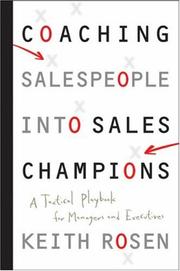
The go-to coaching manual for sales managers; read after Roberge so you have the right people in seats before learning how to develop them through structured conversation and observation.
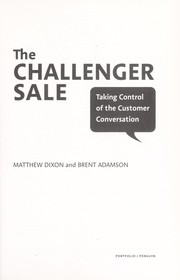
Understanding which rep profile actually wins deals is essential for both hiring criteria and coaching focus; this research-backed model reshapes what 'good' looks like on your team.
Pipeline, Forecasting & the Operating Cadence
IntermediateMaster the mechanics of pipeline management, accurate forecasting, and running a disciplined sales operating rhythm — the weekly and monthly rituals that keep a team on track.
▸ Study plan for this stage
Pace: 6–7 weeks, ~40–50 pages/day (mix of reading and note-taking). Week 1–3: "The Qualified Sales Leader" (focus on pipeline mechanics & cadence chapters). Week 4–5: "Predictable Revenue" (forecasting & systems sections). Week 6–7: Integration exercises and real-world application.
- Pipeline architecture: stages, deal velocity, and how to structure a pipeline that reflects your actual sales process
- The operating cadence: weekly one-on-ones, pipeline reviews, and monthly forecast calls that create accountability and visibility
- Forecast accuracy: leading indicators vs. lagging indicators, and how to build a forecasting model that predicts revenue reliably
- Deal qualification and progression: using consistent criteria to move deals through stages and eliminate false positives
- Sales activity metrics: tracking activities that drive pipeline health (calls, meetings, proposals) rather than just outcomes
- Predictable Revenue systems: repeatable processes that decouple growth from individual heroics and scale the business
- The rhythm of discipline: how consistent rituals (daily, weekly, monthly) compound into predictable business results
- What are the core components of a healthy sales pipeline, and how do you structure stages to reflect your actual sales process?
- How do you run an effective weekly one-on-one and pipeline review to keep reps accountable and forecasting accurate?
- What is the difference between leading and lagging indicators in forecasting, and why does it matter for predicting revenue?
- How do you build a forecast that your CEO and board can rely on, and what systems support that accuracy?
- What activities and metrics should you track daily and weekly to ensure pipeline health, and how do you coach to those metrics?
- How does a repeatable, process-driven sales model reduce dependency on individual performers and enable scaling?
- Map your current sales pipeline: define each stage, typical deal value, average cycle time, and win rate by stage. Compare it to the frameworks in McMahon's book.
- Design a weekly one-on-one template for a sales rep: include pipeline review, activity metrics, coaching questions, and forecast updates. Run it with a real rep for two weeks and refine.
- Build a 90-day rolling forecast model: track leading indicators (activities, meetings, proposals) and lagging indicators (closed deals) to test predictability. Measure accuracy weekly.
- Create a monthly pipeline review agenda: include rep-by-rep pipeline deep dives, forecast reconciliation, and process improvement discussion. Run one live session.
- Audit your current sales activities: document what reps actually do daily, then map those activities to pipeline stages and revenue outcomes using Ross's Predictable Revenue framework.
- Develop a deal qualification scorecard: define criteria for moving deals forward (budget, authority, need, timeline) and test it on 10 deals in your pipeline to validate accuracy.
Next up: This stage equips you with the operational discipline and visibility to manage a predictable pipeline; the next stage will build on this foundation to coach individual reps, develop talent, and scale leadership across a growing team.

McMahon's MEDDIC-rooted approach to deal inspection and pipeline qualification gives managers a rigorous language for separating real pipeline from wishful thinking.
Introduces the outbound prospecting model and pipeline-generation engine that feeds accurate forecasting; essential for understanding where pipeline comes from before you can forecast it reliably.
Compensation, Quota & Performance Systems
ExpertDesign compensation plans that drive the right behaviors, set quotas that are fair and motivating, and build the performance management systems that separate a good quarter from a great year.
▸ Study plan for this stage
Pace: 8–10 weeks, ~40–50 pages/day (approximately 2–3 weeks per book, accounting for note-taking and reflection)
- Total Compensation Strategy: balancing base salary, variable pay, and benefits to attract and retain top talent while controlling costs
- Incentive Plan Design: structuring commissions, bonuses, and accelerators to align individual behaviors with organizational goals
- Quota Setting Methodology: using data-driven approaches (historical performance, market potential, pipeline analysis) to establish fair, achievable, and motivating targets
- Performance Metrics & KPIs: selecting the right mix of leading and lagging indicators (activity, conversion, revenue, profitability) to measure what matters
- Sales Compensation Governance: establishing clear rules, transparency, and dispute resolution to build trust and reduce turnover
- Performance Management Systems: integrating compensation with coaching, feedback, and development to drive continuous improvement
- Quota Fairness & Equity: accounting for territory differences, market conditions, and individual circumstances to maintain morale and retention
- Behavioral Economics in Sales: understanding how compensation design influences risk-taking, collaboration, and long-term thinking
- What are the core components of a total compensation strategy, and how do you balance fixed and variable pay to drive desired behaviors?
- How do you design an incentive plan that rewards the right activities and outcomes without creating unintended consequences or gaming?
- What data and methodology should you use to set quotas that are fair across different territories and motivating for your sales team?
- How do you select and weight performance metrics (activity, conversion, revenue, profitability) to align compensation with business strategy?
- What governance structures and communication practices ensure compensation plans are transparent, trusted, and easy to administer?
- How do you integrate compensation systems with ongoing coaching and feedback to create a complete performance management ecosystem?
- Audit your current compensation plan: map out all components (base, commission, bonus, benefits) and identify which behaviors each component drives—note gaps between intended and actual incentives
- Design a sample incentive plan for a specific sales role: define the mix of fixed/variable pay, commission structure (tiered, accelerated, or flat), and bonus triggers; model how it pays out at different performance levels (50%, 100%, 150% of quota)
- Conduct a quota-setting exercise: gather historical data (past 3 years of sales, activity metrics, pipeline), segment territories by market potential, and propose quotas with documented assumptions and fairness adjustments
- Build a balanced scorecard of 5–7 KPIs for a sales role: include leading indicators (calls, meetings, proposals) and lagging indicators (revenue, win rate, customer retention); assign weights and explain trade-offs
- Create a compensation communication plan: write a one-page summary of your plan's mechanics, payout examples, and dispute resolution process as if presenting to your sales team
- Role-play a compensation conversation: practice explaining quota methodology and compensation changes to a rep who feels their territory is unfair—document how you'd handle objections
Next up: This stage equips you to design and defend the systems that drive sales performance; the next stage will focus on how to coach, develop, and lead the people within those systems to execute at their best.
The most comprehensive and practical guide to sales comp design — covers plan mechanics, pay mix, accelerators, and quota-setting methodology with real-world templates.

Ties comp and accountability together with the cultural and performance-management systems a manager needs to sustain quota attainment, not just design for it on paper.
Scaling a High-Performance Sales Culture
ExpertSynthesize everything into a strategic vision for building, scaling, and sustaining a team culture where hitting quota is the norm, not the exception.
▸ Study plan for this stage
Pace: 6–7 weeks, ~40–50 pages/day (alternating between both books; ~2 weeks per book with overlap for synthesis)
- Output management as the core metric: how to define, measure, and optimize the activities and systems that drive sales results, not just outcomes
- Leverage points in sales operations: identifying where management intervention creates disproportionate impact on team performance and quota attainment
- Building a scalable management structure: designing reporting relationships, decision-making frameworks, and accountability systems that maintain culture as you grow
- Sales enablement as a strategic function: moving beyond tools and training to create an integrated system of processes, content, and coaching that removes friction from the buyer journey
- Coaching and one-on-ones as leverage: using structured feedback and development conversations to compound individual rep performance across the team
- Creating a quota-centric culture: aligning incentives, metrics, and daily behaviors so that hitting numbers becomes the expected norm rather than an exception
- Playbook-driven execution: documenting and scaling repeatable processes, methodologies, and best practices so performance is not dependent on individual heroics
- How does Grove's concept of 'output' differ from 'activity,' and why does this distinction matter when building a high-performance sales culture?
- What are the leverage points in your current sales organization, and how would you redesign management systems to amplify them?
- How would you structure one-on-ones and coaching conversations to systematically improve quota attainment across your team?
- What is the relationship between sales enablement and output management, and how do you integrate them into a cohesive strategy?
- What specific processes, methodologies, and content should be documented in a sales playbook to scale your culture without losing performance?
- How do you measure whether your sales culture is truly quota-centric, and what leading indicators would signal that the norm is shifting?
- Map your current sales organization's leverage points: identify 3–5 activities or decisions where management intervention would have the highest impact on quota attainment. For each, define the output metric and redesign the management system around it.
- Design a one-on-one framework: create a structured template for weekly/bi-weekly coaching conversations that ties rep activities to quota progress. Run 2–3 pilot sessions with reps and document what works.
- Audit your sales enablement infrastructure: inventory all tools, training, content, and processes currently in place. Identify gaps and redundancies, then prioritize 3 enablement initiatives that would remove the biggest friction points from your sales process.
- Build a sales playbook outline: document your repeatable sales methodology, key processes (prospecting, discovery, closing), and best practices. Include decision trees for common scenarios and tie each section to quota impact.
- Conduct a culture diagnostic: survey your team on whether hitting quota feels like the norm or the exception. Identify 2–3 cultural blockers and design interventions (incentives, metrics, rituals) to shift the norm.
- Create a 90-day scaling plan: assume your team will grow by 50%. Design how you would maintain output management, coaching leverage, and playbook adherence as you scale. Identify what breaks and how you'd fix it.
Next up: This stage equips you with the strategic frameworks and operational systems to build a sustainable, quota-centric culture at scale; the next stage will likely focus on advanced topics such as market expansion, territory management, or navigating sales leadership in complex organizational contexts.
The foundational management operating system — output-focused thinking, leverage, and team performance reviews translate directly to sales leadership at scale and tie all prior stages together.

Closes the curriculum by showing how to institutionalize coaching, onboarding, and process into a scalable enablement function so the team's performance doesn't depend solely on the manager.
Discussion
Keep reading
Paths that share books, cover the same subject, or open a related topic.