Enterprise sales is a different job from transactional selling, and applying transactional instincts to a six-figure deal with an eleven-person buying committee is how quarters get lost. The deal cycle is long, the person who likes you is often not the person who signs, and the most common cause of a lost deal is not a competitor but a customer who decides to do nothing. Closing technique barely features in that list of problems.
So the reading order runs: how to ask questions and understand the buyer, then how to map and qualify an account, then how to reach executives and negotiate, then how buying committees actually decide. Tactics last, because tactics without qualification just accelerate you toward a deal that was never going to close.
Learn discovery and the modern buyer
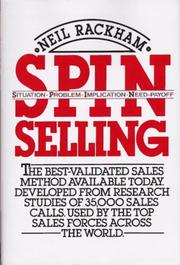
Start with SPIN selling by Neil Rackham. It is decades old and still the most empirically grounded book in sales, based on observation of thousands of real calls. Its core finding — that in large sales, success correlates with the questions that develop the buyer's understanding of their problem, not with the closing techniques that work in small sales — is the foundation everything else rests on.
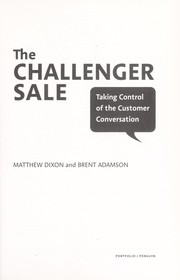
Then The challenger sale by Matthew Dixon and Brent Adamson, built on research into what separates high performers in complex sales. The argument that the best reps teach, tailor and take control rather than simply build relationships was genuinely counterintuitive when published and has held up reasonably well, though the profile categories are looser than the book implies. Take the teaching-with-insight idea seriously and the typology loosely.
Map and qualify the account
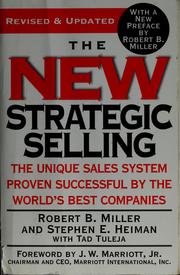
The new strategic selling by Robert Miller and Stephen Heiman gives you the account-mapping discipline: identifying economic, user and technical buyers, the coach who guides you, and the red flags that mean you do not have the deal you think you have. Its blue-sheet approach is the origin of most modern opportunity-planning frameworks.
Follow it with MEDDICC by Andy Whyte, the compact treatment of the qualification framework — metrics, economic buyer, decision criteria and process, identified pain, champion, competition. It is short and operational, and it is the single most useful thing you can impose on a messy pipeline. Read it after Miller and Heiman, since MEDDICC is essentially a checklist over the same territory; if forecast accuracy is your problem, this is the book.
The Qualified Sales Leader by John McMahon covers the same discipline from the manager's chair — how to inspect deals, run a forecast call, and coach reps toward better qualification rather than more activity. Essential if you lead a team, useful if you want to understand what your manager is actually assessing.
Executive access, creativity and the committee
Selling to the C-suite by Nicholas Read and Stephen Bistritz is research-based work on how senior executives actually buy — when in the cycle they get involved, what they want from a meeting, and what gets a rep invited back. It corrects the widespread belief that executive access is mainly a persistence problem.
Dealstorming by Tim Sanders addresses stuck deals specifically: convening a cross-functional group inside your own company to solve a customer problem rather than escalating pressure on the buyer. It is a practical answer to the deal that has gone quiet.
Never Split the Difference by Chris Voss brings hostage-negotiation technique to commercial negotiation — tactical empathy, calibrated questions, labelling. Read it for the questioning discipline; some of the tactics translate awkwardly to a long-term vendor relationship where you will see the counterparty again quarterly.
Close with The challenger customer, the follow-up that shifts focus from the seller to the buying group. Its central finding — that consensus among a large buying committee is the hardest thing to achieve, and that mobilizing an internal advocate matters more than convincing any individual — explains more lost enterprise deals than anything else on this list.
For the management layer, the sales management hub picks up where this leaves off.
Read them in this order and your pipeline will get smaller and more accurate at the same time.
Follow the full ordered path here: The Best Enterprise Sales Books to Read First.