Learn to sell without being pushy
This curriculum builds an honest, effective salesperson from the ground up — starting with mindset and empathy, moving through proven questioning and communication frameworks, and finishing with advanced influence and negotiation skills. Each stage equips you with the vocabulary and intuition needed for the next, so nothing feels like a leap.
Foundations: Mindset & the Buyer's World
BeginnerUnderstand what ethical selling really is, how buyers think and feel, and why empathy — not pressure — is the foundation of every great sale.
▸ Study plan for this stage
Pace: 6–8 weeks total: Weeks 1–3 for "To Sell Is Human" (~25–30 pages/day, ~15 min/day), Weeks 4–7 for "How to Win Friends and Influence People" (~20–25 pages/day, ~15–20 min/day), with Week 8 reserved for review, reflection journaling, and completing exercises.
- Everyone is in sales — Pink's argument that we all spend significant time 'moving' others (persuading, convincing, influencing), whether or not we carry a sales title
- The death of information asymmetry — buyers now have as much (or more) information as sellers, so old manipulative tactics backfire; trust and transparency win
- Attunement, Buoyancy, and Clarity — Pink's three core qualities of effective modern sellers: tuning into others' perspectives, staying resilient through rejection, and helping buyers see their problems clearly
- Servant selling — the shift from 'buyer beware' to 'seller beware'; ethical selling is about serving the buyer's genuine interests, not extracting a transaction
- The foundational importance of making people feel valued — Carnegie's central thesis that people crave genuine appreciation and a sense of their own importance
- Empathy as a practical skill, not just a feeling — both Pink and Carnegie show that understanding what the other person wants and needs is the most effective (and ethical) lever in any human interaction
- Influence through listening and asking, not telling and pushing — Carnegie's principles around being a good listener, asking questions, and letting the other person feel the idea is theirs
- Building rapport and trust before any 'ask' — Carnegie's relationship-first framework as the prerequisite to any successful influence attempt
- According to Pink, why is the old 'used-car salesman' model of selling broken in today's world, and what has replaced it?
- What are Pink's ABC's of modern selling (Attunement, Buoyancy, Clarity), and can you give a real-life example of each from your own experience?
- How does Carnegie define the difference between sincere appreciation and flattery, and why does that distinction matter in a sales context?
- What specific behaviors does Carnegie recommend to make someone feel genuinely heard and important during a conversation — and how do these map to Pink's concept of Attunement?
- How do both books together make the case that empathy and the buyer's perspective — not product features or pressure tactics — are the true foundation of influence?
- What does 'servant selling' mean in practice? Describe a scenario where putting the buyer's interests first would actually lead to a better long-term sales outcome.
- 'Moving Audit' journal (Week 1–2): Each day, log 3 moments where you tried to move someone — a colleague, friend, family member, or customer. Note what approach you used (push vs. serve) and what the outcome was. Review at the end of the week to spot patterns.
- Perspective-flip exercise (after finishing Pink): Pick a recent conversation where you wanted something from someone. Rewrite the interaction entirely from the other person's point of view — what were their fears, goals, and objections? Compare your two versions and identify what you missed.
- Carnegie's 'Name & Listen' challenge (Weeks 4–5): In every conversation this week, consciously use the other person's name at least once, ask one genuine question about them, and say nothing about yourself until they've finished speaking. Journal how the dynamic shifted.
- Empathy role-play (Week 6): Find a partner (friend, colleague, or fellow learner). One person plays a skeptical buyer; the other practices Pink's Attunement + Carnegie's listening principles to understand the 'buyer's' real concern before ever mentioning a solution. Debrief together.
- Rewrite a bad pitch (Week 7): Find a pushy sales email, ad, or script (or recall one you've received). Rewrite it using the principles from both books — lead with the buyer's world, show genuine understanding, offer value, and make no manipulative claims. Compare the two versions.
- Stage synthesis essay (Week 8): Write a one-page personal manifesto titled 'What Ethical Selling Means to Me,' drawing at least two specific ideas from Pink and two from Carnegie. This becomes your north-star document for the rest of the curriculum.
Next up: Internalizing the buyer's mindset and the ethics of influence here creates the essential 'why' that makes the tactical and process-driven skills in the next stage — how to structure conversations, ask diagnostic questions, and move deals forward — feel purposeful rather than manipulative.

The perfect starting point: Pink reframes selling as a fundamentally human, service-oriented act and dismantles the stereotype of the pushy salesperson. It builds the honest-selling mindset before any tactics are introduced.

A timeless primer on genuine human connection, listening, and making people feel understood — core skills that underpin every conversation in this curriculum. Read it here so empathy is wired in from the start.
The Craft: Asking Questions & Understanding Buyers
BeginnerMaster the art of asking great questions, diagnosing real buyer needs, and structuring sales conversations so the customer feels heard rather than sold to.
▸ Study plan for this stage
Pace: 6–8 weeks total: Weeks 1–4 for SPIN Selling (~20–25 pages/day, ~180 pages), Weeks 5–8 for The Challenger Sale (~20–25 pages/day, ~240 pages). Reserve the final 2–3 days of each book for review and reflection before moving on.
- SPIN Question Framework (Situation, Problem, Implication, Need-Payoff): The four question types that guide a buyer from surface-level awareness to felt urgency and articulated desire for a solution.
- Implied vs. Explicit Needs: Rackham's distinction between vague dissatisfactions (implied) and clear, stated desires for a solution (explicit) — and why converting one to the other is the salesperson's core job in larger sales.
- The Danger of Closing Too Early: SPIN Selling's research-backed finding that traditional closing techniques and feature-dumping hurt success rates in complex sales, reframing 'always be closing' as a beginner trap.
- Implication & Need-Payoff Questions as Value Builders: How Implication questions amplify the cost of a problem and Need-Payoff questions let the buyer articulate the value of solving it — making the buyer sell themselves.
- The Challenger Profile: Dixon's finding that top performers in complex sales lead with insight and constructive tension rather than relationship-building alone, and why 'Relationship Builders' finish last in difficult environments.
- Teach–Tailor–Take Control: The three-part Challenger commercial teaching model — leading with a reframe the buyer hasn't considered, customizing it to their specific business context, and confidently directing the conversation toward a decision.
- Constructive Tension & Rational Drowning: The Challenger technique of deliberately making the buyer uncomfortable with their status quo using data and insight, then offering a clear path forward — contrasted with SPIN's more Socratic, question-led approach.
- Buyer-Centric Conversation Structure: The synthesis of both books — great sales conversations are structured around the buyer's world (their situation, problems, and goals), not around the seller's product or pitch.
- According to SPIN Selling, why do traditional sales techniques (features, benefits, and closing tactics) that work in small sales actively damage results in large, complex sales?
- Walk through the four SPIN question types in sequence. For a product or service you sell (or invent), write one example of each type and explain what each one is designed to achieve in the buyer's mind.
- Rackham argues that the seller's goal is to convert implied needs into explicit needs. What is the difference between the two, and which question types are most responsible for driving that conversion?
- The Challenger Sale identifies five seller profiles. Which profile consistently outperforms in complex, high-stakes sales environments, and what specific behaviors set them apart from the Relationship Builder?
- Describe the Teach–Tailor–Take Control framework from The Challenger Sale. How does 'teaching' in this model differ from a traditional product demo or feature walkthrough?
- How do SPIN Selling and The Challenger Sale complement each other? Where do they agree on what great sales conversations look like, and where does their emphasis differ?
- SPIN Question Bank: Pick one real or fictional product/service. Write a bank of 5 Situation, 5 Problem, 5 Implication, and 5 Need-Payoff questions for it. Then sequence them into a natural conversation flow and read it aloud — does it feel like an interrogation or a dialogue? Revise until it flows.
- Call/Conversation Audit: Record or take detailed notes on a real sales conversation (your own, a colleague's, or a publicly available sales call recording). Tag each question asked as S, P, I, N, or 'none of the above.' Calculate the ratio. What does the mix reveal about the seller's approach?
- Implied-to-Explicit Conversion Drill: Write 5 implied need statements a buyer might say (e.g., 'Our reporting is a bit clunky'). For each, write 2 Implication questions and 1 Need-Payoff question designed to convert it into an explicit need. Practice saying them naturally.
- Challenger Insight Pitch: Using The Challenger Sale's Teach–Tailor–Take Control structure, write a 3–5 minute 'commercial teaching' script for a product or service of your choice. It must open with a reframe (something the buyer doesn't know that challenges their assumptions), not with a product feature. Deliver it to a friend or record yourself.
- Profile Self-Assessment: After reading The Challenger Sale's five profiles, honestly assess which profile best describes your current selling style. Write a one-page reflection: What are the strengths of your natural profile? What specific Challenger behaviors are hardest for you, and why? What is one habit you will change?
- Synthesis Comparison Chart: Create a two-column table comparing SPIN Selling and The Challenger Sale across at least six dimensions (e.g., role of questions, role of insight, handling objections, conversation control, buyer emotion, ideal use case). Use direct evidence from both books to populate each cell.
Next up: Mastering question-based diagnosis and insight-led conversation structure gives the reader the foundational 'language of the buyer' they need to tackle more advanced topics — such as navigating complex buying committees, managing objections, and closing multi-stakeholder deals — which build directly on the buyer-centric frameworks established here.
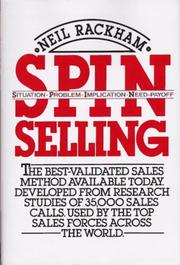
The most research-backed framework for questioning in sales history. SPIN (Situation, Problem, Implication, Need-Payoff) teaches you to uncover what buyers truly need rather than pitching prematurely — essential before learning any closing technique.
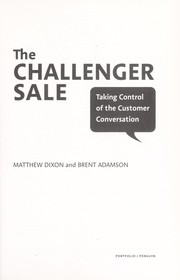
Builds on SPIN by showing that the best salespeople teach, tailor, and constructively challenge buyer assumptions. Read after SPIN so you understand when and why to push back with insight, not pressure.
Communication & Objection Handling
IntermediateHandle objections with confidence and grace, communicate value clearly, and keep conversations moving forward without resorting to manipulation.
▸ Study plan for this stage
Pace: 4–5 weeks total. Week 1–3: "Never Split the Difference" (~30 pages/day, including re-reading key chapters on mirroring, labeling, and calibrated questions). Week 4–5: "Exactly What to Say" (~20–25 pages/day — it's short but dense with phrases, so read slowly and practice each phrase aloud before mov
- Tactical Empathy (Never Split the Difference): Understanding and articulating the other person's perspective and emotions to build trust before pushing any agenda.
- Mirroring & Labeling (Never Split the Difference): Using repetition of the last 1–3 words and 'It seems like…' / 'It sounds like…' statements to keep prospects talking and feeling heard.
- Calibrated Questions (Never Split the Difference): Deploying open-ended 'How' and 'What' questions to uncover hidden objections, shift problem-solving responsibility, and move conversations forward without confrontation.
- The Accusation Audit (Never Split the Difference): Proactively naming every fear, doubt, or negative assumption a prospect might have before they voice it, neutralizing objections before they arise.
- "No" as a Tool (Never Split the Difference): Reframing 'No' as a safe, clarifying response that opens dialogue rather than closes it — and using 'Is it a bad time?' style questions to invite a productive 'No'.
- Magic Words & Phrases (Exactly What to Say): A toolkit of linguistically tested phrases (e.g., 'I'm not sure if it's for you, but…', 'How open-minded are you to…?', 'Just imagine…') that reduce resistance and guide decisions subconsciously.
- Presumptive Language & Directional Phrasing (Exactly What to Say): Using language that assumes positive momentum ('When you get started…' vs. 'If you decide…') to keep conversations moving forward naturally.
- Ethical Influence vs. Manipulation: Synthesizing both books to distinguish between techniques that serve the prospect's genuine interests (ethical) and those that exploit cognitive biases against the prospect's will (manipulation).
- After reading Never Split the Difference, can you explain the difference between tactical empathy and generic sympathy — and why Voss argues empathy is a negotiation superpower rather than a weakness?
- How would you use a calibrated 'What' or 'How' question to respond to the objection 'Your price is too high' without being defensive or making a concession?
- What is an Accusation Audit, and how would you construct one before a sales call where you expect the prospect to be skeptical of your product's ROI?
- From Exactly What to Say, what makes the phrase 'I'm not sure if it's for you, but…' so effective, and in what situation would you deploy it?
- How do the core techniques from both books — Voss's labeling and Jones's directional phrases — complement each other in a single objection-handling conversation?
- Where is the ethical line between using these communication tools to help a prospect make a confident decision versus using them to pressure someone into a decision that isn't right for them?
- Mirror & Label Drill: Record yourself on a phone call or role-play with a partner. Your only allowed responses for the first 5 minutes are mirrors (repeat last 3 words) and labels ('It sounds like…'). Review the recording and note how often the other person elaborated without being asked.
- Accusation Audit Builder: Before your next 3 real or practice sales calls, write out every negative thing the prospect might be thinking about you, your company, or your offer. Open the call by voicing 2–3 of these aloud. Track whether it disarms tension compared to calls where you didn't.
- Calibrated Question Swap: Take 5 common objections you face (e.g., 'I need to think about it,' 'We don't have budget,' 'I need to talk to my boss'). For each, write one 'Why' response (the wrong instinct) and replace it with a 'What' or 'How' calibrated question. Practice delivering the replacements until they feel natural.
- Phrase Flashcards (Exactly What to Say): Write each of Phil M. Jones's key phrases on an index card or flashcard app. On the back, write the specific sales scenario it fits best. Drill 5 cards per day and try to use at least one phrase in a real conversation each day for two weeks.
- Full Objection-Handling Script: Choose your single most common objection. Write a complete response that layers: (1) a label from Voss, (2) a calibrated question from Voss, and (3) at least one phrase from Jones. Role-play it 10 times with a partner until it sounds natural, not scripted.
- Ethics Stress Test: For each major technique from both books, write one sentence describing how it could be used ethically (serving the prospect) and one sentence describing how it could be misused (manipulating the prospect). Use this as a personal code-of-conduct checklist before sales interactions.
Next up: Mastering how to communicate and handle objections clears the conversational path — the next stage can now focus on structuring the full sales process and pipeline, since you have the interpersonal tools to navigate any friction that arises within it.
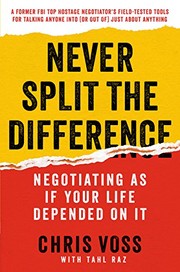
An FBI hostage negotiator's playbook for high-stakes conversation — tactical empathy, mirroring, and calibrated questions translate directly into handling sales objections without caving or coercing.

A concise, practical guide to the specific words and phrases that move conversations forward. Read after Voss so you have both the strategic mindset and the precise language to handle real objections in the moment.
The Full Sales Process: Pipeline to Close
IntermediateOperate a complete, repeatable sales process — from prospecting and pipeline management to closing deals in a way that earns long-term trust and referrals.
▸ Study plan for this stage
Pace: 6–8 weeks total: Weeks 1–3 on "The Sales Bible" (~25–30 pages/day), Weeks 4–6 on "Fanatical Prospecting" (~20–25 pages/day), with Week 7–8 reserved for review, exercise completion, and reflection across both books.
- Gitomer's 'Give Value First' philosophy — building relationships and trust before asking for the sale, as the foundation of every interaction in The Sales Bible
- The 'Little Red Book' principles embedded in The Sales Bible: attitude, humor, creativity, and persistence as non-negotiable sales traits
- Pipeline ownership: treating your pipeline as a living asset that requires daily, disciplined management — a central theme in Fanatical Prospecting
- Blount's 'Fanatical Prospecting' law of replacement — you must constantly fill the top of the funnel to avoid the devastating 'empty pipeline' trap
- The 30-Day Rule from Fanatical Prospecting: prospecting done today pays off 30 days from now, making consistency non-negotiable
- Multi-channel prospecting (phone, email, social, referrals, networking) as taught by Blount — no single channel is sufficient
- Gitomer's closing framework: closing is not a trick or a technique but the natural result of doing everything else right earlier in the process
- Referral generation as a system: both Gitomer and Blount treat referrals not as luck but as a repeatable, proactable outcome of excellent selling
- According to Gitomer in The Sales Bible, why does 'giving value first' outperform traditional pitch-and-close tactics, and how does this change the way you open a sales conversation?
- Blount introduces the concept of the 'empty pipeline' as the root cause of most sales failure — what specific daily behaviors does Fanatical Prospecting prescribe to prevent it?
- How does Blount's 30-Day Rule reframe the way a salesperson should think about the relationship between today's prospecting activity and next month's revenue?
- Gitomer argues that attitude is the single biggest differentiator in sales performance — what concrete practices does The Sales Bible recommend for maintaining a winning attitude under rejection?
- What does Blount mean by 'telephone prospecting is not dead,' and what framework does Fanatical Prospecting provide for making cold and warm calls that actually get responses?
- How do Gitomer's and Blount's approaches to referrals complement each other, and what would a combined referral-generation system look like in practice?
- Pipeline Audit (Week 1): Before starting The Sales Bible, map your current pipeline on paper — count deals at each stage, estimate close dates, and identify gaps. Revisit this map after finishing both books to measure how your thinking has changed.
- Value-First Outreach Rewrite (Week 2–3, The Sales Bible): Take 3 real prospecting messages you have sent (email, LinkedIn, voicemail) and rewrite each one using Gitomer's 'give value first' principle — lead with an insight, a resource, or a relevant observation rather than a pitch. Send the rewrites and track response rates.
- Prospecting Time-Block Sprint (Week 4–5, Fanatical Prospecting): Following Blount's prescribed 'Golden Hours' concept, block 60–90 uninterrupted minutes each morning for 10 consecutive business days dedicated solely to prospecting. Log every attempt (call, email, social touch) and tally your daily numbers.
- Multi-Channel Sequence Build (Week 5–6, Fanatical Prospecting): Design a 7-touch, multi-channel prospecting sequence (phone + email + LinkedIn) for one specific target persona, using Blount's channel-mixing guidance. Execute it on at least 10 real prospects and document what gets responses.
- Referral Script Development (Week 6–7): Drawing on Gitomer's relationship-first philosophy and Blount's systematic approach to referrals, write a word-for-word referral ask you can use at three moments: post-demo, post-close, and post-delivery. Role-play each version with a colleague or record yourself.
- Full Process Simulation (Week 7–8): Run one complete sales cycle — from cold prospect to close attempt — consciously applying at least one principle from each book at every stage. Write a one-page debrief: what worked, what stalled, and which specific lessons from The Sales Bible or Fanatical Prospecting you would apply differently next time.
Next up: Mastering the end-to-end pipeline and prospecting engine built in this stage creates the volume and consistency of deals needed to next study advanced persuasion, negotiation, and buyer psychology — because you now have enough real conversations to practice and pressure-test deeper influence skills.

A comprehensive, practical handbook covering the full sales cycle with an emphasis on value and relationship over manipulation. It ties together the skills from earlier stages into a day-to-day working system.

Addresses the one skill most salespeople avoid — consistently filling the pipeline. Read here, after you have the conversation skills to back it up, so prospecting activity is immediately effective rather than wasted.
Mastery: Psychology, Ethics & Long-Game Influence
ExpertDeeply understand the psychology of persuasion and decision-making so you can influence ethically, protect buyers from bad decisions, and build a reputation that compounds over a career.
▸ Study plan for this stage
Pace: 6–8 weeks total: Weeks 1–4 for "Influence" (~30–35 pages/day, including re-reading key chapters on each principle); Weeks 5–8 for "The Trusted Advisor" (~20–25 pages/day with slower, reflective reading — journaling after each section is strongly recommended).
- Cialdini's 6 Principles of Influence (Reciprocity, Commitment & Consistency, Social Proof, Authority, Liking, Scarcity) and how each one operates automatically in buyers' minds
- The concept of 'click, whirr' automatic responses — how humans use mental shortcuts and why salespeople must understand and respect them
- Ethical vs. exploitative use of influence: recognizing when a principle is being weaponized against a buyer's true interests vs. used to surface genuine value
- The Trust Equation from The Trusted Advisor: Trust = (Credibility + Reliability + Intimacy) / Self-Orientation — and how each variable can be actively managed
- Self-Orientation as the single greatest trust killer: how focusing on your own agenda, quota, or commission is immediately sensed by buyers and destroys long-term relationships
- The Trusted Advisor progression: moving from 'vendor' through 'expert for hire' and 'steady supplier' to 'trusted advisor' — and what behaviors unlock each level
- Long-game reputation compounding: how consistent ethical behavior, transparency about limitations, and client-first advice create referral networks and career longevity
- Protecting buyers from bad decisions: the advisor's duty to give hard truths, recommend against a sale when appropriate, and prioritize the client's outcome over the transaction
- Can you name and explain all six of Cialdini's principles of influence, and give one real example from your own sales experience where each principle was at play — either used on you or by you?
- What is the 'click, whirr' phenomenon described in Influence, and why does Cialdini argue it makes buyers simultaneously efficient and vulnerable? What is the salesperson's ethical responsibility in light of this?
- Using the Trust Equation from The Trusted Advisor, how would you diagnose a client relationship that feels 'stuck' — which variable is most likely broken, and what specific actions would you take to repair it?
- What does Maister mean when he says self-orientation is the denominator of trust? Describe a concrete scenario where high self-orientation destroyed a sale or a relationship, and how low self-orientation would have changed the outcome.
- How do Cialdini's principle of Reciprocity and Maister's concept of giving advice before being asked reinforce each other — and where could they conflict if applied without ethical guardrails?
- What is the difference between a 'trusted advisor' and a 'trusted friend who happens to sell'? According to The Trusted Advisor, what specific behaviors and mindsets separate the two?
- Influence Audit: After finishing Influence, review your last 10 sales interactions (calls, emails, proposals). Label every persuasion tactic used — yours or the buyer's — with the Cialdini principle it maps to. Flag any instance where a principle was used manipulatively rather than authentically, and rewrite that touchpoint ethically.
- Trust Equation Self-Scoring: For your top 5 active client relationships, score yourself 1–10 on Credibility, Reliability, Intimacy, and Self-Orientation (remember: Self-Orientation is the denominator — lower is better). Identify the one variable dragging each score down and write a 30-day action plan to improve it.
- The 'Against the Sale' Drill: Role-play three scenarios where the honest advice to a prospect is NOT to buy your product or to buy a smaller package. Practice delivering this recommendation clearly and confidently. Debrief: How did it feel? What would the long-term relationship outcome likely be versus pushing the sale?
- Advisor Letter Exercise: Choose one current client and write them an unsolicited one-page advisory memo — not a sales pitch — identifying a risk or opportunity in their business that you noticed. Do not attach a product or service to it. Send it. Track the response and relationship temperature over the following 30 days.
- Principle Inoculation Practice: Using Cialdini's chapter on defense against influence, prepare a one-page 'buyer's guide' you could hypothetically share with a prospect explaining the psychological tactics they may encounter in your industry. This forces you to internalize both the offense and the ethical defense simultaneously.
- Career Reputation Mapping: Draw a 'trust network' diagram of your current book of business — who trusts you enough to give a referral, who is neutral, who is at risk. For each at-risk relationship, apply the Trust Equation diagnosis and write one specific action to take within the next two weeks.
Next up: Mastering the psychology of influence and the architecture of trust gives you the internal compass and relational depth needed to tackle advanced topics like strategic account management, negotiation at the executive level, or building and leading high-performance sales teams — because you now sell from principle, not just from technique.
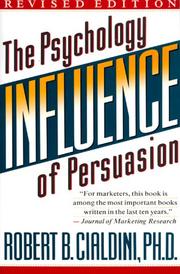
The definitive scientific study of why people say yes. Saved for this stage intentionally — understanding these principles after building an ethical foundation means you use them to serve buyers, not exploit them.
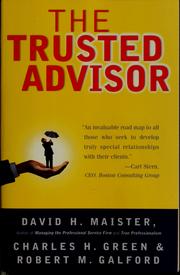
The capstone of the curriculum: shifts the goal from closing transactions to becoming the person clients call first. It reframes long-term trust as the ultimate sales strategy — the honest seller's highest achievement.
Discussion
Keep reading
Paths that share books, cover the same subject, or open a related topic.