Job interviews: the best books to prepare and land the offer
This curriculum takes you from zero to offer-letter confidence across five tightly sequenced stages. You'll start by building the mindset and self-awareness that underpin every great interview, then layer on structured storytelling, behavioral mastery, technical preparation, and finally the advanced negotiation and closing tactics that turn strong interviews into signed offers.
Foundations: Mindset & Self-Presentation
BeginnerUnderstand what interviewers are really evaluating, build baseline confidence, and learn how to present yourself clearly and authentically before diving into specific techniques.
▸ Study plan for this stage
Pace: 4–5 weeks, ~25–30 pages/day (approximately 2 weeks for Parachute, 1.5–2 weeks for Presence, plus reflection time)
- Self-assessment and values clarification: identifying your skills, interests, and what matters to you (Parachute's core premise) as the foundation for authentic self-presentation
- The job market is about mutual fit, not one-way evaluation: interviewers seek candidates whose values and strengths align with organizational needs, not perfection
- Body language and nonverbal presence directly influence how you're perceived and how confident you feel (Cuddy's power posing and embodied cognition)
- Presence as a psychological state: being fully engaged, calm, and authentic reduces anxiety and allows interviewers to see your true competence
- The mind-body connection: physical posture, breathing, and preparation techniques can shift your internal state before and during interviews
- Storytelling and narrative clarity: translating self-knowledge into coherent, compelling narratives about who you are and what you bring
- Authenticity as a strategic advantage: aligning your presentation with your genuine strengths and values builds sustainable confidence and credibility
- What are your top 3–5 core values and skills, and how do they connect to the types of roles or organizations you're targeting?
- How does understanding the job market as a 'mutual fit' problem (rather than a one-way evaluation) change your approach to interviews?
- What is presence, and how does body language influence both how others perceive you and how you perceive yourself?
- Describe one concrete way you could use embodied cognition (e.g., power posing or deliberate breathing) to manage anxiety before an interview.
- How would you translate one of your key strengths or values into a brief, authentic narrative you could share in an interview?
- What is the relationship between self-knowledge (from Parachute) and psychological presence (from Presence), and why do both matter for interview success?
- Complete Parachute's 'Flower Exercise' or similar self-assessment worksheets to identify your skills, values, and ideal work environment; document 3–5 key findings.
- Create a personal narrative: write a 2–3 minute 'elevator pitch' about yourself that weaves together your values, strengths, and what you're seeking; practice saying it aloud.
- Practice power posing: spend 2 minutes in a high-power pose (e.g., hands on hips, arms raised) before a mock interview or stressful task; journal how your confidence and mindset shifted.
- Conduct a mock interview with a friend or mentor, focusing on staying present and grounded; ask for feedback on your body language, eye contact, and authenticity.
- Identify 3 past experiences where you felt confident and present; analyze what conditions (physical, emotional, environmental) enabled that state, and plan how to recreate them before interviews.
- Record yourself answering 3–4 common interview questions; watch the recording and assess your presence, clarity, and alignment between your words and body language.
- Research 2–3 organizations or roles that align with your values and strengths (from the Flower Exercise); write a brief reflection on why the fit feels authentic to you.
Next up: This stage equips you with deep self-knowledge and the psychological tools to show up as your authentic self; the next stage will teach you how to strategically structure your answers, handle tough questions, and demonstrate competence through specific techniques and frameworks.
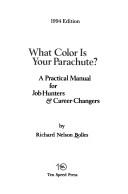
The canonical starting point for any job seeker — it forces deep self-inventory so you know exactly what value you bring before you walk into any room. Reading this first ensures every later technique is grounded in genuine self-knowledge.

Tackles the confidence and body-language side of interviews with rigorous research behind it. Reading it second gives you the psychological foundation to deliver your stories and answers without nerves undermining your message.
Storytelling & Behavioral Questions
BeginnerMaster the STAR method and narrative frameworks so you can turn any past experience into a compelling, concise answer to behavioral questions.
▸ Study plan for this stage
Pace: 4–5 weeks, ~25–30 pages/day. Start with "Tell me about yourself" (weeks 1–2), then move to "The STAR Interview" (weeks 3–5), allowing time for reflection and practice between books.
- The STAR method (Situation, Task, Action, Result) as a structured framework for answering behavioral questions
- Crafting a compelling personal narrative that highlights your unique value proposition and career trajectory
- Distinguishing between different types of behavioral questions and tailoring stories to match the competency being assessed
- The importance of conciseness and clarity—keeping stories to 2–3 minutes while maintaining impact
- Identifying and selecting your strongest experiences that demonstrate relevant skills and achievements
- Practicing authentic storytelling that balances professionalism with personality
- Connecting past experiences to the job description and company values
- What are the four components of the STAR method, and why is each one essential when answering a behavioral question?
- How do you identify which past experiences are most compelling to share in an interview, and what makes a story 'interview-ready'?
- What is the difference between a generic answer and a narrative-driven answer, and how does storytelling make you more memorable?
- How do you keep a behavioral answer concise (2–3 minutes) without losing important details or impact?
- How should you tailor your stories to different types of behavioral questions (e.g., conflict resolution, leadership, failure)?
- What role does authenticity play in interview storytelling, and how do you balance professionalism with personality?
- Write out 5–7 core stories from your professional history using the full STAR framework, with each story on a single page for quick reference
- Record yourself telling one of your STAR stories aloud, then listen back and time it—aim for 2–3 minutes and identify areas where you ramble or lose clarity
- Practice the 'Tell me about yourself' opening: write a 60–90 second personal narrative that connects your background, skills, and career goals
- Take 10 common behavioral questions (e.g., 'Tell me about a time you failed,' 'Describe a conflict with a coworker') and map each to one of your prepared STAR stories
- Conduct a mock interview with a friend or mentor, delivering 3–4 behavioral answers using the STAR method and ask for feedback on clarity, engagement, and length
- Review a job description and rewrite 2–3 of your STAR stories to emphasize skills and values that align with the role
Next up: With a library of polished STAR stories and a strong personal narrative in hand, you're ready to move into the next stage: learning how to handle curveballs, negotiate confidently, and manage the non-technical dimensions of the interview process.

Focuses specifically on crafting the personal pitch and answering open-ended behavioral questions — the exact format most interviews open with. It builds the storytelling vocabulary you'll need for everything that follows.

A concise, practical deep-dive into the Situation-Task-Action-Result framework with worked examples. Reading it after Hansen lets you apply a proven structure to the raw stories you've already identified.
Comprehensive Interview Strategy
IntermediateDevelop a full end-to-end interview strategy — from researching the company to answering tough questions to reading the room — so no part of the conversation catches you off guard.
▸ Study plan for this stage
Pace: 4–5 weeks, ~40–50 pages/day (approximately 280–350 pages total across both books)
- The STAR method and behavioral interview framework for structuring compelling answers to competency-based questions
- Company research techniques: analyzing mission, culture, financials, recent news, and competitive landscape to tailor your narrative
- The 60-second commercial and personal positioning statement—how to articulate your value proposition concisely and memorably
- Identifying and preparing for tough questions (salary expectations, gaps, failures, weaknesses) with honest yet strategic responses
- Reading nonverbal cues and adjusting your communication style in real-time based on interviewer energy and body language
- The interview as a two-way conversation: asking insightful questions that demonstrate genuine interest and critical thinking
- Handling stress, managing nervousness, and maintaining composure under pressure throughout the full interview cycle
- Post-interview follow-up strategy: thank-you notes, persistence, and negotiation tactics to close the offer
- How do you structure a behavioral answer using the STAR method, and why is this framework more effective than generic responses?
- What are the three to five most critical pieces of information you should research about a company before an interview, and how would you use each in conversation?
- How would you deliver your 60-second commercial to different audiences (recruiter vs. hiring manager vs. peer interviewer), and what adjustments would you make?
- What are five common tough questions you're likely to face, and how would you answer each one honestly while remaining strategic?
- How do you recognize when an interviewer is losing interest or becoming skeptical, and what adjustments can you make in the moment to re-engage them?
- What questions should you ask an interviewer to demonstrate genuine interest, critical thinking, and cultural fit assessment?
- Record yourself delivering your 60-second commercial three times, refining it each time based on clarity, energy, and memorability. Time yourself to ensure it fits within the window.
- Conduct deep research on three target companies: document their mission, recent news, key competitors, financial health, and culture. Write a one-page brief for each showing how you'd reference this in conversation.
- Prepare STAR-method responses to 10 behavioral questions (e.g., 'Tell me about a time you overcame a challenge,' 'Describe a conflict with a colleague'). Write them out, then practice delivering them aloud in 60–90 seconds each.
- Role-play five tough questions with a friend or mentor (salary expectations, employment gaps, weaknesses, failure, why you left your last job). Record or have them give feedback on your honesty, composure, and strategic framing.
- Practice reading body language: watch interview clips (TED talks, recorded interviews) and pause to identify when the interviewer appears engaged, skeptical, or distracted. Note what the interviewer did and how you'd adjust.
- Prepare a list of 8–10 insightful questions to ask interviewers that reflect your research and values (e.g., about team dynamics, growth opportunities, success metrics). Practice delivering them naturally in conversation.
Next up: This stage equips you with a complete, integrated interview strategy—from preparation through delivery and follow-up—positioning you to move into the next stage, which likely focuses on specialized interview formats (panel interviews, case studies, technical interviews) or advanced negotiation tactics.

One of the most thorough general interview guides in print, covering hundreds of real questions with model answers. At this stage you have the mindset and story structure; this book fills in every question category you might face.

Teaches you to deliver tight, memorable answers under time pressure and to think like the hiring manager. It bridges behavioral prep with strategic positioning, reinforcing that every answer must serve a clear purpose.
Technical & Case Interview Prep
IntermediateHandle structured problem-solving interviews — including case studies, analytical questions, and role-specific technical challenges — with a repeatable, confident methodology.
▸ Study plan for this stage
Pace: 6–8 weeks, ~40–50 pages/day (mix of reading and active problem-solving)
- Data structures and algorithms fundamentals (arrays, linked lists, trees, graphs, sorting, searching) as the foundation for coding interview success
- Problem-solving frameworks: breaking down complex problems into manageable steps, identifying constraints, and communicating your approach clearly
- The STAR method and structured communication for articulating technical decisions and trade-offs under pressure
- Case interview methodology: defining the problem, building a hypothesis, structuring analysis, and synthesizing insights into actionable recommendations
- Common case types (market sizing, profitability, strategy, operations) and how to apply frameworks to each
- Behavioral integration: connecting technical problem-solving to real business impact and demonstrating leadership through your approach
- Time management and pacing during interviews: knowing when to go deep versus broad, and managing anxiety through systematic thinking
- How would you approach solving a medium-complexity coding problem (e.g., binary search tree traversal or dynamic programming) from scratch, and what data structure would you choose and why?
- Walk through a market-sizing case (e.g., 'How many gas stations are in the US?') using a structured framework—what assumptions would you state upfront, and how would you validate them?
- What are the key differences between a profitability case and a market-entry case, and how would your analytical approach differ for each?
- Describe a time you solved a complex technical problem; how would you communicate your methodology, trade-offs, and final recommendation in a case interview setting?
- Given a case scenario with incomplete or ambiguous information, how would you ask clarifying questions and structure your analysis to avoid wasted effort?
- What are the most common mistakes candidates make in technical and case interviews, and how would you avoid them?
- Complete 20–30 coding problems from 'Cracking The Coding Interview' (Chapters 1–9), starting with easy difficulty and progressing to medium; time yourself and aim for clean, bug-free solutions within 30–45 minutes per problem
- Solve 10–15 full case studies from 'Case in Point' (Chapters 3–5), working through each one on paper first without looking at the solution; then review the suggested approach and identify gaps in your framework
- Record yourself solving 3–5 cases aloud (using your phone or video tool) to practice verbal communication, clarity, and pacing; review the recordings and note filler words, unclear explanations, or logical jumps
- Conduct 4–6 mock interviews with a peer or mentor: 2–3 focused on coding problems and 2–3 on case studies; ask for feedback on structure, communication, and confidence
- Create a personal 'cheat sheet' of 5–7 go-to frameworks (e.g., SWOT for strategy cases, Porter's Five Forces for competitive analysis, unit economics for profitability) and practice applying them to 3 new cases each
- Do a timed 'interview simulation' (90 minutes total): one coding problem (45 min) + one case study (45 min) back-to-back, with no breaks, to build stamina and manage pressure
Next up: This stage equips you with the structured methodologies and technical depth needed to handle the most rigorous interview formats; the next stage will focus on behavioral storytelling, negotiation, and final-round preparation to seal the offer.
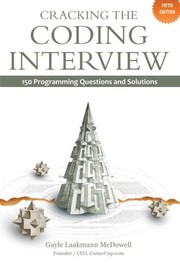
The definitive guide for technical and software-role interviews; its problem-solving frameworks and communication strategies apply broadly even beyond coding. Place it here so learners already have strong storytelling skills before tackling structured problem-solving.
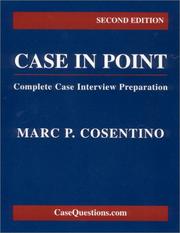
The gold standard for consulting and business case interviews, teaching a structured analytical approach that sharpens logical thinking for any role. Reading it alongside or after McDowell rounds out technical prep for non-engineering tracks.
Closing, Negotiation & Landing the Offer
ExpertConvert strong interviews into offers by mastering the closing conversation, asking powerful questions, and negotiating compensation with confidence.
▸ Study plan for this stage
Pace: 6–7 weeks, ~25–30 pages/day (approximately 3–4 weeks for "Never Split the Difference," then 2–3 weeks for "Fearless Salary Negotiation")
- Tactical empathy and active listening: using mirroring, labeling, and summarization to understand the other party's perspective and build rapport during negotiations
- The power of questions: asking calibrated, open-ended questions that put the other party in problem-solving mode rather than defensive mode
- Anchoring and information asymmetry: understanding how first numbers shape negotiations and how to gather intelligence before discussing compensation
- Salary negotiation fundamentals: knowing your market value, establishing your target salary range, and understanding the employer's constraints and budget
- Handling objections and pushback: using Voss's techniques (especially 'That's right' vs. 'You're right') to defuse resistance and move toward agreement
- Non-monetary negotiation: identifying and negotiating benefits, equity, title, flexibility, and other levers beyond base salary
- Closing with confidence: recognizing when you have leverage, when to make your move, and how to finalize an offer without leaving value on the table
- What is tactical empathy, and how do mirroring and labeling help you extract information and build trust during a salary negotiation conversation?
- How do calibrated questions differ from yes/no questions, and why does Voss argue they are more effective in moving negotiations forward?
- What is anchoring, and why does the first number mentioned in a negotiation often have a disproportionate effect on the final outcome?
- How should you research and establish your market value before entering a salary negotiation, and what role does this intelligence play in your strategy?
- What are the key differences between 'That's right' and 'You're right,' and how do you use this distinction to overcome objections in salary discussions?
- Beyond base salary, what other compensation elements can you negotiate, and how do you prioritize them based on your personal goals and the employer's constraints?
- Record yourself conducting a mock salary negotiation with a friend or mentor playing the employer. Listen back and count how many times you asked calibrated (open-ended) questions versus yes/no questions. Aim for at least 70% calibrated questions.
- Practice the mirroring technique: take 3–5 salary negotiation scenarios and write out how you would mirror back the employer's stated constraints (e.g., 'So you're saying the budget for this role is capped at $X?'). Perform these aloud to internalize the phrasing.
- Research your target role using Glassdoor, Levels.fyi, PayScale, and industry reports. Document your market value range, then create a personal salary target and walk-away number. Write a one-page summary of your research and reasoning.
- Conduct a 'label and summarize' exercise: write out 5 common employer objections (e.g., 'We don't have budget for that,' 'You're asking for more than our range'), then draft responses that label the concern and ask a calibrated question to understand the real constraint.
- Role-play a complete closing conversation (15–20 minutes) where you use at least three of Voss's techniques: mirroring, labeling, and a calibrated question. Have someone record it and review for authenticity and pacing.
- Create a negotiation strategy document for a real or hypothetical job offer: list your target salary, walk-away number, non-monetary priorities (equity, title, flexibility, etc.), and 3–5 calibrated questions you'll ask to understand the employer's flexibility before making your ask.
Next up: This stage equips you with the tactical and psychological tools to convert interview success into a signed offer and optimized compensation package, preparing you to navigate the final critical conversations that determine your career trajectory and earning potential.
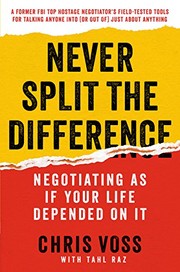
A former FBI hostage negotiator's playbook on persuasion and high-stakes conversation — directly applicable to salary negotiation and closing an offer. Reading it last means you apply elite negotiation tactics on top of a fully built interview skill set.

Laser-focused on the job-offer negotiation process from first number to final signature, with scripts and email templates. It's the perfect capstone because it turns everything you've learned into a concrete financial outcome.
Discussion
Keep reading
Paths that share books, cover the same subject, or open a related topic.