How to Become a Mediator: Best Books on Conflict Resolution, in Order
This curriculum builds from everyday negotiation instincts to professional mediation practice and, finally, the procedural and ethical landscape a working mediator must navigate. Each stage assumes the vocabulary and mental models of the one before it, so reading in order matters — foundational persuasion principles come first, dispute-process theory second, and career-level practice and ethics last.
Foundations: Negotiation Mindset
BeginnerUnderstand the core principles of interest-based negotiation, why people fight, and how agreements are actually reached — the essential vocabulary for everything that follows.
▸ Study plan for this stage
Pace: 4–5 weeks, ~25–30 pages/day. Week 1–2: Getting to Yes (300 pages). Week 2–3: Difficult Conversations (300 pages). Week 3–4: Never Split the Difference (400 pages). Week 4–5: Review and synthesis.
- Interests vs. positions: the fundamental distinction that separates positional bargaining from interest-based negotiation
- BATNA (Best Alternative to Negotiated Agreement): how to establish your walk-away point and negotiate from strength
- Separating people from the problem: treating the other party as a partner against the issue, not as an adversary
- The three conversations framework: understanding the substance, relationship, and identity dimensions of difficult exchanges
- Active listening and tactical empathy: how to uncover hidden interests and motivations before proposing solutions
- Anchoring and framing effects: how the first number, tone, and narrative shape the entire negotiation landscape
- Principled negotiation: using objective criteria and fair standards instead of willpower or manipulation
- Emotional awareness in conflict: recognizing how feelings drive behavior and how to manage them constructively
- What is the difference between interests and positions, and why does this distinction matter in negotiation?
- How do you identify your BATNA, and what role does it play in determining your negotiating power?
- What are the three conversations in the Difficult Conversations framework, and how do they help you prepare for a tough discussion?
- How does tactical empathy differ from traditional empathy, and what specific techniques does Voss recommend for practicing it?
- Why is anchoring so powerful in negotiation, and how can you use it ethically in your own negotiations?
- How can you separate the people from the problem when emotions are running high?
- Map a real negotiation you're facing: identify your interests, the other party's likely interests, your BATNA, and your reservation price. Compare this to what you initially thought were your 'positions.'
- Conduct a mock negotiation with a friend or colleague using the Getting to Yes framework: focus on generating options that satisfy both parties' underlying interests rather than splitting the difference.
- Prepare for a difficult conversation using the three-conversation model: write out the substance issue, the relationship dynamic you want to establish, and the identity concerns at stake.
- Practice tactical empathy in a real conversation: ask open-ended questions, listen for what is *not* being said, and summarize the other person's perspective back to them before responding.
- Analyze a recent conflict or negotiation you experienced: identify where anchoring, framing, or emotional triggers influenced the outcome, and brainstorm how you could have handled it differently.
- Role-play a high-stakes negotiation scenario (e.g., salary discussion, contract dispute) where you deliberately use principled negotiation techniques and emotional awareness to reach agreement.
Next up: This stage equips you with the mental models and interpersonal tools to recognize what's really driving conflict and how to navigate it with intention; the next stage will build on these foundations by teaching you specific mediation techniques for helping *others* resolve disputes using these same principles.
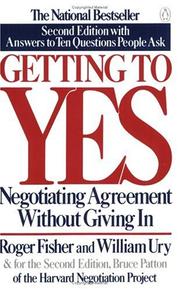
The single most important starting point: it introduces principled negotiation, separating people from problems and focusing on interests over positions — concepts every mediator uses daily.
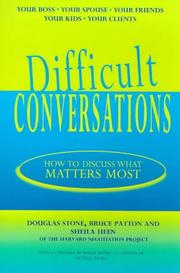
Builds directly on Fisher's framework by showing why conversations break down emotionally and how to stay constructive — essential for a mediator who must manage charged exchanges.
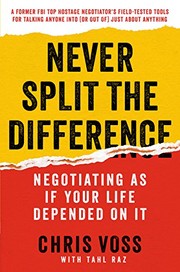
Adds a practical, psychology-grounded counterpoint to Getting to Yes, teaching tactical empathy and listening skills that mediators use to de-escalate and build rapport.
Conflict Theory: Why Disputes Escalate
BeginnerUnderstand the psychological and social dynamics that turn disagreements into entrenched disputes, giving you a theoretical map of what you are intervening in as a mediator.
▸ Study plan for this stage
Pace: 4–5 weeks, ~40–50 pages/day. Week 1–2: "The Anatomy of Peace" (~300 pages); Week 3–4: "Crucial Conversations" (~350 pages); Week 5: Review, synthesis, and exercises.
- The 'inward vs. outward focus' framework: how we shift from seeing others as people to seeing them as obstacles or enemies, which escalates conflict
- Collusion and mutual blame cycles: how both parties unconsciously reinforce each other's defensive narratives, deepening the dispute
- The role of self-betrayal: how abandoning your own values creates justification for viewing others negatively and acting in ways that provoke escalation
- Dialogue vs. debate: the difference between conversations aimed at mutual understanding versus those aimed at winning, and how the latter fuels escalation
- The pool of shared meaning: how disputes shrink the conversational space and limit what can be discussed, trapping parties in rigid positions
- Emotional safety and psychological defensiveness: how threat perception triggers defensive patterns that make people less receptive to influence
- The role of stories we tell ourselves: how narratives about the other person's intentions become self-fulfilling prophecies that perpetuate conflict
- What is self-betrayal according to 'The Anatomy of Peace,' and how does it contribute to the escalation of conflict?
- How does the shift from 'inward focus' to 'outward focus' change the way we perceive and respond to others in a dispute?
- What is collusion, and why do both parties in an escalated conflict often unconsciously participate in it?
- In 'Crucial Conversations,' what is the 'pool of shared meaning,' and how does its shrinkage contribute to conflict escalation?
- What is the difference between dialogue and debate, and why does debate escalate conflict rather than resolve it?
- How do the stories we tell ourselves about others' intentions become self-fulfilling prophecies in conflict situations?
- Self-betrayal audit: Identify a current or recent conflict in your life. Write down a moment when you abandoned your own values or principles in that situation. How did that self-betrayal shape your subsequent view of the other person?
- Inward/outward focus mapping: Take the same conflict and map how your focus shifted between seeing the other person as a person (inward focus) versus seeing them as an obstacle (outward focus). What triggered each shift?
- Narrative reconstruction: Write two versions of a conflict story—one from your perspective (your justifications) and one from the other person's perspective (their justifications). What assumptions did you make about their intentions?
- Dialogue vs. debate practice: Record yourself (audio or written) discussing a disagreement with someone. Analyze the transcript: Were you in dialogue mode (seeking understanding) or debate mode (trying to win)? Identify specific phrases that signal each mode.
- Emotional safety assessment: In a current conflict, identify what would need to happen for the other person to feel psychologically safe enough to lower their defensiveness. What role did you play in reducing or increasing that safety?
- Pool of shared meaning exercise: With a partner or in writing, practice expanding the conversational space in a disagreement by asking genuine questions about the other person's underlying concerns, values, and constraints—not just their positions.
Next up: This stage maps the psychological and social terrain of escalated conflict, preparing you to recognize these dynamics in real mediations and understand what needs to shift; the next stage will teach you specific mediation techniques and frameworks for actually facilitating that shift.
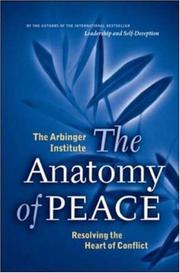
Uses narrative to explain how people shift from seeing others as people to seeing them as obstacles — the root of most conflicts a mediator encounters.
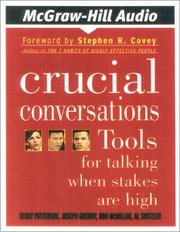
Bridges conflict theory and practical communication, showing how high-stakes conversations go wrong and how to create conditions for honest dialogue — a direct precursor to mediation technique.
Mediation Process: Core Skills and Models
IntermediateLearn the structured stages of a mediation session, the mediator's specific role and techniques, neutrality standards, and how different models (facilitative, evaluative, transformative) are applied.
▸ Study plan for this stage
Pace: 6–7 weeks, ~40–50 pages/day. Week 1–2: Beer's handbook (foundational techniques); Week 3–4: Kovach's mediation (models and process stages); Week 5–7: Bush's promise of mediation (transformative approach and deeper philosophy). Include 1–2 review days per week.
- The five-stage mediation process: opening, joint session, caucus, negotiation, and closure/agreement—and how mediators guide parties through each
- Core mediator techniques: active listening, reframing, reality-testing, and shuttle diplomacy (caucusing) to move parties toward resolution
- Mediator neutrality and impartiality: what it means, how to maintain it, and ethical boundaries when parties have power imbalances
- Three primary mediation models—facilitative (mediator guides process, parties decide outcome), evaluative (mediator assesses case merit and suggests solutions), and transformative (mediator enables recognition and empowerment of parties)—and when each is appropriate
- The role of mediator opening statements in setting tone, explaining process, establishing ground rules, and building trust with both parties
- How to manage impasse, emotions, and difficult dynamics (anger, distrust, power imbalances) without abandoning neutrality
- Transformative mediation's focus on empowerment and recognition as alternatives to settlement-focused models
- Documentation, confidentiality, and ethical obligations in mediation practice
- What are the five core stages of a mediation session, and what is the mediator's primary objective at each stage?
- Explain the differences between facilitative, evaluative, and transformative mediation models. In what types of disputes would you apply each model, and why?
- What does mediator neutrality mean, and what specific techniques does Beer recommend to maintain it when parties have unequal power or information?
- Describe the caucus (private meeting) process: when should a mediator call one, what are the risks, and how do you ensure confidentiality across caucuses?
- How does Bush's transformative mediation approach differ from traditional settlement-focused mediation, and what are the key mediator moves that enable empowerment and recognition?
- What are the ethical obligations and boundaries a mediator must maintain, particularly around confidentiality, conflicts of interest, and the duty to disclose information?
- Role-play a complete mediation session (opening through closure) with two peers playing disputants; record yourself and review your opening statement, reframing attempts, and neutrality maintenance
- Analyze a real or fictional mediation case (from the books or online) and map it against the five-stage model—identify where the mediator succeeded or failed at each stage
- Practice reframing exercises: take 5–10 emotionally charged statements from disputants and reframe them neutrally without losing the speaker's core concern
- Conduct a mock caucus: meet separately with two role-play disputants, test reality, explore interests, and practice shuttle diplomacy without revealing confidences
- Compare two mediation transcripts or case studies—one using a facilitative approach and one using an evaluative approach—and analyze how mediator language and interventions differ
- Write a detailed mediator opening statement for a specific dispute type (e.g., workplace conflict, neighbor dispute, family matter) that establishes neutrality, explains process, and builds trust
Next up: This stage equips you with the structured process, core techniques, and philosophical foundations (especially transformative mediation) needed to apply mediation in real-world contexts—the next stage will likely focus on specialized mediation domains (family, workplace, community) and advanced skills like handling trauma, power imbalances, and complex multi-party disputes.
A step-by-step guide to running an actual mediation session — opening, storytelling, problem-solving, agreement — making it the ideal first professional-practice text.
A widely used law-school and training text that covers all major process models, ethical duties, and the mediator's neutrality obligations in depth.
Introduces the transformative model of mediation — a distinct and influential approach focused on empowerment and recognition rather than settlement, broadening your professional toolkit.
Law, Ethics, and the Professional Landscape
ExpertNavigate the legal framework surrounding dispute resolution — court-connected programs, confidentiality rules, enforceability of agreements, and state-by-state variation in mediator qualifications and ethics codes.
▸ Study plan for this stage
Pace: 6–8 weeks, ~40–50 pages/day (alternating between both texts; approximately 3 weeks on Goldberg, then 3–4 weeks on Waldman, with 1 week for integration and review)
- Court-connected mediation programs: structure, referral mechanisms, and integration with civil litigation processes
- Confidentiality and privilege in mediation: statutory protections, exceptions, and enforceability across jurisdictions
- Enforceability of mediated agreements: contract formation, settlement agreements, and judicial review standards
- State-by-state variation in mediator qualifications, certification requirements, and regulatory frameworks
- Ethical duties and professional standards: neutrality, impartiality, competence, and conflicts of interest
- Ethical dilemmas in practice: balancing party autonomy with mediator responsibility and managing power imbalances
- Legal liability and professional accountability: malpractice, immunity doctrines, and insurance considerations
- Intersection of law and ethics: how legal rules shape ethical obligations and vice versa
- How do court-connected mediation programs differ from private mediation, and what legal requirements govern their operation?
- What are the primary confidentiality protections in mediation, and what exceptions exist across different state jurisdictions?
- Under what conditions are mediated settlement agreements enforceable, and what standards do courts apply when reviewing them?
- How do mediator qualification and certification requirements vary by state, and what are the implications for professional practice?
- What are the core ethical duties of a mediator, and how do they interact with legal obligations?
- How should a mediator ethically navigate situations involving power imbalances, unequal bargaining power, or potential overreaching by a party?
- Comparative jurisdiction analysis: Select three states and map their mediator certification requirements, confidentiality statutes, and ethical codes; identify key differences and implications for practice.
- Settlement agreement review: Analyze 2–3 sample mediated settlement agreements and assess their enforceability under contract law principles and state-specific mediation statutes.
- Ethical scenario case studies: Work through 4–5 realistic ethical dilemmas (e.g., mediator discovering fraud, managing a visibly dominant party, conflict of interest) and draft responses grounded in Waldman's framework.
- Court-connected program audit: Research a local court-connected mediation program; document its referral process, confidentiality rules, fee structure, and mediator qualifications.
- Privilege and confidentiality mapping: Create a detailed chart showing which communications in mediation are privileged, which are discoverable, and how this varies by jurisdiction.
- Professional liability assessment: Draft a brief risk analysis for a hypothetical mediation practice, identifying potential liability exposures and insurance/ethical safeguards needed.
Next up: This stage equips you with the legal and ethical scaffolding necessary to practice mediator competently and responsibly; the next stage will likely focus on advanced mediation techniques, specialized practice areas (family, commercial, environmental), or building a sustainable mediation practice.

The standard law-school ADR casebook: covers the full spectrum of dispute resolution processes, relevant statutes, and landmark cases, giving you the legal literacy a career mediator needs.

Tackles the hardest professional questions — impartiality, power imbalances, confidentiality limits, and state ethics codes — through real case studies, directly preparing you for credentialing and practice.
Discussion
Keep reading
Paths that share books, cover the same subject, or open a related topic.