David Grann Reading Order: Where to Start
David Grann has published a small body of work and almost no filler, which makes a reading order easy: three long narrative books about obsession and disappearance, and two collections of the magazine pieces where his method was invented. Start with the book that made his name, then read the two later histories that show what he can do with an archive, then go back to the shorter pieces, which are where you find the reporting instinct in its purest form. There is no series continuity here, so the order is about building trust rather than following a plot.
Start Here
BeginnerMeet Grann's signature move — a reporter following a disappearance until the story turns into an investigation of why people go looking at all.
▸ Study plan for this stage
Pace: 3 weeks. The Lost City of Z is 416 pages and Killers of the Flower Moon 350, and both read faster than their length — Grann writes short chapters that end on a turn, so 40 pages a sitting is comfortable. Read them in this order with no gap, because Killers of the Flower Moon is the same reporter doi
- Grann's core move: follow a disappearance until the story turns into an investigation of why anyone went looking, including the reporter himself
- The Lost City of Z runs two timelines — Percy Fawcett's 1925 expedition and Grann's own trip up the same rivers — and the modern strand exists to make obsession the subject rather than the frame
- Killers of the Flower Moon drops the first person entirely: no reporter on the page, only documents, which is a deliberate change of instrument for a subject that does not want a narrator's charm
- The Osage murders were not a spree but a system — headright inheritance law made killing Osage people financially rational, and the book's argument is about the law, not the killers
- This is real, documented atrocity: dozens of murders, poisonings and a bombing, and the third section makes clear the toll is far larger than the prosecuted cases. Read it knowing that
- The final section of Killers of the Flower Moon reframes everything before it by shifting from the FBI's account to Grann's own archival work with descendants — the structure is the argument
- Both books are about the reliability of a story that has already been told once, badly: Fawcett's legend and the Bureau's founding myth
- What does Grann's own Amazon journey add to The Lost City of Z that a straight Fawcett biography could not, and where does it become self-indulgent?
- Why does Killers of the Flower Moon withhold the reporter until the last section, and what would be lost if he had been present throughout?
- How did headright law convert inheritance into a motive, and what does that reveal that a focus on individual murderers would obscure?
- The FBI comes out of Killers of the Flower Moon looking both competent and complicit. How does Grann hold both?
- In both books the search is more compelling than the finding. Is that a flaw in the subjects or a habit of the writer?
- After finishing Killers of the Flower Moon, reread its final chapter alone. It is where the book stops being true crime and becomes something else, and it is worth reading twice.
- List what Grann can prove, what he infers and what he leaves open in the Osage case. He is unusually careful about marking these, and noticing the marks trains you for the later books.
- Set the first chapter of each book side by side and describe how each one establishes narrative authority. One does it with a person, the other with a document.
- Look up how many Osage deaths were ever prosecuted versus estimated. The gap is the book's real ending.
Next up: You have now seen Grann as participant and as archivist; the later histories are what happens when the archive is complete and the only question left is whom to believe.
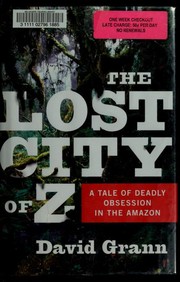
Percy Fawcett vanishes into the Amazon in 1925, and Grann follows him there. The best entry point: shortest of the big three, and it makes the author's own compulsion part of the subject in a way the later books hide.

The murders of Osage people for their oil headrights, and the birth of the FBI. Read second because it drops the first-person frame entirely and shows Grann working purely from documents, with a final section that reframes everything before it.
The Later Histories
IntermediateSee what Grann does when the archive is complete and the problem is deciding whose account to believe.
▸ Study plan for this stage
Pace: 2–3 weeks. The Wager is 432 pages and reads like a novel — a week is realistic. The White Darkness is 160 heavily illustrated pages and is an evening. Read The Wager first and give The White Darkness its own sitting rather than tacking it on, or its brevity will make it feel like an appendix.
- The Wager (catalogued here under a Spanish-edition title, Los Náufragos del Wager) is built on a genuine evidentiary problem: two groups of survivors returned with irreconcilable accounts, both self-serving, both partly true
- The court-martial structure lets Grann present competing testimony without adjudicating — the reader is put in the position of the tribunal
- It is his most tightly constructed book: shipwreck, mutiny, castaway survival and trial, each section a different genre, all four in 432 pages
- The naval and imperial context is not decoration — the Wager was hunting Spanish treasure, and the men's willingness to kill on the island follows from what the Navy had already done to them
- The White Darkness is a magazine piece expanded into a photobook: Henry Worsley's solo Antarctic crossing, told plainly, with the pictures doing much of the work
- Read as a coda it makes the pattern explicit — Fawcett, Worsley, the same compulsion, the same ending, at a tenth of the length
- Both books contain real deaths described without sensationalism; The Wager in particular includes starvation, exposure and murder among the castaways
- The Wager gives you two incompatible survivor narratives. Which did you believe, and what in the text made you believe it rather than the other?
- What does the court-martial format let Grann say about how history gets settled that a straightforward account could not?
- How does the imperial mission of the voyage change how you read the mutiny — is it a breakdown of order or a continuation of it?
- Is The White Darkness a book or an essay in book form, and does that matter to what it achieves?
- Worsley and Fawcett died pursuing the same kind of goal. What does Grann seem to think that pursuit is, having now written about it twice?
- Keep two columns while reading The Wager — Cheap's version and Bulkeley's — and mark each fact as agreed, disputed or unique to one side.
- Note the point at which the castaways' social order collapses and what specifically triggers it. Grann dates it precisely.
- Read The White Darkness in one sitting with the photographs, then reread the last ten pages of The Lost City of Z. The pairing is the argument.
- Write down what The Wager would look like if Grann had picked a side. You will see why he did not.
Next up: With the three long histories behind you, the magazine pieces read as the workshop where each of their methods was first tried at 10,000 words.

A shipwreck on a Patagonian island, a mutiny, and two irreconcilable survivor narratives argued out at a court-martial. His most tightly constructed book, and it rewards having already watched him handle contested testimony in Killers of the Flower Moon.
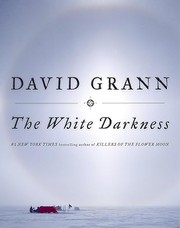
A short, heavily illustrated account of Henry Worsley's solo Antarctic crossing. Slight next to the others, but read after The Wager it works as a coda: the same obsession with the same ending, at a fraction of the length.
The Magazine Pieces
IntermediateRead the long-form journalism where Grann's method was worked out, one self-contained case at a time.
▸ Study plan for this stage
Pace: 3–4 weeks, one piece per sitting. The Devil and Sherlock Holmes is 423 pages of twelve self-contained articles and should not be read straight through; give each piece an evening and let it finish. The Old Man and the Gun is 163 pages and overlaps with the earlier collection, so a weekend is enough.
- The path is short because the shelf is short: five books and two collections is close to the whole output, and there is very little filler in it
- The 10,000-word magazine piece is the unit Grann's books are made of — each of the long histories is recognisably several of these welded together
- The Devil and Sherlock Holmes gathers twelve New Yorker pieces on obsession, deception and murder, including the Sherlock Holmes scholar found dead in his flat
- Its Texas arson piece is the collection's hardest: an execution carried out on forensic evidence that later expert review dismantled, reported without editorial thunder
- Several pieces are visibly the seed of a later book — reading them after the books shows you what an idea looks like before it has been given 400 pages
- The Old Man and the Gun centres on Forrest Tucker, a career bank robber who escaped prison eighteen times, and is a slimmer, more charming selection
- Because the two collections overlap, the second is a completist's book rather than an independent one — buy it knowing that
- Which piece in The Devil and Sherlock Holmes most clearly anticipates one of the books, and what did the book add that the piece could not?
- In the Texas arson piece, where exactly does Grann let the evidence carry the outrage rather than stating it, and is that restraint effective?
- What can a 10,000-word piece do that a 400-page book cannot? Name something specific from this collection.
- Forrest Tucker is funny and the Osage murderers are not. Does Grann's method change when the subject is comic, or only his tone?
- Having read everything, what is a Grann story actually about — the mystery, the obsessive, or the act of reporting?
- Read one piece a night and write one sentence afterwards on what the reporting cost — travel, archives, interviews. It is the discipline underneath the prose.
- Compare the overlapping selections between the two collections before buying the second, so you know what proportion is new.
- Take the Sherlock Holmes piece and outline its structure by section. It is the cleanest available template for how Grann builds a story.
- Write a 500-word account of the Osage case using only the method of these pieces — one person, one scene, one document — and notice how much the book form was doing.
- Make a list of the questions Grann leaves unanswered across all six books. He does it deliberately, and the list is short.
Next up: That is essentially the complete Grann; from here the only extension is the journalism he has published since, read the same way — one case at a time.

Twelve New Yorker pieces on obsession, deception and murder, including the Sherlock Holmes scholar found dead in his flat and the Texas arson case that may have executed an innocent man. Save it for after the books so you can see which pieces later grew into them.

A slimmer selection built around Forrest Tucker, the career bank robber who escaped prison eighteen times. Read last: it overlaps with the earlier collection, so it is a completist's book rather than a starting one.
Discussion
Keep reading
Paths that share books, cover the same subject, or open a related topic.