Indigenous America: the history not taught
This curriculum moves from accessible, narrative-driven introductions through richly detailed histories of specific civilizations and the conquest era, and finally into contemporary Native scholarship and political thought. Each stage builds the cultural vocabulary, historical context, and analytical tools needed to engage meaningfully with the more complex and challenging works that follow.
Foundations: Orienting Yourself to Indigenous History
BeginnerGain a broad, honest overview of Indigenous North American history — dismantling common myths and establishing a baseline of names, nations, timelines, and concepts to build on.
▸ Study plan for this stage
Pace: 10–12 weeks total: ~3–4 weeks per book at roughly 20–25 pages/day. Suggested pacing — Book 1 (Dunbar-Ortiz, ~240 pp): Weeks 1–4; Book 2 (Mann, ~480 pp): Weeks 5–8; Book 3 (Kimmerer, ~390 pp): Weeks 9–12. Read with a dedicated notebook nearby; plan one reflection session per week (~30–45 min) in addi
- Settler colonialism as an ongoing structure, not a past event — the central analytical frame Dunbar-Ortiz uses to reread U.S. history from Indigenous perspectives rather than as a story of inevitable 'progress'
- Doctrine of Discovery and its legal/political legacy — how papal bulls and European legal fictions were used to justify dispossession and how those doctrines still echo in U.S. law today (Dunbar-Ortiz)
- Pre-Columbian complexity and population scale — Mann's argument in 1491 that the Americas were densely populated, highly engineered, and politically sophisticated long before European contact, overturning the 'wilderness myth'
- The Columbian Exchange and demographic catastrophe — the role of epidemic disease, ecological disruption, and warfare in the collapse of Indigenous populations, and why this matters for how we read subsequent history (Mann)
- Land as relationship, not commodity — Kimmerer's Potawatomi framework in Braiding Sweetgrass that positions land, plants, and animals as relatives and teachers rather than resources, offering an epistemological alternative to Western extractivism
- Traditional Ecological Knowledge (TEK) as rigorous science — Kimmerer's argument that Indigenous plant knowledge, reciprocity-based land management, and oral tradition constitute valid and sophisticated ways of knowing alongside Western botany
- The violence of erasure — across all three books, how Indigenous peoples, histories, and knowledge systems have been systematically rendered invisible in mainstream American narratives, and the active work required to undo that
- Nation-to-nation diversity — the importance of moving beyond a monolithic 'Native American' category to recognizing hundreds of distinct nations, languages, governance systems, and geographies (threaded through all three books)
- After reading Dunbar-Ortiz, can you explain why she frames U.S. history as a story of settler colonialism rather than westward expansion — and what specific policies or events does she use as evidence?
- What does Mann mean when he argues that the pre-Columbian Americas were not a 'pristine wilderness,' and which two or three specific civilizations or ecological systems does he use most forcefully to make that case in 1491?
- How does Kimmerer use the story of Skywoman (and its contrast with the Genesis narrative) in Braiding Sweetgrass to establish a fundamentally different relationship between humans and the natural world?
- How do the three books together challenge the timeline most Americans learn — that Indigenous history is essentially 'pre-history' that ends at European contact?
- What is the Doctrine of Discovery, where does it originate, and can you trace at least one concrete way Dunbar-Ortiz shows it still operates in modern U.S. policy or law?
- In what ways does Kimmerer's concept of the 'grammar of animacy' connect to the broader political and historical arguments made by Dunbar-Ortiz and Mann — what is at stake, philosophically, in calling a river 'it' versus 'who'?
- Myth-busting log (ongoing): Keep a two-column journal throughout all three books. Left column: a myth or assumption you held before reading (e.g., 'the land was mostly empty,' 'colonization is over'). Right column: the specific passage, author, and evidence that complicates or dismantles it. Aim for at least 15 entries by the end of the stage.
- Nation mapping project: As you encounter specific Indigenous nations in all three books, add them to a blank outline map of North America. Note their approximate territory, any key historical events mentioned, and which book surfaced them. By the end, you should have 20+ nations plotted — this makes the 'diversity of nations' concept visceral and geographic.
- Parallel timeline: Build a single timeline that runs from ~15,000 BCE to the present. As you read, add entries from all three books — pre-Columbian civilizations and innovations (Mann), colonial policies and resistance movements (Dunbar-Ortiz), and ecological/cultural practices (Kimmerer). The goal is to see Indigenous history as continuous, not frozen at 1492.
- Vocabulary and concept glossary: Maintain a running glossary of at least 20 terms introduced across the three books (e.g., settler colonialism, Doctrine of Discovery, Columbian Exchange, Traditional Ecological Knowledge, animacy, sovereignty, allotment). Write each definition in your own words and note which book introduced it.
- Comparative reflection essay (~500 words): After finishing all three books, write a short personal essay responding to this prompt: 'Dunbar-Ortiz, Mann, and Kimmerer each offer a different entry point into Indigenous history — political, scientific, and ecological/spiritual. Which reframing was most surprising to you, and how do the three perspectives reinforce each other?' This synthesizes the st
- Source audit of your prior education: Before starting Book 1, spend 20 minutes writing down everything you were taught about Indigenous peoples in K–12 schooling. After finishing all three books, return to that list and annotate it — marking what was absent, distorted, or accurate. This makes your own baseline visible and tracks how much the stage has shifted your framework.
Next up: By the end of this stage you will have a working vocabulary of key concepts (settler colonialism, sovereignty, TEK, pre-Columbian complexity) and a mental map of nations and timelines — the essential scaffolding needed to engage with more focused, in-depth histories of specific nations, regions, or policy eras in subsequent stages without getting lost in unfamiliar terminology or false assumptions
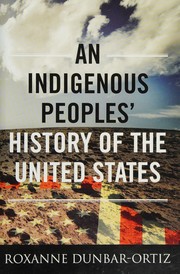
The ideal starting point: a concise, authoritative reframing of U.S. history from an Indigenous perspective that challenges the dominant narrative and introduces key themes — land, sovereignty, and resistance — that run through the entire curriculum.

Read second to immediately deepen the pre-contact picture. Mann synthesizes decades of archaeology and anthropology to reveal the scale, sophistication, and diversity of Indigenous civilizations before European arrival, giving the reader a vivid sense of what was lost.
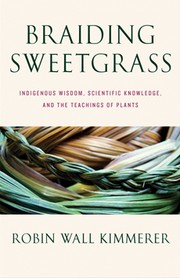
A gentle but profound introduction to Indigenous ways of knowing and relating to the land. Reading it here builds the philosophical and ecological vocabulary — reciprocity, kinship, gratitude — that enriches every subsequent book.
Contact, Conquest, and Survival
IntermediateUnderstand the mechanisms of colonization — warfare, disease, forced removal, and cultural destruction — and the extraordinary resilience and resistance of Native nations across centuries.
▸ Study plan for this stage
Pace: 10–12 weeks total: ~4 weeks for "Bury My Heart at Wounded Knee" (~30 pages/day), ~3 weeks for "The Inconvenient Indian" (~25 pages/day), ~3 weeks for "Killers of the Flower Moon" (~25 pages/day), with 1–2 buffer weeks for reflection, journaling, and exercise completion between books.
- Colonization as a system: how warfare, disease, land theft, and legal manipulation worked together — not as isolated events — to dispossess Native nations, as documented across the dozens of tribal histories in 'Bury My Heart at Wounded Knee'
- Treaty betrayal and legal erasure: Brown's chronological account reveals a repeating pattern in which the U.S. government negotiated, then systematically violated, treaties with nations including the Lakota, Cheyenne, and Nez Perce
- The 'Indian Problem' as a construct of settler imagination: Thomas King's concept of the 'Inconvenient Indian' — that Native people are inconvenient to the settler colonial story precisely because they refuse to disappear — and how pop culture, law, and politics perpetuate this erasure
- Real Indians vs. Dead Indians: King's distinction between the romanticized, frozen image of Native people that settlers find acceptable ('Dead Indians') and the living, contemporary Native people ('Live Indians') whose existence challenges colonial narratives
- Institutional corruption and racial capitalism: 'Killers of the Flower Moon' exposes how the Osage Nation's oil wealth triggered a coordinated campaign of murder, guardianship fraud, and federal complicity, showing colonization operating through economic and legal institutions, not just military for
- Resistance as continuity: across all three books, Native nations are not passive victims — from armed resistance at events like the Battle of Little Bighorn (Brown) to King's sharp political and literary critique to the Osage survivors who demanded federal investigation (Grann)
- The role of narrative and who controls history: King's meta-commentary on storytelling, and Grann's reconstruction of deliberately buried evidence, both interrogate how colonial power shapes which stories get told, preserved, and believed
- Survival and adaptation without assimilation: the through-line across all three books is that Native nations endured not by disappearing into settler society but by maintaining identity, community, and political agency under extreme pressure
- According to Brown's account in 'Bury My Heart at Wounded Knee,' what recurring sequence of events characterized U.S. treaty-making with Native nations, and which specific nations' experiences best illustrate this pattern?
- How does Thomas King define the difference between 'Dead Indians' and 'Live Indians' in 'The Inconvenient Indian,' and what real-world consequences — legal, cultural, political — does he argue flow from that distinction?
- In 'Killers of the Flower Moon,' how did the Osage headright system make the Nation wealthy, and what specific mechanisms — legal, familial, and institutional — did white settlers and federal agents exploit to seize that wealth?
- All three books deal with federal power over Native nations. How does that power look different across the three contexts: the 19th-century military campaigns in Brown, the 20th-century policy landscape in King, and the 1920s FBI investigation in Grann?
- King argues that the stories settlers tell about Native people serve settler interests. Find one example from 'Bury My Heart at Wounded Knee' and one from 'Killers of the Flower Moon' that support or complicate his argument.
- What forms of resistance — armed, legal, cultural, communal — appear across all three books, and what do they reveal about how Native nations understood and exercised sovereignty even under colonial domination?
- Create a 'Treaty Timeline' while reading Brown: for each nation covered, log the treaty made, the year it was broken, and the mechanism of violation (military force, congressional act, re-negotiation under duress). By the end, look for the pattern across 15+ nations.
- After finishing 'The Inconvenient Indian,' audit a single week of mainstream media (news, film, TV, social media) for representations of Native people. Categorize each instance using King's Dead Indian / Live Indian framework and write a one-page reflection on what you find.
- Map the Osage Reign of Terror: using 'Killers of the Flower Moon' as your source, draw a relationship diagram connecting the Osage victims, the white conspirators, the corrupt guardians, and the federal investigators. Annotate each connection with the mechanism of harm or complicity.
- Write a 500-word comparative essay responding to this prompt: 'Brown documents what was done; King analyzes why it continues; Grann shows how it was hidden. Do you agree?' Use specific evidence from all three books.
- Choose one Native nation that appears in 'Bury My Heart at Wounded Knee' and research what that nation's current political, cultural, and legal status is today. Write a one-page update that Brown's chapter could not include, then reflect on what King's framework helps explain about the gap between then and now.
- Host or join a discussion (with a reading group, online forum, or a trusted peer) focused on this question from King: 'The history of Indians in North America is not a story with a happy ending. It's not even a story with an ending.' Prepare three specific passages — one from each book — to anchor the conversation.
Next up: By establishing the deep historical and structural roots of colonization — and Native nations' enduring resistance to it — this stage equips the reader to engage meaningfully with contemporary Indigenous politics, sovereignty movements, and cultural resurgence, which form the natural focus of the next stage.

A landmark work that documents the systematic destruction of Native peoples in the American West through the voices of Indigenous leaders themselves. Its narrative power makes the human cost of conquest undeniable and personal.

Read after Brown to process the same history with sharp wit and critical analysis. King examines how Indigenous peoples have been imagined, stereotyped, and erased in popular culture, bridging the historical and the contemporary.

A deeply researched account of the Osage Nation murders in the 1920s that reveals how dispossession and violence continued well into the modern era. It makes abstract colonial policy viscerally concrete through one community's story.
Nations and Civilizations: Going Deeper
IntermediateMove beyond a single national narrative to understand the distinct histories, cultures, and political structures of specific Indigenous nations and regions across North America.
▸ Study plan for this stage
Pace: 8–10 weeks total. Week 1–5: "1493" by Charles C. Mann (~25–30 pages/day, reading in thematic chunks by chapter/region). Week 6–10: "The Earth Shall Weep" by James Wilson (~20–25 pages/day, pausing after each major chronological section to reflect and take notes). Reserve the final 3–4 days of each b
- The Columbian Exchange as a transformative ecological and demographic force — Mann's central argument in '1493' that the post-1492 world created entirely new biological, economic, and social systems that reshaped Indigenous life across the Americas
- Ecological disruption and Indigenous agency: how specific nations adapted to, resisted, or were devastated by the introduction of new species, diseases, and trade networks detailed in '1493'
- The diversity of Indigenous political structures: from the confederacies and alliances Mann traces through trade networks to the tribal sovereignties, chiefdoms, and nations Wilson examines across North American history
- Settler colonialism as a sustained system — Wilson's framework in 'The Earth Shall Weep' distinguishes episodic violence from the structural, ongoing dispossession of Indigenous peoples across centuries
- Regional specificity: both books demand attention to distinct nations and regions (the Southeast, the Great Plains, the Pacific Coast, the Northeast) rather than treating 'Indigenous peoples' as a monolith
- Indigenous resistance and survival: Wilson's narrative foregrounds how specific nations — Cherokee, Lakota, Apache, and others — actively resisted, negotiated, and endured rather than simply being acted upon
- The role of law and policy in dispossession: Wilson traces how treaties, the reservation system, allotment, and boarding schools functioned as instruments of colonial control
- Interconnection of global and local histories: Mann's global lens in '1493' shows how Indigenous North American histories were entangled with African, Asian, and European economies and ecologies simultaneously
- According to Mann in '1493', how did the Columbian Exchange alter the material conditions — food systems, disease environments, trade economies — of specific Indigenous nations, and can you give two concrete regional examples from the book?
- How does Wilson's 'The Earth Shall Weep' challenge the idea that Indigenous dispossession was inevitable or the result of cultural inferiority? What structural and political forces does he identify instead?
- Both books cover overlapping historical periods but from very different angles. How do Mann's ecological/global focus and Wilson's political/cultural focus complement each other in building a fuller picture of Indigenous history?
- Using 'The Earth Shall Weep', trace the arc of U.S. federal Indian policy from early treaty-making through the reservation era — what were its stated justifications and its actual consequences for at least two specific nations?
- How do both authors handle Indigenous agency? Where do you see Indigenous peoples as active historical actors rather than passive victims in each book, and what does that framing change about the narrative?
- What does regional and national specificity add to your understanding of Indigenous history? Choose one nation discussed in either book and describe what would be lost if it were folded into a generic 'Native American' narrative.
- Ecological impact mapping: After finishing '1493', draw a hand-drawn map of North America and annotate it with at least five specific Indigenous nations or regions Mann discusses, noting the particular ecological or economic disruption each faced (e.g., new trade goods, introduced animals, disease vectors). Compare your map to a modern political map.
- Nation-by-nation profile cards: As you read 'The Earth Shall Weep', create a one-page profile for each major Indigenous nation Wilson covers — including their pre-contact political structure, their primary form of resistance, and the specific policies used against them. By the end, you should have 5–7 cards to compare side by side.
- Parallel timeline: Build a two-column timeline spanning 1492–1900. In the left column, record global/ecological events from '1493' (trade routes opening, species introductions, colonial economies). In the right column, record political/cultural events from 'The Earth Shall Weep' (treaty signings, wars, policy acts). Look for moments where the two columns illuminate each other.
- Argument stress-test journal: After each major section of both books, write a 200-word journal entry that steelmans a counterargument to the author's thesis, then refutes it using evidence from the text. This builds critical engagement rather than passive absorption.
- Primary source pairing: Wilson frequently references treaties and legal documents. Choose one treaty he discusses (e.g., the Treaty of New Echota or the Fort Laramie Treaty) and find its actual text online. Read the relevant clauses and write a one-paragraph comparison of how the document reads versus how Wilson describes its real-world consequences.
- Synthesis essay: After completing both books, write a 600–800 word comparative essay answering: 'How do Mann and Wilson together reframe the standard narrative of American expansion?' Focus on one specific Indigenous nation that appears in or is relevant to both books' arguments, using evidence from each text.
Next up: By grounding the reader in both the ecological forces reshaping Indigenous worlds ('1493') and the political and cultural specificity of distinct nations ('The Earth Shall Weep'), this stage builds the analytical vocabulary and regional awareness needed to engage with more focused, community-centered, or contemporary Indigenous histories and voices at the next level of the curriculum.
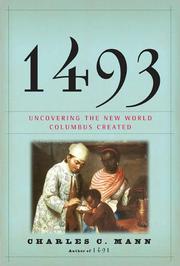
A natural companion to 1491, this book traces the global ecological and human consequences of contact, deepening understanding of how colonization reshaped both Indigenous and world history through trade, disease, and migration.

A comprehensive, nation-by-nation history that fills in the geographic and cultural breadth missing from single-story accounts. By this stage, the reader has the context to absorb its scope and detail.
Native Voices and Nations Today
ExpertEngage directly with contemporary Native scholars, writers, and activists on sovereignty, identity, justice, and the future — understanding Indigenous peoples as living, dynamic political communities, not historical artifacts.
▸ Study plan for this stage
Pace: 10–12 weeks total, reading roughly 20–25 pages per day. Suggested pacing: Vine Deloria Jr.'s "Custer Died for Your Sins" in weeks 1–3 (satirical and foundational — read slowly and annotate); Paul Chaat Smith's "Everything You Know About Indians Is Wrong" in weeks 4–6 (essay-driven — read one essay p
- Tribal sovereignty as a living legal and political reality, not a historical relic — the central argument running from Deloria through Gilio-Whitaker
- Deloria's critique of anthropologists, missionaries, and the federal government as overlapping systems that define and distort Native identity from the outside
- The 'Indian problem' as a white-constructed narrative: how mainstream America projects myths, guilt, and romanticism onto Indigenous peoples (Smith)
- Self-determination vs. termination policy: the legislative history Deloria traces and its ongoing consequences for tribal governance
- The limits of the American environmental justice framework for Indigenous peoples — Gilio-Whitaker's argument that settler colonialism requires its own analytical lens beyond standard civil-rights models
- Settler colonialism as a structure, not an event: land as the persistent target, and how this shapes every contemporary Native political struggle (Gilio-Whitaker, building on Deloria)
- The complexity and diversity of contemporary Native identity — Smith's insistence that Indians are modern, contradictory, media-savvy people, not frozen archetypes
- Consent, consultation, and the doctrine of 'social license': why Gilio-Whitaker argues these fall short of genuine Indigenous free, prior, and informed consent (FPIC)
- According to Deloria in 'Custer Died for Your Sins,' why is the anthropologist a more insidious threat to Native communities than the missionary or the government agent — and do you find his argument convincing?
- Smith argues in 'Everything You Know About Indians Is Wrong' that both the noble-savage stereotype and the 'vanishing Indian' narrative serve the same ideological function. What is that function, and how does he illustrate it across his essays?
- How does Gilio-Whitaker distinguish between the environmental justice movement's framework and an Indigenous-specific framework rooted in settler-colonial theory — and why does she insist the difference is politically consequential?
- Deloria writes extensively about the failures of federal Indian policy from allotment through termination to self-determination. Tracing that arc, what structural pattern does he identify that persists regardless of which policy era is in effect?
- After reading all three books, how would you define 'sovereignty' in a way that accounts for Deloria's legal-political framing, Smith's cultural-representational lens, and Gilio-Whitaker's land-and-environment focus?
- Smith challenges readers to abandon comfortable, pre-packaged ideas about Native peoples. Which assumption or 'known fact' about Indigenous Americans did these three books most forcefully dismantle for you, and what replaced it?
- Sovereignty mapping: Choose one federally recognized tribe and research its current governmental structure, any active treaty rights disputes, and one recent legislative or legal battle. Write a 1–2 page brief connecting what you find to Deloria's framework of sovereignty in 'Custer Died for Your Sins.'
- Stereotype audit: Before finishing Smith's book, list 10 'facts' or images about Native Americans you absorbed from school, films, or media. After finishing, annotate each one using Smith's essays — marking it as myth, half-truth, or complicated reality, with a sentence explaining why.
- Policy timeline: Build a visual timeline (poster, digital tool, or hand-drawn) of major federal Indian policies from the Dawes Act (1887) to NAGPRA (1990), using Deloria's historical chapters as your primary source. Add a column noting which policies Gilio-Whitaker references as having ongoing environmental consequences.
- Environmental justice case study: Select one pipeline, mining, or land-use conflict involving a Native nation (e.g., Standing Rock, Oak Flat, Thacker Pass). Write a 2-page analysis applying Gilio-Whitaker's settler-colonial lens: Who owns the land legally vs. who has ancestral claim? What consultation process was used, and does it meet her FPIC standard?
- Cross-book dialogue: Write a 1-page imagined conversation between Deloria, Smith, and Gilio-Whitaker on this question: 'What is the single greatest obstacle to Indigenous justice in the United States today?' Ground every argument in specific passages from each book.
- Media analysis: Find three current news articles about a Native nation or Indigenous issue. Using Smith's framework from 'Everything You Know About Indians Is Wrong,' identify the narrative frame each article uses — does it rely on any of the tropes he critiques? Write a short editorial correction for the most problematic one.
Next up: By grounding the reader in how Native scholars and activists theorize sovereignty, identity, and settler colonialism on their own terms, this stage builds the critical vocabulary and political literacy needed to engage with more specialized or regionally focused studies — whether in Indigenous law, land rights litigation, comparative Indigenous movements globally, or primary-source archival resear

A foundational text of modern Native American political thought. Deloria's incisive critique of anthropologists, missionaries, and the U.S. government remains essential reading and introduces the intellectual tradition of Native self-determination.

A witty, provocative collection of essays by a Comanche curator that challenges romanticized and reductive ideas about Native identity and culture — the perfect capstone for a reader now equipped to think critically about representation.
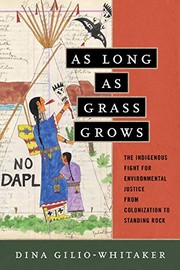
Closes the curriculum with a rigorous examination of environmental justice and Indigenous sovereignty today, connecting historical dispossession to present-day struggles and pointing toward a future built on genuine decolonization.
Discussion
Keep reading
Paths that share books, cover the same subject, or open a related topic.