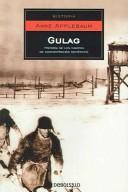
Start with Gulag. It is the book that made Applebaum's reputation, it is built from archives and survivor testimony rather than argument, and every later book on this path is in some sense downstream of it. Starting with one of the short recent polemics instead gives you the conclusions without the evidence, which is exactly the wrong way round for a writer whose authority comes from the archival work.
That said, be honest with yourself about what Gulag is: 672 pages on a system built to work people to death, with sustained and specific accounts of starvation, forced labour, execution and the destruction of families. It is not gratuitous and it is not softened. If that is not where you want to begin, begin with Twilight of Democracy, which is 224 pages and can be read in two evenings — then come back to Gulag, because the shorter books are considerably more persuasive once you have read the long one.
The histories
Gulag first. Read the introduction and the historical chapters, then let the thematic middle section — arrest, transport, work, punishment, escape — take as long as it takes. Thirty to forty pages a sitting is a sensible ceiling.
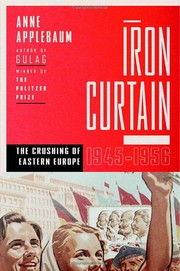
Iron Curtain comes second: how the Soviet apparatus was exported into Central Europe between 1944 and 1956, and how quickly a civil society can be dismantled by people who know what they are doing. It is the most useful of the three histories for understanding the present.
Red Famine third. This is a book about the deliberate starvation of millions of Ukrainians in 1932 and 1933, including detailed accounts of what starvation does to a body and to a village, and there is no way of reading it that makes that easy. Take a break between it and Iron Curtain if you need one. Applebaum argues the famine was a deliberate act against Ukrainians as a nation; that framing is shared by many historians and contested by others, and the book states its case rather than pretending the debate is closed.
The present tense
Twilight of Democracy and Autocracy, Inc. are essays rather than histories, and the shift in register after nineteen hundred pages of archival work is abrupt. That contrast is the reason they come third rather than first. Read alone they are op-ed length arguments about why educated people go along with authoritarian projects and how modern autocracies help each other stay in power. Read after the histories, they are testable claims by someone who has done the underlying research — which is a different and better book to be holding.
The book before the books
Between East and West was published first, in 1994, and belongs last. It is travel writing rather than history — a journey from the Baltic to the Black Sea through the borderlands that were about to become the subject of everything else she wrote — and it is by a wide margin the easiest reading here.
Taken first it is a pleasant 1990s travel book. Taken sixth it is an origin story, and every place she stops turns out to be somewhere she came back to for twenty years. This is the one real order decision on the path, and the case for saving it is strong enough that publication order is worth abandoning.
Where to stop
Gulag alone is a complete education and a legitimate stopping point. If you want two, add Iron Curtain. The recent essays are best read as a pair and are the only books here you can finish in a week. Readers who come to Applebaum for the twentieth century often find they want more narrative history afterwards; Erik Larson is the usual next step.
Follow the full ordered path here: Anne Applebaum Reading Order: Where to Start.
Ready to learn something deeply?
Build a reading path — free