The Wild West: essential books on the American frontier
This curriculum moves from vivid, accessible narrative histories of the frontier to deeper analytical works that challenge the myths behind them. Starting with the human stories of cowboys, outlaws, and pioneers, the path gradually widens to encompass Native nations, empire, ecology, and the cultural machinery that turned a violent, complicated era into legend. Each stage builds the factual grounding and critical vocabulary needed to fully appreciate the next.
Foundations: The Frontier Story
BeginnerBuild a vivid, concrete picture of the Wild West — its landscapes, people, and defining events — through engaging narrative history before tackling deeper analysis.
▸ Study plan for this stage
Pace: 8–10 weeks, ~40–50 pages/day. Start with "Lonesome Dove" (850 pages, ~4 weeks), then move to "Undaunted Courage" (500 pages, ~3–4 weeks), with 1–2 weeks for review and exercises.
- The frontier as a physical and psychological space: vast landscapes, isolation, and the clash between civilization and wilderness
- Character archetypes of the frontier: aging cowboys, former soldiers, Native Americans, settlers, and outlaws—their motivations, codes, and moral ambiguities
- The cattle drive as a defining frontier institution: logistics, dangers, human relationships forged under extreme conditions
- Westward expansion and exploration as both opportunity and tragedy: the Lewis and Clark Expedition as a foundational American narrative
- Violence, law, and order on the frontier: how communities formed and enforced justice in lawless territories
- The role of Native Americans in frontier history: displacement, conflict, and cultural collision
- Survival skills and practical frontier life: navigation, horsemanship, hunting, and adaptation to harsh environments
- Myth versus reality: how frontier narratives shaped American identity and how actual historical events complicate romantic notions
- What are the key differences between the fictional frontier world of 'Lonesome Dove' and the historical frontier depicted in 'Undaunted Courage'? How do both contribute to understanding the Wild West?
- Describe the main characters in 'Lonesome Dove' (Augustus McCrae, Woodrow Call, Lorena, Newt) and explain how their personal journeys reflect larger frontier themes.
- What were the primary goals and outcomes of the Lewis and Clark Expedition as described in 'Undaunted Courage'? How did it shape American expansion?
- How did Native Americans respond to westward expansion, and what does 'Undaunted Courage' reveal about the human cost of the frontier?
- What role does violence play in both texts, and how do they portray the establishment of law and order in frontier communities?
- What practical skills and knowledge were essential for survival on the frontier, as illustrated through the cattle drive in 'Lonesome Dove' and the expedition in 'Undaunted Courage'?
- Create a detailed character map of 'Lonesome Dove' showing relationships, conflicts, and character arcs; annotate with quotes that reveal their frontier values and moral codes.
- Map the cattle drive route from 'Lonesome Dove' and compare it to actual historical routes; research the real dangers (weather, disease, Native American encounters) that the novel depicts.
- Write a 3–5 page comparative essay: 'How does McMurtry's fictional frontier in Lonesome Dove reflect or diverge from the historical frontier in Undaunted Courage?'
- Create a timeline of the Lewis and Clark Expedition from 'Undaunted Courage,' marking key events, discoveries, and encounters with Native American tribes; include Ambrose's interpretation of their significance.
- Develop a 'Frontier Survival Guide' based on details from both texts: list essential skills, tools, and knowledge needed to survive a cattle drive or expedition, with specific examples from the books.
- Conduct a close reading analysis of 2–3 key scenes from 'Lonesome Dove' (e.g., the river crossing, a violent confrontation) and explain what they reveal about frontier morality and human nature.
Next up: This stage establishes the vivid, human-centered narrative foundation of the frontier—its landscapes, characters, and defining moments—preparing you to move into deeper analysis of frontier themes, historiography, and the complex legacies of westward expansion in subsequent stages.
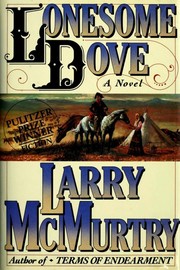
This Pulitzer Prize-winning novel is the single best entry point into the emotional and physical world of the cattle-drive West — it humanizes cowboys, outlaws, and the trail in a way no textbook can. Reading it first gives the learner an intuitive feel for the era's rhythms, dangers, and characters.

Ambrose's gripping account of the Lewis and Clark Expedition is the ideal introduction to westward expansion: it establishes the geography, the Native nations encountered, and the imperial ambitions that set the entire frontier era in motion.
Cowboys, Outlaws & Lawmen
BeginnerUnderstand the real lives behind the most iconic figures of the Wild West — separating documented history from dime-novel legend — and grasp how frontier violence actually worked.
▸ Study plan for this stage
Pace: 8–10 weeks, ~40–50 pages/day. Read "The Last Gunfight" (weeks 1–4, ~300 pages), then "Billy the Kid" (weeks 5–8, ~400 pages). Weeks 9–10 reserved for review and synthesis exercises.
- The OK Corral gunfight was not a simple good-vs-evil showdown but a complex conflict rooted in competing claims to law, order, and economic power in Tombstone
- Frontier violence emerged from specific conditions: weak institutional authority, competing jurisdictions, personal honor codes, and economic competition rather than lawlessness or individual depravity
- Billy the Kid's legend was heavily shaped by dime novels and sensationalized newspaper accounts that bore little resemblance to documented facts about his life, crimes, and character
- Outlaws and lawmen occupied overlapping, morally ambiguous roles—many figures switched sides, and the line between 'outlaw' and 'lawman' was often blurred by politics and circumstance
- Primary sources (court records, newspapers, letters, eyewitness accounts) often contradict popular mythology and reveal the messy, human reality behind iconic figures
- Frontier communities developed informal justice systems and personal networks before formal law enforcement, creating cultures where reputation and loyalty mattered more than official authority
- What were the actual causes of tension in Tombstone that led to the OK Corral gunfight, and how do they differ from the popular 'lawmen vs. outlaws' narrative?
- How did dime novels and sensationalized journalism shape the legend of Billy the Kid, and what do primary sources reveal about his actual life and character?
- What role did competing claims to legal authority play in frontier violence, and why was the distinction between 'lawman' and 'outlaw' often unclear?
- How did economic interests (mining, ranching, trade) drive conflicts that are often portrayed as purely personal or moral disputes?
- What evidence from the books suggests that frontier violence was not random or inevitable, but rather emerged from specific social and economic conditions?
- How did Billy the Kid's own actions and choices differ from his popular image, and what does this reveal about the gap between legend and history?
- Create a timeline of the Tombstone conflict using 'The Last Gunfight': map key events, actors, and turning points. Identify which events are documented vs. which rely on disputed accounts.
- Compile a 'legend vs. reality' chart for Billy the Kid using both books: list 5–7 popular myths about him (e.g., 'he killed 21 men') and note what the authors actually document.
- Write a 2–3 page character analysis of Wyatt Earp using 'The Last Gunfight': assess whether he was a lawman, a businessman, or something else entirely, citing specific evidence.
- Analyze 3–4 newspaper accounts or dime-novel excerpts referenced in the books (or find period sources yourself): identify sensationalism, bias, and omissions compared to what Guinn and Wallis document.
- Create a map of Tombstone or Lincoln County showing the locations of key events, businesses, and residences mentioned in the books. Annotate with the economic and political interests at stake.
- Write a comparative character study of two figures (e.g., Billy the Kid and a lawman, or Wyatt Earp and Doc Holliday): use both books to show how their roles and reputations were constructed differently.
Next up: This stage grounds you in the documented lives of specific frontier figures and the social conditions that produced violence, preparing you to explore broader patterns of frontier settlement, law-and-order movements, and the transformation of the West in subsequent stages.
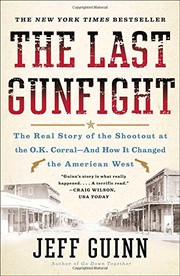
Guinn's meticulous reconstruction of the events leading to the O.K. Corral is the perfect case study in how frontier myth is made: it grounds the learner in real economics, politics, and personalities before the mythology takes over.
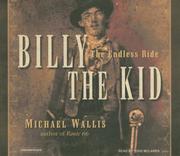
A well-researched biography of the West's most mythologized outlaw that carefully distinguishes fact from folklore, building the learner's critical eye for how frontier figures were romanticized.
Native Nations & the Cost of Expansion
IntermediateUnderstand the frontier from the perspective of the peoples who were already there — the devastating impact of U.S. expansion on Native nations, told through both history and Indigenous voices.
▸ Study plan for this stage
Pace: 10–12 weeks, ~40–50 pages/day (accounting for dense historical narrative and primary source reflection)
- The systematic dispossession of Native lands through broken treaties, forced relocations, and military campaigns from the 1860s onward
- The resilience and strategic adaptation of specific nations (Sioux, Comanche, Osage) in the face of U.S. expansion and resource extraction
- How economic interests (gold, oil, buffalo) drove federal Indian policy and shaped the frontier narrative
- The role of individual leaders (Sitting Bull, Quanah Parker, Osage headmen) in negotiating, resisting, or surviving colonization
- The distinction between the 'frontier myth' taught in American schools and the documented reality of violence, theft, and cultural destruction
- The Osage oil boom as a case study in how wealth and sovereignty became entangled with exploitation and murder
- Indigenous voices and perspectives as primary historical evidence, not footnotes to a settler narrative
- How did the Fort Laramie Treaty and subsequent violations illustrate the pattern of U.S. treaty-breaking with Native nations?
- What role did the buffalo slaughter play in forcing the Sioux and other Plains nations onto reservations, and how did this differ from earlier colonial tactics?
- How did Quanah Parker's leadership and eventual accommodation to reservation life reflect the limited choices available to Comanche people by the 1870s?
- What was the Osage oil boom, and how did the discovery of oil on Osage land transform the nation's relationship with the U.S. government and white settlers?
- How does David Grann's account of murders in Killers of the Flower Moon reveal the legal and social structures that enabled violence against the Osage?
- What is the difference between how the 'Wild West' is mythologized in popular culture versus how these three books present the frontier as a site of colonization and genocide?
- Create a timeline of major treaties and their violations (Fort Laramie, Fort Robinson, etc.) as you read Bury My Heart; annotate each with the specific broken promises and consequences for the nations involved
- Track the movements and strategic decisions of 2–3 key leaders (e.g., Sitting Bull, Quanah Parker, Red Cloud) across both Bury My Heart and Empire of the Summer Moon; write a 1-page comparison of their different approaches to U.S. pressure
- Read and annotate 3–4 primary source documents (speeches, letters, or testimony from Native leaders) referenced in the books; write a reflection on how these voices complicate or challenge the historical narrative presented by the authors
- Map the Osage Nation's territory and oil fields using historical maps; research and write a 2-page explainer on how oil wealth became a death sentence for Osage people, using specific examples from Killers of the Flower Moon
- Write a comparative analysis (2–3 pages) of how Bury My Heart, Empire of the Summer Moon, and Killers of the Flower Moon each approach the question: 'What was the frontier, and for whom?'
- Create a visual or written 'myth vs. reality' chart for 3–4 common frontier narratives (e.g., 'the frontier was empty land,' 'settlers were brave pioneers,' 'Indians were obstacles to progress'); use specific evidence from the books to deconstruct each myth
Next up: This stage establishes the historical foundation and human cost of westward expansion, preparing you to examine how Native nations survived, adapted, and continue to assert sovereignty in the modern era—moving from dispossession to resilience and contemporary Indigenous futures.

The landmark work that first brought Native American perspectives on westward expansion to a mass audience; it is essential reading that reframes everything learned in the earlier stages and introduces the systematic dispossession behind the frontier story.
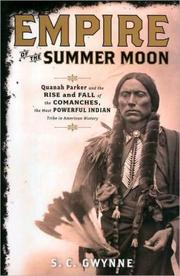
Gwynne's narrative of the Comanche nation and its decades-long resistance to U.S. expansion is the ideal follow-up to Brown — it adds military, political, and cultural depth to the conflict between Native peoples and the advancing frontier.

Grann's account of the Osage murders extends the story into the early 20th century, showing how the exploitation of Native peoples continued long after the 'frontier closed' — a crucial bridge between the Wild West era and its legacy.
Myth, Memory & the Idea of the West
IntermediateAnalyze how and why the Wild West was mythologized — in literature, film, and national identity — and understand the gap between the romantic frontier and the historical one.
▸ Study plan for this stage
Pace: 6–8 weeks, ~40–50 pages/day (approximately 500–600 pages total). Break into 3 phases: Part I (Buffalo Bill's early life & Wild West show origins), Part II (the show's cultural impact & evolution), Part III (Warren's analysis of myth vs. reality).
- Buffalo Bill (William F. Cody) as a constructed persona: how a real frontiersman became a mythological figure through deliberate marketing and performance
- The Wild West show as a cultural technology: how live spectacle shaped American perceptions of the frontier and legitimized a particular narrative of westward expansion
- The gap between historical reality and romantic myth: how Warren deconstructs the 'Wild West' by examining what Cody actually experienced versus what audiences believed
- Imperialism and nationalism: how the frontier myth served American expansionist ideology and national identity formation in the late 19th century
- Performance and authenticity: the paradox of selling 'authentic' frontier experience through theatrical artifice and scripted narratives
- Gender, race, and the frontier myth: how the show's portrayal of Native Americans, women, and non-white performers reflected and reinforced racial hierarchies
- Media and memory: how literature, journalism, and popular culture created and perpetuated the mythologized West that overshadowed historical facts
- How did William F. Cody transform himself from a frontier scout into 'Buffalo Bill,' and what role did deliberate self-promotion and collaboration with others (like Ned Buntline) play in this transformation?
- What was the Wild West show, and how did it function as a vehicle for spreading a particular vision of the American frontier to both American and international audiences?
- What specific gaps does Warren identify between the historical frontier that Cody actually experienced and the romanticized frontier myth that his show promoted?
- How did the Wild West show serve American imperial and nationalist interests in the late 19th century, and what does this reveal about the relationship between popular culture and national ideology?
- How did the show's depictions of Native Americans, women, and other marginalized groups reinforce or challenge prevailing racial and gender hierarchies of the era?
- Why does Warren argue that understanding Buffalo Bill and his show is essential to understanding how Americans constructed their national identity and sense of themselves as a people?
- Create a timeline comparing Cody's actual biographical events (based on Warren's account) with the mythologized versions that appeared in dime novels and popular press—annotate the key distortions and exaggerations.
- Analyze a primary source document from or about the Wild West show (a playbill, newspaper review, or advertisement) and identify the rhetorical strategies used to sell the 'authentic frontier' experience; write a 2–3 page analysis.
- Write a character study of Buffalo Bill that separates the man from the myth: what do we know about Cody's actual motivations, contradictions, and limitations based on Warren's evidence?
- Compare the Wild West show's portrayal of Native Americans (as described by Warren) with historical accounts of the tribes and individuals who performed in it—what was omitted, distorted, or erased?
- Create a visual or written comparison of how the frontier is depicted in one piece of contemporary media (a dime novel, lithograph, or early film still) versus how Warren describes the historical reality.
- Develop a short essay (4–5 pages) arguing how the Buffalo Bill Wild West show functioned as propaganda for American expansionism and nationalism—use specific examples from Warren's text.
Next up: This stage establishes how myths about the West were actively constructed and disseminated through performance and popular culture, preparing you to examine how those myths were further embedded in literature, film, and historical memory in subsequent stages.
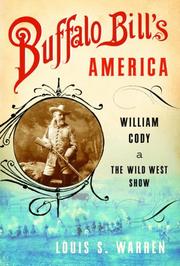
Warren uses Buffalo Bill Cody's Wild West show as a lens to examine exactly how the frontier was packaged and sold to the world, making this the ideal companion to Slotkin for understanding myth-making in action.
The New Western History: Land, Power & Legacy
ExpertEngage with revisionist scholarship that reframes the frontier as a story of conquest, ecology, and ongoing consequence — arriving at a fully rounded, critically sophisticated understanding of the American West.
▸ Study plan for this stage
Pace: 8–10 weeks, ~40–50 pages/day (accounting for dense revisionist scholarship and technical water-policy content)
- The frontier as conquest rather than progress: reframing Western expansion as a story of dispossession, violence, and ecological disruption rather than heroic settlement
- Land as a contested resource: how competing claims to Western land (indigenous, settler, corporate, governmental) reveal power structures that persist today
- The hydraulic West: how water control and dam-building projects became instruments of state power, corporate profit, and environmental transformation
- Legacies of colonialism: understanding how 19th-century frontier policies created ongoing inequalities, environmental degradation, and unresolved conflicts in the modern West
- The role of federal power: how government intervention (land grants, water rights, subsidies) shaped Western development in ways that benefited some groups while marginalizing others
- Ecological consequences of Western expansion: soil depletion, water depletion, species extinction, and climate impacts as direct results of frontier ideology and policy
- Narrative revision: recognizing how dominant historical narratives obscure indigenous dispossession, environmental costs, and structural injustice
- How does Limerick's concept of 'legacy of conquest' challenge the traditional frontier narrative of progress and opportunity?
- What specific examples from Cadillac Desert illustrate how water policy in the West became a tool of political and economic power?
- How do Limerick and Reisner each demonstrate that Western development created winners and losers, and who were the losers?
- What ecological consequences of Western expansion does Reisner document, and how are these connected to the ideological assumptions Limerick identifies?
- How do the books together argue that the 'frontier' is not a closed historical period but an ongoing legacy with present-day consequences?
- What role did federal government intervention play in shaping the West according to both authors, and whose interests did it primarily serve?
- Create a two-column chart: Traditional Frontier Narrative vs. Limerick's Revisionist Framing, filling in specific examples from The Legacy of Conquest for each major claim
- Map the major dam projects Reisner describes in Cadillac Desert, noting their location, purpose, environmental impact, and primary beneficiaries—then analyze patterns in who gained and who lost
- Write a 2–3 page analytical essay comparing how Limerick and Reisner each use the concept of 'power' to explain Western development (political power, economic power, ecological power)
- Identify 3–4 indigenous groups or communities mentioned in either book and research their current legal/political status—then write a brief reflection on how Limerick's 'legacy of conquest' thesis applies to their present situation
- Create a timeline of major Western water projects (from Cadillac Desert) overlaid with major federal land policies (from Limerick), annotating how they reinforce each other
- Debate or write a response: 'Is the American West still being 'conquered' today?' using specific evidence from both books to support your position
Next up: This stage establishes the critical vocabulary and historical evidence needed to examine how Western institutions, environmental crises, and social conflicts continue to unfold—preparing you to explore contemporary Western issues (climate change, water scarcity, indigenous sovereignty, land management) through the lens of historical power and ecological consequence.

The foundational text of the 'New Western History,' Limerick dismantles the triumphalist frontier narrative and replaces it with a story of contested land, racial conflict, and unresolved legacies — the essential capstone for any serious student of the subject.
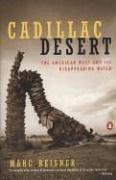
Reisner's classic on water and power in the American West reveals the environmental and political infrastructure that made — and now threatens — the settled West, completing the curriculum by showing that the frontier's consequences are still very much alive.
Discussion
Keep reading
Paths that share books, cover the same subject, or open a related topic.