The Best Books to Understand Henry David Thoreau
This curriculum takes a beginner from a warm, accessible introduction to Thoreau's world all the way through his two most essential texts and into the deeper philosophical and historical context that makes his ideas resonate fully. Each stage builds the vocabulary, historical grounding, and literary confidence needed to tackle the next, ensuring that when you finally read Walden and Civil Disobedience, you read them with genuine understanding rather than surface familiarity.
Foundations: Who Was Thoreau?
BeginnerGain a vivid biographical and historical portrait of Thoreau — his life at Walden Pond, his friendships, his era — so that his writings feel grounded and personal rather than abstract.
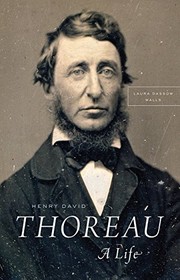
The definitive modern biography, written in clear and engaging prose. Starting here gives you the full human story of Thoreau — his friendships, failures, and passions — before you encounter his own demanding voice.
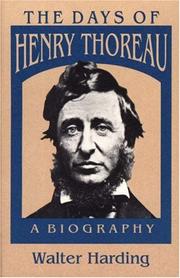
The classic scholarly biography, rich with anecdote and detail. Reading it second deepens the portrait with more granular historical context, preparing you to recognize the real events and people behind Thoreau's writing.
The Essential Texts: Thoreau in His Own Words
BeginnerRead and genuinely understand Thoreau's two masterworks — Walden and Civil Disobedience — armed with the biographical context from Stage 1.
▸ Study plan for this stage
Pace: 8–10 weeks, ~25–30 pages/day (Civil Disobedience: 1–2 weeks; Walden: 6–8 weeks)
- Civil disobedience as moral duty: Thoreau's argument that unjust laws demand individual resistance, not passive compliance
- The relationship between conscience and state power: how personal integrity must supersede governmental authority
- Voluntary simplicity and self-reliance: Thoreau's experiment in reducing material needs to achieve freedom and clarity
- Nature as teacher and spiritual resource: the restorative and philosophical power of direct engagement with the natural world
- Deliberate living: the practice of examining every action and choice rather than drifting through life unconsciously
- Economic independence as prerequisite for freedom: how financial entanglement compromises moral autonomy
- The critique of progress and civilization: questioning whether modern society truly improves human flourishing
- Transcendentalist philosophy in practice: intuition, individualism, and the primacy of direct experience over inherited doctrine
- What is Thoreau's central argument in Civil Disobedience, and why does he believe citizens have a moral obligation to break unjust laws?
- How does Thoreau's experiment at Walden Pond challenge conventional assumptions about what humans need to live well?
- What does Thoreau mean by 'deliberate living,' and how does he practice it during his two years at the pond?
- How are the themes of Civil Disobedience and Walden connected? What do both works reveal about Thoreau's vision of human freedom?
- What specific critiques does Thoreau make of American society, commerce, and 'progress' in Walden?
- How does Thoreau's relationship with nature in Walden differ from the Romantic ideal, and what philosophical purpose does it serve?
- Close-read one key passage from Civil Disobedience (e.g., the opening or the section on taxes) and write a 500-word analysis of Thoreau's rhetorical strategy and underlying assumptions.
- Track Thoreau's budget and daily practices at Walden for one week of reading, then calculate and compare your own weekly expenses to his—reflect on what this reveals about consumption and necessity.
- Write a personal essay (800–1000 words) applying Thoreau's concept of civil disobedience to a contemporary unjust law or policy you believe demands resistance.
- Spend one full day (or weekend) practicing 'deliberate living' as Thoreau describes it: examine each action, choice, and purchase with intentionality, then journal on the experience.
- Create an annotated map or diagram of Walden Pond showing the locations Thoreau describes (his cabin, the cove, the woods) and mark passages where he reflects on specific places—this embeds the spatial and philosophical geography.
- Debate or write a dialogue between Thoreau and a contemporary critic: how would Thoreau respond to accusations that his philosophy is impractical, elitist, or escapist?
Next up: This stage grounds Thoreau's ideas in his own voice and lived experiment, preparing you to engage critically with how later thinkers, movements, and historical events have interpreted, challenged, and built upon his philosophy of conscience, simplicity, and resistance.

Shorter and more argumentative than Walden, this essay is the perfect first encounter with Thoreau's own prose. Its clear political logic eases you into his style before tackling his longer, more lyrical work.
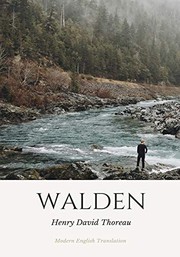
Thoreau's magnum opus and the central text of this entire curriculum. Reading it after the biographies and Civil Disobedience means you arrive with the context, vocabulary, and stylistic familiarity to absorb its full depth.
Thoreau's Wider Voice: Nature Writing and the Journal
IntermediateExplore Thoreau's philosophy of nature and simplicity beyond Walden, discovering how his ideas evolved across his essays and his vast personal journal.
▸ Study plan for this stage
Pace: 8–10 weeks, ~40–50 pages/day (accounting for dense philosophical passages and journal reflection time)
- Walking as a spiritual and philosophical practice: Thoreau's vision of the pedestrian as explorer and truth-seeker
- The wild as sacred space: how Thoreau's encounters with untamed nature in Maine deepen his ecological philosophy
- Simplicity and self-reliance extended: moving beyond Walden to understand how these principles apply across landscapes and seasons
- The journal as philosophical laboratory: how Thoreau's daily observations become the raw material for his evolving thought
- Attention and perception: the practice of close observation as a path to understanding nature and oneself
- Tension between civilization and wilderness: Thoreau's ambivalence about progress, development, and human encroachment on wild places
- Seasonal cycles and natural time: how Thoreau's long-term journal work reveals patterns invisible in shorter timescales
- The writer's voice evolving: recognizing how Thoreau's style, concerns, and philosophical depth shift across different genres and decades
- What does Thoreau mean by 'walking' as a spiritual practice, and how does this concept extend his philosophy beyond Walden?
- How does Thoreau's experience in the Maine Woods challenge or complicate his earlier ideas about nature and human relationship to the wild?
- What role does the journal play in Thoreau's intellectual development, and how do the Selected Journals reveal patterns of thought not visible in his published essays?
- How does Thoreau's treatment of simplicity and self-reliance differ across Walking, The Maine Woods, and the journals, and what accounts for these differences?
- What is Thoreau's position on wilderness preservation and human development, particularly as expressed in The Maine Woods?
- How does Thoreau's practice of close observation—phenology, natural history, seasonal attention—function as both a philosophical and literary method?
- Take daily walks in a local natural area for 2–3 weeks, keeping a Thoreau-inspired journal entry after each walk (500 words minimum). Record observations of flora, fauna, weather, light, and your own thoughts. Reflect on how attention changes your perception.
- Create a comparative chart mapping key themes (wilderness, simplicity, observation, human progress) across Walking, The Maine Woods, and 3–4 selected journal passages. Note how Thoreau's treatment of each theme evolves.
- Write a 1,500-word essay analyzing a single passage from the Selected Journals (choose one that resonates with you). Trace how that observation or idea appears—or doesn't appear—in Walking or The Maine Woods.
- Conduct a 'phenological study' of a specific plant or animal in your area over 4–6 weeks, recording observations in the manner of Thoreau's journals. Document seasonal changes, behaviors, and your interpretations.
- Rewrite a passage from Walking or The Maine Woods in the style of a modern nature writer or scientist. Discuss what is gained and lost in the translation, and what this reveals about Thoreau's unique voice.
- Create an annotated timeline of Thoreau's life (1817–1862) alongside the composition dates of Walking, The Maine Woods, and major journal entries. Identify historical events and personal circumstances that may have shaped his thinking during each period.
Next up: This stage establishes Thoreau's mature ecological vision and his method of philosophical inquiry through nature observation, preparing you to examine how his ideas influenced American environmental thought and to engage with his most challenging and systematic work, *Walden*, with deeper understanding of the intellectual journey that produced it.
This late essay distills Thoreau's philosophy of wildness and freedom into its purest form. It bridges Walden's themes with his broader nature writing and is short enough to read closely and carefully.

Thoreau's account of wilderness travel reveals a rawer, less domesticated relationship with nature than Walden, expanding your sense of what 'simplicity' and 'the wild' meant to him.

The journal is where Thoreau's daily thinking lived. Reading selected entries at this stage shows how his published works grew from years of patient, private observation — the workshop behind the masterpieces.
Intellectual Context: Transcendentalism and Its World
IntermediateUnderstand the Transcendentalist movement that shaped Thoreau — especially his mentor Emerson — and see how Thoreau both absorbed and pushed back against those ideas.
▸ Study plan for this stage
Pace: 4–5 weeks, ~25–30 pages/day (Nature is ~100 pages; Emerson among the Eccentrics is ~400 pages)
- The Transcendentalist belief in intuition and direct spiritual experience over institutional religion and empirical science
- Emerson's concept of the 'Over-Soul' and the divine nature of individual consciousness
- The Transcendentalist view of Nature as a living text that reveals spiritual truth to the receptive observer
- Emerson's influence as mentor and intellectual authority, and the personal dynamics that shaped the movement
- The tension between Emerson's idealism and the practical, eccentric personalities of his circle (Thoreau, Alcott, Fuller, etc.)
- How Thoreau's thinking both aligns with and diverges from Emerson's foundational ideas
- The historical and cultural conditions (Romanticism, American individualism, industrial change) that gave Transcendentalism urgency
- What does Emerson mean by the 'Over-Soul,' and how does this concept challenge conventional religious authority?
- How does Emerson argue that Nature functions as a spiritual teacher, and what role does individual perception play in this process?
- Who were the key figures in Emerson's circle, and how did their personalities and ideas both support and challenge his vision?
- In what ways did Thoreau's thinking align with Emerson's Transcendentalism, and where did he begin to push back or diverge?
- How did the broader historical context—industrialization, American expansion, religious skepticism—make Transcendentalism appealing?
- What does Baker's biography reveal about the personal relationships and conflicts within the Transcendentalist movement that Emerson's essays alone do not?
- Read 'Nature' in one sitting (or two focused sessions) and annotate passages where Emerson makes claims about spiritual truth, intuition, and the divine. Mark where you find his argument most compelling and where you feel skeptical.
- Create a visual map of Emerson's key ideas from 'Nature': place 'Over-Soul' at the center and branch outward with his claims about intuition, perception, beauty, and the relationship between mind and matter.
- As you read Baker's biography, keep a running list of the major figures in Emerson's circle (Thoreau, Alcott, Margaret Fuller, etc.) with 2–3 sentences on each person's relationship to Emerson and their distinctive contribution to Transcendentalism.
- Write a 500-word dialogue between Emerson (as presented in 'Nature') and one of the 'eccentrics' from Baker's book, imagining a debate about whether Transcendentalist ideals can be lived practically.
- Identify 3–4 moments in Baker's narrative where Thoreau's ideas or actions diverge from Emerson's expectations or teachings. Write a brief paragraph on each, noting what this reveals about Thoreau's independence.
- Create a timeline showing the key events and publications in the Transcendentalist movement (1830s–1850s) based on both texts, noting how external events (economic crises, slavery debates, westward expansion) intersect with the movement's evolution.
Next up: This stage establishes the intellectual foundation and personal relationships that shaped Thoreau, preparing you to examine his own writings and how he transformed Transcendentalist philosophy into radical practice and critique.
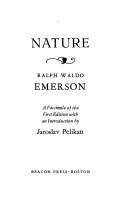
Emerson's foundational essay is the philosophical soil from which Thoreau grew. Reading it here reveals exactly which ideas Thoreau inherited, transformed, and sometimes rejected.
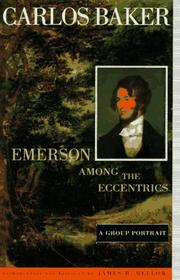
This group biography of the Transcendentalist circle — Emerson, Thoreau, Alcott, and others — shows the living intellectual community around Thoreau and clarifies how his ideas were forged in dialogue and debate.
Legacy and Deep Interpretation
ExpertEngage with the best critical and philosophical interpretations of Thoreau to synthesize everything learned and understand why his work remains urgently relevant today.
▸ Study plan for this stage
Pace: 8–10 weeks, ~40–50 pages/day (alternating between Walden's dense philosophy and Sullivan's accessible biography; 2–3 weeks per book with overlap for synthesis)
- Thoreau's radical critique of industrial capitalism and consumer culture as presented in Walden and its continued relevance to modern economic systems
- Civil disobedience as a philosophical and practical response to unjust government, and its influence on 20th/21st-century activism
- The relationship between nature, self-reliance, and spiritual awakening in Walden versus the biographical reality of Thoreau's life revealed by Sullivan
- Thoreau's deliberate mythmaking and the gap between his literary persona and his actual historical person—how to read him critically
- The concept of 'economy' in Walden: simplicity, intentionality, and resistance to unnecessary labor as a political act
- Thoreau's influence on environmentalism, transcendentalism, and American individualism—and the dangers of misreading him
- How Thoreau's ideas about time, leisure, and contemplation challenge modern productivity culture and digital distraction
- What does Thoreau mean by 'economy' in Walden, and how does his critique of unnecessary labor apply to contemporary consumer capitalism?
- How does Sullivan's biography complicate or challenge the heroic image of Thoreau presented in Walden, and why does this complexity matter?
- What is the philosophical and political argument behind civil disobedience, and how has it been misinterpreted or selectively applied since Thoreau's time?
- How do Thoreau's ideas about nature in Walden reflect his actual relationship with the natural world, according to Sullivan's research?
- Why does Thoreau remain relevant today, and what specific modern problems (environmental, political, economic) does his work address?
- What are the dangers of romanticizing Thoreau, and how should readers approach his work with both admiration and critical skepticism?
- Read Walden's 'Economy' chapter (the longest and most demanding) in close detail, annotating Thoreau's specific critiques of labor, consumption, and housing—then identify three modern equivalents to his 19th-century targets
- Create a two-column comparison chart: 'Thoreau's Walden Narrative' vs. 'Sullivan's Biographical Facts'—track where they align and where they diverge, noting what Thoreau omitted or embellished
- Write a 2–3 page essay: 'What Would Thoreau Say About [Modern Issue]?'—choose a contemporary problem (social media, climate change, wealth inequality, or digital labor) and apply his philosophy rigorously, noting where his ideas break down
- Conduct a 'civil disobedience audit': research three historical or contemporary movements that invoked Thoreau (e.g., Gandhi, MLK, climate activism)—analyze whether they accurately understood his argument and where they departed from it
- Read 'Resistance to Civil Government' alongside Sullivan's chapter on Thoreau's actual jail experience—write a reflection on how the essay's philosophical power differs from the mundane historical reality
- Design a thought experiment: 'My Walden Experiment'—outline how you would apply Thoreau's principles of intentional living to one area of your life for 30 days, then reflect on what you learn about both Thoreau and yourself
Next up: This stage equips you to move beyond Thoreau as a historical figure or moral icon to understanding him as a complex, contradictory thinker whose work demands both reverence and rigorous skepticism—preparing you to engage with how his ideas have been adapted, misused, and reinterpreted across different movements and eras.
Returning to Thoreau's own texts at this advanced stage — in a scholarly annotated edition — allows you to read with fresh, critical eyes, catching layers of meaning invisible on a first reading.
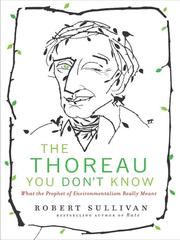
Sullivan's revisionist, deeply researched portrait challenges popular myths about Thoreau and forces a more honest, nuanced reckoning with the man — the ideal capstone for a reader who now knows the texts well.
Discussion
Keep reading
Paths that share books, cover the same subject, or open a related topic.