Erik Larson Reading Order: Where to Start
Erik Larson writes narrative non-fiction on a single template: two stories running on parallel tracks, told with the pacing of a thriller, converging at a known historical catastrophe. Once you have read one you know exactly what you are getting, so the order here is about starting with the best-executed version and then choosing how much of the formula you want. Begin with the two books that made his reputation, move to the wartime histories where the structure is at its most controlled, then work back to the early journalism, which is a different and much drier writer.
Start Here
BeginnerMeet the Larson formula in its two most famous executions, and decide whether the braided-narrative device works for you.
▸ Study plan for this stage
Pace: 3 weeks. The Devil in the White City is 496 pages and Isaac's Storm is his shortest narrative history — a week and a bit each at 50 pages a night. Larson writes short alternating chapters that end on a hook, so the pages go fast; the risk is finishing without noticing how the machine works, which is
- The Larson template, visible on the first read and never abandoned: two stories on parallel tracks, short alternating chapters, thriller pacing, converging on a catastrophe the reader already knows is coming
- The Devil in the White City runs Daniel Burnham building the 1893 Chicago World's Fair against H. H. Holmes murdering people a few blocks away, and the two strands barely touch — which is the standard criticism of it
- The Holmes material is real murder, including of young women and children, and it is written for suspense; that is worth knowing before you start rather than discovering at chapter nine
- Larson's sources are documents — letters, diaries, weather reports, testimony — and he does not invent dialogue, but he does select and pace for effect, which is a different kind of licence
- Isaac's Storm is the 1900 Galveston hurricane, which killed thousands and remains the deadliest natural disaster in United States history, told through the Weather Bureau man who assured the city it was safe
- It is his first narrative history and the method is not yet a formula — the meteorology is explained at length, and Isaac Cline's professional self-deception is the real subject
- Read second, it shows you the technique before it hardened, which is the most useful thing you can know about a writer with a template
- Do the Burnham and Holmes strands in The Devil in the White City actually illuminate each other, or is the juxtaposition an effect rather than an argument?
- What is Larson's answer to the charge that the book aestheticises murder for pace? Is the answer in the text?
- What does Isaac Cline get wrong about the storm, and is his error personal, institutional, or scientific?
- How does Larson handle the death toll in Galveston — where does he put the numbers, and what does that placement do?
- Having read two, can you predict the chapter structure of the next one? That predictability is the thing to hold onto for the rest of the path.
- Chart the chapter lengths and viewpoint switches for the first hundred pages of The Devil in the White City. The rhythm is remarkably regular and seeing it changes how you read the rest.
- Read Larson's source notes at the back rather than skipping them. They are where the line between documented and reconstructed is drawn.
- After Isaac's Storm, look up the current estimated death toll for Galveston and compare it with how the book leaves you feeling about scale.
- Write one sentence describing the Larson formula. You will be testing it against six more books.
Next up: With the template identified, the war books are where it is executed most tightly and where knowing the ending does the most work.
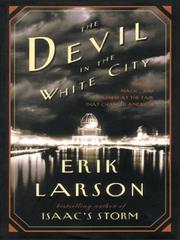
The 1893 Chicago World's Fair cut against the serial killer H. H. Holmes working a few blocks away. The book everyone means when they say Erik Larson, and the clearest demonstration of the two-track structure.

The 1900 Galveston hurricane and the weather bureau man who told the city it was safe. His first narrative history and his shortest; read it second to see the method before it hardened into a formula.
The War Books
BeginnerRead the three books set around the world wars, where the structure is tightest and the endings are ones you already know.
▸ Study plan for this stage
Pace: 6–7 weeks. Dead Wake is 448 pages, In the Garden of Beasts 481 and The Splendid and the Vile 608. Dead Wake is the fastest — it is a countdown and reads in under a week. In the Garden of Beasts is the slowest despite being shorter, because nothing accelerates. The Splendid and the Vile is diary-driv
- Dead Wake is the most disciplined book he has written: the Lusitania and the U-boat converging hour by hour, with the two tracks genuinely bound to each other rather than merely alternating
- It is also the clearest demonstration of his central effect — knowing the ending makes the suspense worse, not better, because every ordinary detail is retrospectively doomed
- Roughly 1,200 people died in the sinking, and Larson gives individual passengers names and plans before the torpedo; that is the technique and it is deliberately hard to read
- In the Garden of Beasts swaps the countdown for a slow dawning: the American ambassador William Dodd and his daughter Martha in Berlin as 1933 and 1934 happen around them
- Martha's affairs with Nazi and Soviet officials are the book's most uncomfortable material, and Larson lets her be foolish rather than explaining her
- It is the most morally awkward book in the path, because the device that generates suspense elsewhere here generates dread about a regime whose crimes are still ahead
- The Splendid and the Vile covers Churchill's first year in office through the Blitz, built from family diaries and private papers rather than strategy documents
- It is his biggest seller and the warmest book he has written, which is worth noticing: the same formula produces a very different feeling when the catastrophe is survived
- Why does Dead Wake work better than The Devil in the White City if both use the same structure? Be specific about what binds the two strands.
- Larson names individual Lusitania passengers before the sinking. Is that respect for the dead or manipulation of the reader — and can it be both?
- In the Garden of Beasts has no countdown. What replaces it as the engine, and does it succeed?
- How does Larson handle Martha Dodd's political sympathies — does he judge her, and should he?
- The Splendid and the Vile is assembled from diaries. What does that source base let him show about the Blitz that a military history could not?
- Which of these three would you defend against the charge that Larson turns history into entertainment?
- Read the last forty pages of Dead Wake in one sitting. The compression is the point and breaking it up destroys it.
- In In the Garden of Beasts, mark the moment where Dodd stops explaining the regime away. Larson dates it precisely and it is later than you expect.
- Track which diarists The Splendid and the Vile relies on most, and ask what a book built on different diaries would emphasise.
- Write a paragraph comparing how each of the three books handles civilian death. The differences are choices, not accidents.
Next up: Having seen the formula at its tightest, the remaining histories let you watch it working with the seams showing.

The Lusitania and the U-boat that sank her, hour by hour. The most disciplined book he has written, and the one where knowing the outcome makes the suspense worse rather than better.
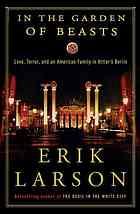
The American ambassador to Berlin and his daughter watching 1933 happen around them. Read after Dead Wake because it swaps the countdown structure for a slow-dawning one, and it is the more uncomfortable book.

Churchill's first year in office, through the Blitz, drawn from diaries and family papers. His biggest-selling book and the natural companion to In the Garden of Beasts, one capital to the other.
The Other Histories
IntermediateRead the two remaining narratives, one about the invention of wireless and one about the road to the Civil War.
▸ Study plan for this stage
Pace: 5–6 weeks. Thunderstruck is 480 pages and The Demon of Unrest 582. Thunderstruck reads quickly once the Crippen strand starts moving; the Marconi material is slower and some readers skim it, which is worth resisting. The Demon of Unrest is a five-month countdown told in near-daily entries and asks f
- Thunderstruck is the most mechanical use of the two-track device: Marconi racing to transmit across the Atlantic, and Hawley Crippen murdering his wife in London, connected only because a wireless message led to Crippen's arrest at sea
- The connection is real but thin, and this is the book where you can see the formula being applied rather than discovered — which is why it is more instructive than the earlier ones
- The Marconi strand is genuinely good technical history: a self-taught inventor, a hostile scientific establishment, and a technology whose theory nobody yet had
- The Demon of Unrest covers the five months between Lincoln's election and the firing on Fort Sumter, told largely through the diaries of participants including Mary Chesnut
- It is his most political book: the countdown is to a war, and the actors spend the whole book insisting it will not happen
- The slowness is deliberate and is the book's argument — secession was not a moment but a series of small refusals to act, and reading it in near-real time is the only way to feel that
- Both books ask more of the reader than the war books do, and neither is where a new reader should start
- Does the wireless-and-murder connection in Thunderstruck justify a whole book, or would two essays have done it better?
- What does Marconi's story tell you about invention that a straightforward biography would miss?
- The Demon of Unrest is a countdown to something everyone in it denies is coming. How does Larson keep that from becoming repetitive — and does he?
- How does he use Mary Chesnut's diary, and what does relying on a slaveholding diarist for so much of the texture cost the book?
- Where is Larson at his best across these two books: on technology, on murder, or on political drift?
- Read the Marconi chapters of Thunderstruck consecutively, skipping the Crippen ones, then do the reverse. Decide whether the interleaving added anything.
- Keep a date column while reading The Demon of Unrest. The near-daily structure only pays off if you are tracking the calendar.
- List what each book's two strands share thematically. For one of them the list will be short, and that is the finding.
- Compare the opening chapter of The Demon of Unrest with that of Dead Wake. Same device, very different confidence.
Next up: The narrative histories are done; the early journalism shows you a different and much drier writer underneath them.
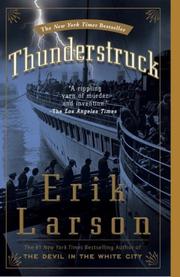
Marconi's race to transmit across the Atlantic braided with the Crippen murder, which was solved by the technology. The most mechanical use of the two-track device; read it once you can see the seams and enjoy them anyway.
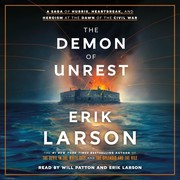
The five months between Lincoln's election and the firing on Fort Sumter. His most recent book and the one that most depends on your patience with a slow, documented countdown.
The Early Journalism
IntermediateGo back to the reported books he wrote before the narrative histories, and see how different the writer was.
▸ Study plan for this stage
Pace: 3 weeks. Lethal Passage is 276 pages and The Naked Consumer 275 — both short and both slower reading than the histories, because argument does not carry you the way narrative does. Read Lethal Passage properly; treat The Naked Consumer as an optional last stop.
- These are reported argument books, not narrative histories, and the writer sounds different: a working investigative journalist rather than a storyteller
- Lethal Passage traces one handgun from manufacture to a Virginia school shooting, following it through the distribution chain, the dealers and the regulatory gaps that let it travel
- Its method is the opposite of the later books: a single object followed forward, with the argument stated openly rather than dramatised
- It explains the investigative habits underneath the narrative histories — the document requests, the paper trails, the willingness to keep asking who signed what
- The Naked Consumer, from 1992, is about companies assembling dossiers on shoppers from purchase records and mailing lists, and it is eerily early on a subject that became inescapable
- Its detail is thoroughly dated — the specific technologies are gone — while its thesis is not, which is an unusual and interesting failure mode for a book
- It is a completist's stop and honestly labelled as such: read it for the historical curiosity, not for the argument, which later writers have made better
- Together they answer the question the path raises: the reporting under the storytelling is real, which is why the histories hold up better than their pacing suggests
- What does following a single gun let Lethal Passage show that statistics about firearms could not?
- Where is Larson's own position visible in Lethal Passage, and how does that compare with his invisibility in the histories?
- Which investigative habits from Lethal Passage can you point to in Dead Wake or The Demon of Unrest?
- The Naked Consumer got the thesis right and every detail wrong. What does that suggest about writing on technology?
- Having read all nine books, is the two-track formula a method or a mannerism — and does your answer change per book?
- Diagram the gun's journey in Lethal Passage from factory to crime scene. The diagram is the book's argument.
- Pick one chapter of Lethal Passage and one of Dead Wake and compare paragraph rhythm. It is the same writer with a different objective.
- Skim The Naked Consumer for its predictions and mark each one as right, wrong, or unfalsifiable.
- Rank all nine books by how well the formula served the subject, and write one line on the bottom two.
- Write a short recommendation for a friend: which two Larson books, and in what order. You are now in a position to disagree with this path.
Next up: That is the full shelf, from the reported early work to the current histories, and you can now say exactly what the two-track structure is for.
How one handgun reached a teenager who used it in a Virginia school, traced back through the American firearms trade. Argumentative reportage rather than narrative history, and read here because it explains the investigative habits underneath the later storytelling.
A 1992 book on how companies were already assembling dossiers on shoppers. Dated in its detail and eerily early in its thesis; strictly a completist's stop at the end of the path.
Discussion
Keep reading
Paths that share books, cover the same subject, or open a related topic.