David McCullough Reading Order: Where to Start
David McCullough wrote two kinds of book — enormous presidential biographies and shorter narratives about a single engineering feat or a single year — and starting with the wrong kind is why people bounce off him. Begin with the compact narratives, which are where his gift for pacing shows fastest, then take on the two big biographies that won him his Pulitzers, then work back to the early construction books that are his most underrated writing. The books are independent of each other, so the order here is about difficulty and commitment rather than continuity.
Start Here: The Short Narratives
BeginnerMeet McCullough at his most accessible — a tight story, a small cast, and a subject you can finish in a week.
▸ Study plan for this stage
Pace: 3–4 weeks. 1776 is 386 pages and moves at the speed of the campaign it describes — a week. The Wright Brothers is next and reads faster than its listing suggests, since much of it is letters and short scenes. The Johnstown Flood is 302 pages and can be done in four or five sittings. Read all three b
- McCullough's raw material is almost always personal correspondence — diaries, family letters, dispatches — which is why his people sound like themselves and why he is weakest where the letters are thin
- 1776 deliberately covers one year rather than the war: the siege of Boston, the disaster on Long Island, the retreat across New Jersey, and Trenton at the end
- The book's actual argument is that the Revolution came within days of collapsing several times, and that Washington's competence in 1776 was contested and often poor
- The Wright Brothers is the purest example of the method: two self-taught mechanics, an incremental engineering problem, and a family archive dense enough to narrate day by day
- Their real breakthrough was control rather than lift — wing-warping and a workable understanding of steering — which is the technical point the book keeps returning to
- The Johnstown Flood was his first book and describes a dam failure that killed over two thousand people in 1889; it is the shortest thing he wrote and the disaster-narrative instinct is already complete in it
- That book is also the least flattering to American institutions in the whole path — the dam was owned by a private club, and the accountability question is left uncomfortable
- 1776 ends in December with almost nothing won. What has McCullough persuaded you the year actually decided?
- Where in The Wright Brothers does the technical problem become genuinely legible, and how does he manage that without diagrams?
- What does McCullough do with a letter that a historian working from official records could not do, and what does he lose in exchange?
- The Johnstown Flood assigns responsibility carefully. Who does he think is culpable, and how does he avoid saying it outright?
- Across these three, what kind of person interests him — and who is systematically absent from his pages?
- Read 1776 with a map of New York and New Jersey open. The retreat only makes sense geographically, and the book assumes you are picturing it.
- Pick one chapter of The Wright Brothers and list every source visibly in play — letter, diary, newspaper, interview. That inventory is his working method.
- After The Johnstown Flood, write two paragraphs: one on what caused the failure, one on who was held responsible. The gap between them is the book.
- Note which of the three you would hand to a non-reader of history, and why. It is the best test of what McCullough is for.
Next up: You now know the voice at short range, which is exactly the trust the two enormous biographies require before you open them.
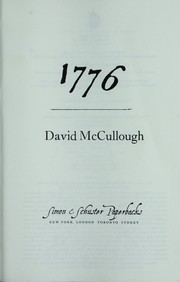
One year of the Revolutionary War, from the siege of Boston to Trenton. The natural entry point: short, propulsive, and it doubles as background for John Adams later in this path.
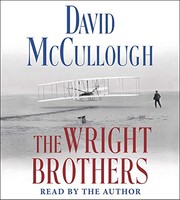
Two bicycle mechanics from Dayton solve flight. Read second because it is the purest example of his method — obsessive craftsmen, family letters, a problem solved incrementally — with none of the scale that makes the biographies daunting.
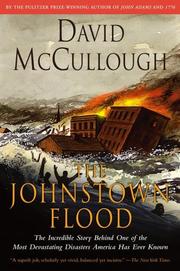
His first book, and a dam failure that killed over two thousand people in 1889. Placed here because it is the shortest thing he wrote and shows the disaster-narrative instinct already fully formed.
The Presidential Biographies
IntermediateCommit to the two long lives that define his reputation, and see how he builds a character from correspondence.
▸ Study plan for this stage
Pace: 10–12 weeks, and plan it. Truman is 1,117 pages, John Adams 751 and Mornings on Horseback 445 — over 2,300 pages of biography. At 30 pages a day Truman alone is five weeks. Read Truman first, take a week off, then John Adams, then Mornings on Horseback as relief: it is half the length and stops befo
- Truman is McCullough's Pulitzer winner and the fullest version of his approach — a failed haberdasher and machine politician who ends the war, recognises Israel, desegregates the armed forces and fires MacArthur
- The book's structural bet is that the Missouri chapters matter as much as the presidency, and roughly the first third is spent before Truman reaches national office
- John Adams is built on one of the great correspondences: Adams with Abigail, and Adams with Jefferson across a fifty-year quarrel and reconciliation
- The Adams-Jefferson relationship is the book's spine, and McCullough is openly partisan for Adams, which is the standard and fair criticism of it
- 1776 pays off here — the war Adams argued into existence is one you have already watched from the field
- Mornings on Horseback is a deliberately partial life: Theodore Roosevelt from asthmatic childhood to the Dakota badlands, stopping before the political career everyone else writes about
- That choice is the most interesting thing about it — the book is about how a body and a family produced a temperament, and it ends the moment the temperament goes to work
- Truman gives a third of its length to the years before power. What does that investment buy when the atomic bomb decision arrives?
- How does McCullough handle Hiroshima and Nagasaki — what does he include, what does he decline to argue, and is the treatment adequate?
- Where is the Adams partisanship visible on the page, and does it distort a specific judgement or only the tone?
- What can the Adams-Jefferson letters show that no third-party account of the founding could?
- Why stop Mornings on Horseback before the presidency, and does the book earn the omission?
- After 2,300 pages, what is McCullough's implicit theory of what makes a good president?
- Keep a chronology card for Truman covering 1945 alone. The year is dense enough that readers routinely lose the order of events.
- Read a few of the Adams-Jefferson letters directly in a public-domain edition alongside the book, and see how much McCullough is quoting versus paraphrasing.
- For Mornings on Horseback, list what a conventional Roosevelt biography would have included that this one does not, then decide whether you missed it.
- Time yourself over a week of Truman and calculate honestly when you will finish. Abandoning it at page 400 is worse than scheduling it properly.
Next up: Having watched him build a person out of letters, you are ready for the books where the protagonist is a project rather than a person.
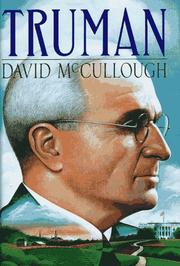
A thousand pages on the failed haberdasher who ended the war and desegregated the army. His Pulitzer winner and the fullest version of his approach; read it first of the two because the twentieth-century material is easier to hold than the eighteenth.
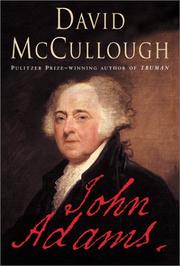
Adams and Jefferson, argued out over fifty years of letters. Reads far better once 1776 has given you the war and Truman has trained you on the length.
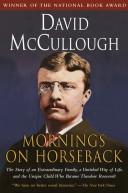
Theodore Roosevelt from asthmatic childhood to the Dakota badlands, stopping before the presidency. A deliberately partial biography, and the right third one because it shows him choosing what to leave out.
The Engineering Histories
IntermediateRead the construction books, where the protagonist is a project and the drama is whether it can be finished at all.
▸ Study plan for this stage
Pace: 6–7 weeks. The Great Bridge is 622 pages and The Path Between the Seas 698. Both are denser than the biographies because there is technical material to hold, so 25–30 pages a day is a better target than 40. Read The Great Bridge first: one bridge, one family, fourteen years. The Path Between the Sea
- In these books the protagonist is a project, and the question is not who wins but whether the thing can be finished at all
- The Great Bridge is really about the Roeblings: John Roebling dies before construction starts, Washington Roebling is disabled by caisson disease, and Emily Roebling carries the work
- Caisson disease — the bends, then unexplained — is the book's central technical and human fact, and it is described in enough detail to be unpleasant
- Tammany-era corruption runs alongside the engineering: the bridge is simultaneously a feat of design and a machine for distributing contracts
- The Path Between the Seas is two stories — the French attempt under de Lesseps that collapsed in bankruptcy and mass death, and the American one that succeeded
- Yellow fever and malaria are the actual antagonists, and the medical breakthrough about mosquito transmission is what changes the outcome; the French death toll ran into the tens of thousands
- The book does not skip the politics: the American canal followed a US-backed Panamanian secession from Colombia, and McCullough narrates it plainly
- Who is the main character of The Great Bridge, and how does McCullough manage a protagonist who spends most of the book in a sickroom?
- How does he make the engineering legible to a reader with no technical background — what does he explain, and what does he decide not to?
- The French failure in Panama is treated as tragedy rather than farce. What does that framing get right, and what might it excuse?
- What actually changed between the French and American attempts — capital, engineering, medicine, or politics? McCullough gives an answer; do you accept it?
- Both books celebrate builders. Where does the celebration crowd out the cost, and where does McCullough insist on the cost?
- Look at photographs of the Brooklyn Bridge caissons before reading those chapters; the scale is very hard to picture from prose alone.
- Track the death toll figures McCullough gives for the French canal effort, and note how he introduces them. The placement is a deliberate rhetorical choice.
- Write a paragraph on Emily Roebling's actual role, using only what the book documents rather than what later accounts claim.
- Sketch a timeline of the Panama project with the French and American phases on the same line. The forty-year span is the thing readers lose.
Next up: You have now read him at full strength, which is the right footing for the late books, where the form loosens and the judgement is more contested.
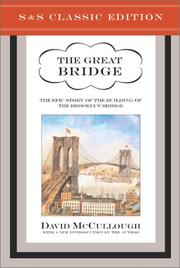
The building of the Brooklyn Bridge and the Roebling family that nearly died doing it. The book most often named as his best, and it lands harder once you know how he handles a family across decades.
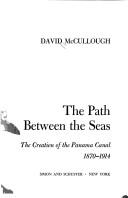
Forty years, two nations and a canal through Panama. His most complex book — French failure, revolution, yellow fever, American engineering — and the one that most needs the patience the earlier volumes build.
The Later Books
IntermediateFinish with the late work, which is looser and more essayistic, and know what you are getting.
▸ Study plan for this stage
Pace: 4–5 weeks. The Greater Journey is 734 pages but ensemble-structured, so it can be read in sections rather than continuously — treat each figure's thread as a unit. The Pioneers is 352 pages and quick. Read the criticism of The Pioneers after the book, not before, so you form your own view first.
- The Greater Journey is the loosest thing he wrote: Americans in nineteenth-century Paris — Morse, Cassatt, Sumner, Holmes, and the medical students — held together by a city rather than a narrative
- Without a single project or life to organise it, the McCullough pacing that carried the earlier books has nothing to pull against, which is why it divides readers
- Its strongest material is the medical training: American doctors learning in Paris hospitals what they could not learn at home, and bringing it back
- The Pioneers is drawn from one family's papers in Marietta and tells the settling of the Ohio country through the Northwest Ordinance
- It is his most contested book: historians criticised it for foregrounding the settlers' virtue and the ban on slavery in the Ordinance while giving little space to the Native nations being dispossessed
- Reading it last is deliberate — the criticism is much easier to weigh once you know how he handles evidence when the archive is rich and his sympathies are engaged
- Together these two show the method's limits: it needs a project, a family archive, or a single year, and it thins out when given a theme instead
- What holds The Greater Journey together, and is it enough? Name the thread you found strongest.
- Which of the Paris figures would have sustained a full McCullough book, and why did he not write it?
- In The Pioneers, whose papers is he working from, and what does that source base structurally prevent him from seeing?
- The Northwest Ordinance banned slavery in the territory and also enabled dispossession. How does the book weigh those, and how would you?
- Having read the whole path, where is McCullough most trustworthy and where should a reader check him against another historian?
- Read The Greater Journey by following one figure's chapters straight through, then reread in published order. Decide which arrangement served you better.
- After The Pioneers, read a critical review of it and a general history of Native removal in the Ohio country, then write down what you would add to the book.
- Rank all ten books in the path by how much you trust them, and write one line of justification for the bottom two.
- Pick the McCullough book you would reread. That choice is the most useful summary of what his method is actually good for.
Next up: That is the whole shelf, and you can now say precisely which subjects his method illuminates and which it flattens.
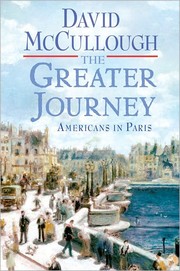
Americans in nineteenth-century Paris — Morse, Cassatt, Sumner, Holmes. Structurally the loosest thing he wrote, an ensemble rather than a narrative, so read it once you already like the voice.

The settling of the Ohio country, drawn from one family's papers. His last book and his most contested; worth reading last both chronologically and because the criticism of its framing is easier to weigh once you know the rest.
Discussion
Keep reading
Paths that share books, cover the same subject, or open a related topic.