David Foster Wallace Reading Order: Where to Start
This curriculum moves through David Foster Wallace's work in the order the learner requested — essays, then short fiction, then Infinite Jest — while respecting an expert starting level. Each stage builds the conceptual and stylistic vocabulary needed for the next: the essays establish DFW's critical mind and prose voice, the story collections deepen comfort with his formal experiments and emotional registers, and Infinite Jest arrives last as the culmination of everything learned.
The Critical Mind: Essays & Nonfiction
ExpertInternalize DFW's argumentative voice, his sincerity-vs-irony thesis, and his method of embedding rigorous ideas inside accessible, digressive prose — the intellectual framework that underlies all his fiction.
▸ Study plan for this stage
Pace: 10–12 weeks total (~3–4 weeks per book); aim for 20–25 pages/day on weekdays with one longer 40-page session on weekends. "A Supposedly Fun Thing" first (warmup to DFW's essayistic voice), then "Consider the Lobster" (his most argumentatively dense nonfiction), then "Both Flesh and Not" (synthesis a
- Sincerity vs. Irony: DFW's central thesis that postmodern irony has become a trap — a shield against genuine feeling — and his argument for a 'new sincerity' as the only honest artistic response, visible across all three collections.
- The Digressive Essay Form: How DFW uses footnotes, parenthetical asides, and structural tangents not as decoration but as argumentative tools that enact the very complexity of thought he is describing.
- Metafictional Self-Awareness in Nonfiction: DFW's habit of foregrounding his own presence, biases, and limitations as a narrator/journalist (most explicit in 'A Supposedly Fun Thing' and 'Consider the Lobster'), turning self-consciousness into an ethical stance.
- Attention as a Moral Act: The argument — threaded through the cruise-ship essay, the lobster essay, and the tennis pieces in 'Both Flesh and Not' — that truly paying attention to something (a person, an animal, a text) is itself an ethical and political gesture.
- The Democratization of Difficulty: DFW's technique of smuggling rigorous philosophical, linguistic, and ethical ideas (Kafka, Wittgenstein, utilitarian ethics) inside pop-culture frames (TV, cruises, lobster festivals) to make them available to a general reader without dumbing them down.
- Authority, Expertise, and the Persona of the Earnest Amateur: How DFW constructs an essayistic 'I' that is simultaneously hyper-informed and self-deprecating, and why this persona is itself an argument about intellectual honesty.
- Language, Usage, and Power: The extended argument in 'Consider the Lobster' ('Authority and American Usage') about how prescriptivism vs. descriptivism in language is really a debate about class, authority, and democratic values.
- The Athlete as Artist: The recurring motif in 'Both Flesh and Not' (Tracy Austin, Roger Federer) that elite athletic performance illuminates questions about consciousness, grace, and the limits of language to capture embodied experience.
- After reading 'A Supposedly Fun Thing,' can you articulate DFW's critique of the cruise industry not merely as consumer satire but as a philosophical argument about death-denial, managed experience, and the commodification of fun? What specific rhetorical moves does he use to elevate the piece beyond journalism?
- In 'Consider the Lobster,' DFW asks whether it is morally okay to boil a sentient creature alive. How does he use the structure of the essay — the Maine Lobster Festival as a frame — to force the reader into the ethical discomfort he is describing, rather than simply stating the argument?
- 'Authority and American Usage' (Consider the Lobster) is ostensibly a book review. How does DFW transform it into a treatise on language, democracy, and class? What is his own position, and how does he signal it while maintaining the essay's argumentative fairness?
- Across all three collections, DFW is suspicious of irony yet is himself deeply ironic. How does he distinguish between 'bad' (defensive, distancing) irony and the kind of irony he practices? Use specific essays from at least two of the three books to support your answer.
- In 'Both Flesh and Not,' the essays on Tracy Austin and Roger Federer bracket the collection. What unified argument do they make about athletic genius, articulacy, and the relationship between doing and knowing? How does this connect to DFW's broader nonfiction project?
- How does DFW's use of the footnote function differently in his essays versus what you would expect in academic writing? Choose two essays across the three books and analyze what argumentative or emotional work the footnotes are performing.
- Footnote Mapping: Pick any single long essay (e.g., 'A Supposedly Fun Thing' or 'Authority and American Usage') and read it twice — once ignoring all footnotes, once integrating them. Write a one-page comparison of how the argument and tone change. This trains you to see footnotes as structural, not supplementary.
- Sincerity Audit: Choose three consecutive pages from 'Consider the Lobster' and mark every moment of irony with an 'I' and every moment of apparent sincerity with an 'S.' Then write a paragraph explaining how DFW manages the transition between the two modes — and whether the distinction holds up.
- Imitation Essay (500–800 words): Write a short personal essay in DFW's essayistic style about an ordinary consumer experience (a fast-food meal, a theme park, a streaming binge). Embed at least one genuine ethical or philosophical question inside the piece without announcing it explicitly. Compare your draft to the opening of 'A Supposedly Fun Thing.'
- Argument Extraction: For 'Authority and American Usage,' strip the essay down to a bare-bones outline — thesis, three main claims, evidence, counterarguments addressed. Then compare your outline to the actual digressive structure of the essay. Write a reflection: what does the digression add that the outline cannot capture?
- Comparative Close-Read (Athletic Essays): Read the Tracy Austin piece and the Roger Federer piece in 'Both Flesh and Not' back-to-back in a single sitting. Write a one-page dialogue imagining DFW arguing with himself about whether language can ever adequately describe physical grace. Use only evidence from those two essays.
- Vocabulary & Allusion Log: Keep a running document as you read all three books. Every time DFW references a philosopher, writer, or theoretical concept (Kafka, Wittgenstein, utilitarianism, poststructuralism), write a two-sentence gloss of who/what it is and why DFW is invoking it at that moment. By the end of 'Both Flesh and Not,' you should have a personal intellectual glossary of ~30–40 entries
Next up: Mastering DFW's essayistic argumentative framework — his sincerity thesis, his digressive structure, and his ethical use of attention — gives you the critical lens to recognize how these same ideas are embedded, disguised, and dramatized in his long-form fiction, making the transition to works like 'Infinite Jest' or 'The Pale King' a process of recognition rather than bewilderment.
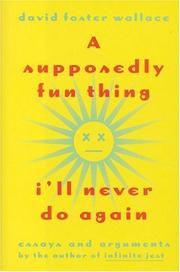
The ideal entry point into DFW's nonfiction: the title essay and 'E Unibus Pluram' lay out his core critique of postmodern irony and his case for a new sincerity, which is the lens through which all his fiction should be read.
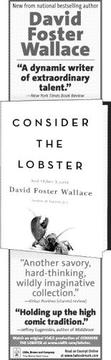
Read second because it shows a more mature, morally urgent essayist — the title essay and 'Joseph Frank's Dostoevsky' deepen the sincerity argument and introduce the ethical seriousness that saturates Infinite Jest.
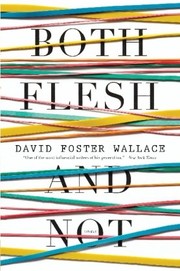
The posthumous collection rounds out the essay arc, including 'Federer Both Flesh and Not' and the denser, more technically demanding pieces that reward the expert reader and complete the picture of his nonfiction range.
The Short Fiction: Apprenticeship & Experiment
ExpertDevelop fluency with DFW's formal experiments — footnotes, second-person address, nested frames, and tonal whiplash — in the more contained laboratory of the short story before facing the novel's full scale.
▸ Study plan for this stage
Pace: 10–12 weeks total: ~3 weeks on Girl With Curious Hair (~25–30 pages/day, reading each story twice — once for plot, once for form); ~3 weeks on Brief Interviews With Hideous Men (~20–25 pages/day, with extra time for the interview transcripts and "octet" sections); ~4 weeks on Oblivion (~15–20 pages/
- Footnotes as narrative architecture: how DFW uses footnotes not merely for annotation but as a competing or subversive voice that destabilizes the main text's authority — first visible in Girl With Curious Hair and fully weaponized in Oblivion
- Second-person address and reader implication: the 'you' as a tool of coercion, seduction, and ethical entrapment, central to the 'B.I. #20' climax in Brief Interviews and the game-show metafiction of 'Lyndon' in Girl With Curious Hair
- Nested and recursive frames: stories-within-stories, transcripts, and interview formats that raise questions about who is really speaking and who is being exposed — the structural backbone of Brief Interviews With Hideous Men
- Tonal whiplash and sincerity under irony: DFW's signature move of pivoting from postmodern comedy to devastating emotional exposure, most nakedly executed in 'Good Old Neon' and 'The Depressed Person' in Oblivion and Brief Interviews respectively
- The hideous man as cultural diagnosis: how the male monologists of Brief Interviews function as case studies in solipsism, misogyny, and the failure of self-awareness, and what the silent female interviewer's absence means structurally
- Formal mimicry and parody: Girl With Curious Hair's stories imitate TV logic ('My Appearance'), hard-boiled crime ('Girl With Curious Hair'), and political biography ('Lyndon') — using genre as a lens to critique the forms themselves
- The self as performance and trap: 'Good Old Neon' and 'Octet' (Brief Interviews) both stage the impossibility of authentic self-expression, anticipating the themes of Infinite Jest
- Scale and containment: understanding how the short story form forces DFW's maximalist impulses into compression, making formal choices more legible and easier to analyze than in novel-length work
- In 'Girl With Curious Hair,' how does DFW use the Punk narrator's flat, affectless voice to critique both the character and the reader who finds him compelling — and how does this differ from the self-aware monologists in Brief Interviews With Hideous Men?
- Brief Interviews With Hideous Men withholds the female interviewer's questions entirely. What is the structural and ethical effect of that absence, and how does it change what the reader is forced to do?
- How does 'Good Old Neon' in Oblivion use the nested frame (Neal's suicide note / DFW-as-character / the reader) to interrogate the sincerity problem — the idea that any attempt at authentic self-expression is immediately undermined by the performance of it?
- 'The Depressed Person' in Brief Interviews is written almost entirely in clinical, distancing language. How does that formal choice produce emotional effects that a conventionally empathetic style could not, and what is DFW arguing about the relationship between language and suffering?
- Across all three collections, how does DFW's use of footnotes evolve — from the relatively conventional apparatus in Girl With Curious Hair to the structurally load-bearing footnotes in Oblivion's 'The Suffering Channel'?
- What does 'Octet' in Brief Interviews — a story that directly addresses the reader and asks for their help — reveal about DFW's theory of what fiction is supposed to do, and how does it connect to the formal experiments in the surrounding stories?
- Footnote mapping: Choose one story with heavy footnote use (e.g., 'Octet' or 'The Suffering Channel') and physically diagram the relationship between the main text and each footnote — label each footnote as 'additive,' 'subversive,' 'recursive,' or 'performative.' Write a one-paragraph argument about what the footnote architecture is doing to the reader's experience of authority and trust.
- Voice imitation drill: Write 1–2 pages in the style of one of the Brief Interviews monologists — a male speaker who is simultaneously self-justifying and self-incriminating. Then write a one-page reflection on what formal choices (sentence length, hedging language, rhetorical pivots) you used, and what they reveal about the character's psychology.
- The silent interlocutor exercise: Reread B.I. #20 (the longest and climactic interview in Brief Interviews With Hideous Men). Write out the questions you believe the female interviewer asked, based solely on the man's responses. Then write a short essay on how your reconstructed questions change the moral valence of the story.
- Tonal pivot analysis: Identify three moments across the three collections where DFW pivots sharply from irony/comedy to genuine emotional exposure. For each, write a close-reading paragraph that identifies the exact sentence or image where the shift occurs and explains the technical mechanism (diction change, shift in address, intrusion of a new voice, etc.).
- Comparative form essay: Write a 600–800 word essay comparing how 'My Appearance' (Girl With Curious Hair) and 'The Depressed Person' (Brief Interviews) each use a specific borrowed form — talk-show logic and clinical case-study language, respectively — to make an argument that the form itself could not make sincerely.
- Re-reading journal: After finishing each collection, write a one-page entry answering: 'Which story most resisted my understanding on first read, and what did a second reading reveal that changed my interpretation?' Track how your reading strategies adapt across the increasing difficulty from Girl With Curious Hair to Oblivion.
Next up: Mastering DFW's formal toolkit — footnotes, nested frames, unreliable monologue, and tonal whiplash — in the compressed laboratory of these three collections gives the reader the exact interpretive muscles needed to navigate the same devices operating simultaneously across a thousand pages in Infinite Jest.

His debut story collection, written before Infinite Jest, shows the postmodern techniques he was consciously wrestling with; reading it first reveals the raw ambition and the problems he was trying to solve.
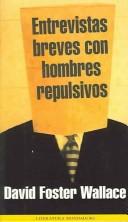
A formal leap forward: the interview structure, the aggressive second-person, and the unflinching emotional honesty here are direct rehearsals for Infinite Jest's most demanding passages.
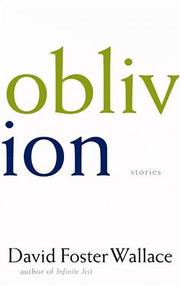
His most difficult and mature story collection, written while Infinite Jest was already behind him — the stories here operate at novel-length complexity and serve as the final warm-up for the sustained attention Infinite Jest demands.
The Summit: Infinite Jest
ExpertRead Infinite Jest as a fully prepared expert — recognizing its essay-derived ideas, its short-fiction formal techniques, and its synthesis of entertainment, addiction, sincerity, and grief into a single maximalist structure.
▸ Study plan for this stage
Pace: 12–16 weeks, ~50–60 pages/day (accounting for endnotes); read endnotes inline as encountered; reserve the final 2 weeks for re-reading key sections, cross-referencing the novel's timeline, and completing synthesis exercises
- Maximalist structure and the 'annular' narrative form: Infinite Jest's non-linear, recursive plot mirrors its thematic obsession with cycles of addiction, entertainment, and self-destruction — the ending loops back to the beginning, demanding re-reading as an act of meaning-making
- The endnotes as a second text: Wallace uses 388 endnotes not merely as footnotes but as a parallel narrative layer, housing entire character backstories, filmographies, and philosophical digressions — they enact the novel's argument about attention, interruption, and the cost of total information
- Entertainment, addiction, and the 'Entertainment' itself: The lethal film at the novel's center is a literalized metaphor for passive consumption — Wallace diagnoses late-capitalist media culture as a delivery system for a pleasure so complete it annihilates the will to live
- Sincerity vs. irony — the post-postmodern wager: Building on Wallace's earlier essays, Infinite Jest dramatizes the failure of ironic detachment as a survival strategy; characters like Don Gately and Hal Incandenza are tested by whether genuine feeling can be recovered after irony has hollowed out l
- Grief, trauma, and the limits of articulation: James Incandenza's suicide, Hal's progressive aphasia, and Gately's near-death vigil all circle the same problem — the self's inability to communicate its interior suffering — which Wallace frames as both a personal and a cultural emergency
- The Enfield Tennis Academy vs. Ennet House: the novel's two institutional settings function as structural counterweights, mapping the tension between hyper-competitive achievement culture and twelve-step recovery culture, both of which demand total submission of the individual self
- Subsidized Time and political satire: The novel's near-future conceit — years named after corporate sponsors, a North American superstate (O.N.A.N.) — extends Wallace's essayistic critique of commodification into geopolitical allegory, satirizing nationalism, waste, and the colonization of public li
- Short-fiction formal techniques scaled up: Wallace imports the close third-person interiority, the mid-sentence tonal pivots, and the deployment of vernacular voice from his short fiction into a 1,000-page structure, making each chapter function as a self-contained unit while accumulating into a sin
- How does the novel's deliberately fractured chronology — beginning near the end, withholding the 'Year of the Depend Adult Undergarment' until late — force the reader into an experience structurally analogous to addiction and compulsive re-consumption?
- What is the relationship between Hal Incandenza's opening scene of total communicative breakdown and the novel's sustained argument that irony and over-intellectualization destroy authentic self-expression?
- How does Wallace use the endnote apparatus to implicate the reader in the novel's central theme — that the pursuit of total, frictionless entertainment is lethal — by making reading itself effortful, fragmented, and physically demanding?
- In what ways do the Alcoholics Anonymous and Narcotics Anonymous recovery scenes at Ennet House function as Wallace's most earnest, least ironic spaces in the novel, and what does it mean that sincerity is located in a community of addicts rather than among the intellectually elite at E.T.A.?
- How does James Incandenza's filmography (endnote 24) operate as a miniature autobiography of Wallace's own artistic anxieties about the relationship between the artist, the audience, and the work's potential to harm?
- What synthesis does Infinite Jest achieve between the ideas Wallace explored in his essays (e.g., television's effect on fiction, the crisis of sincerity) and the formal ambitions of his short fiction — and where, if anywhere, does the synthesis strain or break down?
- Build a living timeline: Keep a running document tracking every datable event across the novel's chronology — including pre-novel backstory — and reconstruct the 'missing' Year of the Depend Adult Undergarment from inference. Note where Wallace withholds information and hypothesize why.
- Endnote audit: Select 10 endnotes of varying length (including the Filmography, the medical/pharmaceutical notes, and at least one extended Gately memory) and write a one-paragraph analysis of each: What would be lost if this material were in the main text? What does its placement in the notes enact thematically?
- Character voice transcription: Choose one page each of Hal's narration, Don Gately's close-third narration, and a minor character's section. Annotate the specific lexical, syntactic, and tonal choices Wallace uses to differentiate them, then write one paragraph in each voice on the same subject (e.g., 'waiting').
- Thematic cross-reference map: Create a two-column chart pairing specific scenes or passages in Infinite Jest with the essayistic or short-fiction ideas they dramatize (e.g., the 'Entertainment' ↔ Wallace's arguments about television; Hal's aphasia ↔ the crisis of sincerity; Gately's AA meetings ↔ the redemption of cliché). Write two sentences explaining each pairing.
- The 'annular' re-read: After finishing the novel, re-read the first 17 pages (Hal's interview scene) and the final ~50 pages (Gately on the beach). Write a 500-word close reading arguing for a specific interpretation of how the ending generates the beginning — commit to a thesis and defend it with textual evidence.
- Synthesis essay: Write a 1,000-word essay answering the question: 'Does Infinite Jest succeed on its own terms — does it offer a way out of the entertainment/addiction trap it diagnoses, or does it reproduce the very problem it critiques?' Use at least four specific passages from the novel as evidence.
Next up: Having navigated Infinite Jest's full maximalist architecture and internalized Wallace's synthesis of essay, fiction, and cultural critique, the reader is now positioned to assess his legacy — examining the later, leaner work, the unfinished Pale King, and the critical conversation about what Wallace's career means as a whole.

The culmination of the entire curriculum: every essay argument, every formal experiment, and every emotional risk DFW took in his shorter work converges here. Reading it last means arriving with the full context to appreciate both its difficulty and its profound generosity.
Discussion
Keep reading
Paths that share books, cover the same subject, or open a related topic.