Competitive Strategy: The Best Books, In Order
This curriculum builds a rigorous, practitioner-grade mastery of competitive strategy — starting from the structural frameworks that define industries, moving through positioning and differentiation, then into the economics of durable advantage (moats), and finally into dynamic, real-world strategy execution. Because the learner starts at an intermediate level, the path skips introductory business primers and goes straight into canonical, analytically demanding texts that build on each other systematically.
Structural Foundations: Industry & Competitive Forces
IntermediateUnderstand the five forces framework, industry structure analysis, and the foundational logic of why some industries are structurally more profitable than others — giving you the vocabulary for everything that follows.
▸ Study plan for this stage
Pace: 8–10 weeks, ~40–50 pages/day (including re-reading key sections and note-taking). Week 1–4: "Competitive Strategy" (focus on Chapters 1–8, covering Five Forces and industry structure); Week 5–8: "Competitive Advantage" (focus on Chapters 1–6, covering value chains and cost/differentiation); Week 9–1
- The Five Forces Framework: threat of new entrants, bargaining power of suppliers, bargaining power of buyers, threat of substitutes, and rivalry among competitors—and how each shapes industry profitability
- Industry structure analysis: how structural characteristics (concentration, growth rate, switching costs, capital intensity) determine competitive dynamics and profit potential
- Competitive positioning within industry structure: how firms can exploit structural advantages or defend against structural disadvantages through strategic choices
- The value chain: how firms create competitive advantage by configuring and linking primary and support activities differently than rivals
- Cost leadership vs. differentiation: the two fundamental generic strategies and how they relate to industry structure and firm economics
- Structural profitability vs. firm-level profitability: understanding that industry structure sets the ceiling for returns, but firm strategy determines actual performance
- Barriers to entry and mobility: how structural features protect incumbent profits and determine the sustainability of competitive advantage
- The relationship between industry attractiveness and strategic choice: why some industries reward certain strategies over others based on their structural characteristics
- Explain the Five Forces Framework and describe how each force affects industry profitability. Give a concrete example of an industry where one force is particularly strong.
- What is the difference between industry structure and competitive positioning? Why does Porter argue that industry structure matters more than firm-specific factors in determining long-term profitability?
- Analyze an industry of your choice using the Five Forces. Which forces are most favorable and which are most threatening? How would this analysis guide strategic choices?
- What is the value chain, and how does it help explain why one firm might be more profitable than another in the same industry?
- Distinguish between cost leadership and differentiation strategies. Under what industry structural conditions is each strategy most viable and most profitable?
- What are barriers to entry, and how do they relate to industry profitability? Provide examples of structural and strategic barriers in a specific industry.
- Five Forces mapping: Select an industry (e.g., airlines, fast food, software). Map each of the five forces in detail, rating their strength (high/medium/low) and explaining why. Predict overall industry profitability based on your analysis.
- Industry structure comparison: Analyze two contrasting industries (e.g., pharmaceuticals vs. commodity chemicals). Use structural variables (concentration, growth, switching costs, capital intensity) to explain why one is more profitable than the other.
- Value chain analysis: Choose a company and map its value chain (primary and support activities). Identify where the company creates cost or differentiation advantages relative to competitors. Explain how these advantages relate to industry structure.
- Generic strategy assessment: Select a real company and determine whether it pursues cost leadership or differentiation. Evaluate whether this strategy is well-suited to the industry structure. What would happen if it switched strategies?
- Barrier analysis: Identify the key barriers to entry in an industry of interest. Distinguish between structural barriers (economies of scale, capital requirements) and strategic barriers (brand, switching costs). How sustainable are these barriers?
- Case study: Analyze a historical or current industry disruption (e.g., digital photography disrupting film, streaming disrupting video rental). Use Five Forces and value chain analysis to explain why incumbents struggled and how entrants succeeded.
Next up: This stage equips you with the structural lens and vocabulary to diagnose *why* competitive advantages exist and persist, setting the foundation for the next stage, which will focus on how firms build and sustain competitive advantage through specific strategic moves, organizational capabilities, and dynamic adaptation.
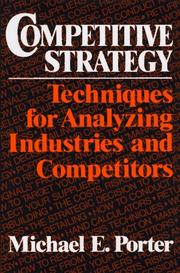
The canonical starting point: Porter introduces the Five Forces, generic strategies (cost leadership, differentiation, focus), and the structural analysis of industries. Every subsequent book in this curriculum either builds on or responds to this framework.
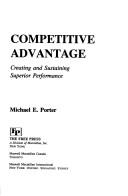
The essential sequel — Porter moves from industry-level analysis to the firm level, introducing the value chain and explaining how activities create and sustain competitive advantage. Read immediately after Competitive Strategy to complete the Porter foundation.
Positioning & Differentiation
IntermediateLearn how firms carve out defensible market positions through differentiation, customer segmentation, and strategic trade-offs — translating structural analysis into concrete strategic choices.
▸ Study plan for this stage
Pace: 4–5 weeks, ~25–30 pages/day, with 2–3 days per week reserved for exercises and case analysis
- Generic strategies (cost leadership, differentiation, focus) as the foundation for positioning
- The concept of strategic trade-offs and why firms cannot be all things to all customers
- Value chains and how to identify where competitive advantage is created and sustained
- Customer segmentation and targeting as the basis for choosing a defensible position
- How competitive scope (broad vs. narrow) shapes strategy and profitability
- The relationship between industry structure and positioning choices
- Operational effectiveness vs. strategy and why the distinction matters for long-term positioning
- How to translate structural analysis (Five Forces) into concrete positioning decisions
- What are Porter's three generic strategies, and why can't a firm successfully pursue all three simultaneously?
- How does a firm's value chain analysis reveal where it can create and defend competitive advantage?
- What role does customer segmentation play in developing a differentiated position, and how do you choose your target segment?
- How do strategic trade-offs protect a firm's position from imitation by competitors?
- What is the difference between operational effectiveness and strategy, and why is this distinction critical for sustainable positioning?
- How should a firm's competitive scope (broad market vs. niche) be determined, and what are the trade-offs involved?
- Given an industry's Five Forces structure, how would you recommend a firm position itself to create defensible advantage?
- Why do many firms fail at differentiation, and what does Magretta identify as the key mistakes?
- Map a company's value chain (e.g., Southwest Airlines, IKEA, or a company in your industry) and identify where it creates cost or differentiation advantage relative to competitors
- Conduct a segmentation analysis for a market of your choice: identify 3–4 distinct customer segments, their needs, and which segment a firm should target given its capabilities
- Analyze a case of failed differentiation (e.g., a luxury brand that tried to go mass-market, or a cost leader that tried to add premium features) and diagnose why the positioning broke down
- Create a positioning statement and strategy map for a real or hypothetical firm, showing its generic strategy, target segment, key trade-offs, and how its value chain supports the position
- Compare two competitors in the same industry (e.g., Southwest vs. legacy carriers, or Costco vs. Whole Foods) and explain how their different positions lead to different profit models and operational choices
- Write a 2–3 page strategic recommendation for a struggling firm: diagnose its current positioning problem, recommend a clearer position, and explain the value chain and trade-offs required to execute it
Next up: This stage equips you to diagnose *where* and *how* firms create defensible positions; the next stage will deepen your toolkit by exploring how firms sustain and evolve those positions over time, manage competitive threats, and build organizational capabilities aligned with their chosen strategy.

Magretta distills and clarifies Porter's frameworks with modern examples, correcting common misreadings. Reading this after Porter himself solidifies intuition and bridges theory to practice before moving to more advanced positioning work.
Lafley and Martin translate positioning theory into a concrete strategic choice cascade (winning aspiration, where to play, how to win). It operationalizes Porter's generic strategies with vivid P&G case studies.
Moats & Durable Competitive Advantage
IntermediateDeeply understand the economic sources of sustainable competitive advantage — network effects, switching costs, intangible assets, cost advantages — and learn to identify and measure moats in real businesses.
▸ Study plan for this stage
Pace: 6–7 weeks, ~25–30 pages/day. Start with "The Little Book That Builds Wealth" (3 weeks), then move to "Competition Demystified" (3–4 weeks). Allow 1 week for review and integration exercises.
- The four sources of economic moats: network effects, switching costs, intangible assets (brand, patents), and cost advantages
- How moats create durable competitive advantage by raising barriers to entry and enabling pricing power
- The difference between a moat and a temporary competitive advantage; why durability matters for long-term value
- How to identify moats in real businesses by analyzing competitive dynamics, customer behavior, and financial metrics
- The role of scale, efficiency, and proprietary assets in creating sustainable cost advantages
- How switching costs and network effects compound over time to entrench market leaders
- The relationship between moat strength and return on invested capital (ROIC); how to measure moat quality
- Why some industries and business models are structurally more defensible than others
- What are the four primary sources of economic moats, and how does each one create a barrier to competition?
- How would you distinguish between a genuine moat and a temporary competitive advantage? What evidence would you look for?
- Describe a real company you know and identify which type(s) of moat it possesses. How durable do you think that moat is?
- Why is return on invested capital (ROIC) a key indicator of moat strength? What does consistently high ROIC suggest about a business?
- How do network effects and switching costs differ in their mechanics, and what are examples of each from your own experience?
- What role do intangible assets like brand and patents play in creating competitive advantage, and how would you assess their durability?
- Moat Audit: Select 3–5 companies from different industries. For each, identify which moat type(s) it possesses, rate the strength (weak/moderate/strong), and explain your reasoning with specific evidence.
- ROIC Analysis: Calculate or research the ROIC for 2–3 companies with strong moats and 2–3 without. Compare the patterns. What does the data tell you about moat quality?
- Switching Cost Mapping: Pick a product or service you use regularly. Map out the switching costs (financial, emotional, time, data) that would prevent you from switching. Repeat for 2 other products.
- Competitive Dynamics Case Study: Choose one industry (e.g., social media, cloud computing, payment processing). Analyze how the leading player(s) have built and defended their moat(s) over time.
- Moat Durability Timeline: For a company with a strong moat, create a timeline showing how that moat was built, when it became defensible, and what threats could erode it in the future.
- Intangible Asset Valuation: Research a company known for brand strength (e.g., Apple, Coca-Cola, Nike). Estimate what percentage of its market value comes from intangible assets vs. tangible assets, and justify your estimate.
Next up: This stage equips you to recognize and measure the sources of lasting competitive advantage; the next stage will teach you how to value these moats financially and integrate them into investment decision-making and portfolio strategy.
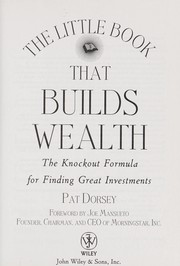
Dorsey provides the clearest, most practical taxonomy of economic moats (intangibles, switching costs, network effects, cost advantages). Reading this first in the moats stage builds precise vocabulary for the deeper analysis that follows.
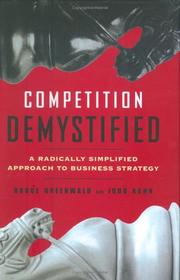
Greenwald challenges and refines Porter by arguing that true competitive advantage is almost always local and rooted in barriers to entry. This book deepens moat analysis with rigorous economic logic and rich case studies.
Dynamic Strategy & Sustaining Advantage Over Time
ExpertMaster how competitive advantages erode, how firms must adapt strategy dynamically, and how to build organizations capable of sustaining advantage against disruption and imitation over the long run.
▸ Study plan for this stage
Pace: 8–10 weeks, ~40–50 pages/day (3 books total: ~400 pages each). Suggested pacing: 2–3 weeks per book with 1 week for integration and synthesis.
- Strategic inflection points and the 10x force: recognizing when fundamental market conditions shift and threaten existing competitive positions (Grove)
- The Innovator's Dilemma: why market leaders fail when disruptive technologies emerge, and the distinction between sustaining vs. disruptive innovation (Christensen)
- Organizational inertia and the structural/cultural barriers that prevent incumbents from adapting to disruption (Christensen & Grove)
- The 7 Powers framework: scale economies, network effects, counter-positioning, switching costs, brand, cornered resource, and process power as durable sources of competitive advantage (Helmer)
- Dynamic strategy and organizational adaptation: building cultures of paranoia, experimentation, and continuous reinvention to sustain advantage over time (Grove & Christensen)
- Imitation and defensibility: understanding which competitive advantages erode fastest and which can be sustained through structural moats (Helmer)
- Timing and optionality: when to defend core business vs. when to cannibalize or pivot to new business models (Grove, Christensen, Helmer)
- Building organizations for long-term advantage: aligning incentives, culture, and structure to enable both exploitation and exploration (Christensen & Grove)
- What is a strategic inflection point, and how did Intel's response to the Japanese memory chip invasion illustrate the principles Grove outlines?
- Why do successful, well-managed companies often fail when faced with disruptive innovation, and what is the fundamental difference between sustaining and disruptive technologies?
- How do the 7 Powers (scale economies, network effects, counter-positioning, switching costs, brand, cornered resource, process power) explain why some competitive advantages persist while others erode?
- What organizational and cultural changes must a firm make to avoid the Innovator's Dilemma and remain adaptive over decades?
- How can a company balance the need to defend its core business advantage while simultaneously building new capabilities to compete against disruptors?
- Which of the 7 Powers are most vulnerable to disruption, and which provide the most durable protection against imitation and market shifts?
- Strategic Inflection Point Case Study: Identify a real company (not Intel) that faced a 10x force or strategic inflection point. Map Grove's framework onto their situation—what were the warning signs, how did they respond, and what was the outcome? Write a 2–3 page analysis.
- Disruptive vs. Sustaining Innovation Audit: Choose an industry you know well (e.g., retail, automotive, healthcare). Identify 2–3 current disruptive threats and 2–3 sustaining innovations. Explain why incumbents are vulnerable to the disruptive ones using Christensen's framework.
- 7 Powers Competitive Mapping: Select a company and its main competitor. Map which of the 7 Powers each firm possesses, rank them by strength, and assess which powers are most at risk of erosion. Identify which powers the disruptor would need to build to win.
- Organizational Inertia Diagnosis: Interview or research a mature company in a disrupted industry (e.g., Blockbuster, Kodak, or a current example). Identify the structural, cultural, and incentive barriers that prevented or are preventing adaptation. How would you redesign the organization to overcome these barriers?
- Build Your Own 7 Powers Strategy: For a startup or new business line, design which 2–3 of the 7 Powers you would prioritize building first, in what sequence, and why. Explain how you would defend against imitation as each power develops.
- Dynamic Strategy Simulation: Take a company facing disruption (real or hypothetical). Create a 5–10 year strategic roadmap that balances defending core advantage, experimenting with new business models, and building organizational capabilities. Include decision points where you would pivot or double down.
Next up: This stage equips you with frameworks for understanding how advantages erode and how to sustain them dynamically; the next stage will likely focus on translating these principles into concrete competitive positioning, market entry strategies, and tactical execution in specific competitive contexts.

Grove's concept of strategic inflection points explains how industry forces can shift catastrophically and how leaders must recognize and respond before advantage collapses. A vital bridge from static positioning to dynamic strategy.

Christensen shows how well-run incumbents with strong positions lose to disruptive entrants — the most important challenge to durable advantage. Essential reading for understanding the limits of moats and the dynamics of competitive erosion.

Helmer synthesizes the entire curriculum into a rigorous, unified theory of the seven sources of persistent business power (scale economies, network effects, counter-positioning, etc.). Best read last — it rewards readers who already know Porter, moats, and disruption theory.
Discussion
Keep reading
Paths that share books, cover the same subject, or open a related topic.