Best Books to Write a Business Plan (in Order)
This curriculum takes a beginner from zero business-plan knowledge to investor-ready pitch mastery across four progressive stages. Each stage builds on the last: first you learn how businesses actually work, then how to research and structure a plan, then how to model the numbers, and finally how to package and present everything to win over investors.
Foundations: Thinking Like an Entrepreneur
BeginnerUnderstand how businesses are built and validated before writing a single word of a plan — so your plan reflects reality, not wishful thinking.
▸ Study plan for this stage
Pace: 4–5 weeks, ~25–30 pages/day. Allocate 2.5 weeks to "The Lean Startup" (~350 pages) and 1.5–2 weeks to "Business Model Generation" (~270 pages), with 3–4 days for review and integration.
- Build-Measure-Learn feedback loop: the core engine of validated learning that replaces guesswork with evidence
- Minimum Viable Product (MVP): releasing the smallest feature set that lets you test your core hypothesis with real customers
- Validated learning: using metrics and experiments to confirm or refute assumptions about your business, not vanity metrics
- Pivot vs. persevere: knowing when to change direction based on data, and the discipline required to make that decision
- Business Model Canvas: a one-page visual framework that maps out nine key components (value proposition, customer segments, channels, revenue streams, etc.) to see your entire business at a glance
- Value proposition: the specific problem you solve and why customers should care, articulated clearly enough to test
- Customer segments and channels: identifying who your customer is and how you'll reach them—assumptions that must be validated
- Revenue model and cost structure: understanding how money flows in and out, and whether your model is sustainable
- What is the Build-Measure-Learn loop, and why does Ries argue it's more reliable than traditional business planning?
- How does an MVP differ from a 'minimum' product, and what makes it 'viable' for testing purposes?
- What are vanity metrics, and why do they mislead entrepreneurs? How do you identify actionable metrics instead?
- When should a startup pivot, and what does Ries mean by 'pivot or persevere'? Can you describe at least two types of pivots?
- What are the nine components of the Business Model Canvas, and how does each one represent a testable assumption?
- How would you use the Business Model Canvas to identify which assumptions in your business idea are riskiest and need validation first?
- Read Part One of 'The Lean Startup' and list three assumptions embedded in a business idea you're considering (or a real startup). For each, write down what evidence would prove or disprove it.
- Design an MVP for a hypothetical product: describe the core feature, the customer segment you'd test with, and the one metric you'd track to validate your riskiest assumption.
- Create a Business Model Canvas for a startup mentioned in 'The Lean Startup' (e.g., IMVU, Zappos) as you understand it from the book. Then identify 3–4 assumptions that were actually wrong and needed pivoting.
- Conduct a 'metrics audit' on a real company's public statements: identify vanity metrics they might be citing and propose actionable metrics that would better reflect customer validation.
- Interview 3–5 potential customers (or people in your target market) about a problem you think you can solve. Document their responses and note which of your assumptions held up and which didn't.
- Draft a one-page Business Model Canvas for your own business idea. Then write a 'hypothesis statement' for each of the nine components (e.g., 'We hypothesize that our value proposition resonates with X segment because Y').
Next up: This stage equips you with the mindset and frameworks to validate assumptions before writing—so when you move to the next stage (writing the actual business plan), you'll be grounded in real customer and market evidence rather than speculation, making your plan credible and actionable.
Establishes the core mindset of testing assumptions and validating ideas before committing to a full plan — essential vocabulary for every section you'll write later.
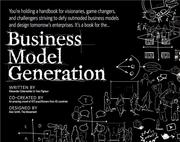
Introduces the Business Model Canvas, giving you a visual framework to map out customers, value propositions, and revenue streams before translating them into written plan sections.
Market Analysis: Knowing Your Arena
BeginnerConduct credible market research, size your opportunity, and write a compelling market analysis section that investors will trust.
▸ Study plan for this stage
Pace: 6–7 weeks, ~40–50 pages/day. Start with "The Mom Test" (weeks 1–2, ~200 pages), then "Competitive Strategy" (weeks 3–7, ~400 pages). Allocate 1–2 days per week for exercises and market research application.
- The Mom Test principle: asking good questions that reveal customer problems without bias or leading questions, and recognizing bad data (compliments, hypotheticals, generic praise)
- Interview techniques for uncovering real customer pain points: listening more than talking, focusing on specific past behaviors rather than future intentions
- Five Forces framework: analyzing competitive intensity through supplier power, buyer power, threat of substitutes, threat of new entrants, and competitive rivalry
- Generic strategies: understanding cost leadership, differentiation, and focus as fundamental competitive positioning approaches
- Industry structure analysis: how to assess the attractiveness and profitability of your market based on structural forces
- Combining customer validation with competitive positioning: using interview insights to identify defensible market opportunities
- Translating research into a credible market analysis narrative: presenting findings that demonstrate deep market understanding to investors
- What is the 'Mom Test' and why does it matter? How do you recognize when you're getting bad data in customer interviews?
- Describe the Five Forces framework and explain how each force affects your market's attractiveness and profitability.
- What are Porter's three generic strategies, and how do they relate to competitive positioning in your target market?
- How would you design a customer interview to uncover real problems (using Mom Test principles) and what specific questions would you ask?
- What is industry structure analysis, and how would you use it to assess whether your market opportunity is defensible?
- How do you synthesize customer interview data with competitive analysis to write a market analysis section that investors will trust?
- Conduct 5–8 customer interviews using Mom Test principles: prepare a question guide focused on past behaviors and problems, record key insights, and identify which responses were 'bad data' (compliments, hypotheticals) versus actionable signals.
- Map the Five Forces for your target market: create a visual diagram showing supplier power, buyer power, substitutes, new entrants, and rivalry, and rate each force as high/medium/low with specific evidence.
- Identify 3–5 direct and indirect competitors; analyze their positioning (cost leadership, differentiation, or focus) and explain why they chose that strategy.
- Write a 2–3 page market analysis section for your business plan that includes: market size estimate, Five Forces assessment, competitive landscape summary, and customer pain points discovered in interviews.
- Create a 'bad data vs. good data' audit: review your interview notes and flag which insights are actionable (specific behaviors, stated problems) versus which are unreliable (generic praise, hypothetical statements).
- Develop a competitive positioning statement: articulate how your solution will compete (cost, differentiation, or focus) and defend why that positioning is sustainable given the Five Forces in your market.
Next up: This stage equips you with validated customer insights and a rigorous understanding of competitive dynamics, preparing you to define a clear value proposition and business model that exploits market gaps identified through both customer research and structural analysis.

Teaches you how to gather honest, unbiased customer and market insights — the raw material for a market analysis that isn't based on assumptions.
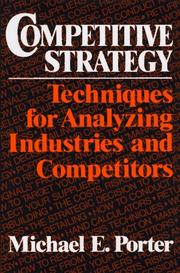
Provides the industry-standard frameworks (Five Forces, competitive positioning) used to analyze markets and competitors in serious business plans.
Writing the Plan: Structure, Financials & Projections
IntermediateDraft a complete, professional business plan with a solid narrative structure and defensible financial projections.
▸ Study plan for this stage
Pace: 6–8 weeks, ~40–50 pages/day (accounting for financial tables and worksheets that require slower, deliberate reading)
- Business plan structure: executive summary, company description, market analysis, organization, marketing strategy, and financial projections as interconnected sections
- Narrative coherence: how to tell a compelling, internally consistent story that ties market opportunity to financial outcomes
- Financial statement fundamentals: income statements, balance sheets, and cash flow statements—what they reveal and why entrepreneurs must understand them
- Building defensible financial projections: assumptions-driven forecasting, sensitivity analysis, and realistic growth scenarios grounded in market data
- Break-even analysis and unit economics: calculating when profitability occurs and understanding the cost structure that drives it
- Debt vs. equity financing implications: how different funding sources affect financial statements and what lenders/investors scrutinize
- Scenario planning: best-case, base-case, and worst-case projections to demonstrate risk awareness and strategic flexibility
- How do the executive summary, market analysis, and financial projections work together to create a coherent business narrative?
- What are the three core financial statements, what does each reveal about your business, and how do they interconnect?
- How do you build financial projections that are both ambitious and defensible—and what assumptions must you document and justify?
- What is break-even analysis, why does it matter to entrepreneurs, and how do you calculate it for your specific business model?
- How do different financing sources (debt, equity, personal capital) affect your financial statements and what metrics do lenders vs. investors prioritize?
- What is sensitivity analysis and why is it essential for demonstrating that you understand the risks and levers in your business?
- Using McKeever's templates, draft a complete business plan outline for a real or hypothetical business, ensuring each section (executive summary through financials) connects logically to the next
- Extract the income statement, balance sheet, and cash flow statement from a published company's annual report; analyze what each reveals and identify the relationships between them
- Build a 3-year financial projection model (revenue, COGS, operating expenses, net income) for your business, documenting every assumption and testing how sensitive profit is to changes in 2–3 key drivers
- Calculate break-even point (units and dollars) for a product or service; then model how break-even changes if you reduce unit costs by 10% or raise price by 5%
- Create a scenario analysis (best-case, base-case, worst-case) for your business projections; articulate the key assumptions and market conditions that differentiate each scenario
- Pitch your business plan to a peer or mentor, focusing on how your narrative (market opportunity → strategy → financial outcomes) holds together and addressing questions about projection assumptions
Next up: This stage equips you with a complete, professionally structured business plan and the financial literacy to defend it; the next stage will focus on refining your pitch, stress-testing your model against investor/lender scrutiny, and adapting your plan as market conditions and your business evolve.
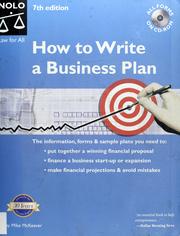
The most practical, step-by-step guide to writing every section of a business plan; read this first in the stage to get the full structural blueprint.
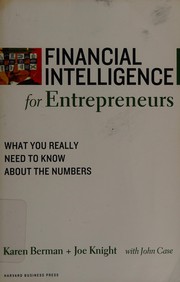
Demystifies income statements, balance sheets, and cash flow so you can build and explain your financial projections with confidence and accuracy.

Goes deeper into startup-specific financial modeling, funding structures, and valuation — giving your projections the rigor that sophisticated investors expect.
The Pitch: Convincing Investors
ExpertTransform your written plan into a compelling investor pitch — both a persuasive deck and a confident verbal presentation that closes funding.
▸ Study plan for this stage
Pace: 6–7 weeks, ~40–50 pages/day (with 2–3 days per week for exercises and pitch drafting)
- Understanding investor psychology and deal structures: term sheets, valuations, and what investors actually care about (from Venture Deals)
- Crafting a narrative arc that moves from problem to vision: positioning your startup as the inevitable solution (from The Art of the Start 2.0)
- The Pitch Stack framework: organizing information hierarchically to match investor attention spans and decision-making processes (from Pitch Anything)
- Designing visual decks that reinforce narrative rather than distract: slides as supporting props, not the main event
- Mastering the verbal pitch: controlling pacing, managing objections, and creating pattern interrupts to hold attention (from Pitch Anything)
- Tailoring your pitch to different investor types and contexts: institutional VCs vs. angels vs. accelerators
- Building credibility through founder story, team composition, and market traction—the emotional and rational case combined
- Handling tough questions and due diligence conversations with confidence and transparency
- What are the key terms and structures in a term sheet, and why should founders care about each one before walking into a pitch meeting?
- How do you construct a compelling founder narrative that connects your personal journey to the problem you're solving and the vision you're pursuing?
- What is the Pitch Stack, and how does it help you organize information to match how investors actually process and remember pitches?
- How should your pitch deck differ from a written business plan, and what role should slides play in a live pitch?
- What are the most common objections or concerns investors raise, and how do you address them without becoming defensive?
- How do you adapt your pitch for different investor audiences (angels, VCs, accelerator programs) and different contexts (30-second elevator pitch vs. 20-minute formal presentation)?
- Read Venture Deals (Chapters 1–5 on term sheets and deal structures) and create a one-page cheat sheet of the 10 most important terms you need to understand before pitching.
- Draft your founder story (2–3 minutes) using The Art of the Start 2.0's narrative framework: the problem you saw, why you're the right person to solve it, and the vision of the world after your solution exists.
- Build a Pitch Stack (from Pitch Anything) for your startup: write out the 15-second version, 2-minute version, and 10-minute version, each with a clear hook and supporting points.
- Create a 10-slide pitch deck (problem, solution, market, business model, traction, team, financials, ask, use of funds, closing) and practice delivering it in under 15 minutes to a peer or mentor.
- Record yourself delivering your pitch twice: once reading from notes, once without notes. Review both and identify where you lose energy, rush, or sound unconvincing. Refine and re-record.
- Conduct three mock pitch sessions with different audiences (a peer, a mentor with investor experience, and a non-technical friend) and collect feedback on clarity, credibility, and emotional resonance.
Next up: This stage equips you with the investor mindset, narrative structure, and delivery skills to secure meetings and funding conversations; the next stage will likely focus on post-pitch execution—managing due diligence, negotiating terms, and building investor relationships that extend beyond the initial pitch.

Explains how investors think, what terms they care about, and how funding rounds work — so you can speak their language and anticipate every question.

Covers pitching, storytelling, and deck design from a legendary venture capitalist's perspective; read after Venture Deals so you know what to say to the audience you now understand.

Provides a neuroscience-backed method for framing and delivering your pitch to capture attention and create urgency — the final layer of persuasion on top of your solid plan.
Discussion
Keep reading
Paths that share books, cover the same subject, or open a related topic.