Quantitative finance is genuinely hard, and the difficulty is mathematical before it is financial. Skip the foundations and the pricing models read like magic; build them properly and the whole edifice makes sense. That's why order is non-negotiable here more than almost anywhere.
A note on expectations: this path builds deep theory, not a trading edge, and markets carry real risk of loss. These books are graduate-level tools that complement formal study and, in practice, professional risk controls.
The mathematical foundations
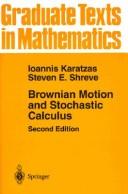
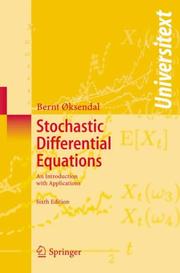
Start with the calculus of randomness. Brownian motion and stochastic calculus by Ioannis Karatzas and Stochastic Differential Equations by Bernt Oksendal are the rigorous foundations for everything downstream. These are demanding texts; expect to work through them slowly with paper and patience.
Continuous-time pricing
With the math in hand, turn to theory. Continuous-time finance by Robert Merton is a landmark, and Martingale methods in financial modelling by Marek Musiela develops the pricing framework formally. Anchor the applied side with Options, futures, and other derivatives by John Hull, which keeps the abstractions tied to real instruments.
Volatility, rates, and modern methods
Now the specialized models. The Volatility Surface by Jim Gatheral and Stochastic volatility modeling by Lorenzo Bergomi are the references on volatility, and Interest Rate Models - Theory and Practice by Damiano Brigo covers rates. For the trading and data era, Algorithmic trading & DMA by Barry Johnson, Advances in Financial Machine Learning by Marcos Lopez de Prado, and Quantitative Portfolio Management by Michael Isichenko bring the field into modern practice.
Read in order, each layer makes the next possible. If the risk-measurement side interests you, the related financial risk management path is the companion. Follow the full reading path to build it stage by stage.
Follow the full reading path →
Ready to learn something deeply?
Build a reading path — free