Growth Investing: The Best Books, In Order
This curriculum builds a rigorous, end-to-end mastery of growth investing across four progressive stages. Starting from the foundational mental models of compounding and business quality, it advances through identifying exceptional companies, applying quantitative and qualitative metrics, and finally synthesizing everything into a disciplined, long-term portfolio philosophy. Because the learner starts at an intermediate level, early books sharpen intuition rather than teach basics from scratch, and later books demand serious analytical engagement.
Compounding & The Growth Mindset
IntermediateInternalize the mathematics and psychology of compounding, understand why long holding periods and business quality are the true engines of wealth, and build the mental framework that all growth investing rests on.
▸ Study plan for this stage
Pace: 4–5 weeks, ~40–50 pages/day. Start with "The Psychology of Money" (2 weeks, ~25 pages/day), then "100 Baggers" (2–3 weeks, ~40 pages/day). Allocate 2–3 days at the end for review and integration exercises.
- Compounding as the primary wealth-building mechanism: understanding exponential growth over decades, not years
- The psychology of patience: why most investors fail despite knowing the math—behavioral and emotional barriers to long holding periods
- Business quality as the prerequisite for compounding: identifying durable competitive advantages (moats) that enable sustained growth
- Time horizon as a competitive advantage: how holding for 10+ years filters out noise and allows compounding to work
- Tail-driven returns: recognizing that a small number of exceptional investments (100-baggers) drive portfolio wealth, not consistent mediocre picks
- The role of luck, humility, and adaptability: understanding what you can and cannot control in investing
- Margin of safety and reasonable expectations: avoiding overconfidence while maintaining conviction in quality businesses
- Reinvestment and dividend compounding: how retained earnings and reinvested dividends accelerate wealth accumulation
- Why do most investors fail to capture the full benefit of compounding despite understanding the mathematics? What psychological and behavioral barriers does Housel identify?
- What are the key characteristics of companies that have produced 100-baggers, and how do these characteristics relate to sustainable competitive advantages?
- How does holding period directly impact investment returns, and why is time horizon a form of competitive advantage in growth investing?
- Explain the concept of 'tail-driven returns'—why do a handful of exceptional investments dominate portfolio performance, and what does this mean for stock selection?
- What role does business quality (moats, management, reinvestment) play in enabling compounding, and how do you identify these qualities before they compound?
- How should an investor balance conviction in a thesis with humility about uncertainty, and what does Mayer suggest about adapting your thesis over time?
- Compounding calculator exercise: Project the wealth accumulation of three hypothetical $10,000 investments over 20, 30, and 40 years at 8%, 12%, and 15% annual returns. Reflect on how small percentage differences compound into massive wealth gaps.
- Behavioral audit: Identify three times in your own investing (or hypothetical investing) when you would have sold a quality business prematurely. Write down the emotional or psychological reason, then calculate what you would have missed in compounding.
- 100-bagger case study analysis: Select 3–4 historical 100-baggers (e.g., Amazon, Microsoft, Netflix, or examples from Mayer's book). For each, identify the durable competitive advantages present at the time of investment and trace how these enabled compounding.
- Moat identification exercise: Analyze 5 current companies you're interested in. For each, write a one-page assessment of their competitive moat (brand, switching costs, network effects, cost advantages, etc.) and rate the durability on a 10-year horizon.
- Holding period stress test: Choose one quality company you believe in. Write a detailed thesis on why you'd hold it for 20 years. Then identify 3–5 'sell triggers'—conditions that would genuinely make you exit. Reflect on whether these triggers are rational or emotional.
- Portfolio tail analysis: Review your own portfolio (or a hypothetical one). Calculate what percentage of total returns came from your top 3 holdings. Compare this to your bottom 10. Reflect on whether your conviction and position sizing align with the tail-driven nature of returns.
Next up: This stage establishes the foundational mindset and mathematical reality of growth investing—that quality compounds and time is your ally—preparing you to move into the next stage where you'll learn the specific analytical frameworks and metrics for identifying which businesses possess the qualities needed to compound.

Opens the curriculum by cementing why time in the market and compounding dwarf all other variables — a non-negotiable mindset shift before studying specific strategies.

Provides the first concrete, data-driven look at what stocks actually produced 100x returns, introducing the key themes of reinvestment, moats, and patience that the rest of the curriculum deepens.
Finding & Recognizing Great Companies
IntermediateDevelop a repeatable framework for identifying businesses with durable competitive advantages, exceptional management, and the capacity to grow earnings for decades.
▸ Study plan for this stage
Pace: 8–10 weeks, ~40–50 pages/day (accounting for dense material and note-taking). Fisher (2–3 weeks), Greenblatt (2 weeks), Greenwald (2–3 weeks)
- Scuttlebutt method: gathering qualitative intelligence on companies through conversations with customers, suppliers, and competitors to assess competitive position and management quality
- Durable competitive advantages (moats): identifying whether a company has sustainable barriers to entry such as brand loyalty, switching costs, or proprietary technology
- Management quality and capital allocation: evaluating whether leadership has a proven track record of reinvesting earnings wisely and thinking long-term
- The Magic Formula: combining return on invested capital (ROIC) and earnings yield to systematically identify undervalued companies with strong competitive positions
- Structural competitive advantages vs. temporary advantages: distinguishing between advantages that can persist for decades versus those vulnerable to disruption
- Earnings power and growth runway: assessing a company's ability to grow earnings sustainably over 10–20+ years without relying on financial engineering
- Industry structure and competitive dynamics: analyzing barriers to entry, supplier/buyer power, and rivalry intensity to predict long-term profitability
- Valuation as a secondary filter: understanding why a great company at a fair price beats a mediocre company at a bargain price
- What is the scuttlebutt method, and how would you use it to assess whether a company's competitive advantage is real and durable?
- How do you distinguish between a company with a genuine moat and one whose competitive advantage is temporary or illusory?
- What are the key indicators of management quality and capital allocation skill, and why does this matter more than current stock price?
- Explain the Magic Formula and how ROIC and earnings yield work together to identify undervalued, high-quality companies.
- How would you analyze industry structure to determine whether a company can sustain high returns on invested capital for decades?
- What is the relationship between competitive advantage, earnings growth, and long-term stock returns, and why does this framework reduce the need to predict the future?
- Conduct a scuttlebutt investigation on one company: interview or research 5–10 customers, suppliers, or competitors to assess the company's competitive position and management reputation.
- Analyze three companies in the same industry using Fisher's framework: identify which has the strongest moat, best management, and most durable competitive advantage.
- Calculate the Magic Formula score (ROIC and earnings yield) for 10–15 companies in a sector of interest; rank them and compare to current market valuations.
- Write a one-page competitive analysis for a company you're considering, explicitly addressing industry structure, barriers to entry, and the sustainability of its advantages.
- Create a 'moat scorecard' for a company, rating the strength of its competitive advantages (brand, switching costs, network effects, cost advantages, etc.) on a 1–5 scale with justification.
- Backtest the Magic Formula on 20 historical companies: identify which ones would have been identified as high-quality/undervalued 5–10 years ago, and track their subsequent returns.
Next up: This stage equips you with a systematic, repeatable framework for identifying exceptional businesses—the foundation for the next stage, which will focus on valuation techniques and determining the right price to pay for these high-quality companies.
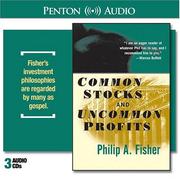
The original growth-investing playbook; Fisher's 'Scuttlebutt' method and 15-point checklist teach qualitative due diligence that no quantitative screen can replace — read first to build the vocabulary.

Bridges qualitative intuition and quantitative discipline by formalizing 'earnings yield + return on capital' — a concise, memorable quality filter to apply after Fisher's framework.
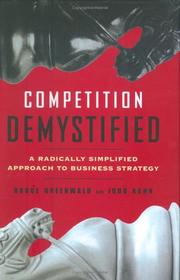
Provides a rigorous, strategy-school treatment of competitive advantage and moat analysis, sharpening the ability to distinguish truly defensible businesses from temporary winners.
Quality Metrics & Deep Business Analysis
IntermediateMaster the financial and operational metrics that separate high-quality compounders from value traps: returns on capital, free cash flow, reinvestment rates, and the economics of scale.
▸ Study plan for this stage
Pace: 6–7 weeks, ~40–50 pages/day (approximately 3–4 hours of focused reading and note-taking per day)
- Capital allocation as the primary driver of shareholder value creation
- Returns on Invested Capital (ROIC) and why it matters more than earnings growth alone
- Free Cash Flow (FCF) generation and its relationship to true economic profit
- Reinvestment rates and the sustainability of competitive advantages
- Economic moats and how to identify durable competitive advantages through operational metrics
- The difference between accounting earnings and economic earnings
- Expectations embedded in stock prices and how to identify when the market has mispriced a business
- The relationship between capital intensity, reinvestment requirements, and long-term compounding potential
- What is capital allocation and why did Thorndike argue it was the most important skill for a CEO?
- How do you calculate ROIC and what does a consistently high ROIC (above cost of capital) signal about a business?
- What is the difference between free cash flow and net income, and why is FCF a better measure of economic reality?
- How do reinvestment rates affect the long-term compounding potential of a business, and how do you calculate them?
- What are economic moats and how can you identify them using operational and financial metrics?
- According to Mauboussin, what are expectations and why is understanding them critical to identifying mispriced stocks?
- How do you reverse-engineer market expectations from a stock price, and what does this reveal about investment opportunity?
- What distinguishes a high-quality compounder from a value trap when analyzing financial metrics?
- Analyze the capital allocation decisions of 3–5 CEOs profiled in The Outsiders (e.g., Berkshire Hathaway, Danaher, Markel); document their key decisions (buybacks, acquisitions, dividends) and calculate the shareholder value created
- Calculate ROIC for 5 companies across different industries over a 5–10 year period; compare their ROIC trends to their stock price performance and identify which have sustainable competitive advantages
- Build a simple FCF model for 2–3 quality companies: project revenue, operating margins, CapEx, and working capital changes to estimate normalized free cash flow; compare FCF yield to earnings yield
- Calculate reinvestment rates for 3–4 companies (reinvestment = CapEx + change in working capital − depreciation, divided by operating cash flow); assess whether reinvestment is productive by comparing reinvestment rates to ROIC
- Conduct a moat analysis on 2–3 companies using operational metrics: analyze pricing power (margins), customer acquisition costs, switching costs, and scale advantages; document how these create durable competitive advantages
- Reverse-engineer market expectations for 3–4 stocks: extract the implied growth rate and ROIC the market is pricing in; compare to historical performance and determine if the stock is fairly valued, overvalued, or undervalued
- Create a 'quality scorecard' for 5 companies using metrics from both books: ROIC, FCF generation, reinvestment rate, margin stability, capital allocation track record; rank them by quality and justify your rankings
Next up: This stage equips you with the analytical tools to identify genuinely high-quality businesses and recognize when the market has mispriced them—skills essential for the next stage, which will focus on valuation frameworks and portfolio construction for long-term wealth creation.
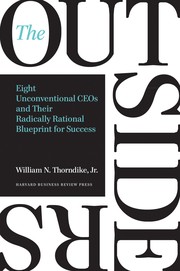
Eight case studies of exceptional capital allocators teach how to evaluate management quality and capital-allocation skill — the human dimension of quality metrics.
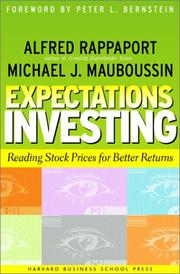
Reframes valuation around the market's embedded expectations rather than intrinsic value alone, giving growth investors a precise tool to judge whether a quality company is also a good buy.
Long-Term Portfolio Construction & Mastery
ExpertSynthesize all prior frameworks into a coherent, long-term growth portfolio philosophy — knowing when to buy, when to hold through volatility, how to size positions, and how the greatest investors have actually practiced this craft.
▸ Study plan for this stage
Pace: 8–10 weeks, ~25–30 pages/day, with 1–2 weeks per book plus synthesis time
- How the greatest investors (Buffett, Munger, and others profiled in Green) actually think about portfolio construction and position sizing over decades
- The discipline of waiting for high-conviction, asymmetric opportunities and resisting the urge to trade constantly
- How to evaluate and hold through volatility, drawdowns, and market cycles without abandoning your thesis
- The role of temperament, psychology, and decision-making frameworks (especially Munger's mental models) in long-term wealth creation
- Buffett's core principles: competitive advantage (moat), management quality, intrinsic value, and margin of safety applied to real portfolio decisions
- Munger's approach to multidisciplinary thinking, avoiding mistakes, and the power of concentrated conviction in a few great businesses
- How to construct a coherent investment philosophy that integrates valuation, risk management, and behavioral discipline
- The relationship between portfolio concentration, conviction, and returns—and when to diversify vs. concentrate
- What are the key behavioral and psychological traits that separate the greatest long-term investors from average ones, and how do you cultivate them?
- How does Buffett's concept of a 'moat' (competitive advantage) inform your portfolio construction, and what specific business characteristics signal a durable moat?
- Describe Munger's approach to mental models and multidisciplinary thinking—how would you apply this framework to evaluate a new investment opportunity?
- What is the relationship between conviction, position sizing, and portfolio concentration in the strategies of Buffett and Munger, and how do you determine your own optimal level of concentration?
- How do you distinguish between temporary market volatility and a genuine deterioration in a business's fundamentals, and what does this mean for your holding discipline?
- What role does margin of safety play in long-term portfolio construction, and how do you quantify or assess it in practice?
- Read 'Richer, Wiser, Happier' and create a one-page profile of 3–4 investors profiled in the book, noting their core investment principles, temperament traits, and how they handled volatility or drawdowns.
- Study Buffett's major portfolio holdings (past and present) using 'The Warren Buffett Way' as your guide; for each, identify the moat, the management quality, and the margin of safety Buffett likely saw at purchase.
- Work through Munger's 'Poor Charlie's Almanack' and extract 5–7 of his most important mental models (e.g., incentives, circle of competence, inversion); write a one-page summary of each and how you'd apply it to investment decisions.
- Conduct a 'temperament audit' on yourself: identify your biggest behavioral weaknesses (fear, greed, impatience, overconfidence) and design a specific portfolio rule or checklist to counteract each one.
- Build a hypothetical concentrated portfolio (5–10 positions) of stocks you genuinely understand and believe in long-term; document your thesis for each, the moat, the management, the valuation, and your conviction level.
- Backtest your conviction thesis: pick one of your hypothetical holdings and simulate how you would have behaved during a 30–50% drawdown; write a brief reflection on whether you would have held, sold, or added.
Next up: This stage synthesizes the complete investment philosophy and decision-making framework needed for mastery; the next stage will likely focus on real-world implementation, portfolio monitoring, tax efficiency, and adapting your philosophy as markets and life circumstances evolve.

Profiles the world's greatest long-term investors and distills their shared principles — an ideal bridge between theory and the lived practice of running a concentrated, patient growth portfolio.

Provides the most thorough synthesis of Buffett's business-owner approach to long-term stock picking, tying together every concept from prior stages into a single, actionable investment philosophy.
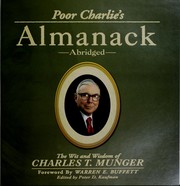
The capstone of the curriculum: Munger's multi-disciplinary mental models, emphasis on high-quality businesses, and lifelong compounding mindset challenge the reader to think at the highest level of growth investing mastery.
Discussion
Keep reading
Paths that share books, cover the same subject, or open a related topic.