Business strategy: the best books to think like a competitor
This curriculum builds a rigorous, practitioner-grade understanding of business strategy across four progressive stages. Starting from the foundational frameworks of competitive advantage and industry structure, it moves through positioning and strategic logic, into dynamic and modern strategy, and finally into the advanced thinking leaders use to make durable, long-term choices. Each stage deepens the vocabulary and analytical muscle built in the one before it.
Foundations: Competitive Advantage & Industry Structure
IntermediateUnderstand the bedrock frameworks of strategy — Porter's Five Forces, value chains, and the structural sources of competitive advantage — so every later concept has a rigorous anchor.
▸ Study plan for this stage
Pace: 8–10 weeks, ~40–50 pages/day (Competitive Strategy: 5–6 weeks; Competitive Advantage: 3–4 weeks). Allocate extra time for re-reading dense chapters and working through frameworks.
- Porter's Five Forces framework: threat of new entrants, bargaining power of suppliers, bargaining power of buyers, threat of substitutes, and competitive rivalry as structural determinants of industry profitability
- Generic strategies: cost leadership, differentiation, and focus as the three fundamental ways to achieve competitive advantage
- Value chain analysis: decomposing the firm into primary and support activities to identify where competitive advantage is created and where costs can be managed
- Structural sources of competitive advantage: barriers to entry, switching costs, and economies of scale as durable sources of above-average returns
- Industry structure analysis: how to assess whether an industry is attractive and where profitability is likely to concentrate
- Competitive positioning: how firms choose where to compete (broad vs. narrow scope) and how to defend their position against rivals
- Cost advantage and differentiation advantage: the two fundamental ways to outperform competitors and the trade-offs between them
- Linkages and fit: how activities in the value chain interconnect and reinforce one another to create defensible advantage
- What are Porter's Five Forces, and how do they determine the structural profitability of an industry?
- How do the three generic strategies (cost leadership, differentiation, focus) differ, and why is 'stuck in the middle' a weak position?
- What is a value chain, and how do you use it to identify where a firm creates value and incurs costs?
- What structural sources of competitive advantage are most durable, and how do barriers to entry, switching costs, and scale economies protect them?
- How do you assess whether an industry is attractive, and what signals indicate where profits are likely to concentrate?
- How do linkages and fit between activities in the value chain create competitive advantage that is difficult for rivals to imitate?
- Map the Five Forces for a real industry (e.g., airlines, retail, software). Rate each force as high, medium, or low threat, and explain why the industry is attractive or unattractive.
- Conduct a value chain analysis for a company you know well (e.g., Apple, Amazon, a local business). Identify primary and support activities, pinpoint where value is created, and where costs are highest.
- Compare two competitors in the same industry using the generic strategies framework. Classify each as pursuing cost leadership, differentiation, or focus, and assess whether either is stuck in the middle.
- Identify the key barriers to entry in an industry of your choice. Explain which barrier is most defensible and why new entrants struggle to overcome it.
- Create a 'fit map' for a company showing how its value chain activities reinforce one another. Explain why this fit makes the company's advantage difficult to imitate.
- Analyze a company that lost competitive advantage. Use Five Forces and value chain analysis to explain what changed in industry structure or in the company's position.
Next up: This stage establishes the structural and analytical foundations—Five Forces, value chains, and generic strategies—that explain *why* some firms outperform others; the next stage will build on these frameworks to explore how firms sustain and evolve advantage over time through resources, capabilities, and dynamic strategy.
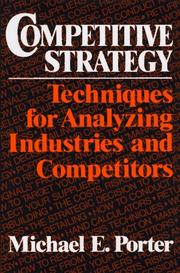
The canonical starting point for any serious study of strategy; introduces Five Forces and the three generic strategies that define the field's vocabulary. Read this first to establish the analytical language used in every subsequent book.
Extends Competitive Strategy into the value chain and the mechanics of how firms actually create and sustain advantage. Reading it second lets you move from industry-level analysis to firm-level execution.
Positioning & Strategic Logic
IntermediateLearn how great companies choose where — and where not — to compete, and how deliberate positioning and trade-offs translate structural insight into lasting market differentiation.
▸ Study plan for this stage
Pace: 8–10 weeks, ~40–50 pages/day. Week 1–3: "Understanding Michael Porter" (focus on Five Forces, Value Chain, and Generic Strategies); Week 4–5: transition and review; Week 6–10: "Blue Ocean Strategy" with concurrent application exercises.
- Porter's Five Forces framework: how industry structure shapes competitive intensity and profitability
- Generic strategies (cost leadership, differentiation, focus): the three fundamental ways to compete
- Value chain analysis: identifying where competitive advantage is built and defended
- Strategic positioning: choosing a distinct place in the market and making deliberate trade-offs
- Blue Ocean vs. Red Ocean thinking: competing in uncontested space versus fighting in saturated markets
- Value innovation: simultaneously pursuing differentiation and low cost by reconstructing industry assumptions
- Strategic profiles and strategy canvas: visualizing how your positioning differs from competitors
- Execution and organizational alignment: how positioning translates into operational reality
- What are Porter's Five Forces, and how do they determine whether an industry is structurally attractive or unattractive?
- Explain the three generic strategies and why a company cannot be 'stuck in the middle.' What happens if it tries?
- How does value chain analysis reveal where a company creates and captures value, and where competitors may be vulnerable?
- What is the difference between competing in a Red Ocean versus a Blue Ocean, and why do most companies remain trapped in Red Oceans?
- How does the strategy canvas help identify uncontested market space, and what role do value innovation and trade-offs play in Blue Ocean strategy?
- Pick a real company: what is its strategic positioning, and what trade-offs has it made to defend that position?
- Conduct a Five Forces analysis on an industry of your choice (e.g., retail, software, hospitality). Rate each force as strong or weak and explain what that means for profitability.
- Map a company's value chain (e.g., Apple, Netflix, or a local business). Identify which activities are sources of competitive advantage and which are commoditized.
- Classify three competing companies in the same industry by Porter's generic strategies. Explain why each chose its strategy and what trade-offs it made.
- Create a strategy canvas for an industry you know well: plot 4–6 key factors and show how current competitors position themselves. Identify white space.
- Design a hypothetical Blue Ocean strategy for a mature, Red Ocean industry (e.g., airlines, banking, fast food). What factors would you eliminate, reduce, raise, and create?
- Write a 2–3 page strategic positioning statement for a real company or startup: define the target customer, the value proposition, and the key trade-offs that protect it.
Next up: This stage equips you with the analytical frameworks and strategic logic to diagnose competitive advantage; the next stage will focus on how to build and sustain that advantage through organizational capabilities, culture, and execution.

A clear, concise synthesis of Porter's ideas written for practitioners; it bridges the dense academic originals and makes the logic of positioning and trade-offs immediately actionable. Read this to consolidate and sharpen what the Porter books established.
Translates strategic theory into a concrete five-choice cascade (winning aspiration, where to play, how to win, capabilities, management systems) using P&G as a live case. It shows how positioning decisions are made inside a real organization.
Challenges the assumption that strategy is purely about competing within existing industry boundaries; introduces value innovation and market creation as a complement to Porter's structural view. Reading it here creates productive tension with the foundations already built.
Dynamic Strategy & Sustained Competitive Advantage
IntermediateGrapple with why advantages erode over time, how firms build moats and capabilities that compound, and what distinguishes companies that sustain outperformance from those that don't.
▸ Study plan for this stage
Pace: 12–14 weeks, ~25–30 pages/day (approximately 3 weeks per book with overlap for integration)
- The kernel of good strategy: diagnosis, guiding policy, and coherent action—and why most strategies fail at diagnosis
- How competitive advantages erode through imitation, substitution, and changing customer needs; the concept of 'moats' as defensibility mechanisms
- The Innovator's Dilemma: why incumbent firms with superior resources and management often lose to disruptive innovations that don't initially serve mainstream customers
- Organizational inertia and the challenge of cannibalizing existing business models; why past success becomes a liability
- The 7 Powers framework: scale economies, network effects, counter-positioning, switching costs, brand, cornered resource, and process power as sources of durable competitive advantage
- How capabilities compound over time through reinforcing loops and path dependency; the difference between temporary advantages and structural moats
- The role of timing, luck, and strategic positioning in determining which firms sustain outperformance versus those that plateau or decline
- What are the three components of the strategy kernel in Rumelt's framework, and why do most strategies fail at the diagnosis stage?
- Explain the Innovator's Dilemma: why do successful, well-managed companies often fail to adapt to disruptive innovations, and what organizational factors enable or prevent this failure?
- How do the 7 Powers differ from traditional competitive advantage concepts, and which power(s) are most durable across different industries?
- What is a 'moat' in business strategy, and how do scale economies, network effects, and switching costs function as moats that protect profitability?
- Why do past successes and organizational capabilities sometimes become liabilities in the face of market disruption, and how can firms balance exploitation and exploration?
- Compare and contrast how Rumelt, Christensen, and Helmer each explain why some firms sustain competitive advantage while others lose it over time.
- Analyze a real company (e.g., Netflix, Apple, or a firm facing disruption) using Rumelt's kernel framework: identify its diagnosis, guiding policy, and coherent actions. Where does the strategy break down?
- Map a historical case of disruption (e.g., digital photography vs. Kodak, smartphones vs. Nokia) through the lens of the Innovator's Dilemma. Identify the incumbent's resources, processes, and values that prevented adaptation.
- Identify the dominant 7 Power(s) for 3–4 companies in a single industry (e.g., tech, retail, or finance). Assess which powers are reinforcing and which are vulnerable to erosion.
- Conduct a 'moat audit' for a company you know well: what defensibility mechanisms does it have, how durable are they, and what could erode them in the next 5–10 years?
- Write a 2–3 page strategic diagnosis for a company facing a disruptive threat, using Rumelt's framework and Christensen's insights on organizational barriers to innovation.
- Design a thought experiment: if you were a disruptor entering an incumbent's market, which of the incumbent's 7 Powers would you target first, and why?
Next up: This stage equips you with frameworks for diagnosing why advantages persist or erode; the next stage will shift focus to how firms actively *build* and *renew* strategy in real time through organizational design, leadership, and adaptive execution.
Rumelt's 'kernel of strategy' framework cuts through strategic fluff and teaches readers to diagnose the difference between a real strategy and a list of goals. This is the book that sharpens critical judgment about strategic quality.
Explains how disruptive innovation erodes even well-managed incumbents' advantages, adding a dynamic, time-sensitive dimension to the structural frameworks learned earlier. Essential for understanding why durable advantage is so hard to maintain.

Provides a precise, modern taxonomy of the seven sources of durable business power (scale economies, network effects, switching costs, etc.) with a rigorous framework for when and how they can be established. The most analytically tight modern treatment of sustainable competitive advantage.
Advanced Thinking: Long-Run Strategic Choices & Leadership
ExpertIntegrate everything into the perspective of a senior leader — understanding long-horizon bets, corporate-level strategy, and the mental models that distinguish truly exceptional strategic thinkers.
▸ Study plan for this stage
Pace: 8–10 weeks, ~40–50 pages/day (mix of dense strategic analysis and case studies; allow time for reflection on long-term thinking)
- Strategic inflection points: recognizing when the competitive landscape fundamentally shifts and requires decisive action
- Paranoia as a strategic discipline: staying alert to existential threats and weak signals of change before they become crises
- Capital allocation as the core lever of strategy: how exceptional leaders compound returns through disciplined, long-term investment decisions
- Decentralized decision-making and organizational adaptability: building cultures where frontline insights inform strategy and the organization can pivot quickly
- The outsider CEO advantage: how leaders from outside an industry or company often see opportunities and threats insiders miss
- Long-horizon thinking over quarterly metrics: prioritizing sustainable competitive advantage and shareholder value creation over short-term earnings pressure
- Mental models of exceptional strategists: pattern recognition, systems thinking, and the ability to hold multiple competing scenarios simultaneously
- Execution discipline: strategy is worthless without relentless follow-through and accountability at every level
- What is a strategic inflection point, and how did Grove's Intel navigate the shift from memory chips to microprocessors? What early warning signs did he miss or catch?
- How did the outsider CEOs in Thorndike's book (Berkshire, Markel, Fairfax, etc.) use their external perspective to make capital allocation decisions that insiders would not have made?
- What role does 'constructive paranoia' play in long-term strategy, and how can a leader cultivate it without becoming paralyzed by fear?
- Compare the strategic decision-making processes of Grove and the outsider CEOs: what mental models and disciplines do they share?
- How do you distinguish between a genuine strategic threat that demands immediate action and a distraction that should be ignored?
- What is the relationship between organizational culture, decentralized decision-making, and strategic agility in both Grove's Intel and the outsider CEOs' companies?
- Strategic inflection point audit: Identify a strategic inflection point in a company you know well (current or past employer, or a public company). Map the early warning signs, the moment of recognition, and the response. How does it compare to Grove's Intel example?
- Capital allocation case study: Select one of Thorndike's outsider CEOs (e.g., Berkshire under Buffett, Markel under Markel, or Fairfax under Watsa). Trace 3–5 major capital allocation decisions over a decade. What mental model or principle guided each? How did they differ from industry peers?
- Paranoia exercise: For your own organization or a company you're analyzing, conduct a 'weak signals' scan. Identify 5–10 early indicators of potential disruption (technological, competitive, regulatory, or cultural). Rank them by likelihood and impact. What would you do differently if you took each seriously?
- Outsider perspective role-play: Choose a mature industry (e.g., retail, banking, automotive). Imagine you are a CEO from a completely different sector (e.g., tech, healthcare, energy). What would you see as the biggest strategic vulnerability or opportunity that insiders have normalized?
- Mental model journal: As you read, document the key mental models Grove and the outsider CEOs use (e.g., 'second-order thinking,' 'inversion,' 'scenario planning'). For each, write one real-world example from your experience where applying that model would have changed your decision.
- Long-horizon strategy memo: Write a 2–3 page memo to your board or leadership team proposing a 10-year strategic bet. Ground it in the principles from Grove and Thorndike: capital allocation discipline, paranoia about threats, outsider perspective, and decentralized execution. Include metrics and decision gates.
Next up: This stage equips you with the mental models and long-term thinking discipline of exceptional strategic leaders; the next stage will likely focus on translating these insights into organizational systems, stakeholder communication, and the personal leadership practices that sustain strategic clarity under pressure.

Grove's concept of the Strategic Inflection Point — a force that fundamentally changes the competitive landscape — teaches leaders how to sense and respond to industry-level shifts before they become fatal. A masterclass in strategic vigilance from a practitioner.

Examines eight CEOs who dramatically outperformed peers through unconventional capital allocation and long-term strategic discipline; reframes corporate strategy as a series of durable resource-deployment choices rather than just competitive positioning.
Discussion
Keep reading
Paths that share books, cover the same subject, or open a related topic.