Management consulting: the best books to think, solve, and land the job
This curriculum takes a beginner from zero consulting knowledge to practitioner-level fluency across four tightly sequenced stages. It opens with the mindset and language of consulting, moves into the structured problem-solving and frameworks consultants use daily, then sharpens case-interview skills as a forcing function for rigorous thinking, and finally addresses the senior-level craft of client communication and storytelling that separates good consultants from great ones.
Foundations: The Consulting Mindset
BeginnerUnderstand what management consulting is, how firms are structured, how consultants think, and the core vocabulary used across the industry.
▸ Study plan for this stage
Pace: 4–5 weeks, ~25–30 pages/day. Week 1–2: "The McKinsey Way" (~300 pages); Week 3–5: "Flawless Consulting" (~250 pages) with overlap for reflection and practice.
- The Problem-Solving Framework: structured thinking, hypothesis-driven analysis, and the 80/20 principle as taught in The McKinsey Way
- The Consulting Engagement Lifecycle: how projects are scoped, staffed, executed, and delivered
- The Consultant's Mindset: intellectual rigor, client focus, and the ability to communicate complex ideas simply
- Relationship and Communication Fundamentals: building trust with clients, active listening, and managing expectations (from Flawless Consulting)
- The Consultant's Toolkit: case interviews, frameworks, data analysis, and presentation skills
- Organizational Structures and Roles: how consulting firms are organized and how different roles contribute to client value
- Contracting and Engagement Clarity: establishing clear agreements, roles, and success metrics before diving into work
- What is the McKinsey Problem-Solving Process, and how does the 80/20 principle apply to narrowing down complex problems?
- How are consulting engagements typically structured from start to finish, and what are the key milestones?
- What does it mean to think like a consultant, and how does hypothesis-driven analysis differ from data-first analysis?
- What are the core principles of 'flawless consulting' according to Peter Block, and why is contracting essential before beginning client work?
- How do you build and maintain trust with a client, and what communication practices undermine it?
- What are the main roles in a consulting team (partner, manager, analyst), and what are their responsibilities?
- Work through 3–4 case interview problems from The McKinsey Way, practicing the structured problem-solving framework and hypothesis generation on paper before solving.
- Create a one-page 'engagement charter' for a hypothetical consulting project: define the problem statement, success metrics, timeline, roles, and assumptions—practicing the contracting principles from Flawless Consulting.
- Analyze a real business problem (e.g., declining sales at a local business, rising costs in a non-profit): apply the 80/20 principle to identify the 20% of factors likely driving 80% of the issue.
- Conduct a mock client conversation with a peer: practice active listening, asking clarifying questions, and summarizing back to confirm understanding—focusing on the relationship skills from Flawless Consulting.
- Build a simple consulting framework for a sector of interest (e.g., retail, healthcare, tech): identify the 4–6 key drivers of success and map them visually.
- Write a 2-page 'engagement summary' after reading both books: synthesize the McKinsey problem-solving approach with Block's contracting and relationship principles into your own consulting philosophy.
Next up: This stage equips you with the foundational mindset, vocabulary, and relationship skills needed to approach real consulting problems—preparing you to dive into specialized methodologies, industry-specific frameworks, and advanced analytical techniques in the next stage.
The single best entry point for beginners — a former McKinsey associate demystifies how top consultants frame problems, organize teams, and deliver work. Establishes the vocabulary and mental models used throughout the rest of the curriculum.
Broadens the view beyond elite firms to the universal principles of the consultant-client relationship: contracting, trust, and navigating organizational politics. Read second so the McKinsey lens is immediately balanced with human-dynamics reality.
Structured Problem Solving & Frameworks
BeginnerMaster the core analytical frameworks (MECE, issue trees, hypothesis-driven thinking, strategy models) that consultants apply to real client problems every day.
▸ Study plan for this stage
Pace: 8–10 weeks, ~40–50 pages/day. Allocate roughly 3 weeks to "The McKinsey Mind" (foundational frameworks), 2–3 weeks to "The Pyramid Principle" (communication structure), and 3–4 weeks to "Competitive Strategy" (strategic application). Build in 1 week for integration and review.
- MECE (Mutually Exclusive, Collectively Exhaustive) principle: how to partition problems into non-overlapping, complete categories that prevent analytical blind spots
- Issue trees and hypothesis-driven thinking: structuring complex problems top-down by breaking them into testable sub-questions rather than jumping to conclusions
- The Pyramid Principle: organizing ideas with a clear answer at the top, supported by logically grouped arguments below, enabling persuasive communication of analytical findings
- Five Forces framework and competitive positioning: analyzing industry structure, competitive dynamics, and strategic advantage through Porter's lens
- Business problem diagnosis: distinguishing between symptoms and root causes, then designing focused analyses to validate or reject hypotheses
- Strategic models and frameworks: applying Porter's generic strategies (cost leadership, differentiation, focus) and value chain analysis to real client situations
- What is MECE and why is it critical to problem-solving? How would you apply it to partition a business problem (e.g., declining sales) into mutually exclusive, collectively exhaustive categories?
- Explain the concept of hypothesis-driven thinking. How does it differ from exploratory analysis, and why do consultants prioritize it when facing ambiguous client problems?
- What is the Pyramid Principle and how does it structure an argument? Why is placing the answer at the top (rather than the bottom) more persuasive in a consulting context?
- Describe Porter's Five Forces framework. How would you use it to assess the attractiveness of an industry and identify where competitive advantage might be defensible?
- What is the value chain and how does it help identify sources of competitive advantage? Walk through an example of how a company might use value chain analysis to improve positioning.
- How do you diagnose a business problem to distinguish root cause from symptoms? What role do issue trees and hypotheses play in this process?
- Build a MECE framework for a real or hypothetical business problem (e.g., 'Why is our market share declining?'). Ensure each category is mutually exclusive and collectively exhaustive; iterate until you eliminate overlaps.
- Create an issue tree for a client scenario from one of the books (or a case study you find online). Start with the central question at the top, branch into sub-questions, and identify which branches are most critical to test first.
- Write a one-page memo using the Pyramid Principle: state your recommendation or key finding in the first sentence, then support it with 3–4 grouped arguments, each with supporting evidence. Compare this to a traditional bottom-up memo and note the difference in clarity.
- Analyze a real company or industry using Porter's Five Forces. For each force (threat of new entrants, bargaining power of suppliers, bargaining power of buyers, threat of substitutes, competitive rivalry), score it as high/medium/low and explain your reasoning.
- Map the value chain for a company in an industry you know (e.g., a retailer, manufacturer, or service provider). Identify 2–3 activities where the company has competitive advantage and 1–2 where it is vulnerable.
- Take a case study (from the books or online) and practice hypothesis-driven analysis: state your initial hypothesis, design 2–3 analyses to test it, and explain what data or findings would confirm or refute it.
Next up: By mastering these analytical frameworks and the discipline of structured problem-solving, you are now equipped to apply them to real client engagements—the next stage will teach you how to conduct fieldwork, gather data, and synthesize insights using the frameworks you've internalized here.

A direct sequel to The McKinsey Way that goes deeper into applying the frameworks in practice — analysis, presentations, and managing engagements. Reading it here cements structured thinking before you encounter heavier strategy texts.

The canonical text on MECE logic and top-down communication, written by the McKinsey consultant who invented the framework. Essential before tackling strategy books because it teaches how to structure any argument or analysis.
Introduces the Five Forces, generic strategies, and industry analysis — the bedrock frameworks cited in virtually every strategy engagement. Placed here so readers have analytical scaffolding before moving into case prep.
Case Interview Mastery
IntermediateBe able to crack any business case under pressure — structuring ambiguous problems, performing mental math, and communicating a clear recommendation — the same skill set used on live client engagements.
▸ Study plan for this stage
Pace: 6–8 weeks, ~25–30 pages/day with 2–3 case practice sessions per week
- The MECE principle (Mutually Exclusive, Collectively Exhaustive) for breaking down ambiguous business problems into logical frameworks
- Hypothesis-driven case solving: forming initial hypotheses and testing them systematically rather than exploring randomly
- The four core case types (Profitability, Market Entry, M&A, Valuation) and their unique structures and solution approaches
- Mental math and estimation techniques for quick, accurate calculations under time pressure
- Active listening and clarifying questions to extract critical information from case narratives
- Communicating recommendations with clear logic chains, supporting data, and actionable next steps
- Managing time and energy across a 30–45 minute case to avoid getting stuck on irrelevant details
- Reading financial statements and interpreting key metrics (margins, growth rates, market share) to diagnose business problems
- What is the MECE principle and how do you apply it to structure a case about declining profitability or market entry?
- Walk through the hypothesis-driven approach: how do you form an initial hypothesis in the first 2–3 minutes of a case, and what questions do you ask to test it?
- What are the four core case types covered in Case in Point 11, and what is the typical problem structure and solution path for each?
- You are given a case with revenue of $100M growing at 15% annually, but profit margin dropped from 12% to 8% year-over-year. What are the three most likely root causes you would investigate first, and why?
- How do you estimate the size of a market or customer segment when given only partial data (e.g., population, income levels, product price)?
- What should your final recommendation include, and how do you prioritize which insights to emphasize in your summary?
- Describe a situation where you got stuck in a case. How would you recognize you're off-track and redirect your analysis?
- Complete all 15+ practice cases in Case in Point 11 in sequence, timing yourself to 30–40 minutes per case and recording your structure, hypotheses, and final recommendation before reviewing the solution
- Conduct 2–3 mock interviews per week with a peer or mentor, alternating roles as interviewer and candidate; record yourself and review for clarity, pace, and logical flow
- Practice mental math drills daily (10 minutes): percentage calculations, growth rates, margin analysis, and unit economics using real business scenarios from the book
- Create a personal case framework library: after each case type (Profitability, Market Entry, M&A, Valuation), synthesize the key diagnostic questions and decision trees into a one-page reference sheet
- Analyze 3–5 real company case studies (e.g., Netflix's market entry into streaming, Apple's iPhone launch, Uber's profitability challenges) using the MECE and hypothesis-driven frameworks from the book
- Record a 5-minute verbal summary of your recommendation for 5 different cases, focusing on clarity, conciseness, and persuasiveness; listen back and refine your communication
- Solve 2–3 cases 'blind' (without reviewing the solution first) and then compare your approach to the book's solution, noting gaps in your framework or analysis
Next up: Mastery of case structure, mental math, and recommendation delivery under pressure equips you to move into advanced territory—whether that's specialized consulting domains (strategy, operations, digital transformation), live client simulations, or preparing for final-round interviews at top-tier firms.
The most widely used case-interview guide; covers every major case type with frameworks and worked examples. Read first in this stage to get a broad map of case structures before drilling deeper.
Client Communication & Storytelling
IntermediateCraft compelling, executive-ready communications — slides, memos, and verbal narratives — that drive client decisions and reflect the polished output standard of top consulting firms.
▸ Study plan for this stage
Pace: 4–5 weeks, ~25–30 pages/day. Week 1–2: "Say it with Charts" (complete); Week 3–5: "The Trusted Advisor" (complete), with 2–3 days at the end for integration exercises.
- The five-step process for chart selection: define the message first, then choose the visual form that best conveys it (Zelazny's core methodology)
- Chart types and their purposes: tables, bar charts, line charts, pie charts, scatter plots, and when each tells the story most effectively
- Data-ink ratio and visual clarity: eliminating chart junk and ensuring every element serves the message
- The trust equation (Credibility, Reliability, Intimacy, Self-Orientation) as the foundation for client relationships and persuasive communication
- Moving from expert-driven advice to client-centered dialogue: listening, asking powerful questions, and co-creating solutions
- The role of vulnerability and authenticity in building trusted advisor status—admitting what you don't know and focusing on client outcomes, not consultant ego
- Integrating visual storytelling with relationship trust: using charts to clarify thinking, not to impress or obscure
- What is Zelazny's five-step process for creating an effective chart, and why does defining your message come before selecting the visual form?
- When would you use a bar chart versus a line chart, and what story does each tell most compellingly?
- How does the trust equation (Credibility, Reliability, Intimacy, Self-Orientation) apply to your role as a consultant, and which component is most often overlooked?
- What is the difference between being a trusted advisor and being an expert, and how does this shift change the way you communicate with clients?
- How can you use charts and data visualization to support a trusted advisor approach rather than undermine it?
- Describe a situation where admitting uncertainty or lack of knowledge would strengthen rather than weaken your credibility with a client.
- Redesign three poorly constructed charts from business reports or presentations using Zelazny's five-step process: define the message, select the chart type, design for clarity, and explain why your version is more effective.
- Create a 5-slide deck on a consulting topic of your choice, applying Zelazny's principles: one chart per slide with a clear headline message, minimal data-ink, and visual hierarchy that guides the eye to the insight.
- Conduct a mock client conversation where you deliberately practice the trusted advisor behaviors from Maister: ask clarifying questions, listen for unstated concerns, admit what you don't know, and focus on the client's desired outcome rather than your solution.
- Write a one-page memo to a hypothetical client using both Zelazny's visual principles (include one well-designed chart) and Maister's relationship principles (show you understand their context, acknowledge their constraints, and frame recommendations around their goals, not your expertise).
- Analyze a case study or real consulting presentation: identify where the visuals serve the message versus where they distract or obscure, and rewrite the narrative to align charts with the trust-building principles from Maister.
- Record yourself delivering a 3-minute verbal narrative of a finding or recommendation, then review it for: (1) clarity of the core message, (2) evidence of listening to the client's actual concern, and (3) language that reflects partnership rather than expert pronouncement.
Next up: Mastering clear, trustworthy communication in this stage equips you to move into the next phase—likely strategy development or implementation planning—where your ability to align stakeholders around a shared vision and maintain credibility through complexity becomes the engine of project success.
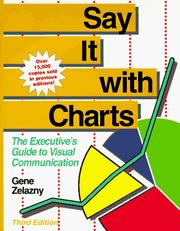
The McKinsey visual-communication bible — teaches exactly how to choose the right chart for every data story. Placed first in this stage because clear visuals are the foundation of every consulting deliverable.
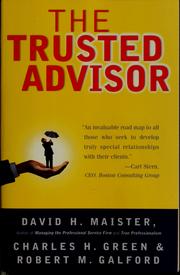
Shifts focus from outputs to relationships, explaining how consultants move from hired expert to indispensable strategic partner. The capstone of the curriculum because it requires all prior skills to be in place before the human trust dimension can be fully leveraged.
Discussion
Keep reading
Paths that share books, cover the same subject, or open a related topic.