Financial risk management is the counterweight to every strategy that assumes things go well. It puts numbers on the ways they might not, across markets, credit, and operations. The math can be demanding, so the reading order matters: build the core concepts, then the quantitative tools, then the specialized risks, then the human history that gives it all meaning.
A note up front: markets carry genuine risk of loss, and these models are tools for understanding uncertainty, not for eliminating it. They complement judgment and, in professional settings, formal training and oversight.
The core toolkit
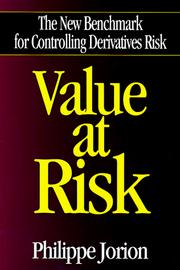
Start with Value at Risk by Philippe Jorion, the standard introduction to measuring potential loss, and Risk Management and Financial Institutions by John Hull, a broad and readable survey of the field. These frame the questions the rest of the path answers.
The quantitative methods
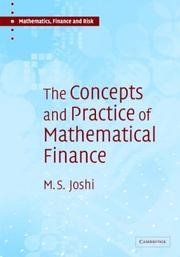
Next, the mathematics. The Concepts and Practice of Mathematical Finance by Mark Joshi and Quantitative risk management by Alexander McNeil develop the rigorous methods, and Options, Futures, and Other Derivatives by John Hull grounds you in the instruments being hedged. Take these slowly; they reward patience.
Specialized and operational risk
Risk isn't one thing. Credit risk by Darrell Duffie and Credit risk measurement by Anthony Saunders cover default and counterparty exposure, while Modeling, measuring and hedging operational risk by Marcelo Cruz addresses the failures that aren't about markets at all. Dynamic hedging by Nassim Taleb and The Volatility Surface by Jim Gatheral deepen the options and volatility side.
The long view
Close with Against the gods by Peter Bernstein, a history of risk itself that reminds you these models exist to manage uncertainty, not abolish it. If the math draws you in, the related quantitative finance path goes further. Follow the full reading path to work through it in order.
Follow the full reading path →
Ready to learn something deeply?
Build a reading path — free