Strategy is one of the most talked-about and least understood subjects in business. The core ideas are few and powerful, but they get diluted into buzzwords fast. Reading in order lets you learn them from the people who developed them, then watch how competition actually erodes even the best positions.
This path moves from foundations, to how to make real choices, to what protects an advantage, and finally to what destroys it.
The foundations
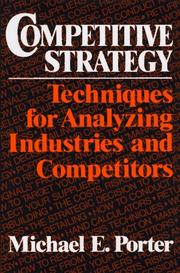
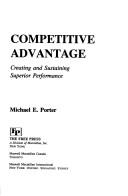
Start at the source. Competitive Strategy and Competitive advantage, both by Michael Porter, define the frameworks the whole field still argues with. Because Porter can be dense, Understanding Michael Porter by Joan Magretta is the ideal companion, distilling the ideas into plain language.
Making real choices
Strategy is ultimately about choosing where to play and how to win. Playing to Win by A.G. Lafley turns that into a practical, decision-focused process from a leader who used it at Procter & Gamble. It converts theory into questions you can actually answer for a business.
Moats and disruption
Now the durability question. The little book that builds wealth by Pat Dorsey and Competition demystified by Bruce Greenwald explain economic moats, the sources of advantage that persist. 7 Powers by Hamilton Helmer is a sharp modern synthesis of the same problem. Then confront the limits: Only the paranoid survive by Andrew Grove and The Innovator's Dilemma by Clayton Christensen show how even dominant firms get toppled, which is the humbling counterweight every strategist needs.
Read this way, you learn the frameworks and their failure modes together. If you want to see strategy applied to platforms, the related marketplace businesses path fits well. Follow the full reading path to progress in order.
Follow the full reading path →
Ready to learn something deeply?
Build a reading path — free