Sustainability and ESG: The Best Books, In Order
This curriculum builds from foundational sustainability literacy through ESG frameworks and reporting standards, into climate risk and finance, and finally to advanced responsible corporate strategy. Each stage equips the reader with the vocabulary and mental models needed for the next, creating a coherent arc from "why it matters" to "how to act on it" at a professional level.
Foundations: Why Sustainability Matters
BeginnerUnderstand the core case for sustainability — environmental, social, and economic — and develop the vocabulary needed to engage with ESG concepts seriously.
▸ Study plan for this stage
Pace: 8–10 weeks, ~25–30 pages/day. Allocate roughly 3 weeks per book to allow time for reflection and exercises between titles.
- The three pillars of sustainability: environmental limits (planetary boundaries), social equity, and economic viability must be balanced simultaneously
- The Sustainable Development Goals (SDGs) as a framework for defining what 'sustainable development' actually means across all sectors
- The circular economy and 'doughnut economics' model as alternatives to linear extraction-based growth
- The concept of planetary boundaries and why infinite growth on a finite planet is impossible
- Stakeholder capitalism: how businesses create value by serving employees, communities, and the environment—not just shareholders
- ESG as a practical lens for measuring and managing non-financial risks and opportunities in organizations
- The business case for sustainability: how environmental and social responsibility directly improves financial performance and resilience
- What are the three pillars of sustainability, and why is balance among them essential rather than prioritizing one over the others?
- Explain the concept of planetary boundaries and how it challenges the traditional model of unlimited economic growth.
- What is the doughnut economics model, and how does it differ from conventional GDP-focused economic thinking?
- How do the Sustainable Development Goals (SDGs) provide a common language for sustainability across different sectors and countries?
- What is the business case for sustainability, and how can environmental and social improvements lead to competitive advantage?
- Define ESG and explain how it relates to the broader concept of sustainable development covered in this stage.
- After reading Sachs: Map your own organization or a company you know against the SDGs—which goals does it currently support or undermine? Write a one-page analysis.
- After reading Raworth: Sketch the doughnut model and identify one product or service you use daily; trace its supply chain to show where it operates inside or outside the safe and just space.
- After reading Willard: Calculate the 'sustainability advantage' for a business of your choice by identifying 3–5 non-financial risks (environmental, social, regulatory) and their potential financial impact.
- Comparative exercise: Create a matrix comparing how each author frames the problem (Sachs' SDG lens, Raworth's doughnut, Willard's business case). Where do they align and diverge?
- Vocabulary building: Compile a glossary of 20–25 key terms from all three books (e.g., planetary boundaries, circular economy, stakeholder capitalism, externalities) with your own definitions.
- Reflection journal: After each book, write 2–3 pages on how the reading has shifted your understanding of what 'sustainability' means and why it matters to you personally or professionally.
Next up: This foundation establishes the *why* and *what* of sustainability; the next stage will move into the *how*—practical frameworks, tools, and strategies for implementing ESG across different organizational contexts and industries.

A rigorous yet accessible introduction to sustainable development, covering the planetary boundaries, social goals, and economic systems that underpin all ESG thinking. Start here to understand the 'why' before the 'how'.

Reframes economic success around social and ecological limits — a mental model that directly informs modern ESG frameworks. Reading this second gives the learner an intuitive framework for evaluating corporate impact.
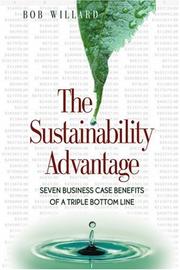
Translates sustainability principles into a clear business case with quantified benefits, bridging the gap between idealism and corporate practice before diving into formal ESG standards.
ESG Frameworks and Reporting Standards
BeginnerUnderstand the major ESG disclosure frameworks (GRI, SASB, TCFD, ISSB) and how companies measure, report, and are held accountable for non-financial performance.
▸ Study plan for this stage
Pace: 4–5 weeks, ~40–50 pages/day (approximately 300 pages total, accounting for note-taking and reflection)
- The relationship between capitalism, values, and sustainable value creation—and why traditional financial metrics alone are insufficient for measuring corporate performance
- How ESG frameworks emerged as a response to market failures and the need to price in externalities (environmental, social, and governance risks)
- The role of trust, stakeholder accountability, and transparency in rebuilding confidence in markets and institutions
- How disclosure standards (implicit in Carney's framework) create common language for measuring and reporting non-financial performance across industries
- The concept of 'sustainable value' as distinct from shareholder value—balancing profit with purpose and long-term resilience
- The interconnection between climate risk (TCFD-aligned thinking), social responsibility, and governance quality as integrated ESG pillars
- Why companies and investors are increasingly held accountable by regulators, stakeholders, and markets for non-financial performance
- What does Mark Carney mean by 'sustainable value,' and how does it differ from the traditional shareholder value model?
- Why does Carney argue that capitalism needs to be reformed, and what role do values and accountability play in that reform?
- How do externalities (environmental and social costs) relate to the need for ESG disclosure and measurement frameworks?
- What is the relationship between trust, transparency, and effective ESG reporting from Carney's perspective?
- How does Carney's framework for measuring non-financial performance align with the need for standardized ESG disclosure (frameworks like GRI, SASB, TCFD)?
- What mechanisms does Carney propose for holding companies and markets accountable for their environmental, social, and governance impacts?
- Create a 'values audit' for a company of your choice: identify its stated values, then map them against Carney's definition of sustainable value. Where are the gaps?
- Read a company's annual report and ESG disclosure (or sustainability report). Annotate it to identify which of Carney's principles (trust, accountability, transparency, long-term resilience) are evident or missing.
- Develop a simple scorecard that translates Carney's framework into measurable non-financial metrics for a specific industry (e.g., banking, energy, retail). Compare your metrics to actual ESG disclosure frameworks.
- Write a 1–2 page reflection: 'How would ESG reporting standards help address the market failures Carney identifies in Value(s)?'
- Interview or survey 3–5 professionals (investor, corporate sustainability officer, regulator, or analyst) about how they use ESG data in decision-making. Synthesize their responses against Carney's argument for accountability.
- Analyze a case study of a company that faced ESG-related criticism or failure. Use Carney's framework to diagnose what went wrong in terms of values, trust, and accountability.
Next up: This stage establishes the philosophical and economic foundation for why ESG frameworks exist—the next stage will dive into the specific technical frameworks (GRI, SASB, TCFD, ISSB) and how companies operationalize Carney's principles through structured disclosure and measurement.

Written by a former central bank governor, this book explains how markets fail to price sustainability and makes the authoritative case for mandatory ESG disclosure and new reporting architectures like TCFD and ISSB.
Climate Risk and Sustainable Finance
IntermediateUnderstand how climate change translates into financial risk and opportunity, how capital markets are responding, and how to apply tools like scenario analysis and green finance instruments.
▸ Study plan for this stage
Pace: 6–7 weeks, ~40–50 pages/day (approximately 280–350 pages total across both books)
- Climate change as a systemic financial risk: how physical and transition risks affect asset valuations, credit ratings, and portfolio performance
- ESG integration in investment analysis: using environmental, social, and governance metrics to identify material risks and opportunities beyond traditional financial metrics
- Scenario analysis and stress testing: modeling climate futures (1.5°C, 2°C, 4°C+ pathways) to assess portfolio resilience and capital allocation decisions
- Green finance instruments: understanding bonds, loans, and equity structures that fund low-carbon transitions and renewable energy projects
- Energy transition dynamics: recognizing how grid modernization, renewable energy adoption, and fossil fuel stranding reshape investment landscapes
- Stakeholder capitalism and long-term value creation: balancing shareholder returns with climate accountability and systemic risk mitigation
- Regulatory and policy drivers: carbon pricing, disclosure mandates (TCFD, SEC), and net-zero commitments that reshape capital flows
- Practical due diligence: evaluating companies' climate strategies, transition plans, and exposure to climate-related liabilities
- How do physical risks (e.g., extreme weather, resource scarcity) and transition risks (e.g., stranded assets, regulatory shifts) manifest as financial risks in different sectors and geographies?
- What are the key ESG metrics and data sources you would use to assess a company's climate preparedness and long-term financial viability?
- How would you design a scenario analysis to stress-test a diversified portfolio against different climate pathways, and what would you look for in the results?
- What are the main types of green finance instruments, and how do they differ in structure, risk profile, and suitability for different investor mandates?
- Why is grid modernization and energy transition central to understanding both climate risk and investment opportunity, and what are the key transition challenges?
- How can investors use climate risk frameworks to identify both risks to avoid and opportunities to capture in their capital allocation decisions?
- Build a simple climate risk matrix for 3–4 companies in different sectors (e.g., energy, utilities, consumer goods): map their physical and transition risk exposures, then research their disclosed climate strategies and compare to their actual risk profile.
- Conduct a green bond analysis: select 2–3 green bonds or sustainability-linked loans, review their use-of-proceeds documentation, and assess whether the projects align with credible climate pathways.
- Create a portfolio stress test: take a sample portfolio (real or hypothetical) and model its performance under 2–3 climate scenarios (e.g., orderly 1.5°C transition vs. disorderly 3°C+ pathway); document assumptions and key vulnerabilities.
- Analyze a company's transition plan: choose a fossil fuel or carbon-intensive company, review their net-zero commitment and capital allocation strategy, and critically assess credibility gaps or alignment with climate science.
- Map energy transition dynamics in a specific region: research grid composition, renewable capacity targets, regulatory drivers, and stranded asset risks; identify investment opportunities and risks for utilities and energy companies.
- Develop an ESG screening framework: define 5–7 material ESG criteria for a specific sector, source data from public disclosures (10-K, sustainability reports, TCFD filings), and rank companies by climate resilience and transition readiness.
Next up: This stage equips you with the analytical tools and frameworks to quantify climate risk and identify sustainable finance opportunities; the next stage will likely deepen your ability to execute these strategies at scale—whether through portfolio construction, stakeholder engagement, or impact measurement and governance.

Covers ESG integration in portfolio management, green bonds, and impact investing in a structured way, building directly on the risk concepts introduced by Stern.

Provides a grounded, critical perspective on energy transition risks and grid reliability — essential for stress-testing optimistic climate narratives and understanding real-world transition complexity.
Responsible Corporate Strategy
ExpertSynthesize all prior learning into a strategic capability: how to embed sustainability into corporate purpose, governance, supply chains, and long-term value creation.
▸ Study plan for this stage
Pace: 6–7 weeks, ~40–50 pages/day. Week 1–3: "Net Positive" (400 pages); Week 4–7: "Reinventing Capitalism in the Age of Big Data" (350 pages), with 2–3 days for synthesis and integration at the end.
- Purpose-driven corporate strategy: embedding sustainability as core to business model, not peripheral CSR
- Stakeholder capitalism vs. shareholder primacy: redefining value creation to include employees, communities, environment, and long-term resilience
- Governance and accountability mechanisms: how boards, metrics, and incentives must align with sustainability commitments
- Supply chain transformation: leveraging data and transparency to drive responsible sourcing and circular economy principles
- Data as a strategic asset for sustainability: using analytics, AI, and real-time monitoring to optimize environmental and social outcomes
- Long-term value creation: connecting ESG performance to financial resilience, risk mitigation, and competitive advantage
- Systemic change through business: how individual corporate strategies aggregate into market-wide and societal transformation
- How does Paul Polman define 'net positive' impact, and how does it differ from traditional sustainability or CSR approaches?
- What role does corporate purpose play in Polman's framework, and how should it be embedded into governance and decision-making?
- How can companies use data and digital tools (per Mayer-Schönberger) to measure, monitor, and improve supply chain sustainability?
- What is the relationship between stakeholder capitalism and long-term financial value creation, according to these authors?
- How do the governance structures and accountability mechanisms described in 'Net Positive' align with data-driven decision-making in 'Reinventing Capitalism'?
- What are the barriers to embedding sustainability into corporate strategy, and what concrete levers do these books identify to overcome them?
- Map your organization's (or a case study company's) current business model against Polman's net positive framework: identify gaps between stated purpose and actual operations, and draft a 3–5 year roadmap to close them.
- Conduct a stakeholder analysis: list all stakeholders (employees, suppliers, customers, communities, environment) and assess how current governance structures and incentives serve or neglect each group.
- Design a data strategy for supply chain transparency: identify 3–5 critical sustainability metrics (e.g., carbon, water, labor practices), specify data sources, and outline how real-time monitoring could drive accountability.
- Create a governance audit: review board composition, executive compensation, and KPIs at a real company; assess whether they truly incentivize long-term sustainability or remain short-term profit-focused.
- Draft a purpose statement and supporting strategy: write a concise corporate purpose that integrates financial and sustainability goals, then outline how it would reshape product development, supply chain, and stakeholder engagement.
- Develop a case study analysis: select a company that has attempted to embed sustainability into strategy (e.g., Unilever, Patagonia, Interface); evaluate its successes and failures using concepts from both books.
Next up: This stage equips you with the strategic frameworks and tools to design and implement sustainability-embedded business models; the next stage will likely focus on scaling these strategies across industries, measuring systemic impact, and navigating the policy and market conditions that enable or constrain corporate sustainability leadership.

Written by Unilever's former CEO, this is the definitive practitioner's guide to building a corporation that gives back more than it takes — a masterclass in translating ESG into enterprise strategy.

Explores how data and transparency are restructuring markets toward sustainability, providing a forward-looking strategic lens that ties together reporting, risk, and corporate purpose.
Discussion
Keep reading
Paths that share books, cover the same subject, or open a related topic.