Agribusiness: The Best Books on the Business of Food, in Order
The business of food is one of the most concentrated industries in the world and one of the least visible: four companies control most American beef, a handful of traders move most of the world's grain, and the farmer who raises your chicken usually does not own it. There is no good textbook route into this, because the textbooks are agricultural economics and the actual reporting is done by journalists. So this path is built out of investigative books, read in order of scale — from the supermarket back to the field, then out to the commodity markets and the policy that sets the whole thing running.
The Consumer's Entry Point
BeginnerTrace the food on a plate back to its industrial origin, and acquire the basic argument that the way food is produced is an economic arrangement rather than a natural fact.
▸ Study plan for this stage
Pace: Four to five weeks. The Omnivore's Dilemma is 450 pages in four sections built around four meals — read a section at a sitting, roughly three weeks. Fast Food Nation is 385 pages of reported journalism and reads faster, two weeks. Both are works of advocacy journalism as well as reporting: each auth
- The industrial-corn argument in The Omnivore's Dilemma: a very large share of the American food supply is a rearrangement of one subsidised plant, and Pollan's tracing of corn through feedlot, sweetener and processed food is still the clearest version of it anyone has written.
- Every food is the end of a supply chain that someone designed for a reason. The whole path rests on this: the way food is produced is an economic arrangement, not a natural fact.
- Fast Food Nation supplies the labour and safety dimension Pollan largely leaves out — franchising, the deskilling of kitchen work, meatpacking line speed, and the injury rates that follow from it.
- The buyer shapes the farm. Schlosser's account of potato and beef contracts shows a handful of restaurant chains setting specifications that reorganise entire agricultural sectors upstream.
- Flavour is manufactured. The chapter on the New Jersey flavour industry is the single best demonstration that a processed food's sensory qualities are an engineered input like any other.
- Both books are twenty years old or more. Reading them now means separating what has changed — some labour and antibiotic practices have — from what has consolidated further, which is most of it.
- Pollan's book created the general audience that every later book on this path was published into, which is why it comes first even for readers who know the argument second-hand.
- Follow one industrial meal in The Omnivore's Dilemma back to the field. How many of its ingredients derive from corn?
- What does a subsidy actually do to a commodity's price, and how does Pollan connect farm policy to what is on a supermarket shelf?
- How does a fast food chain's purchasing specification change what a farmer plants or a packer builds?
- Where do Pollan and Schlosser disagree about what the central problem is — ecology, labour, health or concentration?
- Which claims in Fast Food Nation would you expect to have changed since publication, and which would you expect to have got worse?
- Take one packaged product from your own kitchen and read its ingredient list against Pollan's corn chapters. Mark every ingredient that is a corn derivative. This is the book's argument tested on your own shelf and it takes ten minutes.
- Reconstruct Pollan's steer from the feedlot section: what it ate, over how many days, at what weight gain. Then find the current price of a pound of ground beef and ask what that price does and does not include.
- Using Schlosser's account of line speed, write down the injury mechanism he describes and then look up the current permitted line speed for beef or poultry. The comparison between his figure and today's is the most direct check you can run on the book.
- Trace one fast food menu item back through Schlosser's supply chain — potato, beef, flavouring — and list every firm involved that the customer never sees.
Next up: You now have the consumer end of the chain in detail, which is the vantage point from which the ownership structure behind it is visible.

Pollan follows four meals back to their sources, and the industrial-corn section is still the clearest explanation anyone has written of why American food is built out of one plant. It is the book that created the general audience for everything else on this path, so start here even if you have read about it second-hand.

The book that opened the modern genre: franchising, flavour chemistry, potato contracts, and the meatpacking line. Read it second because it supplies the labour and safety dimension Pollan largely leaves out, and because the industry it describes is the customer that shapes the farm.
Who Actually Owns the Farm
BeginnerUnderstand consolidation and contract growing — the two mechanisms that turned independent farmers into something closer to franchisees with debt.
▸ Study plan for this stage
Pace: Six to seven weeks. The Meat Racket is 384 pages of investigative reporting and is the single most important book on this path — three weeks, read carefully. Barons is 320 pages in seven short profiles and reads quickly, under two weeks. Foodopoly is 356 pages and more polemical than either; two wee
- Vertical integration in poultry: the company owns the birds, the feed and the processing plant, and the farmer owns the buildings, the debt and the risk. Leonard's account of the Tyson model is the definitive one.
- The tournament system: growers are paid relative to each other rather than against a fixed rate, so a farmer's income depends on inputs the company controls and on how the neighbours performed. It is the mechanism that converts an independent business into something closer to a franchise with debt.
- Contract growing has since spread from chicken to hogs and beyond, which is why The Meat Racket generalises so far past its subject.
- Austin Frerick is an antitrust researcher, and Barons makes the structural argument Leonard makes for chicken across seven commodities — hogs, dairy, grain, coffee, berries, slaughter and groceries — in short profiles of the families and firms that dominate each. It is the newest book on this path.
- Four-firm concentration ratios are the standard measure here, and in American beef, pork and poultry processing they are extraordinarily high by the standards of any other consumer industry.
- Wenonah Hauter runs an advocacy organisation, and Foodopoly is a campaigner's survey rather than a work of reporting: it covers more ground, including seeds, retail and Farm Bill politics, and argues a policy position throughout.
- Antitrust enforcement, or its absence, is the thread connecting all three books, and the Packers and Stockyards Act is the specific law whose non-enforcement Leonard documents.
- Explain the tournament pay system precisely enough that you could describe a grower's income in a bad month.
- What does the integrator own, what does the grower own, and where does the risk sit at each stage of a flock's life?
- Take three of Frerick's seven commodities and state how concentration was achieved in each. Were the routes the same?
- Where does Foodopoly make a claim that neither Leonard nor Frerick supports? Is the difference evidence or emphasis?
- Why has antitrust law not been applied to these structures? Give the legal and the political answers separately.
- Reconstruct a broiler grower's economics from the numbers in The Meat Racket: barn construction cost, loan term, flocks per year, payment range under the tournament. Work the arithmetic yourself — the book gives you enough to do it, and doing it is what makes the argument land.
- Look up the current four-firm concentration ratio for American beef packing and compare it with the figure in Barons. Note the direction of travel.
- Take one commodity Frerick profiles and draw the chain from farm to checkout, naming the firm at each step. The number of steps controlled by one company is the point.
- Read Hauter's chapter on seeds and check three of its factual claims against the reported books. Note which hold up, which are advocacy framing and which you cannot verify either way.
- Find a contract grower's own account online or in local reporting and read it against Leonard's model. Where it diverges is where the model has aged.
Next up: With the ownership structure understood in the abstract, the next stage shows the same logic producing four different pathologies in four different commodities.
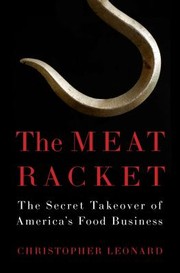
The definitive account of the Tyson model: how vertical integration and the tournament pay system moved the risk of chicken farming onto growers while keeping the profit at the processor. This is the single most important book on the list, and everything about contract agriculture flows from it.

Seven short profiles of the families and firms that dominate specific commodities — hogs, dairy, grain, coffee, berries, slaughter, groceries. Frerick is an antitrust researcher, so this is the structural argument Leonard makes for chicken, generalised across the industry. A recent book, and the newest thing on this path.

A campaigner's survey of concentration across the whole food chain, including seeds, retail and the politics of the Farm Bill. It is more polemical than the two above and covers more ground; read it third, once you can judge the specific claims against the reported cases.
Inside the Commodities
IntermediateGet four single-commodity investigations, and see that the same industrial logic produces different pathologies in chicken, pork, beef and tomatoes.
▸ Study plan for this stage
Pace: Eight to ten weeks for four investigations. Big Chicken is 400 pages and carries the most science, three weeks. The Chain is 313 pages and is the most physically detailed book on the path; two weeks, and it describes slaughterhouse work, severe repetitive injury and a cluster of neurological illness
- Routine sub-therapeutic antibiotic use built the modern broiler industry by making dense confinement survivable, and Maryn McKenna is a public health reporter, so Big Chicken carries the strongest scientific evidence on this path — including the link to drug-resistant bacteria.
- An externality is a cost the price does not contain. Antibiotic resistance is the clearest example in this literature: the cost is real, measurable in human deaths, and appears nowhere in the price of chicken.
- Line speed is the central variable in meatpacking. Genoways shows how a single plant's throughput determines injury rates, worker turnover, immigration patterns in the surrounding town and the plant's relationship with regulators.
- The Chain and Pig Tales cover the same animal at opposite ends — Estabrook on confinement systems, manure lagoons and the odour that empties rural neighbourhoods, Genoways on the processing line — and reading them together gives you a whole industry.
- Estabrook and Genoways both include producers doing it differently, which is what keeps these books from being accounts of an inevitable system.
- Tomatoland shows that the produce aisle is as industrial as the meat counter: breeding for shipping durability rather than flavour, chemical inputs, and a labour system that produced federal slavery prosecutions.
- The same structural logic — concentration, contract, throughput — produces different specific harms depending on the biology of the commodity, which is the argument this stage exists to make.
- How did antibiotics change the physical design of a chicken house, and what did that make possible?
- What is the evidentiary chain from farm antibiotic use to a resistant human infection, and where is it weakest?
- What determines line speed at a pork plant, and who benefits from raising it?
- In Pig Tales, what specifically does a manure lagoon do to the surrounding area, and why is it legal?
- How was the Florida tomato labour system organised, and what actually changed it?
- Which of these four industries would be hardest to reform, and why — technology, concentration, or labour supply?
- Use McKenna's figures to work out how much antibiotic is used per bird and how that scales to national production. Then compare it with the total used in human medicine, which she gives.
- Take Genoways's description of one workstation on the line and write out the motion, the frequency per hour and the injury it produces. The arithmetic is the argument.
- Read Pig Tales and The Chain on the same animal in the same fortnight, then draw the hog's life as a single timeline from farrowing to package, marking which book covers which segment.
- Look up a tomato in a supermarket in February, find where it was grown, and check that region against Estabrook's account. The book is specific enough to make this a real test.
- Pick one reform each book proposes and check whether it has since happened. The hit rate across four books is a useful measure of what this genre actually achieves.
Next up: Four commodities in detail leaves one question unasked: whether the soil and water underneath them can sustain any of it.

How routine antibiotic use built the modern broiler industry and, along the way, drug-resistant bacteria. McKenna is a public health reporter, so this is the strongest science on the list and the clearest case of an externality the price of chicken does not contain.

One Hormel plant, the line speed, and the workers on it — including a cluster of neurological illness among people cutting pig brains with compressed air. The most physically detailed account of what a slaughterhouse actually is.
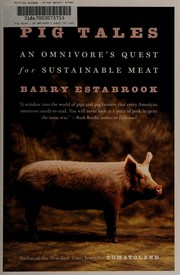
Estabrook on the hog industry: confinement systems, manure lagoons, the smell that empties rural neighbourhoods, and the small farms doing it differently. Pairs directly with Genoways, who covers the same animal at the processing end.
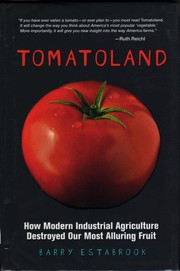
Florida's winter tomato industry, its labour conditions and its documented slavery cases, plus the plant breeding that made a fruit that ships well and tastes like nothing. The best demonstration that the produce aisle is as industrial as the meat counter.
The Land, the Water and the Grain Trade
IntermediateMove underneath the commodity to the two things that actually constrain it — soil and water — and out to the global traders who set the price of everything.
▸ Study plan for this stage
Pace: Seven to eight weeks. Perilous Bounty is 280 pages of reporting on two slow-moving crises — two weeks. The Unsettling of America is 228 pages of essays and is the densest prose on this path; read it slowly over two to three weeks. Merchants of Grain is 406 pages and is the closest thing here to a bu
- Two physical limits: California's groundwater, drawn down faster than it recharges, and the Midwest's topsoil, eroding faster than it forms. Philpott's case is that current American agriculture is arithmetically temporary.
- Subsidence, aquifer overdraft and the water rights structure that permits it — the specific mechanisms by which a state can farm itself out of water while every individual decision is legal and rational.
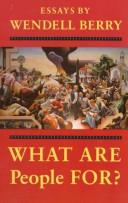
- Wendell Berry is an essayist, farmer and advocate, not a reporter. The Unsettling of America is a moral and cultural argument from 1977 that industrial agriculture destroys communities and competence as well as soil, and it is the book every later author on this path is arguing with, usually without
- Berry wrote without the data Philpott has, which is why reading them in that order matters: the modern measurements largely support a case that was originally made on other grounds.
- Merchants of Grain is the classic account of the five family trading firms — Cargill, Continental, Bunge, Dreyfus and André — that quietly moved the world's grain, written in the wake of the 1970s Soviet wheat deal.
- How commodity trading actually works: storage, freight, basis, information advantage. Morgan's book is the only place on this path where the mechanics of a market rather than the politics of a company are explained.
- Merchants of Grain is dated in its particulars — the firms have merged, changed hands and been joined by others — and unmatched on the structure of the business, which has not changed.
- What is aquifer overdraft, and what makes it individually rational and collectively fatal?
- How fast is topsoil lost relative to how fast it forms, on Philpott's figures, and what does that ratio imply on a fifty-year horizon?
- What is Berry's actual argument? State it without using the word sustainable.
- Which of Berry's 1977 predictions have been borne out, and which have not?
- How does a grain trader make money, and why is information the central asset?
- Morgan's five firms are no longer five. Does the concentration story in Barons follow from the structure Morgan described, or contradict it?
- Take Philpott's groundwater figures for one California basin and calculate how long at current rates. Then look up that basin's current status under state groundwater regulation.
- Read Berry's essay on specialisation immediately after The Meat Racket. The contract grower is exactly the figure Berry predicted in 1977, and setting the two texts side by side is the most striking single juxtaposition on this path.
- Work through one grain trade as Morgan describes it — purchase, storage, freight, sale — and identify at each step where the trader's advantage comes from.
- Look up the current ownership of Morgan's five firms and write the fifty-year corporate history in a paragraph. That paragraph is the missing last chapter of his book.
- Write a one-page answer to whether current American agriculture can continue for another fifty years, citing Philpott for the physical limits and Morgan for the market that would have to absorb the change.
Next up: The physical and market constraints are in place, so the last stage asks who writes the rules that hold the whole arrangement together.

California's disappearing groundwater and the Midwest's disappearing topsoil, presented as the two slow-moving crises that make current American agriculture arithmetically temporary. The most important book here on whether the system can continue at all.
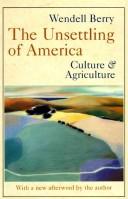
Berry's 1977 argument that the industrialisation of agriculture is a cultural and moral failure as much as an ecological one. It is the oldest book on the path and the one every later author is arguing with; read it after Philpott, who supplies the data Berry lacked.
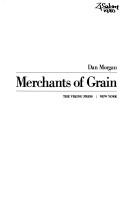
The classic account of the five family firms — Cargill, Continental, Bunge, Dreyfus, André — that quietly moved the world's grain, written after the 1970s Soviet wheat deal. Dated in its particulars and unmatched on how commodity trading actually works; this is the closest thing on the path to agricultural economics.
Policy and the Global Picture
BeginnerSee who writes the rules, and how the same corporate structure produces obesity in rich countries and dispossession in poor ones.
▸ Study plan for this stage
Pace: Five to six weeks. Food Politics is 486 pages, heavily documented, and reads as an academic book rather than as journalism — three weeks. Stuffed and Starved is 438 pages and is a global argument with an activist frame; two to three weeks. Read Nestle first for the American policy machinery and Pate
- Marion Nestle is a nutrition scientist who served on federal advisory bodies and then documented how the food industry shapes dietary guidance. She is a participant in the fights she describes and writes as an open critic of the industry.
- The mechanisms of influence Food Politics documents are ordinary and legal: lobbying, committee membership, research funding, trade association litigation, and the difference between eat less of X and choose a balanced diet in the wording of official advice.
- The Farm Bill is where most of this settles, and it is why the policy layer bends the way it does — commodity support, nutrition programmes and conservation funding negotiated together in one instrument.
- Raj Patel is an academic and an activist, and Stuffed and Starved argues that the same corporate structure produces obesity in rich countries and dispossession in poor ones, with billions of farmers at one end, billions of eaters at the other, and a handful of firms at the waist.
- The hourglass image is the path's closing idea: everything from Pollan's corn to Leonard's contract growers to Morgan's traders is a description of the narrow middle.
- Patel takes the American cases you have spent four stages on and makes them a regional instance of something worldwide, including the effects of trade liberalisation on smallholders outside the United States.
- Both authors are arguing for policy change, and separating their documented findings from their proposals is the last reading skill this path asks for.
- Name three specific mechanisms by which industry has influenced federal dietary advice, with the case Nestle uses for each.
- Why does official nutrition guidance rarely tell people to eat less of a named food? Give Nestle's account.
- What holds the Farm Bill's coalition together, and what would break it?
- What is the hourglass, and where in it does each book from stages two to four sit?
- How does Patel connect obesity in one country to dispossession in another? Is the causal chain convincing at every link?
- After the whole path: is the central problem concentration, subsidy, labour law or physical limits? Defend a single answer.
- Take the current federal dietary guidelines and read them against Nestle's analysis of the wording. Mark every place where a food is named positively and every place where a nutrient stands in for a food.
- Find the spending breakdown of the most recent Farm Bill by title and compare it with the coalition Nestle describes. The numbers show you who is actually at the table.
- Use Patel's framework to redraw the hourglass with the specific firms named in Barons and Merchants of Grain at the waist. One page, and it is the summary of this entire path.
- Pick one country outside the United States covered by Patel and find whether the trade liberalisation he describes has since been reversed or deepened.
- Write a final page listing which of the fifteen books on this path is reporting, which is advocacy and which is both, and what you would trust each for. This is the literacy the path was actually for.
Next up: This is the end of the path: from a supermarket shelf to a contract barn, a slaughter line, an aquifer, a trading floor and a Farm Bill, with the same structure visible at every scale.
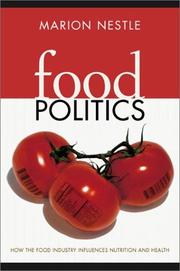
Nestle is a nutrition scientist who watched the industry shape federal dietary advice, and this documents the lobbying in detail. It explains why the policy layer above everything in this path bends the way it does.
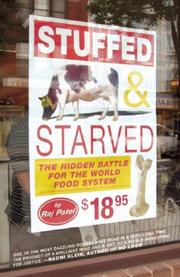
The global version of the argument: an hourglass food system with billions of farmers at one end, billions of eaters at the other and a handful of firms at the waist. The right closing book because it makes the American cases in this path a regional instance of something worldwide.
Discussion
Keep reading
Paths that share books, cover the same subject, or open a related topic.