How to learn Nutrition
This curriculum takes you from everyday food intuition to rigorous nutritional science, building in four stages. Each stage introduces new vocabulary and frameworks that make the next stage's material accessible — starting with the "why food matters," moving through macronutrients and micronutrients, then into evidence-based dietary patterns, and finally into the cutting-edge biochemistry and research literacy needed to think critically about nutrition science.
Foundations: Food, Health & the Big Picture
BeginnerUnderstand why nutrition matters, how modern food environments shape eating, and develop a critical lens on dietary advice before diving into the science.
▸ Study plan for this stage
Pace: 6–8 weeks total: Weeks 1–3 for "In Defense of Food" (~30 pages/day, ~3–4 days/week), then Weeks 4–8 for "How Not to Die" (~25–30 pages/day, ~4–5 days/week, allowing extra time for the dense disease-by-disease chapters)
- Nutritionism vs. whole-food thinking: Pollan's critique of reducing food to isolated nutrients and why this reductionist ideology misleads eaters and policy alike
- The Western Diet as a disease driver: how the modern industrialized food pattern — refined grains, added sugars, processed fats, excess animal products — correlates with chronic disease across populations
- Developing a critical lens on dietary advice: understanding how food science, industry funding, and media cycles produce contradictory headlines, and how to evaluate claims skeptically
- Pollan's seven-word manifesto — 'Eat food. Not too much. Mostly plants.' — as a practical, culture-tested alternative to expert-driven dietary rules
- The food environment and its influence: how supermarkets, marketing, packaging, and food engineering shape what people eat largely below the level of conscious choice
- Whole-plant foods as the common thread in longevity research: Greger's survey of evidence linking fruits, vegetables, legumes, whole grains, nuts, and seeds to reduced mortality from the 15 leading causes of death
- The Daily Dozen framework: Greger's evidence-based checklist of food categories and lifestyle behaviors to aim for each day as a practical implementation tool
- Evidence hierarchies in nutrition: understanding why Greger prioritizes meta-analyses and randomized controlled trials, and how to weigh observational data, industry-funded studies, and mechanistic claims
- According to Pollan, what is 'nutritionism,' why does he argue it has harmed public health, and what does he propose as an alternative way of thinking about food?
- What specific features of the Western Diet does Pollan identify as most problematic, and what historical and cross-cultural evidence does he use to support that claim?
- How does Greger define 'dying from a food-related illness' as preventable, and which of the 15 leading causes of death does he argue are most strongly influenced by diet?
- For at least three diseases covered in 'How Not to Die' (e.g., heart disease, type 2 diabetes, certain cancers), what dietary patterns does Greger identify as protective, and what is the quality of evidence he cites?
- How do both Pollan and Greger converge — and where do they differ — in their practical dietary recommendations, and what does that convergence or tension reveal about the current state of nutrition knowledge?
- After reading both books, how would you evaluate a new dietary headline (e.g., 'Red meat linked to cancer') using the critical tools each author provides?
- The 'Real Food' audit: spend one week photographing everything you eat, then review each item against Pollan's definition of 'real food' (found in the produce, bulk, or refrigerated sections; has fewer than five ingredients; your great-grandmother would recognize it). Note patterns and surprises in a short journal entry.
- Western Diet mapping: after finishing 'In Defense of Food,' list the five most common ultra-processed foods in your own kitchen or weekly shopping. For each one, trace which specific features Pollan critiques (refined grains, added sugars, industrial seed oils, etc.) appear on the label.
- Disease-chapter deep dive: choose any two of Greger's disease chapters from 'How Not to Die' that feel personally relevant (e.g., heart disease, hypertension, diabetes). For each, create a one-page summary: the key dietary villain, the key dietary protector, the strongest study cited, and one actionable change.
- Daily Dozen tracking: for 7 consecutive days after finishing 'How Not to Die,' use Greger's Daily Dozen checklist (available as a free app or printable) to track your own eating. At the end of the week, identify the two hardest categories to hit and brainstorm two realistic strategies to improve each.
- Claim autopsy: find one recent nutrition headline online (from a news site, not a peer-reviewed journal). Apply both Pollan's 'nutritionism' critique and Greger's evidence-hierarchy thinking to dissect it: Who funded the study? Is it isolating a single nutrient? Is it a meta-analysis or a single observational study? Write a 200-word verdict.
- Convergence-and-tension essay: write a 300–500 word reflection comparing where Pollan and Greger agree (e.g., eat more plants, avoid ultra-processed food) and where they diverge (e.g., Pollan's more permissive stance on quality animal products vs. Greger's whole-food plant-based emphasis). Conclude with your own provisional position and why.
Next up: By establishing that whole, minimally processed plant-rich eating is both historically grounded (Pollan) and clinically supported (Greger), this stage gives the reader a strong 'why' and a practical framework, making them ready to move into the underlying biochemistry and physiology — the 'how' — that the next stage's more science-focused books will explain at a mechanistic level.
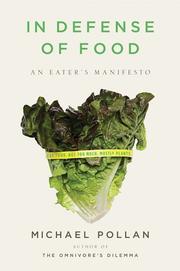
A perfect entry point — Pollan dismantles nutritionism and teaches you to think about whole foods vs. nutrients, giving you the conceptual vocabulary for everything that follows.

Deepens the foundation by tracing where food actually comes from, building context for why food quality and sourcing matter nutritionally and ecologically.
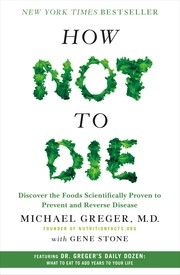
Introduces the disease-prevention angle of nutrition with accessible summaries of research, bridging everyday food choices to long-term health outcomes.
Core Science: Nutrients, the Body & How They Interact
BeginnerLearn how macronutrients and micronutrients work in the body, understand digestion and metabolism at a practical level, and build a solid scientific vocabulary.
▸ Study plan for this stage
Pace: 8–10 weeks total. Weeks 1–6: "Nutrition Concepts and Controversies" (~25–35 pages/day, focusing on one chapter cluster per sitting — e.g., macronutrients one week, micronutrients the next, then digestion/metabolism). Weeks 7–10: "The China Study" (~20–25 pages/day, reading more analytically to see h
- Macronutrients (carbohydrates, proteins, fats) — their structures, caloric values, and primary roles in the body as covered in Nutrition Concepts and Controversies
- Micronutrients (vitamins and minerals) — fat-soluble vs. water-soluble vitamins, major vs. trace minerals, deficiency and toxicity thresholds
- Digestion and absorption — the step-by-step journey of food through the GI tract, the roles of enzymes, bile, and gut flora as explained in Nutrition Concepts and Controversies
- Metabolism fundamentals — how the body converts macronutrients into ATP, the roles of glycolysis, the citric acid cycle, and beta-oxidation at a practical (non-biochemistry-degree) level
- Energy balance — calories in vs. calories out, BMR, thermic effect of food, and how Whitney & Sizer frame healthy weight management
- Nutrient-disease relationships — how chronic deficiencies or excesses link to conditions like scurvy, osteoporosis, anemia, and obesity (Nutrition Concepts and Controversies)
- Diet-disease epidemiology — how T. Colin Campbell's China Study uses population-level data to connect animal-protein intake to rates of cancer, heart disease, and diabetes
- Scientific literacy and critical evaluation — understanding how to read a nutrition study, distinguish correlation from causation, and weigh the evidence presented across both books
- After reading Nutrition Concepts and Controversies, can you explain what happens to a piece of whole-grain bread from the moment it enters your mouth to the moment its glucose enters a cell for energy — naming each organ, enzyme, and transport mechanism involved?
- What is the difference between a fat-soluble and a water-soluble vitamin, and why does that distinction matter for how much of each you can safely consume? Use at least two specific vitamins from the book as examples.
- How does Nutrition Concepts and Controversies define 'essential' nutrients, and which macronutrient building blocks (amino acids, fatty acids) fall into that category and why?
- What methodology does T. Colin Campbell use in The China Study to argue that animal protein promotes cancer growth, and what are the biological mechanisms (e.g., casein and IGF-1) he proposes?
- How do the dietary recommendations implied by The China Study align with or challenge the macronutrient guidelines presented in Nutrition Concepts and Controversies? Where do the two books agree, and where do they diverge?
- Using vocabulary from both books, how would you explain to a friend why two people eating the same number of calories might have very different health outcomes?
- Nutrient-Tracking Journal (Weeks 1–3): Log everything you eat for 5 consecutive days using a free app (Cronometer or MyFitnessPal). After finishing the macronutrient and micronutrient chapters of Nutrition Concepts and Controversies, revisit your log and annotate it — identify which foods supplied which nutrients, flag any likely deficiencies or excesses, and connect your findings to the DRI table
- Digestion Diagram (Week 3): Without looking at the book, draw and label the entire digestive tract from mouth to large intestine. Add callout boxes naming the enzyme or secretion produced at each stage and the nutrient it acts on. Then open Nutrition Concepts and Controversies and self-grade your diagram, correcting any gaps.
- Metabolism Flowchart (Week 4): Create a one-page visual flowchart showing how each macronutrient (glucose, fatty acids, amino acids) enters and moves through the body's energy-producing pathways. Use color-coding: one color per macronutrient. Pin it somewhere visible and quiz yourself on it daily for a week.
- Controversy Corner Debate Notes (Weeks 5–6): Nutrition Concepts and Controversies includes 'Controversy' sections at the end of chapters. Choose any three that interest you, read them carefully, and write a one-paragraph 'verdict' for each: What is the evidence? What is still uncertain? What would you need to know to be more confident? This builds the critical-reading muscle you'll need for The Ch
- China Study Evidence Audit (Weeks 7–9): As you read The China Study, keep a two-column running log: Column A = claims Campbell makes; Column B = the type of evidence he cites (animal study, epidemiological correlation, clinical trial, etc.). At the end, tally the evidence types and write a one-page reflection on what the book proves, what it strongly suggests, and what remains speculative — drawin
- Synthesis Meal Plan (Week 10): Design a 3-day meal plan that attempts to satisfy the DRI guidelines from Nutrition Concepts and Controversies while also reflecting the whole-food, plant-predominant principles of The China Study. Annotate each meal with the key nutrients it provides and any trade-offs you had to make, demonstrating your ability to apply both books simultaneously.
Next up: By mastering how individual nutrients function in the body and how dietary patterns connect to disease at a population level, the reader now has the scientific vocabulary and critical framework needed to engage confidently with more advanced or specialized topics in nutrition — such as sports nutrition, clinical dietetics, or food policy — without being overwhelmed by the underlying biology.

The most widely used introductory nutrition textbook — systematically covers every nutrient, digestion, and metabolism with clear explanations, giving you the scientific backbone the earlier popular books assumed.
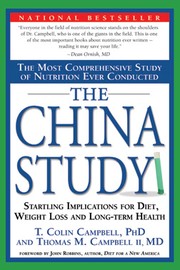
Introduces epidemiological thinking and the relationship between animal protein, plant-based diets, and chronic disease — a landmark work that teaches you to read large-scale nutrition research.
Intermediate Depth: Evidence-Based Dietary Patterns
IntermediateEvaluate major dietary frameworks (Mediterranean, low-carb, plant-based, etc.) using evidence, and understand how context — genetics, gut microbiome, lifestyle — shapes individual nutrition.
▸ Study plan for this stage
Pace: 10–12 weeks total. Week 1–4: "Good Calories, Bad Calories" (~30 pages/day, reading critically with notes on Taubes's evidence chain). Week 5–7: "The Diet Myth" (~25 pages/day, journaling gut microbiome observations alongside reading). Week 8–10: "Eat, Drink, and Be Healthy" (~20 pages/day, cross-ref
- The carbohydrate-insulin hypothesis of obesity and metabolic disease, as argued by Taubes, and the quality of the epidemiological and experimental evidence he marshals for and against dietary fat vs. refined carbohydrates
- How refined carbohydrates and sugar drive insulin resistance, and why Taubes distinguishes 'good' from 'bad' calories by hormonal effect rather than caloric value alone
- The central role of the gut microbiome in individual dietary response, as detailed by Spector — including how microbiome diversity, fiber fermentation, and short-chain fatty acid production mediate health outcomes
- Why identical foods produce dramatically different blood-glucose and metabolic responses in different people (Spector's personalized nutrition framework), undermining one-size-fits-all dietary guidelines
- The influence of genetics, epigenetics, and lifestyle factors (sleep, stress, exercise) on how individuals process macronutrients — a theme woven through both Spector and Willett
- Willett's Harvard Healthy Eating Plate model: the evidence base for replacing refined grains with whole grains, favoring healthy fats (olive oil, nuts) over saturated fat dogma, and the role of plant-protein sources
- Critical appraisal of dietary epidemiology: how to distinguish robust cohort data (Willett's Nurses' Health Study) from weaker observational associations, and where randomized controlled trial evidence does and does not exist
- How major dietary patterns — Mediterranean, low-carb/ketogenic, plant-based — compare on cardiovascular, metabolic, and longevity outcomes, and why context determines which pattern suits which individual
- According to Taubes in 'Good Calories, Bad Calories,' what is the primary hormonal mechanism by which refined carbohydrates promote fat storage, and what does he argue was wrong with the scientific consensus that blamed dietary fat for obesity and heart disease?
- Spector's 'The Diet Myth' argues that two people can eat the same meal and have completely different health outcomes. What biological systems does he identify as responsible for this variability, and what practical implications does this have for universal dietary guidelines?
- How does Willett's Harvard Healthy Eating Plate in 'Eat, Drink, and Be Healthy' differ from the USDA food pyramid, and what specific bodies of evidence (e.g., which cohort studies) does he cite to justify those differences?
- Across all three books, dietary fat is treated very differently. Compare and contrast how Taubes, Spector, and Willett each characterize the role of fat — saturated, unsaturated, and trans — in human health.
- What methodological critiques does Taubes level at nutritional epidemiology, and how do those critiques apply (or not apply) to the large cohort studies that underpin Willett's recommendations?
- After reading all three books, how would you advise someone to evaluate whether a low-carb diet, a Mediterranean diet, or a plant-based diet is most appropriate for them personally, drawing on the frameworks of all three authors?
- Taubes Argument Map: After finishing 'Good Calories, Bad Calories,' draw a one-page cause-and-effect diagram tracing Taubes's full argument from refined carbohydrate consumption → insulin secretion → fat storage → metabolic disease. Annotate each arrow with the type of evidence he uses (RCT, animal study, historical epidemiology) and flag any links you find weak or contested.
- Microbiome Food Diary (Spector-inspired): For two weeks while reading 'The Diet Myth,' log every meal and note fiber variety, fermented foods, and food diversity score (aim for 30+ different plant foods per week as Spector recommends). Reflect in writing on how your diet compares to Spector's diversity prescription.
- Three-Way Dietary Pattern Comparison Table: Create a structured table with rows for: evidence quality, macronutrient stance, fat recommendations, carbohydrate stance, role of gut health, and personalization. Fill in columns for Taubes's low-carb framework, Spector's microbiome-first view, and Willett's Mediterranean-influenced plate. Identify where they agree and where they directly contradict.
- Evidence Quality Audit: Select three specific dietary claims — one from each book — and independently look up the primary studies cited. Classify each study by design (RCT, prospective cohort, meta-analysis, animal model) and assess the strength of the causal claim the author draws from it. Write a one-paragraph verdict on each.
- Personal Dietary Pattern Design: Using Willett's Healthy Eating Plate as a structural template, Spector's microbiome diversity principles as a filter, and Taubes's caution about refined carbohydrates as a constraint, draft a one-week sample meal plan for yourself. Annotate each day explaining which author's logic guided each food choice.
- Synthesis Essay — 'What Does the Evidence Actually Say?': Write a 600–900 word essay answering: 'Is there one best dietary pattern, or is nutrition irreducibly personal?' Use specific arguments and evidence from all three books, steelman the strongest points of each author, and conclude with your own evidence-based position.
Next up: By mastering how major dietary frameworks are built, contested, and individualized, the reader is now equipped to move into advanced topics — such as the clinical application of nutrition in disease prevention and management, nutrigenomics, and precision nutrition — where the nuance and critical thinking developed here become essential tools.

A rigorous, deeply researched challenge to the diet-fat hypothesis that teaches you how to interrogate nutritional epidemiology and understand the carbohydrate-insulin model — essential for thinking critically.
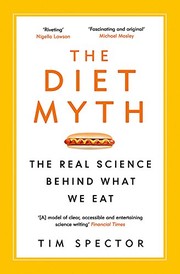
Introduces the gut microbiome as a central player in nutrition and explains why individuals respond differently to the same foods, adding a modern biological layer to dietary pattern research.
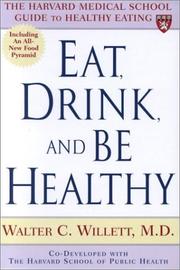
Written by one of the world's leading nutritional epidemiologists, this book synthesizes decades of Harvard research into practical, evidence-graded dietary guidance — a bridge between science and application.
Advanced: Biochemistry, Research & the Frontier
ExpertUnderstand nutrition at the biochemical and cellular level, critically evaluate primary research, and engage with cutting-edge topics like metabolic health, longevity, and personalized nutrition.
▸ Study plan for this stage
Pace: 4–5 weeks, ~25–30 pages/day; Lifespan is ~300 pages of main text — read chapters in thematic clusters (Ch. 1–3 in Week 1, Ch. 4–6 in Week 2, Ch. 7–9 in Week 3, Ch. 10–end + notes/appendix in Weeks 4–5), pausing after each cluster to complete reflection exercises before moving on.
- The Information Theory of Aging: Sinclair's central thesis that aging is caused by the loss of epigenetic information, not DNA sequence damage, and that this information can potentially be restored
- Sirtuins, NAD+, and the epigenetic silencing pathway: how sirtuin proteins (SIRT1–7) act as guardians of the genome, their dependence on NAD+ as a cofactor, and how NAD+ levels decline with age
- The Survival Circuit and hormesis: the evolutionary conserved stress-response network (sirtuins, AMPK, mTOR) and how mild stressors — caloric restriction, exercise, heat/cold exposure — activate longevity pathways
- mTOR and AMPK as nutrient-sensing hubs: how mTOR (activated by amino acids/calories) promotes growth vs. autophagy suppression, and how AMPK (activated by low energy) promotes repair and mitochondrial biogenesis
- Epigenetic reprogramming and the Yamanaka factors: the concept that cellular identity and biological age are encoded epigenetically and may be partially reversible using transcription factors (Oct4, Sox2, Klf4)
- NAD+ precursors as nutritional interventions: the biochemical rationale for NMN and NR supplementation, their conversion pathways to NAD+, and the current state of human clinical evidence
- Caloric restriction, intermittent fasting, and protein restriction: the mechanistic links between reduced nutrient signaling (lower mTOR, higher AMPK/sirtuins) and extended healthspan in model organisms and emerging human data
- Critical appraisal of longevity research: distinguishing robust findings in model organisms (yeast, worms, mice) from speculative extrapolations to humans, understanding study design limitations, and recognizing conflicts of interest in a commercially active field
- According to Sinclair's Information Theory of Aging, what is the primary driver of cellular aging and how does it differ from the traditional 'DNA damage accumulation' view?
- Trace the biochemical pathway from caloric restriction → AMPK/sirtuin activation → NAD+ consumption → epigenetic maintenance. Where does nutrition intervene in this cascade?
- What is the mechanistic tension between mTOR activation (growth) and longevity, and what dietary strategies does Sinclair argue can resolve it without sacrificing muscle mass or health?
- How does Sinclair evaluate the evidence for NMN/NR supplementation — what animal data exists, what human trials have been conducted as of the book's writing, and what epistemic caution should a reader apply?
- What is epigenetic reprogramming via Yamanaka factors, and why does Sinclair consider it a potential 'reset' for biological age rather than just a treatment for individual diseases?
- How would you design a personal nutritional protocol based on Lifespan's principles, and what are the key uncertainties or risks Sinclair himself acknowledges about such a protocol?
- Pathway mapping: Draw a hand-written diagram connecting the key molecular players — NAD+, sirtuins, AMPK, mTOR, IGF-1, Yamanaka factors — showing how each dietary input (calories, protein, specific micronutrients) activates or suppresses each node. Annotate with page references from Lifespan.
- Primary literature dive: For one specific claim in Lifespan (e.g., NMN extends lifespan in mice, or resveratrol activates SIRT1), find the original peer-reviewed paper Sinclair cites in the endnotes. Read the abstract and results section, then write a 200-word critical summary: Does the study design support the conclusion as stated in the book?
- Biomarker audit: Using Sinclair's discussion of biological age metrics (epigenetic clocks, blood panels), research which of these tests are currently accessible to consumers. Create a comparison table of cost, scientific validity, and actionability for at least three metrics (e.g., Horvath clock, telomere length, hs-CRP).
- Dietary intervention log: For two weeks, implement one of the evidence-graded interventions discussed in Lifespan (e.g., a 16:8 intermittent fasting window, or reducing animal protein at one meal per day). Keep a structured journal tracking energy, hunger, performance, and any measurable biomarker you have access to, then reflect on what the n=1 data can and cannot tell you.
- Steelman-and-critique essay: Write a 400–500 word essay that first steelmans Sinclair's Information Theory of Aging (make the strongest possible case for it), then presents the two most substantive scientific criticisms of the theory from the broader aging research community. This forces engagement with the book as a scientific argument, not just a summary.
- Frontier scan: Identify one topic from Lifespan that Sinclair flags as emerging or speculative (e.g., partial reprogramming, senolytics, or xenotransplantation). Find one research article published after the book's 2019 release date that updates the evidence. Summarize what has changed and whether it strengthens or weakens Sinclair's original claim.
Next up: Lifespan builds the molecular and biochemical vocabulary — sirtuins, epigenetics, nutrient-sensing pathways — and the habit of critically interrogating primary research, which together form the essential foundation for engaging with any subsequent advanced stage focused on personalized nutrition, metabolomics, or clinical application of longevity science.

Synthesizes cutting-edge research on how nutrition, fasting, and metabolism intersect with aging and longevity, representing the frontier of where nutritional science is heading.
Discussion
Keep reading
Paths that share books, cover the same subject, or open a related topic.