Wendell Berry Reading Order: Where to Start
Berry has published in three modes for sixty years — essays, poems and the Port William novels — and they are all arguing the same case, which is why the order matters less than most careers and more than it looks. Start with the essays, because they state the argument outright and everything else assumes it. Then read the Port William fiction, where the argument stops being a position and becomes people. The poetry comes third because it is the most compressed, and the last stage is for the harder essays and the earliest novel.
Start With the Essays
BeginnerGet Berry's argument about land, work and community stated directly, so the fiction and poems read as its consequences.
▸ Study plan for this stage
Pace: 6–8 weeks for 228, 210 and 145 pages. These read slowly because Berry argues by accumulation rather than by point — a chapter of The Unsettling of America can take an hour. Fifteen to twenty pages a sitting. One orienting note for the whole path: Berry has published in three modes for sixty years —
- The Unsettling of America, from 1977, attacks industrial agriculture as a cultural failure rather than a technical one — its target is a way of thinking about land, work and people, not a farming method
- Berry's core distinction is between exploitation and nurture, or between the strip-miner's relation to a place and the farmer's, and it recurs in every mode he writes in
- 'Get big or get out' — the postwar agricultural policy Berry writes against — is a real policy, and the book is a specific historical argument, not a general lament
- What Are People For? is the most approachable collection and ranges from Huckleberry Finn to why Berry refuses to buy a computer; it applies the same argument to literature, economics and technology
- The computer essay and the responses to it are worth reading together — Berry's economics of technology stands or falls on whether you accept that a tool has social costs its user does not pay
- The Hidden Wound, published in 1970, is his book on race, written from his own Kentucky childhood and from the two Black people who worked his grandfather's farm
- The Hidden Wound is the essay that keeps the whole agrarian argument honest about whose labour built the agrarian past, and reading it early prevents a sentimental reading of everything else
- What is Berry's distinction between exploitation and nurture, and how does he apply it beyond farming?
- Why does he insist that industrial agriculture is a cultural rather than a technical problem, and what follows practically from that claim?
- What is his argument against the computer, and which part of it is about the machine and which about the economy behind it?
- In The Hidden Wound, what does Berry say his own family's history cost the people who worked for them?
- Does The Hidden Wound resolve the tension between Berry's agrarian ideal and the labour system that produced the American agrarian past, or does it only name it?
- Having read all three, state Berry's argument in three sentences. You will test it against the novels and the poems.
- Write out Berry's central argument in your own words before starting the fiction. Everything in the rest of the path is a variation on it, and having your own version makes the variations visible.
- Read The Hidden Wound before, not after, the Port William novels. Port William is an affectionate portrait of a farming community and reading it without this book first produces a much more comfortable and much less accurate Berry.
- Mark every place where Berry makes an economic claim that could be checked. He is often treated as a moralist; he is frequently making falsifiable arguments about costs.
- Read the computer essay aloud. It is the most quoted and most caricatured thing he wrote and hearing it makes clear how narrow the actual claim is.
- Note which of his positions you disagree with. Berry is a genuinely contrarian writer and a reader who agrees with everything has probably not read carefully.
Next up: With the argument stated as argument, the Port William novels can do what only fiction can — put it inside people who did not choose it, and show what it costs them.
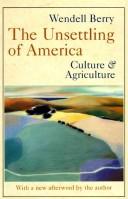
The 1977 book that made him a public figure: an attack on industrial agriculture as a cultural rather than merely technical failure. Almost fifty years old and still the single best entry point, because every later Berry essay is an extension of it.
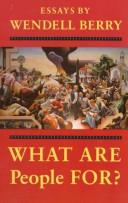
The most approachable collection, ranging from Huckleberry Finn to why he refuses to buy a computer. Read second: it shows the same argument applied to literature, economics and technology, and it contains the essays people quote.
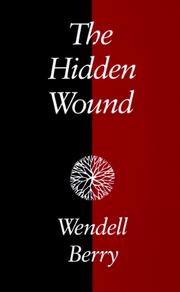
His 1968 book on race, written from his own Kentucky childhood and the two Black people who worked his grandfather's farm. The most personal and most uncomfortable of the essays, and the one that keeps the agrarian argument honest about whose labour built the agrarian past.
The Port William Novels
BeginnerMeet the fictional Kentucky community Berry has written about since 1960, and see the essays' claims tested against actual lives.
▸ Study plan for this stage
Pace: 9–12 weeks for 374, 190, 223 and 192 pages. These read faster than the essays but should not be rushed; Berry's fiction is deliberately undramatic and its effects are cumulative. Read them in the order given rather than in chronological order of the events they cover — Jayber Crow is the book that c
- Port William is a fictional Kentucky river town Berry has written about since 1960, with a shared cast whose members recur across novels and stories at different ages
- The membership — Berry's word for the community of people bound to each other and to the place — is the fictional embodiment of what the essays argue for
- Jayber Crow narrates half a century from a barber's chair: a bachelor with no land, no family and no stake, which makes him the ideal observer of a community defined by attachment
- Jayber Crow contains the whole argument of the essays without ever arguing, which is why it converts readers the essays do not
- Hannah Coulter looks back from inside a household rather than a shop, across two marriages, a war and children who left the land — the departure of the young is the novel's real subject and the essays' unanswered problem
- The Memory of Old Jack takes place across a single day in 1952 inside the mind of a ninety-two-year-old farmer, and is the most formally ambitious of the four
- Nathan Coulter, from 1960, is his first novel and the earliest window on Port William; it is slighter than the others, which is why it belongs at the end rather than the start
- What does Berry mean by the membership, and who belongs to it and on what terms?
- Why give the community's fullest portrait to a man with no land and no family?
- In Hannah Coulter, why do the children leave, and does the novel treat their leaving as a failure, a loss, or an inevitability?
- What does the single-day structure of The Memory of Old Jack allow that a conventional chronology would not?
- Where do the novels concede something the essays do not — a cost, a limit, a person the argument cannot accommodate?
- Do these books idealise rural community? Point to the evidence on both sides before answering.
- Keep a family tree for Port William as you read. The Coulters, Feltners, Catletts and Crows recur across all four books and the connections are half the pleasure once you can see them.
- After Jayber Crow, go back to your three-sentence summary of the essays and mark which parts the novel dramatises and which it quietly complicates.
- Read Hannah Coulter's chapters about her children slowly. They are the strongest counter-evidence to Berry's own position that Berry himself supplies.
- Read The Memory of Old Jack in as few sittings as possible. It covers one day and its effect depends on the compression.
- Note every mention of money in the novels — debt, prices, machinery payments. Berry's fiction is far more economically specific than its reputation suggests and tracking it links the novels back to the essays directly.
Next up: Having watched the argument become people, the poems become readable as its most compressed form — the same case with the reasoning removed and only the attention left.
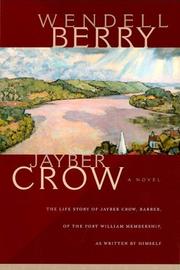
The best novel to start with, and the one that converts readers: a bachelor barber narrating half a century of Port William from the shop window. It requires nothing from the other novels and contains the whole argument of the essays without ever arguing.
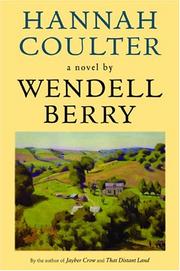
An old woman looking back on two marriages, a war, and children who left the land. Shorter and sadder than Jayber Crow, and the natural second — it covers much of the same century from inside a household rather than a shop.
A single day in 1952 in the mind of a ninety-two-year-old farmer, remembering everything. The most formally ambitious of the Port William books, and best read once the community is already familiar to you.
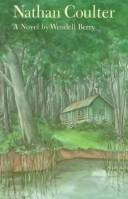
His first novel, published in 1960, and chronologically the earliest window on Port William. Slighter than the others, which is why it belongs here rather than first — read it once you want the whole map.
The Poetry
IntermediateRead the most compressed form of Berry's work, and find the Sabbath poems that are the spine of the late career.
▸ Study plan for this stage
Pace: 4–6 months, and that is not a mistake — 53, 134 and 228 pages read as slowly as anything in this path. Read a few poems at a sitting, aloud, and stop. A Timbered Choir in particular is a book to keep by a chair and read three or four poems from at a time over a season; it collects twenty years of Sa
- The Country of Marriage, from 1973, contains 'Manifesto: The Mad Farmer Liberation Front', the poem most readers meet Berry through, and its voice is closest to the essays
- The Mad Farmer poems are Berry at his most polemical and funniest, and they are the clearest bridge between the argumentative and the lyric modes
- The Peace of Wild Things and Other Poems is a selection built around his best-known poem and is the easiest single volume to find and to give away — treat it as the sampler
- A Timbered Choir collects twenty years of Sabbath poems, written outdoors on Sunday mornings walking his own land, and is the heart of the poetry
- The Sabbath poems are the closest Berry comes to devotional writing, and their form is set by the practice: undated walking, attention, and no argument
- The poems are where the argument stops being an argument — the essays tell you what a place is worth and the poems simply attend to one, which is the strongest version of the case
- Read in this order, the three volumes move from polemic to selection to practice, which is also the shape of Berry's own career
- How does the Mad Farmer's voice differ from the essayist's, and what can the poem say that the essay cannot?
- What does 'The Peace of Wild Things' actually claim about consolation, and is the claim as gentle as its reputation?
- What does the Sabbath practice — outdoors, weekly, on foot, on the same land — do to the poems it produces?
- How does Berry's plainness work technically? Look at line-endings and syntax rather than at vocabulary.
- Do the poems make the argument or set it aside? Defend your answer with a specific Sabbath poem.
- Which of the three modes — essay, novel, poem — makes Berry's case most persuasively to you, and why?
- Read every poem aloud once. Berry's poems are quiet enough that silent reading skates over them, and they are built on ordinary speech rhythm.
- Cap yourself at three or four poems a sitting and put the book down. This is the most important instruction in the stage.
- Read A Timbered Choir over months rather than weeks, ideally outdoors and ideally on the same day each week. The poems were made by a practice and they respond to being read inside one.
- Copy out one Sabbath poem by hand. The line-breaks are where almost all of Berry's craft sits and copying makes them visible.
- Read 'Manifesto: The Mad Farmer Liberation Front' immediately after finishing The Unsettling of America. The poem is the essay's conclusion said in ninety seconds.
- Keep a note of poems that stay with you and reread those rather than pushing forward. Berry rewards rereading far more than coverage.
Next up: With all three modes in hand you can take on the two hardest books — the essay where Berry argues directly with a scientist, and the novel that assumes you already love Port William.
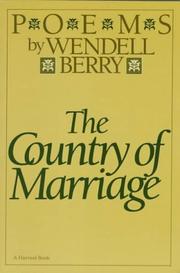
The 1973 collection, containing Manifesto: The Mad Farmer Liberation Front — the poem most people meet him through. A good starting collection because the voice is closest to the essays.

A selection built around his best-known poem, and the easiest single volume of Berry's verse to find and to give away. Read it as the sampler before committing to the Sabbath sequence.
Twenty years of Sabbath poems, written outdoors on Sunday mornings walking his own land. This is the heart of Berry's poetry and the closest he comes to devotional writing; it rewards being read a few poems at a time over months.
Deeper Cuts
BeginnerRead the harder, more combative essays and the most demanding of the novels.
▸ Study plan for this stage
Pace: 5–7 weeks for 150 and 337 pages. Life Is a Miracle is short and combative and can be read in a fortnight, but it is philosophically dense and rewards note-taking. A Place on Earth is slow and diffuse by design and is the one Berry novel that genuinely requires patience — save it for when you already
- Life Is a Miracle is a book-length argument with E. O. Wilson's Consilience and Berry's most sustained attack on scientific reductionism and on the claim that all knowledge converges on one method
- Berry's objection is epistemological rather than religious: he argues that reductionism mistakes what it can measure for what exists, and that professionalised knowledge loses the local and particular
- The book is contentious and much sharper than the gentle-farmer reputation suggests; readers who like Berry for his mildness are frequently annoyed by it
- It also connects directly to the agrarian argument — the industrial agriculture of The Unsettling of America is presented as reductionism applied to land
- A Place on Earth is the second Port William novel, set during the last months of the Second World War, and follows a father waiting for news of a missing son
- Berry heavily revised A Place on Earth years after publication, cutting it substantially, so editions differ and the revised version is the one usually in print
- It is slow and diffuse deliberately — the novel is about waiting — which is exactly why it belongs at the end of a path rather than anywhere near the start
- What is Berry's actual objection to Consilience, and is it an argument against science or against a claim made on science's behalf?
- Where does Life Is a Miracle overreach, and where is it strongest? A serious reader should be able to name both.
- How does reductionism in Life Is a Miracle map onto industrial agriculture in The Unsettling of America?
- What does A Place on Earth do with waiting as a subject, and could a more conventionally plotted novel have done it?
- Why did Berry cut the novel so heavily, and what does that revision tell you about what he thought fiction was for?
- After eleven books, what is the strongest objection to Berry's whole position, and what is his best answer to it?
- Read a summary of Wilson's Consilience thesis before Life Is a Miracle. Berry assumes it and the argument is hard to assess without knowing what is being argued against.
- Note which of Berry's objections you find persuasive and which read as assertion. This is the book in his corpus that most needs an actively resisting reader.
- Read A Place on Earth after, not before, Jayber Crow and Hannah Coulter. Its diffuseness is bearable only once Port William is a place you already know.
- Check which edition of A Place on Earth you have — the original or Berry's shortened revision — and note it. Editions differ substantially and reviews of the book often describe different texts.
- Write a final page connecting one essay, one novel and one poem that make the same claim. If you can do that, you have read Berry the way the three modes were meant to be read.
Next up: This is the end of the path: the argument, the community that lives it, the poems that practise it, and the hardest versions of both — so the natural next step is deeper into Port William, which runs to several more novels and two volumes of stories, or outward to the agrarian and ecological writing Berry argues alongside.
A book-length argument with E. O. Wilson's Consilience, and Berry's most sustained attack on scientific reductionism. Contentious, and much sharper than the gentle-farmer reputation suggests.
The second Port William novel, set during the last months of the Second World War and heavily revised by Berry years after publication. Slow and diffuse by design; save it for when you already love this place.
Discussion
Keep reading
Paths that share books, cover the same subject, or open a related topic.