This subject has a clean chronology, and following it is the whole trick. The argument that industrial food production hides its costs from the people eating it was made in 1906, made again in 2001, and is being made now about ultra-processed food. Reading in order shows you which parts of the case have been settled by regulation, which have simply moved, and which are still genuinely open.
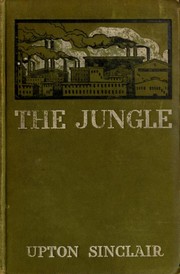
Begin with The Jungle, remembering that it is a novel and a deliberately propagandistic one. Upton Sinclair spent weeks in the Chicago packing houses and wrote what he found into fiction intended to make readers socialists; what it produced instead was the Pure Food and Drug Act and the Meat Inspection Act of 1906. Sinclair's own remark that he aimed at the public's heart and hit its stomach is the founding joke of the genre, and worth keeping in mind, because almost every book after it succeeds in the same partial way.
The modern template
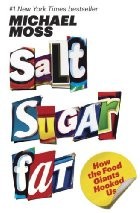
Fast Food Nation by Eric Schlosser is the book that restarted the tradition in 2001, and its structure — follow the supply chain from the potato field to the slaughterhouse to the counter — has been copied by nearly everything since. Salt Sugar Fat by Michael Moss is the product-development book: internal industry documents, the bliss point, and the deliberate engineering of foods to be difficult to stop eating. Moss is a reporter working from company records rather than from nutrition science, which is what makes the book hard to dismiss.
The academic anchor
Marion Nestle appears three times on this path, and you probably want one of them. Food Politics is the one: a nutrition professor's account of how the food industry shapes dietary guidelines, funds research and lobbies, and the book that gave the field its name. Unsavory Truth narrows to industry-funded nutrition studies specifically, which is a real and well-documented distortion, and Soda politics is a long, thorough treatment of one product category and its public-health campaigns. Read Food Politics for the argument; read the other two only if that specific question is yours. Their overlap is substantial and their thesis is the same.
Where the science is contested
The next three books are all making scientific claims rather than documentary ones, and they carry different amounts of evidence. The Dorito effect by Mark Schatzker argues that industrial produce has become blander while artificial flavour has become better, and that our appetites are being misdirected as a result. It is a genuinely interesting hypothesis and it is a hypothesis; the nutrient-dilution and flavour-craving mechanisms it proposes are not established. Hooked by Michael Moss argues that some foods are addictive in a meaningful clinical sense — a position with real support and real opposition in the research literature, where the question of whether food addiction is a coherent construct is unresolved.
Ultra-Processed People by Chris van Tulleken is the current centre of the argument. It builds on the NOVA classification, which sorts foods by degree of processing rather than nutrient content, and on evidence including a small controlled feeding trial in which people ate substantially more on an ultra-processed diet. Its critics argue that NOVA groups very heterogeneous products together and that most of the supporting evidence is observational; its defenders argue the effect is large and consistent enough to act on. Both positions are held by serious researchers, and this article is not going to settle it for you. Note also the ordinary caution: none of these books is dietary advice, and individual health questions belong with a clinician.
Down the supply chain
Tomatoland by Barry Estabrook is about Florida tomato production, including prosecuted cases of forced labour. Read it knowing that the Coalition of Immokalee Workers' Fair Food Program has changed conditions materially since publication, which is one of the few places the genre can point to a fix. Big chicken by Maryn McKenna traces routine antibiotic use in poultry and its link to resistance, and policy in both the US and EU has shifted since it appeared. The chain by Ted Genoways is the harder book — pork processing, line speeds and what they do to the people standing on the line.
The Secret Life of Groceries by Benjamin Lorr is the best closer, and the most surprising. It follows the supermarket itself: slotting fees, the trucking that supplies it, a shrimp supply chain implicated in forced labour, and the actual economics of getting a new product on a shelf. It is more curious than angry, which after twelve books of prosecution is a useful change of register.
Related reading sits under the fast food industry and agribusiness.
Follow the full ordered path here: Food Politics: The Best Books on the Food Industry and What It Sells, in Order.