Antibiotic Resistance: The Best Books on Superbugs and the Post-Antibiotic Era, in Order
Antibiotic resistance is one of the few public-health problems where the popular literature and the specialist literature broadly agree on the facts and disagree sharply about the tone. This path reads it as an argument rather than a warning: how the drugs were found and why that era ended, where resistance actually comes from, what it looks like from inside a hospital, and how much of the alarm is warranted. The books disagree with each other about the last question, and the disagreement is deliberately left visible rather than resolved.
How the Drugs Were Found
BeginnerUnderstand the twenty-year window in which most antibiotic classes were discovered, and why nothing comparable has happened since.
▸ Study plan for this stage
Pace: Two to three weeks, about 680 pages. Lax's The Mold in Dr. Florey's Coat (320 pages) first, then Rosen's Miracle Cure (358 pages) — both are trade narrative histories written for general readers, not technical accounts, and neither assumes any microbiology. Lax is the narrow, deeply reported story o
- The distinction between Fleming's observation in 1928 and the Oxford team's achievement of purification, assay and production a decade later
- Why manufacturing chemistry, not discovery, was the binding constraint on penicillin
- The Waksman platform — systematic soil screening — which produced streptomycin and most of what followed
- The compressed window in which most antibiotic classes were found, roughly the 1940s to the early 1960s
- Why the screening approach exhausted itself: repeated rediscovery of the same compounds
- The economics Rosen sets out, in which antibiotics built the modern pharmaceutical industry and then stopped being worth developing
- What did the Oxford team have to solve that Fleming did not, and why did it take a decade?
- How was streptomycin found, and how does that method differ from the penicillin story?
- Why did the discovery of new antibiotic classes slow so sharply after the early 1960s, on Rosen's account?
- What features of an antibiotic make it commercially unattractive compared with a drug for a chronic condition?
- What does Rosen's wide survey add to, and what does it lose against, Lax's single-team narrative?
- Build a timeline of antibiotic classes from Miracle Cure — compound, year, source organism or synthetic route — and mark where the gaps begin. Keep the timeline; you will check the later books' claims about the empty pipeline against it.
- Follow the penicillin production problem through The Mold in Dr. Florey's Coat step by step: yield, extraction, assay, scale-up. Write it as a list of obstacles solved, and note which were biological and which were industrial.
- Take Rosen's account of how the sulfa drugs were received and compare it with his account of penicillin's reception. The two say something different about how a medical revolution is recognised at the time.
- Identify every point where Lax and Rosen cover the same events, and note where they differ in emphasis or in whom they credit.
Next up: Having seen the drugs found and the pipeline close, the next stage takes up resistance itself — which was documented almost as early as the drugs, and warned about far earlier than most readers assume.
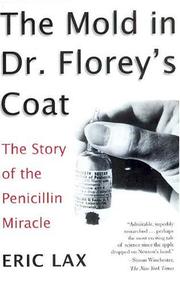
The Oxford team that turned Fleming's observation into a usable drug — and the industrial chemistry that mattered more than the discovery. Read it first because it establishes how contingent and how hard the original achievement was.

The broader story from Salvarsan through the sulfa drugs to the golden age of the 1950s, and the pharmaceutical economics that ended it. Read it second for the wide view Lax deliberately narrows.
How They Started Failing
IntermediateLearn the mechanisms of resistance and follow the first serious warnings, which are older than most readers expect.
▸ Study plan for this stage
Pace: Three to four weeks, about 815 pages. Levy's The Antibiotic Paradox (279 pages) first — it is from 1992, which is exactly why it goes first, since almost everything later is an elaboration of it. Then Spellberg's Rising Plague (2009, 264 pages), written by an infectious-disease physician who is an a
- Selection pressure: antibiotics do not create resistance, they select for it, which is the single idea the whole subject rests on
- The mechanisms of resistance — enzymatic inactivation, efflux pumps, target modification, reduced permeability
- Horizontal gene transfer by plasmids, transposons and integrons, and why it lets resistance cross between species
- The resistome: resistance genes as ancient and widely distributed in the environment rather than newly evolved
- Levy's agricultural reservoir argument, made in 1992 and taken up in full in the next stage
- Spellberg's supply-side case: why the regulatory and commercial structure produces an empty pipeline for a drug meant to be used sparingly
- MRSA's move out of hospitals into community settings, which is McKenna's specific subject and the concrete instance of everything above
- What are the main biochemical mechanisms of resistance, and which of them can be transferred between organisms?
- Why does Levy argue that resistance is a predictable consequence of use rather than of misuse alone?
- What is the difference between hospital-acquired and community-associated MRSA, and why did the second surprise people?
- What does Spellberg identify as the specific barriers to developing a new antibiotic, and which are regulatory rather than scientific?
- Which claims in these three books are about mechanism and which are about the state of the problem at the time of writing? Sort them, because only the first category has aged well.
- Make a table of resistance mechanisms from The Antibiotic Paradox: mechanism, an example organism and drug, and whether it is chromosomal or transferable. Then check each entry against the corresponding passages in Superbug and note what changed in the eighteen years between the books.
- Take Levy's 1992 predictions and Spellberg's 2009 ones, list them, and mark each as borne out, not borne out, or not yet decidable from what these books say. Do not fill in the answer from memory of later news — the exercise is to see what the books themselves committed to.
- Follow the MRSA story through Superbug and write down each setting in which McKenna documents transmission. The list is the argument that hospital infection control alone cannot solve this.
- Read Spellberg's chapters on the regulatory pathway and write out the sequence a new antibiotic must pass through, marking each point at which he says the incentive fails.
Next up: Mechanism and clinical alarm established, the next stage follows the causes upstream out of the hospital entirely — into agriculture, into prescribing, into the microbiome and into the manufacture of the drugs themselves.
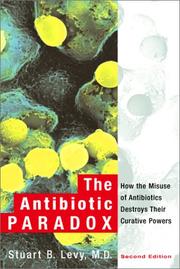
Levy was sounding this alarm in 1992, and his book is where the core mechanisms — selection pressure, plasmid transfer, the agricultural reservoir — were first laid out for general readers. Read it first: everything since is a footnote to it.

An infectious-disease physician on why the pipeline emptied, with an unsentimental account of the regulatory and commercial reasons no company wants to develop a drug meant to be used sparingly. The best statement of the supply-side half of the problem.

MRSA specifically — its move out of hospitals and into gyms, prisons and households. Read it third as the case study that makes the two preceding arguments concrete.
Where the Resistance Comes From
IntermediateFollow the causes upstream of the clinic: agriculture, over-prescription, the microbiome, and a global generic supply chain few readers know exists.
▸ Study plan for this stage
Pace: Five to six weeks, about 1,190 pages. McKenna's Big Chicken (400 pages) first — it is the strongest reporting on the list and it moves the problem out of medicine altogether. Blaser's Missing Microbes (275 pages) second: Blaser is a working researcher arguing his own hypothesis, and the case that ea
- Growth promotion versus prophylaxis versus treatment in animal agriculture, and why the distinction matters for both policy and resistance
- The chain from farm to food to human carriage that Big Chicken documents, and the points at which it is and is not well evidenced
- How the American poultry industry's structure created the demand for routine antibiotic use in the first place
- Blaser's hypothesis: that repeated early-life courses perturb the microbiome with downstream metabolic and immune effects — a hypothesis under active test, not a conclusion
- The microbiome as a bystander casualty of narrow-spectrum thinking, and why that reframes over-prescription
- Substandard and degraded doses as resistance generators, which is why the manufacturing quality Eban documents belongs on this list at all
- The global generic supply chain, inspection and data-integrity failures as a public-health mechanism rather than a business story
- What did growth-promoter antibiotics do for poultry production, and what is the evidence that resistance moved from birds to people?
- Which parts of Blaser's argument rest on animal experiments and which on human epidemiology, and how strong is each?
- Why does a sub-therapeutic dose select for resistance more efficiently than no dose at all?
- What specific failures does Eban document, and by what route would a substandard antibiotic contribute to resistance?
- Of the three sources of pressure in this stage — agriculture, over-prescription, manufacturing quality — which do these books establish most firmly, and which least?
- Draw the transmission chain Big Chicken argues for, link by link, from a bird on a farm to a resistant infection in a person. Then mark each link with the type of evidence McKenna gives for it: direct genomic matching, epidemiological correlation, or plausibility. The chain is strong in places and inferential in others, and seeing which is which is the exercise.
- List Blaser's proposed consequences of early-life antibiotic exposure and note, for each, whether the supporting evidence in Missing Microbes is mouse work, human observational data, or a mechanism argument. Then write one sentence per item on what would confirm it.
- Take Eban's account of one specific facility and write out what was falsified, how it was discovered, and what the product did or did not do in patients. Generalising from that single case is the judgement call the book asks you to make.
- Return to the resistance-mechanism table from the previous stage and add a column for the selective pressure each book in this stage identifies. Agricultural, clinical and manufacturing pressures do not select equally across mechanisms.
Next up: The upstream causes are diffuse and statistical; the next stage puts you at a bedside where they arrive as one patient with an infection nothing will treat.

How growth-promoter antibiotics rebuilt the American poultry industry, and the resistance that followed. The most important single book on this list, and the one that moves the problem out of the hospital entirely.
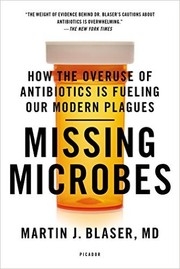
Blaser's argument that repeated childhood antibiotic courses damage the microbiome with long-term metabolic and immune consequences. Read it second — it is the most contested book here, and worth reading precisely because parts of it remain debated.
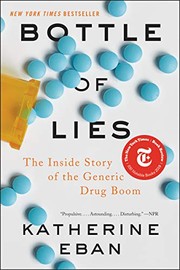
An investigation into fraud and quality failure in the global generic-drug supply. It matters here because a substandard antibiotic dose is a resistance generator, which is the link most accounts of the problem miss.
From Inside the Hospital
IntermediateSee what an untreatable infection looks like at the bedside, and what the current attempts at a way out actually involve.
▸ Study plan for this stage
Pace: Four weeks, about 984 pages. McCarthy's Superbugs (304 pages) first, then Strathdee and Patterson's The Perfect Predator (352 pages), then Shnayerson's The Killers Within (328 pages) last and deliberately out of chronological order, because its value here is as a check on how the projections of 2003
- What an antibiotic clinical trial actually involves: enrolment criteria, endpoints, comparator choice, and the ethics of a control arm in a lethal infection
- Why non-inferiority rather than superiority is the usual design for a new antibiotic, and what that does to the evidence base
- Multi-drug-resistant Gram-negative infection, and why it is the harder problem than MRSA
- Colistin and the other last-resort drugs, and what "last resort" means in practice
- Bacteriophage therapy: its history, why it was abandoned in the West, and its status as compassionate-use rescue rather than an approved treatment — which is exactly what The Perfect Predator documents
- Compassionate-use and expanded-access pathways as the mechanism by which an unapproved treatment reaches one patient
- Reading a 2003 book about the future as a record of what was expected, not of what happened
- What has to be true of a patient before they can be enrolled in McCarthy's trial, and who is thereby excluded?
- What was done for Tom Patterson, in what order, and which parts of it were research and which were treatment?
- Why did phage therapy fall out of Western medicine, and what are the practical obstacles to using it routinely now?
- Which of the predictions in The Killers Within came true, which did not, and which cannot be judged from the books on this path?
- What does an account written from inside a trial show that a journalist's account cannot, and what does it obscure?
- Write out the design of the trial McCarthy describes — population, comparator, primary endpoint, duration — and then state what a positive result would and would not license anyone to claim. This is the difference between a drug approval and a solution.
- Reconstruct the Patterson case as a clinical timeline from The Perfect Predator: organism, drugs tried, failure points, phage preparation, regulatory step, outcome. Then mark every step that depended on the patient's wife being an infectious-disease epidemiologist with a professional network.
- Take the projections and timelines in The Killers Within and set them against your antibiotic-class timeline from the first stage and the pipeline claims in Rising Plague. Twenty-year-old forecasts are the only calibration available for judging current ones.
- List the ethical problems McCarthy raises about running his trial and write, for each, what the alternative would have cost.
Next up: After four stages inside the current crisis, the last stage steps out to the long history of infectious disease, which is the only frame in which the question of how exceptional this moment is can be asked at all.

McCarthy runs a clinical trial of a new antibiotic and writes the process up patient by patient, including the ones who do not survive the trial period. The best account of how a drug is actually tested.

An epidemiologist assembles a phage-therapy rescue for her own husband, dying of multi-drug-resistant Acinetobacter. Read it after McCarthy: it is the clearest picture of what is left when the antibiotics have all failed.

Earlier reportage on the researchers and clinicians confronting resistance, and a useful check on how the projected timelines of twenty years ago compare with what happened. Read it last in this stage for that calibration.
The Longer View
IntermediatePlace antibiotic resistance inside the general history of human infectious disease, and judge for yourself how exceptional the current moment is.
▸ Study plan for this stage
Pace: Three to four weeks, about 884 pages. Crawford's Deadly Companions (256 pages) first — a microbiologist's history for general readers — then McNeill's Plagues and Peoples (340 pages), which is the 1976 book that made epidemic disease a category of historical explanation and which predates the resist
- Disease as a driver of historical change rather than a backdrop to it, which is McNeill's founding argument
- Micro-parasitism and macro-parasitism as McNeill's paired categories, and how far the analogy is doing real work
- The relationship between population density, agriculture, trade and epidemic disease, which Crawford traces from the first settlements
- Zoonotic spillover and the conditions that make it more frequent — Shah's central mechanism
- The epidemiological transition, and where antibiotic resistance sits relative to it
- How to judge the exceptionality of a present threat when every generation has considered its own threat exceptional
- That none of these three books is about antibiotic resistance, which is precisely their value as an outside view
- What does McNeill claim disease explains that political and economic history had not, and where is his evidence thinnest?
- How does Crawford's account of the origins of human infectious disease change the timescale you have been reading in?
- What conditions does Shah identify as making spillover more likely, and which of them are increasing?
- Placed against this history, is antibiotic resistance a novel problem or the resumption of a normal condition briefly interrupted?
- Which authors from the earlier stages would object to the framing of that last question, and on what grounds?
- Write a page arguing that antibiotic resistance is historically exceptional, using only McNeill and Crawford. Then write a page arguing it is not, using the same two books. Whichever you find easier to write is worth knowing about your own priors.
- Take Shah's account of one emergence event and map it onto McNeill's framework of micro- and macro-parasitism, noting where the older categories fit and where they strain.
- Return to the timeline you built in the first stage and extend it backwards using Crawford: the antibiotic era becomes a very short segment. Mark the segment.
- Write a final one-page statement of what you now believe is well established about antibiotic resistance, what is contested, and what these books — several of them fifteen to fifty years old — simply cannot tell you about the situation now. The last category should be the longest, and knowing that is the point of the path.
Next up: This closes the path: the discovery era, the mechanisms of failure, the upstream causes, the bedside, and the long history against which all of it has to be judged.
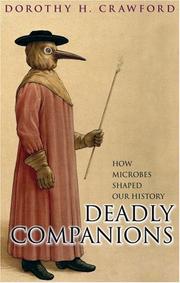
A microbiologist's history of how microbes shaped human societies from the first settlements onward. Read it first here to reset the timescale after four stages of contemporary alarm.

The 1976 classic that made epidemic disease a category of historical explanation. It predates the resistance debate entirely, which is what makes it a genuine outside view.

How new pathogens emerge and spread through modern trade, cities and animal contact. The right closing book: it puts resistance alongside the other ways an infectious threat can arrive, rather than treating it as the only one.
Discussion
Keep reading
Paths that share books, cover the same subject, or open a related topic.