Start with The Omnivore's Dilemma if you want the shape of the American food system explained through four meals, or Fast Food Nation if you would rather start with the labour, the meatpacking and the marketing. Both are narrative journalism from writers with no specialist background assumed, and between them they are why most people read anything else on this list.
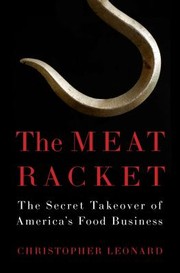
Then read The Meat Racket. This is the pivot of the path, and it is the book most readers are actually looking for without knowing it: Christopher Leonard is a business reporter, and his subject is the corporate structure of American chicken and pork — the contract-farming model, the debt the farmer carries, the tournament pay system, and how one company built it. Pollan tells you what the system produces. Leonard tells you who owns it.
One honest structural note before the rest. This list is overwhelmingly critical journalism and advocacy. There is no agribusiness management or agricultural-economics textbook on it, no commodity-trading manual, and no book presenting the industry's own account of itself. That is a real gap: if you want futures markets, farm financial management or crop science, this path will not give them to you. What it gives you is the investigative literature, which is where nearly all the good writing on this subject has gone.
The industry, sector by sector
Barons by Austin Frerick is the most efficient follow-up to Leonard: seven short profiles of dominant firms and families across hogs, grain, coffee, dairy, berries, slaughter and groceries. Frerick is an antitrust advocate and the book argues a case, which it states openly. Foodopoly by Wenonah Hauter makes a broader consolidation argument from the same direction, from the head of an advocacy organisation; it is more comprehensive and less narratively controlled.
Then the single-sector books, each reported at close range. Big chicken by Maryn McKenna is on routine antibiotic use in poultry and the resistance that followed — the strongest science reporting here. The chain by Ted Genoways follows a pork plant and the people who work the line, including a genuine industrial-illness episode. Pig tales by Barry Estabrook covers hog production and animal welfare; Tomatoland, also Estabrook, covers Florida tomatoes and includes documented cases of forced labour among farmworkers. These books contain descriptions of injury, slaughter and coercion because their subjects do.
Perilous Bounty by Tom Philpott is about the two physical constraints the business is running into: groundwater in California's Central Valley and soil in the Corn Belt.
The longer argument
The Unsettling of America by Wendell Berry is from 1977 and is not journalism at all — it is a sustained essay arguing that industrial agriculture is a cultural failure before it is an economic one. It is the oldest and most rhetorically ambitious book here, and it is the source much later farming writing draws from.
Merchants of grain by Dan Morgan is the other historical entry: a 1979 investigation of the private grain-trading houses that moved the world's cereals. It is dated, and should be read as history rather than a picture of the trade today, but it remains the classic account of how invisible that business is.
Politics and the global system
Food Politics by Marion Nestle is the academic book on the list — a nutrition professor's documentation of how the food industry shapes dietary guidelines, labelling and research funding. It is thoroughly referenced and rewards some familiarity with how US policy is made. Stuffed and Starved by Raj Patel takes the argument global, framing hunger and obesity as two outputs of one system in which farmers and eaters are separated by a narrow corporate middle. Patel writes from an explicit political-economy position, which he does not hide.
Work through the full reading path in order, or browse other reading paths if you want the farming and cooking side instead.
Follow the full ordered path here: Agribusiness Books: How to Read the Business of Food, in Order.
Ready to learn something deeply?
Build a reading path — free