Food Politics: The Best Books on the Food Industry and What It Sells, in Order
This is a path about companies and policy, not about what to eat. It starts with the muckraking tradition that first showed readers the inside of a food business, moves to how dietary advice gets made and who lobbies it, then to how individual products are engineered to be eaten in quantity, and ends in the fields, sheds and warehouses that supply the whole thing. Several of these authors are participants as well as observers — Marion Nestle sat on the federal committees she writes about, and Chris van Tulleken made himself the subject of his own experiment — and the reading order is arranged so you meet the industry's account and its critics' account close together rather than one after a long gap.
How the Industry Got Here
BeginnerSee the food business as a business first — its scale, its labour, and the reporting tradition that keeps opening it up.
▸ Study plan for this stage
Pace: 5–6 weeks. The Jungle is a novel of about four hundred pages and reads quickly once you accept that its last quarter is a political tract rather than a story. Fast Food Nation and Salt Sugar Fat are each a fortnight of reported non-fiction. The Jungle contains sustained descriptions of industrial in
- The muckraking method: one industry followed end to end, from raw input to the counter, with labour given equal weight to the product
- Sinclair as an advocate writing fiction for a political purpose, and the famous mismatch between what he aimed at — the workers — and what readers took away, which was the meat
- The 1906 Pure Food and Drug Act and Meat Inspection Act as the first federal food regulation, and what prompted them
- Vertical integration and commodity standardisation as the actual mechanism of the fast-food supply chain
- The shift Schlosser documents from skilled to deskilled labour, and its effect on wages, injury rates and turnover
- Product formulation as an industrial research discipline — the bliss point, mouthfeel, and the flavour house
- That Moss's evidence is internal documents and named executives on the record, which is a stronger evidentiary base than most of what follows
- What was Sinclair trying to change, and what actually changed? What does that gap suggest about how food reporting lands?
- Which parts of Fast Food Nation are about food and which about labour, and why does Schlosser refuse to separate them?
- How does a commodity specification — a potato of a given length, a beef patty of a given fat percentage — reshape the farm that supplies it?
- What did Moss's executives actually admit, and what did they defend? Keep the two lists separate.
- Which of the three books rests on documents, which on interviews, and which on invention? Say what each evidence type can support.
- Read the last fifty pages of The Jungle, where the novel becomes a socialist argument, and write a paragraph on why almost nobody remembers them. Then check what the 1906 statutes actually regulated — it was not labour.
- Take one Schlosser chapter and reconstruct the supply chain it describes as a diagram from field to counter, marking who bears the cost at each link. Keep the diagram; stage four fills in the parts he leaves out.
- From Salt Sugar Fat, list every named product-formulation technique Moss documents, with the company and the decade. That list is the mechanism the whole of stage three is arguing about.
- Compare the meatpacking floor in The Jungle with the one in Fast Food Nation, a century apart, on four variables: line speed, injury, wages and immigration status of the workforce. Write the four-line result.
Next up: The reporting shows what companies do; the next stage asks who writes the rules they operate under, and who pays for the science those rules cite.
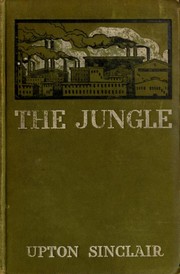
The 1906 novel that got the first federal food-safety law passed, and the ancestor of everything else on this path. Sinclair wrote it as socialist propaganda about meatpacking labour and was famously annoyed that readers cared about the sausage instead — worth noticing at the start, because the same gap between what a reporter intends and what the public takes away recurs throughout the subject.

The modern template: one industry followed from the potato field to the franchise counter to the slaughterhouse floor, with the labour and the meat inspection given as much space as the food. Read it second because almost every later book on this list is either extending Schlosser's method or arguing with his conclusions.
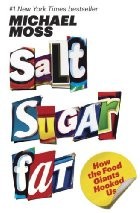
Moss got food-company executives and their internal documents on the record about how products are formulated to sell. It bridges the first stage and the second: the reporting shape is Schlosser's, but the subject is the product-development lab, which is where the next stages go.
Policy, Lobbying and the Science
BeginnerUnderstand how dietary guidance is made, who funds the research behind it, and why the advice so rarely says 'eat less of this'.
▸ Study plan for this stage
Pace: 6–7 weeks. Food Politics is the longest and most heavily documented of the three — take two to three weeks with the notes. Unsavory Truth and Soda Politics are each around a fortnight; Soda Politics is structured as a reference and can be read selectively. Read all three knowing that Nestle is a par
- How the US Dietary Guidelines are actually produced — advisory committee, comment period, joint departmental sign-off — and where industry can intervene at each step
- The 'eat less' problem: why guidance is phrased around nutrients rather than foods, and whose interest that serves
- Lobbying instruments beyond direct spending: checkoff programmes, commodity promotion, congressional appropriations riders, school and dietary programme rules
- Funding effects in nutrition research: the direction of findings by sponsor, and the mechanisms — question framing, comparator choice, publication decisions — by which it happens
- Conflict-of-interest disclosure as a partial remedy, and why Nestle argues it is not sufficient
- The soda case as a controlled test of the general argument: marketing, sponsorship, science funding and tax fights all in one product
- That Nestle is an advocate with a position, that she states it, and that this makes her arguments checkable rather than neutral
- Trace one specific guideline recommendation from committee draft to final published language, using Nestle's account. What changed and who asked?
- What is the mechanism by which industry funding shifts a nutrition study's result, on Nestle's account — is it fraud, framing, or selection?
- Nestle sat on the committees she describes. Where does that give her evidence nobody else has, and where should it make you more careful?
- In Soda Politics, which interventions actually moved consumption, and what is the evidence for each?
- If you accept Unsavory Truth's argument in full, what should you do with an industry-funded study whose methods are sound?
- Find the current Dietary Guidelines advisory committee report online and check three of Nestle's structural claims against it: who sat on the committee, what the comment process was, and how the final language differs from the committee's.
- Take five nutrition studies on any single question — sugar and weight is the easiest — and record the funder and the conclusion of each. You will have reproduced the core of Unsavory Truth in an afternoon, and you will see how crude the exercise is as well as how suggestive.
- Using Soda Politics, build a timeline of one soda-tax fight: who proposed it, who funded the opposition, what the ballot language said, and what happened to consumption afterwards.
- Write out Nestle's argument in its strongest form and then the industry's best rebuttal, with the strongest available evidence on each side. If the rebuttal takes less than a page you have not looked hard enough.
Next up: With the policy machinery understood, the argument narrows to the products themselves — and to a claim about harm that is genuinely still open.
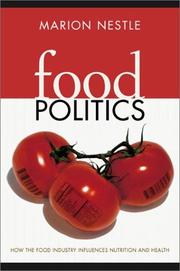
The book that named the field, and the anchor of this path. Nestle traces how industry pressure shaped the US dietary guidelines and the food pyramid — and she is a participant, not a neutral observer: she worked on federal nutrition policy and is describing rooms she was in. Read it knowing that, which makes it a better book rather than a worse one.
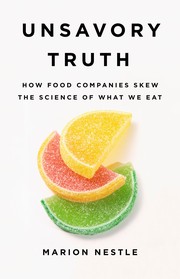
Her follow-up on industry-funded nutrition research and the reliable direction of its findings. It comes directly after Food Politics because it answers the obvious objection to it — 'but what does the science say?' — by examining who paid for the science.
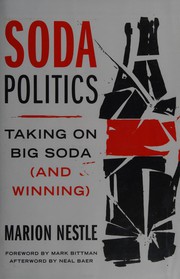
One product, tracked through marketing, lobbying, sponsorship and soda-tax fights, so the general argument of the previous two books gets tested against a specific case. This is the third Nestle book in a row deliberately: read together they show a method, not just a position.
The Products Themselves
IntermediateLearn what 'ultra-processed' actually means, what the evidence for harm is, and where the argument is still open.
▸ Study plan for this stage
Pace: 6 weeks, about ten days to a fortnight each. The Dorito Effect is the lightest and should come first because it supplies the mechanism. Hooked is a reported book with a scientific argument running through it. Ultra-Processed People is the most recent and the most contested, and is worth reading twic
- The NOVA classification and what 'ultra-processed' formally means — a definition about industrial formulation, not about nutrients — and the criticism that it is too broad to be causal
- Schatzker's decoupling thesis: breeding and flavour technology separating taste from nutritional content, so flavour stops signalling anything
- Food addiction as a clinical claim — what would have to be true, which criteria are borrowed from substance dependence, and where the analogy strains
- Hyperpalatability and energy density as measurable properties, and the difference between those and 'processing'
- Observational epidemiology versus controlled feeding: what a cohort association can and cannot establish, and the small inpatient trials that fed matched diets under supervision
- Confounding by socioeconomic status, which is the standard objection to the whole ultra-processed literature
- Reading a participant's self-experiment as illustration, and reading the cited studies as the actual evidence
- What is the NOVA definition, and can you apply it correctly to five items in your own kitchen without ambiguity?
- Is Schatzker's decoupling claim about breeding, about additives, or about both — and what evidence does he give for each?
- Where does Moss show the addiction claim straining, and does he resolve it or leave it open?
- Van Tulleken's month on an 80% UPF diet: what did it demonstrate, and what could it not have demonstrated with one subject?
- Which findings in this stage would survive if socioeconomic confounding were fully controlled, and how would you know?
- If ultra-processing is the harm, what is the mechanism? List the candidates these three books offer and rank them by evidential support.
- Classify a week of your own eating under NOVA. Record every item you could not classify confidently — the size of that list is the strongest available critique of the category.
- Take five claims from Ultra-Processed People, find the study behind each in the notes, and record the design: cohort, cross-sectional, randomised, or animal. Then rewrite each claim at the strength its design actually supports.
- Read Schatzker's account of tomato and chicken breeding, then look up the flavour-compound and nutrient data he cites for one of them. Write whether the data supports decoupling or merely dilution.
- Write two paragraphs on the addiction question: the strongest case, using Moss's material, and the strongest objection. Then state which you believe and what evidence would change your mind.
Next up: Having argued about the product, the path follows it backwards to the farms, sheds and warehouses that had to exist for it to be cheap.

The most useful reframing on this path: Schatzker argues the problem is flavour technology decoupling taste from nutrition, so we chase synthesised cues that no longer signal anything. Put it before the two harder books because it gives you the mechanism they then quantify.

Moss's sequel to Salt Sugar Fat, on whether processed food is addictive in any clinically meaningful sense. He takes the addiction claim seriously and also shows where it strains — useful practice at holding a contested claim without either swallowing or dismissing it.

The current best-known statement of the ultra-processed food case, from a doctor who ran an 80%-UPF diet on himself and filmed the results. He is explicitly a participant in his own study with an n of one, and says so; read the self-experiment as illustration and the epidemiology he cites as the actual argument.
Where the Food Comes From
IntermediateFollow the supply chain behind the products — farm labour, antibiotics, meatpacking and the retail shelf that sets the terms for all of it.
▸ Study plan for this stage
Pace: 7–8 weeks. Tomatoland is short and can be read in a week; Big Chicken and The Chain are each a fortnight; The Secret Life of Groceries is around ten days and should be last. Tomatoland reports on forced labour and slavery prosecutions in Florida agriculture and on pesticide exposure among farmworker
- Breeding for shipping rather than for eating, and the specific traits — firmness, uniform ripening, shelf life — that were selected for
- Farm labour: the crew-leader system, piece rates, immigration status, and why enforcement is structurally difficult
- Subtherapeutic antibiotics as a growth and density technology, and the resistance problem that followed
- How a regulatory fight actually proceeds over decades, which is Big Chicken's real subject
- Line speed as the central variable in meatpacking, connecting worker injury, animal handling and contamination in one number
- Retail buying power: slotting fees, private label, category management, and the buyer who decides what gets made
- The trucking and cold-chain layer, which almost no food book covers and which Lorr does
- That the supermarket, not the consumer, sets most of the terms — the conclusion that reframes every earlier stage
- What was the Florida tomato bred to do, and what was traded away to get it? Who made that trade and who bore it?
- Why did antibiotic use in poultry persist for decades after the resistance risk was identified, and which institutions failed at which point?
- What does line speed determine, and why is it the number both companies and unions fight over hardest?
- What is a slotting fee, and what does its existence imply about whose preferences shape a supermarket shelf?
- Compare The Chain with The Jungle directly: what has changed in meatpacking in a century, and what has not?
- After this stage, where in the chain would you intervene to change what stage three's products look like — the field, the shed, the plant, or the shelf?
- Return to the supply-chain diagram you drew in stage one and extend it backwards and forwards using these four books: the field and the labour at one end, the truck, the warehouse and the buyer at the other. The complete diagram is the deliverable of the whole path.
- Take one product on your own shelf and trace as much of its chain as you can from public sources — brand owner, contract manufacturer, primary agricultural input, retailer. Note precisely where the trail goes cold; that opacity is a finding.
- Using Big Chicken, build a timeline of the antibiotic fight: the science, the FDA actions, the industry response, the eventual change. Mark how many years separate the first evidence from the first rule.
- Read Lorr's chapters on trucking and on shrimp and write half a page on what each adds that a book about brands could not have shown.
- Write a closing two-page memo: given everything on this path, name the three interventions most likely to change what the food supply produces, and say for each which book supplies the evidence and which author is an advocate you are relying on.
Next up: This closes the path: the reporting tradition, the policy machinery, the argument about the products, and the supply chain and retail power that decide what gets made at all.
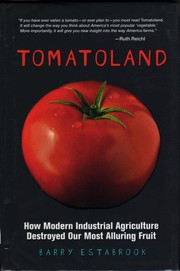
A single crop reported to the ground: Florida tomatoes, the breeding decisions that produced a fruit optimised for shipping, and the farm labour conditions that came with it. The best short demonstration that 'the food industry' includes agriculture, not just brands.

How routine antibiotic use in poultry created both cheap chicken and a public-health problem, told through the science and the regulatory fights. Read after Tomatoland because it moves the same reporting from a crop to an animal, where the externalities are harder to argue about.

Modern meatpacking through one pork plant and its line speeds — the direct descendant of The Jungle a century on, which is why this path opened there. Genoways is reporting on workers, not on food safety, and the comparison across a hundred years is the point.
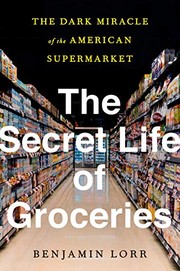
The last link and the one that sets the terms for everything before it: the supermarket. Lorr covers slotting fees, private label, trucking and shrimp supply chains, and closes the path by showing that retail buying power, more than consumer choice, decides what the rest of this list produces.
Discussion
Keep reading
Paths that share books, cover the same subject, or open a related topic.