Writing a Nonfiction Book: The Best Books to Read, in Order
This curriculum takes an intermediate writer from solid structural foundations through the craft of research and narrative nonfiction, then into the professional skills of book proposals and traditional publishing. Each stage builds directly on the last: you must understand structure before you can layer in narrative technique, and you must master the craft before you can sell it to a publisher.
Structure & Architecture
IntermediateUnderstand how nonfiction books are architecturally built — how to find your throughline, organize chapters, and give a book-length argument its shape and momentum.
▸ Study plan for this stage
Pace: 4–5 weeks, ~25–30 pages/day. Start with "Bird by Bird" (Week 1–2), move to "The Sense of Structure" (Week 2–3), then "Thinking on Paper" (Week 3–4), with Week 5 reserved for integration exercises and review.
- Finding your throughline: the central argument or narrative thread that holds a nonfiction book together, as explored in Lamott's emphasis on authentic voice and Gopen's reader-centered approach
- Hierarchical chapter organization: how to structure chapters as nested arguments that build toward a larger claim, using Gopen's principles of clarity and emphasis
- The reader's experience of momentum: how sentence structure, paragraph breaks, and chapter transitions create forward movement, drawing on Gopen's analysis of reader expectation and Howard's work on written reasoning
- Scaffolding ideas on paper: using visual and spatial organization to make complex arguments accessible, as Howard demonstrates through outlining and structural planning
- Revision as architectural refinement: treating rewrites as opportunities to strengthen the book's skeleton, not just polish prose, informed by Lamott's iterative process and Gopen's structural principles
- Coherence across scales: ensuring that individual sentences, paragraphs, chapters, and the whole book reinforce the same throughline and argument
- What is your book's throughline, and how would you articulate it in a single sentence? (Drawing on Lamott's insistence on finding your authentic subject and Gopen's reader-centered clarity)
- How does each chapter in your planned book advance or complicate your central argument? Can you map the logical progression?
- Using Gopen's principles, identify a passage from one of the three books and explain how its structure guides the reader's understanding.
- What structural problems might arise if you organized your chapters chronologically versus thematically versus by argument? Which serves your throughline best?
- How would you use Howard's techniques for 'thinking on paper' to plan or revise your book's architecture before writing or rewriting?
- How do Lamott's ideas about voice and authenticity relate to the structural clarity that Gopen advocates? Are they in tension or alignment?
- Write a one-page throughline statement for your nonfiction book project: What is the central claim or narrative arc? Test it against Lamott's standard of authenticity—does it feel true to your voice and subject?
- Create a chapter outline (8–12 chapters) that shows how each chapter builds on the previous one. Annotate each chapter with a single sentence explaining how it advances your throughline.
- Select a difficult or abstract concept you plan to explain in your book. Using Howard's 'thinking on paper' method, create a visual map (outline, diagram, or flowchart) that breaks it into component parts and shows their relationships.
- Analyze the structure of one chapter from 'Bird by Bird,' 'The Sense of Structure,' or 'Thinking on Paper.' Map its internal architecture: How does it open? What is the main claim? How are supporting ideas ordered? How does it close?
- Rewrite a paragraph from your own draft (or a sample paragraph) three times, each time prioritizing a different structural principle: (1) Lamott's emphasis on specificity and voice, (2) Gopen's reader-expectation approach, (3) Howard's logical scaffolding. Compare the results.
- Conduct a 'momentum audit' of your planned book: Read your chapter outline aloud or sketch it visually. Does the reader feel forward motion? Where might the argument stall or loop back? Revise the sequence to strengthen momentum.
Next up: This stage equips you with the architectural blueprint for your book—the throughline, chapter sequence, and structural logic—preparing you to move into the next stage of drafting and developing individual chapters with confidence in how they fit the larger design.
Resets the intermediate writer's mindset around process and permission, establishing the psychological foundation needed before tackling structure. Read first to clear the decks.
Teaches how readers process prose at the sentence and paragraph level, giving you the micro-structural vocabulary that makes macro-structure decisions coherent.

Bridges the gap between raw ideas and organized argument, showing how to externalize and sequence thinking into a book-length structure.
Research & the Art of Reporting
IntermediateLearn how to gather, evaluate, and deploy research — interviews, documents, and data — so that evidence becomes the living tissue of your nonfiction, not just footnotes.
▸ Study plan for this stage
Pace: 6–7 weeks, ~25–30 pages/day (alternating between both books; approximately 3 weeks per book with overlap for synthesis)
- The distinction between fact-gathering and storytelling: how raw research becomes narrative
- Interview technique as a moral and practical craft: building trust, asking the right questions, and managing the power dynamic between reporter and subject
- The ethics of narrative reconstruction: how journalists shape reality through selection, framing, and interpretation
- Document analysis and verification: evaluating sources, spotting bias, and building an evidentiary foundation
- The tension between objectivity and intimacy: how close relationships with sources can deepen reporting but also complicate truth-telling
- Narrative authority: how to deploy evidence (quotes, facts, data) so it feels alive and integrated rather than bolted-on
- The psychological contract with the reader: what you owe your audience when you claim to be telling a true story
- What does Kerrane mean by 'the art of fact,' and how does he distinguish between mere information-gathering and the craft of nonfiction writing?
- According to Malcolm, what is the fundamental ethical problem in the relationship between a journalist and their subject, and why does she use the murderer case to illustrate it?
- How should a nonfiction writer evaluate and select among the hundreds of details, quotes, and facts they've gathered? What principles guide this selection?
- What are the key differences between interviewing for journalism versus interviewing for a book-length narrative, based on these texts?
- How do you maintain narrative momentum and emotional truth while remaining faithful to documented facts and evidence?
- What does it mean to 'own' your perspective as a nonfiction writer, and how does this relate to the ethical issues Malcolm raises?
- Conduct three short interviews (15–20 minutes each) with people on a single topic; record or transcribe them, then analyze: What questions elicited the most revealing answers? Where did you miss follow-ups? How did your relationship with each subject shift the tone of their responses?
- Gather 10–15 documents (articles, emails, letters, public records) related to a single event or person; create an evidence map showing contradictions, gaps, and corroborating details. Write a one-page memo on what the documents reveal versus what they obscure.
- Take one interview transcript and write two different 500-word scenes using the same quotes and facts but with different narrative framings (e.g., sympathetic vs. skeptical). Reflect on how framing shapes the reader's interpretation without changing the facts.
- Read a published nonfiction excerpt (from Kerrane's book or elsewhere) and reverse-engineer it: identify every fact, quote, and detail; then research the original sources. Where did the author make interpretive choices? How did selection and arrangement create meaning?
- Write a detailed interview plan for a hypothetical subject (someone you'd like to profile for a book). Include: background research, 8–10 core questions, follow-up strategies, and ethical considerations specific to this person's situation.
- Rewrite a scene from one of your own interviews or observations, moving from raw notes to polished narrative. Annotate your choices: Why this quote? Why this detail? What did you leave out, and why?
Next up: This stage equips you with the discipline to gather and ethically deploy evidence; the next stage will teach you how to structure that evidence into a compelling narrative arc that sustains a reader across 300+ pages.
An anthology of master practitioners explaining their research and reporting methods; reading it first gives you a wide map of approaches before you commit to one.
A rigorous, unsettling examination of the ethics and dynamics of interviewing — essential reading before you conduct serious research for a book.
Narrative Craft & Voice
IntermediateMaster the storytelling techniques — scene, character, pacing, voice, and immersion — that transform well-researched material into a book readers can't put down.
▸ Study plan for this stage
Pace: 8–10 weeks, ~40–50 pages/day (with 2–3 days per week for reflection and exercises). Gutkind (3 weeks), Hart (3–4 weeks), Zinsser (2–3 weeks).
- Scene construction: using dialogue, action, and sensory detail to show rather than tell, as foundational to immersive nonfiction narrative
- Authorial voice: developing a distinctive, honest, and trustworthy tone that sustains reader engagement across a full manuscript
- Character development in nonfiction: revealing human complexity, motivation, and transformation through observation and narrative technique
- Pacing and structure: controlling narrative rhythm through scene selection, transitions, and the strategic use of exposition to maintain momentum
- Immersion and specificity: the power of concrete details, vivid language, and sensory precision to make abstract ideas and research tangible
- The nonfiction contract: balancing truth, literary technique, and reader expectation without sacrificing accuracy or integrity
- Revision as craft: using feedback and multiple drafts to refine voice, clarify scenes, and strengthen the emotional arc of your narrative
- How do you construct a scene in nonfiction using dialogue, action, and sensory detail, and what makes a scene more effective than summary or exposition?
- What is authorial voice in nonfiction, and how do you develop and maintain a distinctive, trustworthy voice across a full-length manuscript?
- How do you reveal character and human complexity in nonfiction narrative without inventing dialogue or internal thoughts you cannot verify?
- What strategies can you use to control pacing in a nonfiction narrative—when to linger in a scene, when to summarize, and how to use transitions effectively?
- Why does specificity and sensory detail matter in nonfiction, and how do you use concrete language to make research and ideas come alive for readers?
- How do you balance the demands of truth and accuracy with the techniques of literary narrative, and what ethical boundaries should guide your choices?
- Rewrite a passage from your research or notes as a fully realized scene: include dialogue (if available), action, sensory detail, and character observation. Compare it to the original summary form.
- Analyze a scene from one of the assigned books (e.g., a passage from Gutkind or Hart's examples). Identify the specific techniques used: dialogue tags, pacing, detail selection, and voice. Write a brief reflection on why these choices work.
- Record yourself reading aloud a paragraph you've written. Listen for rhythm, word choice, and tone. Revise for clarity and distinctiveness of voice, then read again.
- Take a research fact or interview quote and write three different versions: one in your natural voice, one in a more formal tone, and one in a more intimate tone. Discuss which feels most authentic to your project.
- Outline the pacing of a chapter or section you're working on: mark where you linger in scenes, where you summarize, and where you transition. Identify any dead spots or rushed moments, and revise.
- Write a character sketch of a key figure in your nonfiction project, focusing on observable details (appearance, speech patterns, gestures, choices) rather than interpretation. Practice showing character through action and dialogue.
Next up: This stage equips you with the narrative and stylistic tools to make your research compelling and readable; the next stage will focus on structure and architecture—how to organize scenes, arguments, and evidence into a coherent, persuasive whole that sustains a reader's journey from beginning to end.
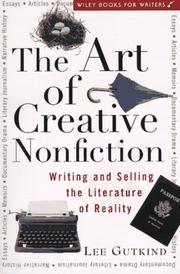
The definitive craft guide to narrative nonfiction by the genre's leading advocate; establishes the core techniques of scene-building and immersion.

A veteran editor's systematic breakdown of narrative structure, tension, and character in long-form nonfiction — the most practical craft book at this level.

The canonical guide to clear, authoritative nonfiction prose; read after Storycraft to refine and strip your newly narrative writing down to its most powerful form.
The Book Proposal
ExpertProduce a professional, compelling nonfiction book proposal — the document that sells your book to agents and publishers before it is written.
▸ Study plan for this stage
Pace: 6–8 weeks, ~25–30 pages/day, with 1–2 days per week reserved for proposal drafting and revision
- The anatomy of a professional book proposal: what agents and publishers expect to see in each section (overview, market analysis, competitive titles, author platform, chapter outline, sample chapters)
- How to position your nonfiction book concept as commercially viable by understanding market trends, audience demographics, and sales potential
- The editor's perspective: how acquisitions editors evaluate proposals, what makes them say 'yes' or 'no', and how to anticipate their concerns before they arise
- Crafting a compelling narrative hook and author platform that demonstrates both the book's marketability and your credibility to write it
- Strategic use of competitive title analysis to show your book's unique angle without dismissing existing works in your category
- The difference between a proposal that gets rejected and one that gets multiple offers: clarity, specificity, and professional presentation
- How to write sample chapters that showcase your voice, research depth, and ability to deliver on the proposal's promise
- The psychology of persuasion in proposal writing: building a case that makes agents and editors feel confident investing in your book
- What are the essential sections of a professional nonfiction book proposal, and what specific information should each section contain?
- How do you research and present your target market in a way that convinces an editor the book has genuine commercial potential?
- What is the editor's primary concern when evaluating a proposal, and how should you structure your proposal to address that concern directly?
- How do you analyze competitive titles without appearing to dismiss or diminish existing books in your category?
- What elements of author platform matter most to agents and publishers, and how do you present a platform that may still be developing?
- How should your sample chapters differ in tone, depth, or approach from the rest of your proposal, and why?
- Read and annotate 3–5 published nonfiction book proposals (available through writing organizations or mentor networks) and identify the structural patterns, persuasive techniques, and market positioning strategies used in successful proposals
- Conduct a competitive title analysis for your own book concept: identify 5–8 comparable titles, analyze their market positioning, sales performance (if available), and identify the specific gap your book fills
- Draft your book's overview/hook section (1–2 pages) multiple times, testing different angles and narrative frames until you find the one that most compels you and best positions the book's unique value
- Write a detailed author platform statement that honestly assesses your current credentials, audience reach, and promotional capacity—then identify 2–3 concrete ways you could strengthen your platform before submission
- Draft a complete chapter outline with 1–2 sentence descriptions for each chapter, ensuring the progression is logical, the scope is clear, and each chapter delivers on the proposal's central promise
- Write two sample chapters (typically the first chapter and one from the middle of the book) that showcase your voice, research methodology, and ability to engage readers while maintaining the book's core argument
Next up: This stage equips you with the proposal that will open doors to agents and publishers; the next stage will focus on navigating the submission process, understanding contracts, and preparing for the editorial relationship that follows acceptance.
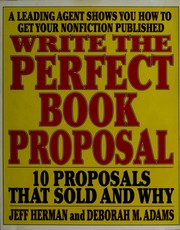
The most widely used, practical guide to proposal writing, with annotated real-world examples; the essential starting point for this stage.
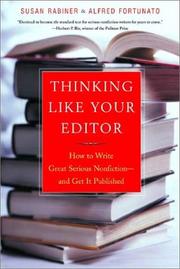
Written by a top acquisitions editor, this book teaches you to see your project through a publisher's eyes — the critical perspective needed to make your proposal irresistible.
Getting Published & the Industry
ExpertNavigate the publishing industry with confidence — understanding agents, contracts, editors, and the strategic decisions that determine a nonfiction book's success.
▸ Study plan for this stage
Pace: 4-5 weeks, ~40-50 pages/day (with note-taking and contract review)
- The traditional publishing pathway: agents, acquisitions editors, contracts, and the role of each stakeholder in bringing a book to market
- How to identify and approach literary agents strategically—including query letters, pitching, and what agents actually look for in nonfiction proposals
- Understanding publishing contracts: advances, royalties, rights (subsidiary, foreign, digital), reversion clauses, and negotiation leverage
- The economics of nonfiction publishing: how books are priced, marketed, and distributed; what determines commercial viability
- Self-publishing vs. traditional publishing trade-offs: when each path makes sense and how to make an informed strategic choice
- The editor's role in shaping your manuscript: developmental editing, line editing, and how to work productively with editorial feedback
- Building an author platform and marketing strategy before, during, and after publication to maximize reach and sales
- Timeline expectations: from agent query to bookshelf—realistic production schedules and key milestones
- What are the key differences between a literary agent's role and an acquisitions editor's role, and why do most traditional publishers require agent representation?
- What makes an effective nonfiction book proposal, and what specific elements should you include when querying an agent?
- How do advances, royalties, and subsidiary rights work in a standard publishing contract, and what are the red flags you should watch for?
- What is the realistic timeline from agent query to seeing your book in print, and what happens at each major stage?
- When does self-publishing make more strategic sense than traditional publishing for a nonfiction author, and what are the trade-offs?
- How should you approach working with an editor to improve your manuscript without losing your voice or vision?
- Research and create a target list of 15-20 literary agents who represent nonfiction in your genre, noting their submission guidelines, recent sales, and why they're a fit for your book
- Write a one-page query letter for your nonfiction book project, then revise it based on the principles in Eckstut's guide—focus on hook, platform, and market positioning
- Obtain and annotate a sample publishing contract (or use one provided in the book); identify key clauses, flag potential issues, and note where you'd want to negotiate
- Create a 12-month author platform-building plan: identify 3-5 concrete actions (speaking engagements, media appearances, social media strategy, etc.) to establish credibility before querying
- Develop a nonfiction book proposal outline for your project, including comparable titles, market analysis, chapter breakdown, and author bio—the exact document agents expect
- Interview or shadow a published nonfiction author about their publishing journey; ask about agent selection, contract negotiation, editorial process, and what they'd do differently
Next up: This stage equips you with the business acumen and industry knowledge to navigate the publishing landscape strategically; the next stage will focus on executing your marketing and launch strategy to ensure your published book reaches its intended audience and achieves commercial success.
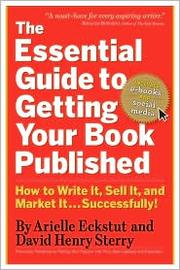
The most comprehensive, up-to-date roadmap of the entire traditional publishing process, from querying agents to launch — the ideal capstone for the full curriculum.
Discussion
Keep reading
Paths that share books, cover the same subject, or open a related topic.