How to learn Writing
This curriculum takes you from the fundamental mechanics of clear sentences all the way to the craft of voice, style, and the writer's creative process. Each stage builds on the last — you'll first learn to write clearly, then compellingly, then with full artistic intentionality — so that by the end you have both the technical command and the creative confidence of a seasoned writer.
Foundations: Clarity & Correctness
BeginnerUnderstand the basic rules of grammar, sentence construction, and clear communication — the non-negotiable bedrock every writer needs before developing style.
▸ Study plan for this stage
Pace: 8–10 weeks total. Week 1–2: "The Elements of Style" (~10–15 pages/day; it's short but dense — re-read key sections). Week 3–5: "On Writing Well" (~20–25 pages/day, pausing to annotate examples). Week 6–8: "Bird by Bird" (~25–30 pages/day, journaling alongside each chapter). Weeks 9–10: Review, conso
- The 'omit needless words' principle from Strunk: every word must earn its place — brevity is not about shortness but about density of meaning.
- The rules of usage and composition from The Elements of Style: subject-verb agreement, active vs. passive voice, parallel construction, and proper punctuation.
- Zinsser's four pillars of good writing: Clarity, Simplicity, Brevity, and Humanity — and how they interact in nonfiction prose.
- Clutter as the enemy of communication: Zinsser's concept of stripping prose down to its essential load-bearing structure, cutting words that do no work.
- The importance of the writer's authentic voice: Zinsser argues that readers must sense a real human being behind the sentences, not a corporate or academic mask.
- Anne Lamott's 'shitty first drafts' concept: the first draft is not meant to be good — it is a private, generative act that frees the writer from perfectionism.
- Writing as a process, not a product: Lamott reframes writing as a series of small, manageable steps ('bird by bird') rather than one overwhelming task.
- The psychological dimension of writing: Lamott addresses self-doubt, the inner critic, and the emotional courage required to sit down and write honestly every day.
- After reading The Elements of Style, can you identify and correct the five most common grammatical errors Strunk flags — such as misuse of the comma, dangling modifiers, and incorrect pronoun case?
- How does Zinsser define 'clutter' in On Writing Well, and can you locate three specific examples of clutter in a piece of your own recent writing?
- What does Zinsser mean when he says writing must have 'humanity,' and how does this concept connect to Lamott's argument about finding your authentic voice?
- In your own words, what is the 'shitty first draft' and why does Lamott argue it is not just acceptable but necessary for every writer?
- How do Strunk's rule-based approach and Lamott's process-based approach complement rather than contradict each other at the beginner stage?
- Can you describe the 'bird by bird' method and apply it to a writing project you are currently facing — breaking it into its smallest possible components?
- STRUNK DRILL — Take any paragraph you have written (email, essay, journal entry) and apply Strunk's 'omit needless words' rule ruthlessly. Count the words before and after. Aim to cut at least 20% without losing meaning. Repeat weekly.
- CLUTTER AUDIT (Zinsser) — Find a piece of published writing (a news article, a company memo, a blog post) and highlight every word or phrase Zinsser would call clutter: throat-clearing openers, redundant adjectives, passive constructions, and corporate jargon. Rewrite the passage with the clutter removed.
- VOICE IMITATION THEN DEVIATION — Write one paragraph imitating Zinsser's plain, direct nonfiction voice on any topic you know well. Then write the same paragraph in Lamott's warmer, more self-deprecating voice. Compare them and write a third paragraph in your own emerging voice.
- SHITTY FIRST DRAFT SPRINT (Lamott) — Set a timer for 20 minutes. Write on any topic without stopping, editing, or re-reading. The only rule: keep the pen (or cursor) moving. Afterward, read it once and underline one sentence that surprises you — that is the seed of your real draft.
- SENTENCE SURGERY — Write 10 grammatically flawed sentences (passive voice, dangling modifiers, faulty parallelism, comma splices, vague pronoun reference). Swap with a writing partner or self-correct using The Elements of Style as your reference. Explain in one sentence why each correction works.
- BIRD-BY-BIRD PROJECT MAP — Choose a writing project (a short essay, a letter, a personal narrative). Following Lamott's method, break it into the smallest possible sequential steps — not 'write the essay' but 'describe only what the room smelled like.' Write one small piece each day for one week and observe how the whole begins to assemble itself.
Next up: By internalizing the rules of correctness (Strunk), the discipline of clarity (Zinsser), and the courage of process (Lamott), the reader has built a stable foundation from which they can safely begin to break rules intentionally — which is precisely what the next stage, focused on developing a distinctive personal style, will demand.
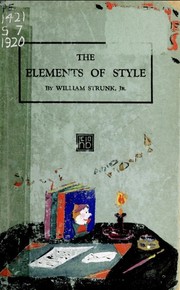
The classic starting point for any writer: short, direct rules for clear sentences and clean prose. Its brevity makes it the perfect first read before anything else.

Expands on Strunk's rules with warmth and practical examples, showing how clarity applies to real-world nonfiction writing. Bridges the gap between rule-following and actual writing practice.
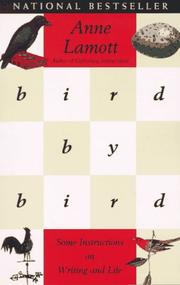
Addresses the psychological side of beginning to write — fear, perfectionism, and the 'shitty first draft' — giving beginners the mindset needed to actually put words on the page.
Building Blocks: Sentences, Words & Structure
BeginnerDevelop a deeper feel for how sentences work at the word and rhythm level, and learn how structure shapes meaning in both paragraphs and longer pieces.
▸ Study plan for this stage
Pace: 6–8 weeks total: Weeks 1–3 on "Several Short Sentences About Writing" (~20–25 pages/day, read slowly and re-read passages — the book rewards deliberate, non-linear reading); Weeks 4–7 on "The Sense of Style" (~25–30 pages/day, pausing to study diagrams and sentence trees in Chapters 4–5); Week 8 res
- The sentence as a complete, self-sufficient unit of thought — Klinkenborg's central argument that every sentence should be able to stand alone and justify its own existence
- Noticing vs. assuming: training yourself to consciously observe what a sentence does, rather than passively reading through it
- Rhythm and length variation: how the cadence of short and long sentences creates emphasis, momentum, and meaning
- The myth of 'flow' — Klinkenborg's critique of the idea that writing should be invisible; instead, each sentence is a deliberate choice
- The Classic Style as a model for clear prose — Pinker's framework of writer and reader looking at the world together, prioritizing directness and confidence
- The Curse of Knowledge: Pinker's explanation of why writers forget what it feels like not to know something, and how this is the root of most bad writing
- Syntactic structure and the sentence as a tree: how subjects, verbs, and objects nest inside each other, and why understanding this helps untangle complex sentences
- Coherence at the paragraph level: given/new information structure, topic sentences, and how each sentence sets up the next
- According to Klinkenborg, why is the sentence — not the paragraph or the essay — the fundamental unit of writing, and what practical habit does this suggest for revision?
- What does Klinkenborg mean when he says most writers don't notice their own sentences? How can a writer develop the habit of noticing?
- How does Pinker define the 'Classic Style,' and how does it differ from other styles like practical or self-conscious writing?
- What is the 'Curse of Knowledge,' and can you identify an example of it in a piece of writing you have read or written yourself?
- How does understanding a sentence's syntactic tree (subject–verb–object branching) help a writer diagnose and fix a confusing sentence?
- How do the two books complement each other — where does Klinkenborg's intuitive, craft-based approach overlap with or diverge from Pinker's cognitive and linguistic framework?
- Sentence isolation drill (Klinkenborg): Take a paragraph you have written and put each sentence on its own line. Read each one aloud in isolation. Ask: Does it stand alone? Does it earn its place? Cut or rewrite any that cannot answer yes.
- Rhythm mapping: Choose one page from each book and mark sentences as Short (S), Medium (M), or Long (L). Draw the pattern (e.g., S-S-L-M-S). Then write a 150-word passage imitating that exact rhythm pattern on a topic of your choice.
- Curse-of-Knowledge audit (Pinker): Take a paragraph you have written for an audience unfamiliar with your subject. Highlight every word, phrase, or assumed reference that a newcomer would not understand. Rewrite the paragraph eliminating each one.
- Sentence tree sketching (Pinker, Ch. 4–5): Pick 5 complex sentences — 2 from Pinker, 2 from Klinkenborg, 1 of your own — and draw a simple branching tree showing the main clause and all subordinate parts. Use this to identify where complexity is hiding.
- Classic Style imitation (Pinker): Write a 200-word explanation of something you know well (a hobby, a process, a place) strictly in Classic Style — confident, direct, no hedging, no meta-commentary. Then compare it to an earlier draft of the same explanation and note the differences.
- Weekly sentence journal: Every day for the duration of this stage, copy out one sentence you admire from either book. Below it, write 2–3 sentences explaining exactly what it does — its structure, its rhythm, its word choices — as if you were teaching it to someone else.
Next up: By internalizing how individual sentences are built and how structure shapes meaning, the reader is now equipped to zoom out and study how those sentences accumulate into larger arguments, narratives, and styles — the focus of the next stage.
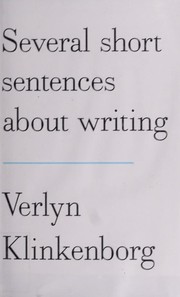
A radical, meditative focus on the single sentence as the unit of all writing — reading this after Strunk and Zinsser reframes everything you thought you knew about prose rhythm.

Uses modern linguistics and cognitive science to explain why some writing is clear and some is not, giving you an analytical framework to diagnose and fix your own prose.
Craft: Storytelling & Narrative Technique
IntermediateMaster the craft elements that make writing compelling — scene, character, tension, detail, and narrative arc — applicable to both fiction and creative nonfiction.
▸ Study plan for this stage
Pace: 10–12 weeks total: ~3–4 weeks per book. "Story" by McKee (~480 pp): read ~20–25 pages/day, focusing on one structural concept per session. "The Art of Fiction" by Gardner (~240 pp): read ~15–20 pages/day, pausing to re-read dense philosophical passages. "Steering the Craft" by Le Guin (~170 pp): rea
- Story structure and the gap between expectation and result (McKee): the inciting incident, progressive complications, crisis, climax, and resolution as the skeleton of all narrative
- Scene construction as the fundamental unit of story (McKee): every scene must turn — a value must shift from positive to negative or vice versa — and scenes are built from beats of action and reaction
- The 'fictional dream' and the writer's obligation to never break it (Gardner): prose must sustain an unbroken, vivid, continuous dream in the reader's mind, and every lapse in clarity, logic, or vividness shatters it
- Character as the engine of story (McKee + Gardner): desire, will, and contradiction define compelling characters; a character is revealed not by description but by the choices they make under pressure
- The narrative sentence and the rhythm of prose (Le Guin): sentence length, syntax variation, and the 'sound' of prose are not decorative — they are structural tools that control pace, tension, and reader experience
- Point of view as a craft decision with consequences (Le Guin + Gardner): each POV (first, close third, omniscient, etc.) creates a different contract with the reader and must be chosen and maintained with intention
- Tension, detail, and specificity (Gardner + Le Guin): concrete, precise sensory detail is what makes abstraction credible; vague writing is always a symptom of unclear thinking about the scene's purpose
- Narrative arc in both fiction and creative nonfiction: McKee's structural principles apply across forms — what changes is the source material (invented vs. lived), not the underlying logic of cause, consequence, and meaning
- According to McKee, what is a 'gap' and why is it the engine of a scene? Can you identify the gap in a scene from a book or film you know well?
- Gardner argues that the writer must maintain an unbroken 'fictional dream.' What are the most common ways writers accidentally rupture that dream, and how does Gardner recommend guarding against them?
- Le Guin distinguishes between 'the narrative sentence' and 'the decorative sentence.' What does she mean, and how does sentence-level rhythm affect the reader's experience of tension and pace?
- How does McKee define the difference between a story's 'premise' and its 'controlling idea'? Why does he argue that theme must be dramatized rather than stated?
- What does Le Guin mean when she says point of view is a 'technical choice with moral implications'? Give an example of how switching POV in a scene would change its meaning.
- How do Gardner's concept of 'psychic distance' and Le Guin's discussion of POV complement and complicate each other? Where do they agree, and where might they diverge?
- Scene audit (McKee): Take any scene you have written — or a scene from a published work — and map it beat by beat. Identify the opening value (e.g., safe/in-danger, connected/isolated), the beats of action and reaction, the gap where expectation fails, and the closing value. Write a one-paragraph analysis of whether and how the scene turns.
- The fictional dream stress-test (Gardner): Write a 400–600 word scene in close third-person. Then read it aloud to a trusted reader and ask them to raise a hand every time they feel 'pulled out' of the story. Catalog each interruption and diagnose the cause: was it a logic error, a vague image, an anachronism, an intrusive authorial voice? Revise accordingly.
- Sentence orchestra (Le Guin): Take a passage of your own prose of ~200 words. Following Le Guin's exercises on sentence length and rhythm, rewrite it three times: once using only short sentences (under 10 words), once using only long sentences (over 25 words), and once deliberately varying length for effect. Read all three aloud and write a paragraph on what each version does to tension and pace.
- POV translation (Le Guin + Gardner): Take a single scene (yours or a published excerpt) and rewrite it in three different points of view — first-person, close third, and distant/omniscient third. Note how the emotional proximity, the available information, and the reader's relationship to the character change in each version. Which POV serves the scene's core purpose best, and why?
- Character under pressure (McKee + Gardner): Write a scene of 600–800 words in which a character wants something badly and is blocked. The scene must contain at least one moment where the character makes a choice that costs them something. After writing, identify: What does the choice reveal that description never could? Does the character's desire drive every beat?
- Structural reverse-engineering (McKee): Choose a short story or personal essay you admire. Map its full narrative arc using McKee's terminology: locate the inciting incident, identify each progressive complication, pinpoint the crisis question, the climax, and the resolution. Then write a half-page reflection on how the structure creates (or undermines) the work's meaning.
Next up: Mastering scene, structure, character, and prose rhythm at the craft level equips the reader with the technical vocabulary and hands-on skills needed to tackle the next stage — whether that focuses on genre-specific technique, revision and editing, or the writer's voice — because every subsequent challenge (revision, style, publication) assumes fluency in these foundational narrative building bloc
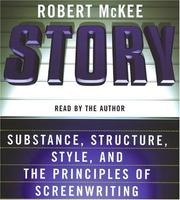
Though rooted in screenwriting, McKee's breakdown of story structure, conflict, and scene construction is the most rigorous treatment of narrative available and applies to all forms.
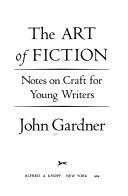
A demanding, authoritative guide to fiction craft from a master teacher — covers point of view, tone, and the 'fictional dream,' building directly on the structural thinking from McKee.
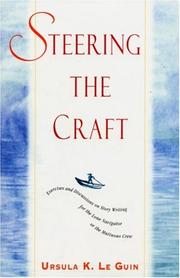
Provides hands-on exercises in narrative voice, point of view, and prose rhythm, turning the theory of the previous books into practiced, embodied skill.
Voice & Style: Finding Your Own
IntermediateMove beyond technique to develop a distinctive personal voice and understand how the greatest writers have used style as an expressive tool.
▸ Study plan for this stage
Pace: 6–8 weeks total: Weeks 1–3 cover "On Writing" by Stephen King (~30–40 pages/day, reading both the memoir sections and the craft sections closely); Weeks 4–7 cover "Style: Ten Lessons in Clarity and Grace" by Joseph M. Williams (~20–25 pages/day, working slowly through each lesson with active annotat
- Autobiographical voice: King's memoir sections in 'On Writing' demonstrate how lived experience, personality, and obsession are the raw material of a writer's voice — not a technique to be applied but an identity to be excavated.
- The Toolbox metaphor (King): Vocabulary, grammar, and style form layered tiers of a writer's toolkit, with voice emerging from how a writer reaches into that toolbox instinctively and consistently.
- Reading as the prerequisite for writing (King): King's insistence that wide, voracious reading is inseparable from developing style — you absorb rhythms, tones, and structures before you can subvert or own them.
- Honest storytelling over performance (King): Voice is undermined by self-consciousness and the desire to impress; King argues for writing the first draft with the 'door closed' — for yourself, not an audience.
- Clarity as a form of style (Williams): Williams reframes clarity not as the absence of style but as its highest expression — sentences that move readers efficiently through ideas are themselves a stylistic achievement.
- The action-in-verbs principle (Williams): Burying key actions in nouns (nominalization) drains prose of energy; strong, specific verbs are the engine of both clarity and distinctive voice.
- Characters as subjects, actions as verbs (Williams): Williams's core sentence-level lesson — readers experience prose as lively when the grammatical subject is a concrete agent and the verb carries the real action.
- Cohesion and flow across sentences (Williams): Voice is not just word choice but the architecture of how sentences connect; given/new information structure and topic strings create a sense of a guiding, consistent intelligence behind the prose.
- According to King in 'On Writing,' what is the relationship between the life you have lived and the voice you develop on the page — and why can't voice be borrowed or imitated permanently?
- King describes writing the first draft with the 'door closed' and revising with the 'door open.' How does this two-stage philosophy protect and then refine a writer's authentic voice?
- Williams argues in 'Style' that nominalizations are one of the most common enemies of clear, energetic prose. What is a nominalization, how do you identify one, and what is the corrective move?
- How does Williams's 'characters as subjects, actions as verbs' principle connect to King's advice about strong, active verbs — and where do the two authors' approaches to sentence-level style converge or diverge?
- Williams introduces the concept of 'old' (given) and 'new' information within and across sentences. How does managing this flow contribute to what a reader experiences as a writer's 'voice' or 'presence'?
- After reading both books, how would you define the difference between 'style' as surface decoration and 'style' as the deep expression of how a writer thinks and sees the world?
- The Closed-Door Draft (King-inspired): Write a 500–800 word personal narrative or scene about a specific memory or obsession — with no audience in mind. No editing during drafting. Then, one day later, read it aloud and mark every sentence where you hear your own voice clearly versus where you hear yourself performing. Revise only the 'performing' sentences.
- Toolbox Audit (King-inspired): Take a piece of your own writing (1–2 pages) and highlight every verb. Circle the weak or vague ones (was, had, got, made). Replace each circled verb with the most precise, active verb you can find. Compare the two versions aloud — note how verb choice alone shifts the personality of the prose.
- Nominalization Hunt (Williams Lesson 3–4): Take a paragraph from a newspaper editorial or academic article and identify every nominalization (e.g., 'the consideration of,' 'made a decision,' 'gave an explanation'). Rewrite each sentence so the action lives in a verb. Then apply the same audit to a page of your own writing.
- Characters & Verbs Reconstruction (Williams Lesson 2): Find five sentences from your own drafts where the grammatical subject is abstract or vague (e.g., 'There is a tendency…' or 'The reason for…'). Rewrite each so a concrete human agent is the subject and the action is a strong verb. Read both versions aloud and record which feels more like 'you.'
- Given/New Flow Exercise (Williams Lessons 5–6): Write a 200-word explanation of something you know well (a skill, a place, an idea). Then diagram each sentence: underline the 'old' information at the start and the 'new' information at the end. Rewrite any sentence where new information appears too early, disrupting the flow. Notice how managing this architecture creates a sense of a confident, gui
- Voice Comparison & Imitation (synthesis of both books): Choose one paragraph from a writer whose voice you admire. Using King's toolbox lens, identify what vocabulary tier and verb choices define their voice. Using Williams's lens, identify their sentence architecture (subject/verb patterns, given/new structure). Write an imitation paragraph on a completely different topic. Then write a second par
Next up: Mastering personal voice and sentence-level style creates the foundation for the next stage, where writers learn to sustain and structure that voice across longer, more complex forms — moving from the sentence and paragraph to the architecture of full essays, stories, or arguments.
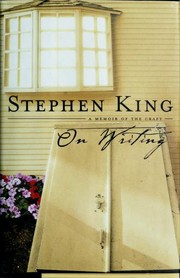
Half memoir, half masterclass — King's candid account of his own writing life shows how a working writer internalizes craft into an authentic, unmistakable voice.

The most thorough academic treatment of prose style, teaching you to consciously control emphasis, cohesion, and elegance — the tools needed to shape a deliberate personal style.
Mastery: The Writer's Mind & Long Game
ExpertInternalize a professional writer's philosophy — how to sustain a practice, think about audience and purpose at the highest level, and keep growing across a lifetime of writing.
▸ Study plan for this stage
Pace: 6–8 weeks total: Weeks 1–3 on "The Writing Life" (~30 pages per sitting, 3 sittings/week — it's short but dense with metaphor and demands slow, reflective reading); Weeks 4–7 on "Negotiating with the Dead" (~25–35 pages per sitting, 3 sittings/week — one lecture/chapter per session with journaling a
- The writing life as radical commitment and sacrifice — Dillard's vision that serious writing demands giving up comfort, safety, and even your best previous work in service of the current project
- The 'log' and 'fuel' metaphor — Dillard's idea that the writer IS the work's energy source, and that spending yourself fully on one project is not waste but necessity
- Momentum and the danger of showing your work too early — Dillard's warning that talking about a piece, or over-polishing prematurely, bleeds the energy needed to finish it
- The writer as a figure who negotiates between the living and the dead — Atwood's central thesis that writing is fundamentally an act of descending into an underworld and returning with something for the living
- The double identity of the writer — Atwood's distinction between the ordinary person who writes and the 'writer-self,' a separate, sometimes frightening entity that takes over during composition
- Writing as a transaction with the reader — Atwood's exploration of why writers write (for money, for fame, for love, for survival) and how honest examination of motive shapes the work's integrity
- The ethics and responsibility of authorship — Atwood's argument that writers bear moral weight for what they put into the world, and that this weight cannot be outsourced to 'the muse' or 'the character'
- Sustaining a lifelong practice — synthesizing both books: how to keep writing across decades by treating it as a vocation, a discipline, and a philosophical stance rather than a mood or inspiration
- According to Dillard, why is it sometimes necessary to cut your best passage from a piece, and what does this reveal about her philosophy of craft over ego?
- What does Dillard mean when she compares the writer's life to that of a logger or a laborer — and how does this challenge romantic notions of artistic inspiration?
- What is Atwood's 'negotiating with the dead' metaphor, and which literary and mythological traditions does she draw on to build it? What does it suggest about the writer's relationship to mortality and legacy?
- How does Atwood characterize the split between the 'writer-self' and the everyday self, and what are the psychological and ethical implications of that split for a working writer?
- Both Dillard and Atwood treat writing as something that costs the writer deeply. Where do their visions of that cost agree, and where do they diverge in important ways?
- After reading both books, how would you articulate your own answer to Atwood's central question: 'Why do you write?' — and how has your answer changed or deepened?
- Dillard Sacrifice Drill: Take a piece of your own writing and identify the single sentence or paragraph you are most proud of. Following Dillard's logic, cut it entirely and revise the piece around its absence. Write a one-page reflection on what the piece lost and — honestly — what it gained.
- Metaphor Excavation: Dillard builds her entire philosophy through extended metaphors (the weasel, the log, the expedition). Choose one of her metaphors, unpack it in writing (what it illuminates, what it obscures), then invent your own original metaphor for what your writing practice feels like right now.
- Motive Inventory (Atwood Exercise): Atwood catalogs the reasons writers write. Write a brutally honest, private 500-word essay answering: 'Why do I write?' Rank your motives from most to least honest. Revisit this essay at the end of the stage and annotate what has shifted.
- The Double-Self Dialogue: Drawing on Atwood's concept of the writer's double identity, write a one-page dialogue between your 'everyday self' and your 'writer-self.' Let them disagree. What does each one want? What does each one fear? Use this to identify where internal resistance lives in your practice.
- Underworld Mapping: Atwood frames writing as a descent. Think of a piece you are currently working on or planning. Write a one-page 'descent map' — what are you going into (the difficult material, the unknown), what do you hope to bring back, and who is the audience waiting at the surface for your return?
- Synthesis Manifesto: After completing both books, write a personal 1–2 page 'Writer's Philosophy Statement' — your own articulation of why you write, what you owe your readers, how you intend to sustain the practice, and what you are willing to sacrifice. This document should be revisited and revised annually.
Next up: By internalizing the professional philosophy and long-game thinking forged in Dillard and Atwood, the reader is now equipped to move from studying writing to practicing it at full commitment — ready for any subsequent stage focused on producing, revising, and submitting sustained original work in the world.
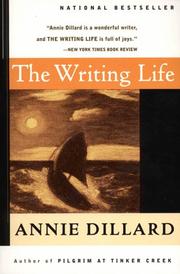
A lyrical, unflinching meditation on what it truly costs to write seriously — best read last, when you have enough craft to appreciate the depth of what Dillard is describing.
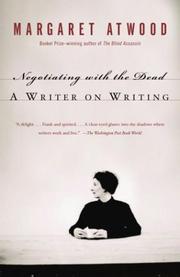
Atwood's essays explore the deepest questions about why writers write, who they write for, and what writing means — a fitting capstone that reframes the entire journey you've taken.
Discussion
Keep reading
Paths that share books, cover the same subject, or open a related topic.