Journalism basics: the best books to report and write the news
This curriculum takes a beginner journalist from the absolute basics of clear, accurate writing all the way through advanced narrative craft, investigative technique, and professional ethics. Each stage builds directly on the last — you'll first learn to write and report, then sharpen your storytelling and interviewing skills, then tackle the deeper ethical and investigative dimensions that separate good journalists from great ones.
Foundations: Writing & Reporting Basics
BeginnerUnderstand what journalism is, how news is structured, and how to write clearly, accurately, and concisely for a general audience.
▸ Study plan for this stage
Pace: 8–10 weeks, ~40–50 pages/day (approximately 2–3 weeks per book, with overlap for practice)
- Clear, concise writing: eliminating clutter, using active voice, and choosing precise words (Zinsser's core thesis)
- The inverted pyramid structure: leading with the most important information and organizing details by decreasing importance
- The nine elements of journalism: truth, loyalty to citizens, independence, accountability, and others as foundational principles
- Accuracy and verification: fact-checking methods, source evaluation, and the responsibility to get details right
- News judgment and story selection: understanding what constitutes news and why certain stories matter to audiences
- Interviewing techniques: asking effective questions, building rapport with sources, and capturing direct quotes
- The lede and nut graf: crafting compelling opening sentences and clearly stating the story's significance early
- Ethical reporting: conflicts of interest, fairness, and the journalist's duty to serve the public interest
- What are Zinsser's main principles for clear writing, and how do they apply specifically to journalism?
- Explain the inverted pyramid structure and why it is the dominant format in news reporting.
- What are the nine elements of journalism according to Kovach, and why is each one essential to credible reporting?
- How do you verify information and evaluate sources to ensure accuracy in a news story?
- What makes an effective lede, and how does it differ from a feature story opening?
- Describe the key steps in conducting a journalistic interview and extracting usable quotes.
- Rewrite three sample news articles using Zinsser's principles: eliminate redundancy, convert passive to active voice, and cut unnecessary words by at least 20%.
- Analyze five published news stories (from major outlets) and map their structure to the inverted pyramid; identify the lede, nut graf, and supporting details.
- Write three short news stories (150–250 words each) on assigned topics, using the inverted pyramid and a strong lede.
- Conduct and record two mock interviews with classmates or friends; transcribe key quotes and practice integrating them into a brief news story.
- Create a source evaluation checklist based on Mencher's guidance, then apply it to fact-check one news story by tracing its sources.
- Write a 500-word reflection identifying which of Kovach's nine elements are present (or absent) in a provided news article, and explain the impact.
Next up: This foundation in clear writing, news structure, and ethical principles prepares you to tackle more specialized reporting skills—such as investigative journalism, beat reporting, and multimedia storytelling—where these fundamentals become the bedrock for deeper, more complex work.

Before learning journalism specifically, you must learn to write with clarity and economy. Zinsser's timeless guide strips away clutter and builds the clean prose foundation every journalist needs.

This is the essential primer on what journalism is for — its principles, obligations, and standards. Reading it first gives you the philosophical backbone before you learn the craft mechanics.
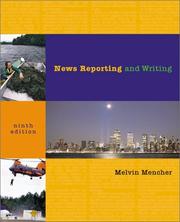
The most widely used journalism textbook in U.S. universities, it walks beginners through the inverted pyramid, beat reporting, sourcing, and the full news-writing workflow step by step.
The Craft: Interviewing & Storytelling
BeginnerMaster the art of the interview, learn to find and develop compelling stories, and move beyond formulaic news writing toward engaging narrative.
▸ Study plan for this stage
Pace: 8–10 weeks, ~25–30 pages/day. Start with Malcolm (3–4 weeks), move to Gutkind (2–3 weeks), finish with Grobel (2–3 weeks). Build in 1–2 weeks for exercises and reflection between books.
- The ethical tension between journalistic truth-seeking and the relationship of trust with sources (Malcolm's central argument)
- The distinction between journalism and creative nonfiction: how narrative techniques and literary devices elevate factual reporting
- The interview as a craft: preparation, listening, follow-up questions, and the psychology of getting subjects to open up
- Story structure in narrative journalism: finding the arc, conflict, and human stakes beyond the headline
- The role of the interviewer's presence and perspective in shaping the narrative without fabricating
- How to move from inverted-pyramid news writing to immersive, character-driven storytelling
- Fact-checking and verification within creative nonfiction: maintaining credibility while using literary techniques
- The interview as collaboration: balancing control of the narrative with respect for the subject's voice
- What is Malcolm's core argument about the relationship between journalist and subject, and why does she use the Mailer-Capote case as evidence?
- How does Gutkind define creative nonfiction, and what are the key differences between it and traditional journalism?
- What are the major interview techniques Grobel outlines, and how do they differ depending on the subject and context?
- How can a journalist use narrative and literary devices while maintaining factual accuracy and ethical responsibility?
- What makes a story 'compelling' beyond the newsworthiness of the facts? How do you identify and develop that narrative arc?
- How should a journalist handle the tension between building rapport with a source and maintaining objectivity or critical distance?
- Conduct a 30–45 minute interview with someone about a significant moment in their life. Record it, transcribe key sections, and identify moments where you asked follow-up questions versus missed opportunities. Reflect on what Grobel's techniques you used or neglected.
- Read a piece of traditional news writing (inverted pyramid) and a narrative journalism piece on the same topic. Annotate the differences in structure, voice, detail, and pacing. Rewrite 2–3 paragraphs of the news piece using Gutkind's creative nonfiction approach.
- After reading Malcolm, write a 1–2 page reflection on an interview you've conducted or observed: Did you establish trust? Did you feel the ethical tension Malcolm describes? How did it affect what the subject shared?
- Select a news story that interests you. Develop a story outline using Grobel's interview planning framework: research the subject, list 10–15 core questions, identify what you don't know, and plan follow-up angles.
- Conduct two interviews on the same topic with different subjects. Compare the transcripts: How did your approach differ? What did each person reveal that the other didn't? Write a short narrative (500–750 words) that weaves both voices together, practicing Gutkind's blending of voices and perspectives.
- Revise a previous piece of your own writing (news article, blog post, profile) using techniques from all three books: add narrative structure (Gutkind), deepen characterization through interview detail (Grobel), and reflect on the ethical dimensions of your reporting (Malcolm).
Next up: This stage equips you with the ethical foundation, narrative craft, and interview mastery needed to move into the next level—where you'll apply these skills to longer-form investigations, multimedia storytelling, and specialized reporting that demands both technical precision and human insight.
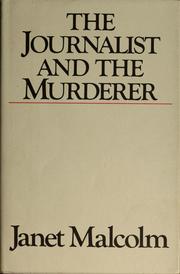
A sharp, provocative examination of the journalist-source relationship that forces you to think critically about trust, manipulation, and responsibility — essential before you conduct serious interviews.

Gutkind, the father of creative nonfiction, teaches how to use scene, dialogue, and character to tell true stories compellingly — bridging the gap between hard news writing and narrative journalism.
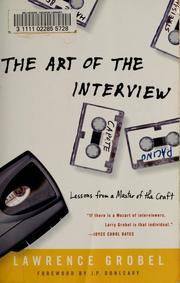
A practical, technique-focused guide to getting people to open up, built from decades of high-profile interviewing experience — directly applicable to any beat or story type.
Narrative Mastery: Long-Form & Feature Writing
IntermediateWrite publishable long-form and feature journalism by studying how master practitioners structure, report, and voice deeply researched stories.
▸ Study plan for this stage
Pace: 6–7 weeks, ~25–30 pages/day (with 2–3 days per week for writing exercises and reflection)
- The evolution of literary journalism: how contemporary writers blend novelistic techniques with rigorous reporting to create immersive narratives
- Structural architecture in long-form: how master practitioners use scene construction, pacing, and narrative momentum to sustain reader engagement across 5,000–15,000+ word pieces
- Voice and authorial presence: the spectrum from transparent reporting to distinctive authorial perspective, and when each serves the story
- Deep reporting and immersion: techniques for gathering material through observation, interviews, and sustained access that enable vivid, credible storytelling
- The truth-telling contract: how literary journalism maintains ethical fidelity to facts while employing narrative strategies that deepen emotional and intellectual understanding
- Dialogue and scene as evidence: using reconstructed scenes and quoted speech not as decoration but as primary evidence of character, conflict, and theme
- The architecture of revelation: how to withhold and release information strategically to create narrative tension and reader investment in outcomes
- What distinguishes 'the new new journalism' from both traditional objective reporting and pure fiction, and what ethical obligations does this hybrid form create?
- How do the narrative structures in Boynton's featured writers differ from one another, and what reporting and structural choices allow each writer to sustain reader attention across long-form pieces?
- According to Kramer, what is the relationship between 'telling true stories' and the writer's responsibility to both accuracy and narrative coherence?
- How do immersive reporting techniques (observation, access, time spent in the field) enable the kind of scene construction and dialogue that Kramer and Boynton's writers employ?
- What role does authorial voice play in long-form narrative journalism, and how do you decide when to be transparent versus when to let scenes and characters speak for themselves?
- How can you structure a 5,000–10,000 word feature to maintain momentum, manage multiple threads of information, and deliver both emotional resonance and substantive insight?
- Read and annotate two complete long-form pieces featured in Boynton's anthology (e.g., one by Gay Talese, one by Adrian Nicole LeBlanc). Map the structural turning points, scene sequences, and moments of authorial reflection. Write a 1-page analysis of how each writer uses structure to build narrative momentum.
- Conduct a 'voice inventory' exercise: select three different writers from Boynton's collection and identify their distinctive stylistic choices (sentence rhythm, metaphor, level of authorial presence, use of humor or irony). Write a 500-word reflection on how each writer's voice shapes the reader's relationship to the subject.
- Design and execute a mini-immersion reporting project (4–6 hours minimum): spend sustained time observing a location, institution, or event. Collect at least 10 vivid sensory details, conduct 2–3 interviews, and gather dialogue. Then write a 1,500–2,000 word scene-based narrative that demonstrates how immersion enables credible storytelling.
- Outline a long-form feature story (5,000–8,000 words) on a subject of your choice, using Kramer's framework for 'telling true stories.' Identify your central narrative question, map your reporting needs, sketch your structural arc (opening hook, rising action, climax, resolution/reflection), and note where scenes, dialogue, and authorial voice will carry the story.
- Rewrite a scene from one of Boynton's featured pieces in a different narrative voice or structural approach (e.g., if it's written in third-person immersion, try first-person reflection; if it opens with scene, try opening with analysis). Write a 300-word reflection on how the change affects the reader's access to truth and emotion.
- Conduct a 'reporting depth audit' on a published long-form piece (not from the assigned books). Identify what kinds of reporting (observation, interviews, documents, background research) the writer likely conducted, and write a 400-word memo on how that reporting enabled the narrative choices made.
Next up: This stage equips you with the structural, reporting, and stylistic mastery to write immersive, publishable long-form narratives; the next stage will deepen your ability to pitch, edit, and place these stories in professional outlets while navigating the business and ethics of contemporary journalism.
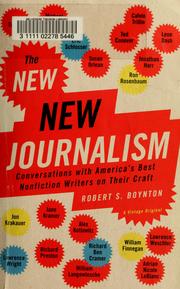
Boynton interviews 19 leading narrative journalists about their methods, giving you an inside look at how the best in the business actually find, report, and construct their stories.

A Nieman Foundation anthology of advice from top narrative journalists on structure, voice, ethics, and revision — the closest thing to a graduate seminar on long-form journalism in book form.
Investigative Reporting & Ethics
IntermediateConduct original investigations, navigate legal and ethical minefields, protect sources, and hold power accountable with rigorous, defensible reporting.
▸ Study plan for this stage
Pace: 6–8 weeks, ~40–50 pages/day (alternating between handbook chapters and narrative chapters to balance theory with real-world application)
- Document analysis and FOIA requests: How to locate, request, and interpret public records as the foundation of investigative work
- Source development and protection: Building trust with sources, using confidentiality agreements, and employing operational security to shield identities
- Legal liability and defenses: Understanding libel law, the actual malice standard, and how to construct legally defensible reporting
- Verification and corroboration: The discipline of confirming facts through multiple independent sources before publication
- Ethical decision-making under pressure: Balancing the public interest against personal safety, source protection, and institutional pressure
- Narrative reconstruction: How to weave documents, interviews, and timelines into a coherent investigative story (as modeled in All the President's Men)
- Power accountability: Recognizing patterns of abuse, following money trails, and understanding how systemic corruption operates
- Operational security and personal safety: Protecting yourself, your sources, and your work from legal threats, surveillance, and intimidation
- What are the primary methods for obtaining public records, and what legal tools (FOIA, state open records laws) should you use when direct requests are denied?
- How do you establish and maintain confidentiality with a source, and what are the legal and ethical limits of source protection?
- What is the actual malice standard, and how does it apply to reporting on public figures versus private citizens?
- How did Woodward and Bernstein verify their Watergate findings, and what role did corroboration play in their defensibility against legal challenge?
- What ethical dilemmas arise when investigating powerful institutions, and how do you decide whether the public interest justifies the risks to sources or yourself?
- How do you construct a timeline and connect disparate documents and interviews into a coherent narrative that proves a larger pattern of wrongdoing?
- File a FOIA request for a local government record (e.g., city council contracts, police incident reports) and document the process, timeline, and any denials or redactions you encounter
- Conduct a mock source interview with a friend or colleague playing a reluctant witness; practice building trust, establishing ground rules for attribution, and handling sensitive information
- Analyze a published investigative piece (from ProPublica, The Washington Post, or similar outlet) and reverse-engineer its sources: identify which facts likely came from documents, which from interviews, and which required corroboration
- Create a detailed timeline of a real-world scandal or corporate malfeasance using only publicly available documents (news archives, SEC filings, court records); identify gaps and what additional reporting would be needed
- Draft a legal memo for a hypothetical investigation: given a set of facts you plan to publish, identify potential libel risks, the actual malice standard, and how to strengthen your defenses
- Write a 2,000–3,000 word investigative narrative (modeled on All the President's Men's structure) that connects at least three independent sources and two documentary sources to establish a single claim of wrongdoing
Next up: This stage equips you with the investigative toolkit, ethical framework, and legal literacy to conduct original accountability reporting; the next stage will likely focus on specialized beats (data journalism, business investigations, or international reporting) where you apply these core skills to specific domains and emerging technologies.

The definitive how-to manual for investigative journalism, covering public records, data analysis, source development, and story construction — a must-read before attempting any serious investigation.
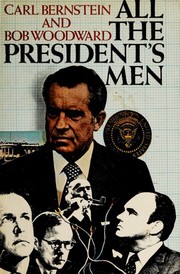
The real-world case study of investigative journalism at its highest stakes. Reading it after the handbook lets you see every technique — source cultivation, document verification, editorial pressure — in live action.
Discussion
Keep reading
Paths that share books, cover the same subject, or open a related topic.