Tolkien and Middle-earth: The Best Books to Read, in Order
This curriculum takes you from Tolkien's most accessible stories all the way through his mythological masterworks and into scholarly guides that illuminate the full depth of Middle-earth. Each stage builds the lore, language, and context needed to fully appreciate the next, turning a casual reader into a genuine Tolkien scholar.
The Journey Begins
BeginnerExperience Tolkien's storytelling voice, fall in love with Middle-earth, and build the foundational knowledge of its peoples, places, and history needed for everything that follows.
▸ Study plan for this stage
Pace: 12–14 weeks, ~40–50 pages/day. The Hobbit (310 pages, ~1 week); The Lord of the Rings trilogy (1,178 pages, ~11–13 weeks). Allow flexibility for re-reading key passages and reflection.
- Bilbo's transformation from comfort-seeking hobbit to reluctant hero—the archetypal journey that defines heroism in Middle-earth
- The Ring as a corrupting force and the central object of power that drives the entire narrative of LOTR
- The geography, cultures, and histories of Middle-earth's peoples: hobbits, elves, dwarves, men, and the forces of darkness
- Tolkien's narrative voice and descriptive style—how language creates immersion and emotional resonance
- The theme of friendship and fellowship as the emotional and moral core of the story
- The concept of the 'long defeat' and eucatastrophe—how hope persists even in the face of overwhelming darkness
- The progression from small, personal stakes (Bilbo's adventure) to world-altering consequences (the War of the Ring)
- Middle-earth's history and mythology as a living backdrop that enriches every scene and character interaction
- How does Bilbo's character change from the beginning of The Hobbit to the end, and what does this reveal about Tolkien's view of heroism?
- What is the Ring, why is it dangerous, and how does Tolkien use it to explore themes of power and corruption?
- Describe the major peoples of Middle-earth (hobbits, elves, dwarves, men) and their distinct cultures, values, and roles in the story.
- What is the Fellowship, why is it formed, and how do the relationships between its members drive the narrative of The Lord of the Rings?
- How does Tolkien's descriptive language and narrative voice differ from modern fantasy writing, and what effect does this have on your experience as a reader?
- What do you understand by the terms 'eucatastrophe' and 'the long defeat,' and how do they apply to the endings of The Hobbit and The Lord of the Rings?
- Create a character arc map for Bilbo: list 5–7 key moments from The Hobbit that show his transformation, and write 2–3 sentences explaining what he learns at each stage.
- Draw or describe a map of Middle-earth based on the journey in The Hobbit and The Lord of the Rings, labeling major locations (the Shire, Rivendell, Lothlórien, Mordor, etc.) and noting the significance of each.
- Write a 500-word character study of one member of the Fellowship (e.g., Aragorn, Legolas, Gimli, Boromir) using specific scenes and dialogue from LOTR to support your analysis.
- Compile a 'Ring Journal': track every mention of the Ring's power, corruption, and influence across both books. What patterns emerge?
- Compare Bilbo's encounter with Smaug in The Hobbit to Frodo's encounters with Sauron's servants in LOTR. How does Tolkien escalate the stakes and danger?
- Create a visual or written 'cultural guide' to Middle-earth's peoples: for hobbits, elves, dwarves, and men, list their values, strengths, weaknesses, and key representatives from the books.
Next up: This stage establishes your intimate familiarity with Middle-earth's world, characters, and Tolkien's voice, providing the essential foundation to explore deeper layers—such as the linguistic and mythological underpinnings of Middle-earth, the historical texts and appendices, or thematic analysis of good, evil, and sacrifice.
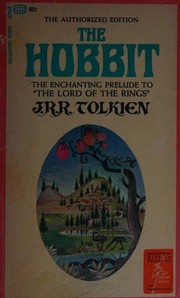
The perfect entry point: a shorter, lighter adventure that introduces hobbits, dwarves, wizards, and the One Ring without overwhelming the new reader. Its accessible tone and brisk pace build confidence and excitement for the larger world ahead.
The central masterwork of Middle-earth, best read immediately after The Hobbit while the world feels fresh. Its epic scope, rich languages, and moral depth reward the reader who has already met Bilbo and Gandalf, and it establishes virtually every major thread of lore explored in later stages.
The Mythology Beneath
IntermediateUnderstand the deep mythological and cosmological foundation of Middle-earth — the creation of the world, the gods, the Elves, and the great tragedies that shaped the Age of the Ring.
▸ Study plan for this stage
Pace: 8–10 weeks, ~40–50 pages/day. The Silmarillion (480 pages) over 4–5 weeks, then Unfinished Tales (500 pages) over 4–5 weeks. Allow 1–2 weeks for review and synthesis.
- The Ainur, the Valar, and the Maiar: the divine hierarchy and their roles in shaping Middle-earth
- The Music of the Ainur and the creation of the world: how Ilúvatar's vision became reality
- The First Age timeline and the rebellion of Fëanor: the central tragedy driving the entire mythology
- The Elves' nature, immortality, and the curse of the Noldor: why they cannot escape their fate
- Númenor as a gift and a test: the rise and fall of Men and its connection to the Ring's power
- The forging of the Rings of Power and Sauron's deception: how the mythology directly enables the events of The Lord of the Rings
- The concept of eucatastrophe and inevitable doom: how Tolkien weaves hope and tragedy throughout the cosmology
- Unfinished narratives and textual layers: understanding how Unfinished Tales expands, complicates, and sometimes contradicts The Silmarillion
- What is the Music of the Ainur, and how does it explain the creation of the world and the existence of evil within it?
- Why did Fëanor rebel against the Valar, and what curse did his oath bring upon the Noldor Elves?
- How did Sauron deceive the Elves into accepting the Rings of Power, and why were the Elves unable to resist this deception?
- What was Númenor, and how did its fall foreshadow the events that would occur in the Third Age?
- How do the events and characters in The Silmarillion and Unfinished Tales directly explain the power and danger of the One Ring?
- What role do the Valar play in Middle-earth after the First Age, and why do they become increasingly distant from the affairs of Men and Elves?
- Create a genealogical chart of the major Elven houses (Finwë's descendants, the House of Hador, etc.) and trace how Fëanor's oath affects each bloodline across the First Age.
- Write a 2–3 page essay comparing the fall of Númenor (from Unfinished Tales) with the fall of the Noldor in The Silmarillion: what are the parallels, and what do they reveal about Tolkien's view of pride and mortality?
- Map out the timeline of the First Age, marking key events (the theft of the Silmarils, the Dagor Bragollach, the fall of Gondolin, etc.) and identify how each event escalates the tragedy.
- Analyze the Rings of Power narrative: explain in detail how Sauron's deception worked, why each group of Elves, Men, and Dwarves received rings, and how this directly connects to The Lord of the Rings.
- Create a character study of Fëanor, Morgoth, and Sauron: identify their motivations, their pride, and how each represents a different type of rebellion against the Valar's order.
- Read and annotate the 'Ainur and the Creation' section of The Silmarillion, then write a summary explaining how the existence of Morgoth/Melkor is explained within the cosmology (hint: the discord in the Music).
Next up: This stage establishes the mythological weight and cosmic stakes behind every character, artifact, and conflict in Middle-earth, preparing you to read The Lord of the Rings and The Hobbit with full understanding of why the Ring matters, who the ancient powers are, and what echoes of the First Age resound through the Third Age.
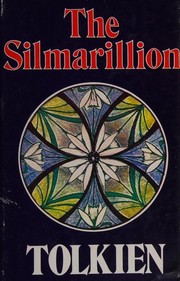
Tolkien's own mythology, from the creation of the universe to the end of the First Age. Reading it after LotR is the key: dozens of names and references in the trilogy suddenly open up into full, breathtaking stories. Dense but transformative.
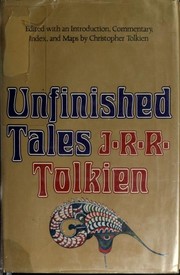
A collection of longer, more narrative tales that fill crucial gaps — the full story of Tuor, the history of Galadriel and Celeborn, and the origins of the Istari. It reads more like fiction than The Silmarillion and deepens the mythology with satisfying detail.
Guides to the World
IntermediateUse authoritative reference works to map, catalogue, and cross-reference Middle-earth, cementing a comprehensive and organized understanding of its geography, peoples, and chronology.
▸ Study plan for this stage
Pace: 6–8 weeks, ~25–30 pages/day (alternating between Atlas and Guide; ~2 weeks per book with overlap for cross-referencing)
- Cartographic literacy: reading and interpreting Fonstad's maps to understand Middle-earth's physical layout, distances, and geographical relationships across all ages
- Chronological frameworks: using Fonstad's timeline overlays and Foster's chronological entries to situate events, peoples, and kingdoms within their historical contexts
- Gazetteer methodology: leveraging Foster's alphabetical entries as a reference tool to cross-reference locations, characters, and concepts with precise page citations to primary texts
- Regional coherence: synthesizing information about distinct regions (Eriador, Rhovanion, Gondor, Mordor, etc.) to understand their geography, inhabitants, political structures, and historical trajectories
- Genealogical and dynastic mapping: tracing lineages and rulerships across ages to understand succession, alliances, and the rise and fall of kingdoms
- Nomenclature and etymology: recognizing naming patterns across languages (Sindarin, Quenya, Rohirric, etc.) to decode geographical and personal names
- Layered history: understanding how Middle-earth changed across the First, Second, and Third Ages, and how maps and references must account for these transformations
- Integration of appendices: using Tolkien's appendices as primary sources that Fonstad and Foster systematize and expand upon
- How did the geography of Middle-earth change between the First Age and the Third Age, and what does Fonstad's cartography reveal about these transformations?
- Using Foster's Guide, trace the genealogy of the Kings of Gondor and Arnor—what patterns emerge in their reigns, and how do these dynasties relate to the broader history of Men in Middle-earth?
- What is the significance of the Misty Mountains as a geographical and political barrier, and how do Fonstad's maps illustrate the routes around or through them?
- How would you use Foster's Guide to cross-reference a location mentioned in The Lord of the Rings with its First Age equivalent, and what does this reveal about Middle-earth's deep history?
- Describe the layout and political divisions of Gondor in the Third Age using Fonstad's maps—where are its major cities, fortresses, and provinces, and why were they positioned this way?
- What role do the Valar, Maiar, and immortal beings play in shaping Middle-earth's geography and history, and how do Fonstad and Foster help you track their influence?
- Create a personal annotated map of Middle-earth by overlaying Fonstad's maps with your own notes on key locations, peoples, and events from The Lord of the Rings and The Hobbit; mark routes of major journeys and identify geographical chokepoints
- Build a chronological timeline using Foster's entries: select 20–30 major events across all three ages and arrange them on a single visual timeline, noting which regions and peoples were affected by each
- Conduct a 'gazetteer deep-dive': choose one region (e.g., Rohan, Moria, Rivendell) and compile all references from Foster's Guide, then cross-reference each entry back to Tolkien's appendices to verify and expand your understanding
- Trace a genealogy: using Foster's Guide, map out the complete lineage of one major dynasty (e.g., the Kings of Númenor, the Elven-kings of Mirkwood, or the Dúnedain of Arnor) across multiple ages, noting key marriages and alliances
- Create a regional profile document for 3–4 distinct regions: for each, synthesize Fonstad's cartography with Foster's entries to describe geography, major settlements, ruling powers, and historical significance
- Practice toponymic analysis: select 10–15 place names from Fonstad's maps and use Foster's Guide to decode their etymologies and meanings in Sindarin, Quenya, or other languages; note how naming patterns reflect cultural and linguistic boundaries
Next up: This stage transforms you from a reader of Tolkien's narratives into a scholar of Middle-earth's structure, equipping you with the reference tools and spatial-temporal literacy needed to engage with deeper textual analysis, comparative mythology, and Tolkien's creative process in subsequent stages.
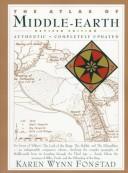
The definitive cartographic guide to Tolkien's world, covering all three Ages with detailed maps of regions, battles, and journeys. Reading it at this stage transforms abstract place-names into a vivid, navigable geography.
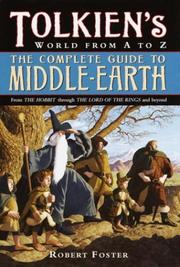
An encyclopedic A-to-Z reference covering every name, place, and concept across Tolkien's writings. Invaluable as a companion and look-up tool once you have read the primary texts and want to connect the dots.
The Scholarly Depth
ExpertEngage with Tolkien's own essays on his craft and mythology, and with serious biographical and critical scholarship, to understand the man, his sources, and the literary achievement behind Middle-earth.
▸ Study plan for this stage
Pace: 12–14 weeks, ~40–50 pages/day (with 1–2 days per week for reflection and note-taking)
- Tolkien's theory of eucatastrophe and the consolation of the happy ending as central to his literary philosophy
- The relationship between Tolkien's linguistic invention and his mythopoeic project—how language shaped Middle-earth's creation
- Tolkien's sources in Norse, Celtic, Finnish, and medieval literature, and how he transformed them into original myth
- The biographical foundations: Tolkien's Catholic faith, his experience of WWI, his philological career, and their imprint on his work
- The concept of the 'Secondary World' and the writer's role as sub-creator, not mere inventor
- Middle-earth's internal chronology, geography, and genealogies as expressions of Tolkien's systematic world-building philosophy
- The evolution of The Lord of the Rings from The Hobbit: narrative, thematic, and stylistic development
- Tolkien's literary achievement in the context of 20th-century literature and the fantasy genre's legitimacy
- What does Tolkien mean by 'eucatastrophe' and why does he consider it essential to fairy-stories?
- How did Tolkien's work as a philologist directly influence the creation and structure of Middle-earth?
- What are Tolkien's primary sources (Norse, Celtic, medieval, etc.), and how did he adapt rather than simply copy them?
- How do Tolkien's biography—his faith, his war experience, his academic life—manifest thematically in The Lord of the Rings?
- What is the 'Secondary World,' and how does Tolkien's concept of sub-creation differ from mere fantasy invention?
- How does The Road to Middle-earth trace the linguistic and narrative development of Middle-earth from its earliest conception?
- Read and annotate 'On Fairy-Stories' from Tree and Leaf, then write a 2–3 page reflection on how eucatastrophe operates in a specific scene from The Lord of the Rings
- Create a genealogical chart or timeline tracing one major family line (e.g., the House of Elros or Dúnedain) using the Complete Guide to Middle-Earth, then write notes on what this structure reveals about Tolkien's world-building
- Identify three of Tolkien's source texts (e.g., Völsunga Saga, Beowulf, The Kalevala) and write comparative analyses showing how he transformed each source into Middle-earth material
- Compile a biographical timeline correlating key events in Tolkien's life (WWI service, academic appointments, publication dates) with major developments in The Lord of the Rings' composition and themes
- Select one chapter from The Road to Middle-earth and create a study guide with key arguments, evidence, and your own critical response
- Write a 5–7 page essay synthesizing all three books: 'How Tolkien's Philology, Biography, and Literary Philosophy Created Middle-earth'
Next up: This stage transforms you from a reader of Middle-earth into a scholar of Tolkien's mind and method, equipping you to engage critically with specialized academic debates, textual variants, and the broader literary and cultural legacy of his work in subsequent stages.
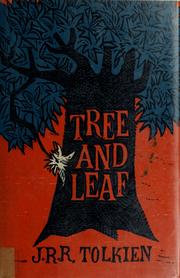
Contains Tolkien's landmark essay 'On Fairy-Stories,' in which he articulates his own theory of myth-making, sub-creation, and the purpose of fantasy. Essential for understanding why Middle-earth was built the way it was.

The authorized biography by the scholar who had full access to Tolkien's papers. It reveals how his life — the loss of his parents, World War I, his Catholic faith, his Oxford friendships — shaped every corner of Middle-earth.
The most respected piece of Tolkien literary criticism, by a scholar who held the same professorship Tolkien once did. Shippey traces the Old English, Norse, and Finnish sources that Tolkien wove into his mythology, revealing the extraordinary scholarly depth beneath the stories.
Discussion
Keep reading
Paths that share books, cover the same subject, or open a related topic.