Getting published: an ordered reading path from query letter to book deal
This curriculum takes a writer from zero knowledge of the publishing world to confident, strategic action — whether they pursue traditional or self-publishing. The four stages build deliberately: first understanding the industry landscape, then mastering the query and proposal process, then protecting yourself legally with contracts, and finally exploring self-publishing as a fully viable parallel path.
The Publishing Landscape
BeginnerUnderstand how the traditional publishing industry works — who the players are (agents, editors, publishers, distributors) and how a book moves from manuscript to bookstore shelf.
▸ Study plan for this stage
Pace: 4–5 weeks, ~25–30 pages/day. Start with "Thinking Like Your Editor" (Week 1–2), then move to "The Essential Guide to Getting Your Book Published" (Week 3–5), with overlap for review and exercises.
- The editorial perspective: how editors evaluate manuscripts for marketability, voice, structure, and commercial viability (Rabiner/Fortunato's core framework)
- The traditional publishing supply chain: the roles and incentives of agents, acquisitions editors, publishers, sales teams, and distributors
- How a manuscript moves through the publishing pipeline: from agent submission through acquisition, editing, production, and distribution to retail
- Market positioning and audience identification: understanding your book's category, comp titles, and target reader (essential for both editors and publishers)
- The agent's role as gatekeeper and advocate: why agents matter, what they look for, and how they pitch to publishers
- Publisher economics: how publishers evaluate profit potential, print runs, marketing budgets, and royalty structures
- The submission process: query letters, proposal packages, and what makes a manuscript stand out to agents and editors
- Post-acquisition realities: the timeline from contract to publication, the role of developmental editing, and author expectations
- What are the key criteria an editor uses to evaluate a manuscript, and how does understanding the editor's perspective help you strengthen your own work?
- Describe the journey of a manuscript from agent submission to bookstore shelf—who are the major players at each stage, and what is each person's primary concern?
- Why do agents act as gatekeepers, and what specific things do they look for when deciding whether to represent a manuscript?
- How do publishers assess the commercial viability of a book, and what role does market positioning and audience identification play in their decision?
- What is the difference between a trade publisher's expectations and an author's expectations regarding timeline, marketing support, and royalties?
- How should you position your manuscript (comp titles, category, audience) to appeal to both agents and editors?
- Read and annotate the first 3 chapters of 'Thinking Like Your Editor' focusing on the editorial checklist—then apply those criteria to a published book in your genre and a sample chapter of your own manuscript.
- Create a one-page 'Publisher's P&L Simulation': estimate print run, unit cost, retail price, and profit margin for a hypothetical book in your category using principles from 'The Essential Guide.' Reflect on what this teaches you about publisher decision-making.
- Write a detailed market positioning statement for your book: identify 2–3 comp titles, define your target audience in specific demographic/psychographic terms, and explain why your book fills a gap—then compare it against the positioning framework in Eckstut.
- Research and document the submission process: find 5 agents in your genre, note their submission guidelines, and draft a one-paragraph pitch for your manuscript that addresses what you've learned about what agents seek.
- Create a visual flowchart or timeline of the publishing pipeline (manuscript → agent → publisher → bookstore) with 8–10 key decision points and stakeholders, labeling what each person cares about most.
- Interview or email a published author in your genre and ask them 3–4 questions about their experience with agents, editors, and the timeline from contract to publication—document their answers and compare to what the books say.
Next up: This stage establishes the landscape and power dynamics you'll navigate; the next stage will teach you how to craft a manuscript and proposal that actually succeeds within this system.
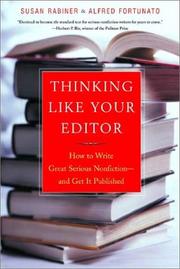
Written by a veteran editor and agent, this book demystifies how publishers think and make acquisition decisions — essential context before you write a single query letter.
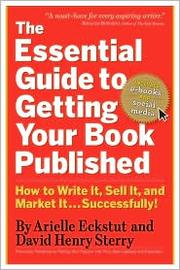
A comprehensive, beginner-friendly overview of the entire traditional publishing journey, from idea to deal, that introduces all the key vocabulary and steps in one place.
Querying Agents & Crafting Your Pitch
BeginnerWrite a compelling query letter and synopsis, understand how to research and approach literary agents, and avoid the most common submission mistakes.
▸ Study plan for this stage
Pace: 4–5 weeks, ~20–25 pages/day
- Query letter structure and essential components (hook, pitch, bio, credentials)
- How to research and identify agents suited to your manuscript (genre, submission preferences, agency reputation)
- The purpose and format of a synopsis (typically 1–2 pages, present tense, third person)
- Common query mistakes to avoid (mass queries, poor formatting, vague pitches, irrelevant credentials)
- Agent submission guidelines and etiquette (follow instructions precisely, respect response times, track submissions)
- The role of platform and author credentials in agent decision-making
- Query psychology: what agents are looking for and how they evaluate submissions
- What are the five essential components of a strong query letter, and why does each matter?
- How do you research literary agents to find the right fit for your manuscript, and what red flags should you watch for?
- What is the difference between a query letter and a synopsis, and when do you use each?
- What are the three most common query mistakes, and how do you avoid them?
- How should you format and structure a synopsis, and what information must it contain?
- What role does author platform and credentials play in agent queries, and how do you present them effectively?
- What submission tracking system would you use, and what information should you record for each submission?
- Write a one-paragraph hook for your manuscript that grabs attention in 2–3 sentences
- Research and create a list of 10–15 agents suited to your genre, noting their submission guidelines and recent client sales
- Draft a complete query letter for your manuscript, then revise it based on Sambuchino's guidelines
- Write a 1–2 page synopsis of your manuscript in present tense, third person
- Compare your query letter against the common mistakes listed in the guide; identify and fix at least three potential issues
- Create a submission tracking spreadsheet with agent names, submission dates, guidelines followed, and response status
- Rewrite a weak query letter example from the book (or your own draft) to demonstrate how each revision strengthens it
- Research three agents' recent sales and write a personalized opening line for each query that references their client list
Next up: This stage equips you with the tactical tools to approach agents professionally and strategically; the next stage will likely focus on navigating agent responses, contract negotiations, and what happens after you land representation.
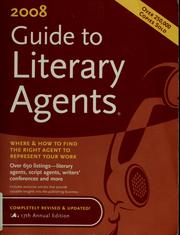
The industry-standard annual directory that also includes detailed articles on how to query, what agents want, and how to navigate the submission process — read the instructional sections cover to cover.
Book Proposals & Sealing the Deal
IntermediateWrite a professional book proposal for nonfiction (and understand the equivalent for fiction), and know what happens after an agent offers representation — including going on submission to publishers.
▸ Study plan for this stage
Pace: 6–8 weeks, ~25–30 pages/day (alternating between both books to build proposal skills while understanding publisher perspective)
- The anatomy of a professional nonfiction book proposal: overview, market analysis, author platform, chapter outline, and sample chapters
- How to position your book in the marketplace and identify comparable titles that prove demand
- Building and demonstrating author platform (platform as currency in publishing)
- The agent-publisher relationship and what agents look for when evaluating proposals
- How editors at publishing houses actually read and evaluate proposals (the gatekeeper perspective)
- The submission process: what happens after an agent offers representation and how books go on submission to publishers
- Common proposal pitfalls and how to avoid them
- The psychology of publishing: understanding both the business side and the human side of editorial decisions
- What are the essential components of a nonfiction book proposal, and why does each section matter to an agent or publisher?
- How do you identify and present comparable titles in your proposal without underselling your book's uniqueness?
- What constitutes 'author platform' and why is it critical for nonfiction proposals—how do you demonstrate it?
- After an agent offers representation, what is the submission process to publishers, and what role does the agent play?
- What are the most common mistakes writers make in proposals, and how do Larsen's and Lerner's books help you avoid them?
- How does understanding an editor's perspective (from Lerner) change the way you write and position your proposal?
- Write a one-page overview/hook for your book idea, then refine it based on Larsen's guidance on compelling openings
- Identify and analyze 5–8 comparable titles in your genre; write a brief market analysis section explaining how your book fits and differs
- Audit your current author platform (social media, speaking experience, credentials, audience); create a realistic platform-building plan for the next 6 months
- Draft a detailed chapter-by-chapter outline (15–20 chapters) with 2–3 sentence descriptions of each, following Larsen's structural recommendations
- Write two sample chapters (or polish existing ones) that showcase your voice, expertise, and the book's unique value
- Assemble a complete mock proposal (overview, market analysis, author platform, chapter outline, 2 sample chapters) and critique it against Larsen's checklist
- Read a published nonfiction book in your genre and reverse-engineer what its proposal likely contained; note what worked in the final book
- Write a one-page reflection on how Lerner's insights about editors' decision-making would change your proposal strategy
Next up: With a polished proposal and understanding of the submission process, you're now ready to learn how to actually pitch agents, navigate rejections, and manage the publishing timeline—moving from proposal-writing to agent-hunting and contract negotiation.
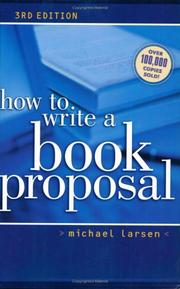
The definitive guide to nonfiction book proposals, written by a longtime literary agent; reading it first gives you the structural framework every subsequent negotiation is built on.

A former editor and agent pulls back the curtain on the editor-agent-author relationship and the emotional and strategic realities of going on submission — bridges the gap between proposal and deal.
Contracts, Rights & Protecting Yourself
IntermediateRead and negotiate a publishing contract, understand advances, royalties, rights, and reversion clauses, and know when to push back.
▸ Study plan for this stage
Pace: 6–8 weeks, ~20–25 pages/day (alternating between both books; start with Kirsch, then Crawford for deeper legal context)
- Contract structure and standard clauses: what each section means and why it matters (grant of rights, term, termination, reversion)
- Advances vs. royalties: how they're calculated, when you receive them, and what they represent in your deal
- Rights negotiation: subsidiary rights, foreign rights, digital rights, and which ones to retain or license
- Reversion clauses and out-of-print definitions: how to reclaim your work when it stops earning
- Red flags and deal-breakers: unfavorable terms in Kirsch's examples and how Crawford's legal framework helps you identify them
- When and how to push back: negotiation tactics, what's standard vs. exploitative, and when to walk away
- Author protections: indemnification, warranties, liability, and what you're legally responsible for
- Subsidiary agreements: how film/audio/translation rights are handled separately and what you should negotiate
- What is the difference between an advance and a royalty, and how do they interact in a typical publishing contract?
- What does a reversion clause do, and why is the 'out-of-print' definition critical to protecting your rights?
- Name three subsidiary rights and explain why an author should consider retaining some of them rather than granting all to the publisher.
- What are three red flags in a publishing contract that Kirsch identifies, and what should you do if you encounter them?
- How does indemnification work, and what legal risks should an author understand before signing?
- When is it appropriate to negotiate a contract term, and when should you consider walking away from a deal?
- Annotate a sample publishing contract (real or fictional) using Kirsch's clause-by-clause breakdown as your guide; mark which sections favor the publisher and which protect the author.
- Create a personal negotiation checklist: list 10 contract terms you will always negotiate, 5 you're willing to compromise on, and 3 that are deal-breakers for you.
- Calculate royalty earnings: given a hypothetical advance, list price, royalty percentage, and print run, determine when the author breaks even and starts earning royalties.
- Role-play a contract negotiation: have a peer play the publisher's agent while you advocate for author-friendly changes to 3–5 clauses using arguments from both Kirsch and Crawford.
- Research a real author's contract dispute (e.g., a reversion case or rights conflict): identify the clause that caused the problem and propose how Kirsch's or Crawford's guidance would have prevented it.
- Draft a one-page summary of your ideal contract terms for your own book, prioritizing which rights you'll retain, what advance you'll seek, and which clauses are non-negotiable.
Next up: This stage equips you with the legal literacy and negotiation confidence to protect yourself at the contract stage; the next stage will focus on navigating the publishing process itself—production, marketing, and your relationship with your publisher once the deal is signed.
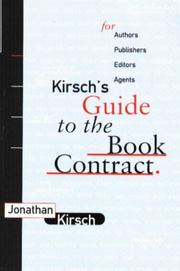
The most thorough plain-English breakdown of every clause in a standard publishing contract, written by a publishing attorney — essential reading before you sign anything.

Broadens the legal picture beyond contracts to cover copyright, libel, collaboration agreements, and more, giving writers a complete protective framework.
Self-Publishing as a Strategic Path
ExpertEvaluate self-publishing as a serious alternative or complement to traditional publishing, and execute a professional indie publishing strategy including editing, distribution, and marketing.
▸ Study plan for this stage
Pace: 4–5 weeks, ~40–50 pages/day (approximately 280–350 pages total across both books)
- The three-pillar model of indie publishing: author, publisher, and entrepreneur roles and how they interact
- Professional editing, cover design, and formatting as non-negotiable quality gates for self-published work
- Digital-first distribution strategy: selecting platforms (Amazon KDP, Draft2Digital, IngramSpark) based on audience and revenue goals
- Pricing psychology and strategy: how to position your book competitively while maximizing royalties
- Building an author platform and email list as the foundation for sustainable indie publishing success
- Marketing fundamentals for indie authors: organic reach, paid advertising, and launch strategies
- Rights management and metadata optimization to increase discoverability across retailers
- The business mindset required to treat self-publishing as a professional venture, not a hobby
- What are the three core roles an indie author must master or delegate, and why is each essential to success?
- How do professional editing, cover design, and formatting directly impact sales and reader perception of self-published work?
- What are the key differences between Amazon KDP, Draft2Digital, and IngramSpark, and when should an author use each?
- How should an indie author approach pricing strategy to balance competitiveness with profitability?
- What is the relationship between author platform, email list building, and long-term indie publishing success?
- What are the most effective, low-cost marketing tactics for indie authors launching a new book?
- Create a detailed pre-publication checklist based on APE's quality standards, including editor selection, cover design brief, and formatting requirements for your own book project
- Audit your current author platform (social media, website, email list) and develop a 90-day plan to strengthen it using principles from both books
- Research and compare at least three distribution channels (Amazon KDP, Draft2Digital, IngramSpark, others) for a specific book genre; document pros, cons, and royalty rates for each
- Develop a pricing strategy for a book in your genre: analyze comparable titles, calculate break-even points, and justify your price point using both books' frameworks
- Design a launch marketing plan including at least five specific, actionable tactics (pre-orders, email campaigns, paid ads, partnerships, etc.) with realistic timelines and budgets
- Write metadata (title, subtitle, keywords, description) for a book optimized for discoverability on multiple platforms, applying Gaughran's principles on keywords and category selection
- Build a simple one-page business plan for your indie publishing venture that addresses author, publisher, and entrepreneur roles and identifies which you'll handle vs. delegate
Next up: This stage equips you with the strategic and tactical knowledge to execute a professional indie publishing operation; the next stage will likely focus on scaling that operation, managing multiple titles, and building long-term author business sustainability.

Written by a Silicon Valley veteran turned indie author, this is the most comprehensive and business-minded guide to self-publishing — read it after traditional publishing so you can make a fully informed strategic choice.

A practical, up-to-date playbook for indie publishing on Amazon and beyond, covering metadata, algorithms, and reader discovery — the operational capstone to the entire curriculum.
Discussion
Keep reading
Paths that share books, cover the same subject, or open a related topic.