Worldbuilding is the most fun and the most treacherous part of speculative fiction. Building a world can become an end in itself, a bottomless map-and-lore project that never becomes a novel. The good books on the subject all push the same discipline: the world exists to serve the story, not the other way around.
Reading in order helps you build both muscles at once — the imaginative craft of invention and the narrative craft of restraint. Start by learning the cliches to avoid, then master the concrete tools, then anchor it all in story and real-world plausibility.
Learn the cliches, then the craft of invention
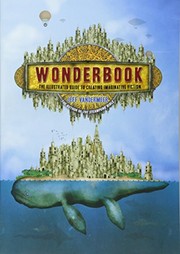
Start with The Tough Guide to Fantasyland by Diana Wynne Jones, a satirical dictionary of fantasy cliches that inoculates you against the tired tropes readers are sick of. Then Wonderbook by Jeff VanderMeer is the illustrated, imaginative bible of creative fiction, full of exercises that spark original worlds. For the visual and mechanical side, How to Draw Fantasy Art and RPG Maps by Jared Blando teaches you to render geography, and The Writer's Complete Fantasy Reference is the handy encyclopedia of period detail — armor, titles, magic systems — that keeps invented worlds internally consistent.
Systems, story, and consistency
A world needs rules. Kobold Guide to Magic collects designers on building magic that feels lawful and dramatic rather than arbitrary. But mechanics are inert without narrative, so The Anatomy of Story by John Truby anchors your world to character and theme, and The Art of Fiction by Ursula K. Le Guin — a master of both craft and worldbuilding — teaches the prose-level attention that makes any setting believable on the page.
Ground it in reality and language
The most convincing invented worlds borrow from how the real one works. Guns, Germs, and Steel by Jared Diamond explains why civilizations develop as they do, giving your geography and cultures causal logic. For invented tongues, The Language Construction Kit by Mark Rosenfelder is the practical primer on conlangs. Finally, Kobold Guide to Worldbuilding and The World of Ice & Fire by George R. R. Martin show, respectively, the craft advice and a masterclass example of a fully realized world.
Read in this order and your worlds gain both wonder and discipline. Follow the full path to build settings that deepen a story instead of drowning it.
Follow the full reading path →
Ready to learn something deeply?
Build a reading path — free