World Mythology: The Best Books to Read, in Order
This curriculum takes you from accessible retellings of the world's greatest myths all the way to deep comparative and scholarly analysis. It begins with vivid, story-first introductions to build intuition and love for the material, then moves through tradition-specific deep dives, and finally reaches the analytical frameworks that reveal why mythology matters across all human cultures.
Foundations: The Story of Myth
BeginnerBuild a broad, enjoyable familiarity with the major mythological traditions — Greek, Norse, Egyptian, and beyond — through accessible, narrative-driven retellings.
▸ Study plan for this stage
Pace: 6–8 weeks, ~40–50 pages/day (approximately 3–4 weeks per book, with time for reflection and exercises)
- The universal patterns in myth: how different cultures use stories to explain the world, human nature, and the divine
- Greek mythology's focus on human-like gods, heroic quests, and moral lessons (Hamilton's thematic organization)
- Norse mythology's emphasis on fate, honor, cyclical time, and the inevitability of Ragnarök (Gaiman's narrative approach)
- Archetypal characters and motifs: the hero, the trickster, the wise elder, and how they recur across traditions
- The distinction between mythological truth and historical fact—myth as cultural meaning-making rather than literal history
- How mythological narratives reflect the values, anxieties, and worldviews of their source cultures
- The role of transformation, sacrifice, and consequence in driving mythological plots
- What are the major differences in how Greek and Norse cultures portrayed their gods, and what do these differences reveal about each culture's values?
- How does Edith Hamilton organize Greek mythology thematically, and what advantage does this approach offer over a purely chronological retelling?
- Describe the concept of fate (moira in Greek, wyrd in Norse mythology) and explain how it shapes the actions of heroes and gods in each tradition
- What is Ragnarök, and how does the Norse vision of an inevitable apocalypse differ from the Greek understanding of divine order?
- Identify and explain at least three archetypal character types or motifs that appear in both Greek and Norse mythology
- How do the myths you've read reflect the historical circumstances and geographical contexts of ancient Greece and Scandinavia?
- Create a comparative chart of 5–6 Greek gods and their Norse equivalents (e.g., Zeus/Odin), noting personality traits, domains, and cultural significance
- Write a 2–3 page character study of one Greek hero (e.g., Odysseus, Heracles) and one Norse hero (e.g., Sigurd, Thor), analyzing how each embodies their culture's ideals
- Map out the family trees of the Greek Olympians and the Norse Aesir/Vanir; note patterns in succession, conflict, and divine relationships
- Retell one Greek myth and one Norse myth in your own words (500 words each), then reflect on which details you emphasized and why
- Create a visual timeline or infographic showing key events in Greek mythology (Titanomachy, Trojan War, etc.) and Norse mythology (creation through Ragnarök)
- Write a reflective essay (3–4 pages) comparing how Greek and Norse cultures used myth to process themes like mortality, duty, and the limits of human power
Next up: This foundation in narrative-driven retellings and cultural patterns prepares you to dive deeper into specialized traditions, thematic explorations, and critical analysis of how mythology shapes literature, psychology, and modern culture.
The classic starting point for Western mythology: Hamilton retells Greek, Roman, and Norse myths in clear, elegant prose, giving beginners a rich vocabulary of gods, heroes, and stories to build on.
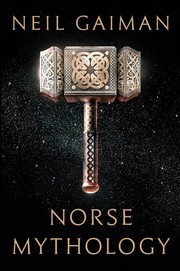
Gaiman's vivid, novelistic retelling of the Norse myths — from the creation of the world to Ragnarök — makes the Norse tradition immediately gripping and memorable right after Hamilton's overview.
Going Deeper: Tradition by Tradition
IntermediateExplore individual mythological traditions in greater depth, understanding their internal logic, theology, and cultural context — Greek, Hindu, and world traditions.
▸ Study plan for this stage
Pace: 12–14 weeks, ~40–50 pages/day. Graves' two-volume work (650+ pages) takes 4–5 weeks; March's Penguin book (400+ pages) takes 3–4 weeks; Hindu Myths (300+ pages) takes 2–3 weeks, with 1–2 weeks for synthesis and review.
- Genealogical and narrative structure of Greek myths: how Graves traces mythological lineages and variant versions to reconstruct pre-Olympian and Olympian cosmologies
- Internal logic of mythological systems: how each tradition (Greek, Hindu) encodes theological, cosmological, and social principles through narrative patterns
- Cultural and historical context: understanding how myths reflect the values, anxieties, and worldviews of their originating cultures (Bronze Age Greece, Vedic and classical India)
- Variant versions and textual transmission: recognizing that myths exist in multiple forms across sources (Homer, Hesiod, Ovid for Greek; Vedas, Puranas, epics for Hindu) and what these variations reveal
- Archetypal patterns and symbolic meanings: identifying recurring motifs (creation, flood, hero's journey, divine conflict) and their cultural-specific expressions
- Theological frameworks: comparing how Greek myths address fate, divine will, and human agency versus Hindu concepts of dharma, karma, and cosmic cycles
- Mythological function in society: how myths served to explain natural phenomena, justify social hierarchies, and transmit cultural values
- How does Robert Graves use variant versions and genealogical reconstruction to argue for pre-Olympian matriarchal religion in Greek mythology, and what evidence does he present?
- What are the major theological differences between the Greek Olympian pantheon (as presented in March's Penguin book) and the Hindu divine hierarchy (as presented in the Hindu Myths text)?
- Trace the creation myth in both Greek and Hindu traditions: what cosmological principles does each tradition emphasize, and how do these reflect their respective cultural values?
- How do the concepts of fate (Greek moira) and cosmic law (Hindu dharma/rta) shape the narrative structure and moral logic of myths in each tradition?
- What role do trickster and boundary-crossing figures (Hermes, Loki-like figures, or Indra) play in maintaining or disrupting cosmic order across different mythological traditions?
- How do the Hindu epics (Mahabharata, Ramayana) as sources for Hindu Myths differ in function and scope from Greek literary sources (Homer, Hesiod), and what does this tell us about how each culture preserved and transmitted mythological knowledge?
- Create a genealogical chart of the Greek pantheon using Graves' detailed lineages, then compare it to March's presentation—note where they agree, diverge, and what Graves' variants suggest about religious history
- Select three Greek myths (e.g., Prometheus, Persephone, Heracles) and map their narrative structure: identify the conflict, resolution, and theological principle each myth encodes; repeat for three Hindu myths
- Write a comparative analysis (2–3 pages) of a creation myth in Greek tradition (Hesiod's Theogony as discussed in both texts) versus a Hindu creation myth from the Hindu Myths text—focus on cosmological order and divine agency
- Build a 'myth index' tracking archetypal patterns (e.g., divine conflict, flood, hero's descent) across Greek and Hindu traditions; note which patterns appear in both and which are unique
- Annotate a passage from Graves on a specific myth and a corresponding passage from March on the same myth, then a Hindu parallel from Hindu Myths—analyze how each source frames the myth's meaning and cultural function
- Create a visual or written comparison of how Greek and Hindu traditions represent the relationship between gods and humans, fate and free will, using specific myths as evidence
Next up: This stage builds a deep, comparative understanding of how individual mythological traditions encode their worldviews through narrative, preparing you to recognize universal patterns and culture-specific variations that will enable analysis of lesser-known traditions and synthesis of global mythological themes in the next stage.
Graves provides the complete corpus of Greek myth with commentary, moving beyond Hamilton's retellings into the full complexity of variant sources — essential for anyone who wants to truly know Greek mythology.

A rigorous yet readable companion to the Greek and Roman traditions that fills gaps left by Graves, with careful attention to original sources and cultural context.
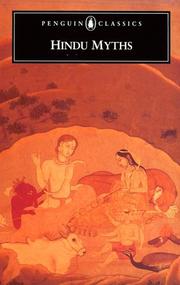
Doniger is the foremost Western scholar of Hindu mythology; this Penguin Classic anthology introduces the vast, layered world of Vedic and Puranic myth, broadening the reader well beyond the Greco-Roman world.
The Wider World: Global Traditions
IntermediateEncounter mythologies from Mesopotamia, the Americas, Africa, and East Asia, developing a truly global picture of how human cultures have used myth.
▸ Study plan for this stage
Pace: 8–10 weeks, ~40–50 pages/day (accounting for dense mythological content and cross-cultural comparison work)
- Mesopotamian cosmology and the role of gods in creation, kingship, and the afterlife (Enuma Elish, Atrahasis, Gilgamesh)
- How Mesopotamian myths reflect the concerns of an urban, literate civilization dependent on irrigation and trade
- Comparative mythology: identifying universal themes (flood narratives, hero quests, divine conflict) across unrelated cultures
- The relationship between myth and social structure—how myths legitimize power, explain natural phenomena, and preserve cultural memory
- Regional mythological systems from the Americas, Africa, and East Asia as distinct responses to local geography, ecology, and historical experience
- The transmission and adaptation of myths across cultures and time periods
- How to read mythological texts critically: distinguishing between ancient sources, scholarly interpretation, and modern retelling
- What are the major creation myths in Mesopotamian tradition, and what do they reveal about Mesopotamian values and anxieties?
- How does the Epic of Gilgamesh use myth to explore themes of mortality, friendship, and the human condition?
- What are at least three universal mythological themes you can identify across Mesopotamian and non-Mesopotamian traditions, and what might explain their prevalence?
- How do the mythologies presented in Gray's survey reflect the geographic, economic, and social conditions of their respective cultures?
- What are the key differences between how Mesopotamian myths and myths from other regions (Americas, Africa, East Asia) conceptualize the divine and the cosmos?
- How can you distinguish between primary mythological sources and scholarly interpretation or modern adaptation when reading these texts?
- Create a comparative chart mapping creation myths from Mesopotamia against at least two other cultural traditions covered in Gray's survey, noting similarities and differences in cosmology, divine hierarchy, and human origins
- Write a 500-word analytical essay on the Gilgamesh epic, focusing on how it uses myth to address a specific human concern (mortality, friendship, kingship, or the limits of power)
- Identify and annotate three Mesopotamian myths in Dalley's text that reflect the concerns of an urban, irrigation-dependent civilization; explain the connection between myth and material conditions
- Create a visual timeline or map showing how a single mythological theme (e.g., flood narratives, trickster figures, or divine conflict) appears across the cultures surveyed in Gray's work
- Select one myth from Mesopotamia and one from another region covered in Gray's survey; write a comparative analysis (600–800 words) exploring how each culture's myth reflects its worldview
- Compile an annotated bibliography of 3–4 scholarly sources on comparative mythology; write brief summaries of how each source approaches cross-cultural mythological analysis
Next up: This stage establishes a global foundation in how diverse cultures use myth to explain the cosmos and society, preparing you to deepen your analysis of specific mythological traditions and to examine how myths function in modern contexts and adaptations.
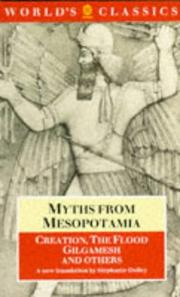
Dalley's authoritative translations of the Epic of Gilgamesh, Enuma Elish, and other Babylonian and Assyrian texts reveal the oldest written myths and their surprising echoes in later traditions.
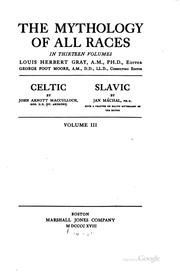
A landmark comparative reference covering mythologies from Celtic, Slavic, American, African, and Oceanic traditions — ideal at this stage for broadening the reader's global scope.
The Analytical Layer: Why Myth Matters
ExpertUnderstand the psychological, structural, and cultural theories that explain what myths are, how they work, and why they are universal to human experience.
▸ Study plan for this stage
Pace: 8–10 weeks, ~40–50 pages/day (accounting for dense theoretical material requiring re-reading and reflection)
- The monomyth (hero's journey): departure, initiation, and return as a universal narrative structure underlying myths across cultures
- The role of the unconscious and archetypes (the Shadow, the Wise Old Man/Woman, the Anima/Animus, the Self) in shaping mythological narratives
- Myth as psychological function: how myths help individuals integrate unconscious material and achieve psychological wholeness
- The relationship between personal psychology and collective mythology: how individual hero's journeys mirror universal human development
- Myth as cultural meaning-making: how myths encode and transmit a society's values, cosmology, and answers to existential questions
- The distinction between literal and metaphorical readings of myth: why treating myths as psychological and symbolic rather than historical is essential
- Campbell's thesis on myth's modern crisis: why contemporary secular societies have lost access to mythological meaning and what the consequences are
- The role of ritual and storytelling in activating myth's psychological and social functions in lived experience
- What is the monomyth, and how does Campbell demonstrate that it appears across radically different cultures and time periods? What are its major stages?
- How do Jungian archetypes function in myths, and why does Campbell argue they are universal to human psychology rather than culturally constructed?
- What does Campbell mean by saying that myths serve a psychological function for individuals? How do myths help people navigate life transitions and integrate shadow material?
- How does Campbell explain the relationship between a culture's mythology and its ability to provide meaning, purpose, and social cohesion to its members?
- What is Campbell's diagnosis of the modern crisis regarding myth, and what does he suggest are the consequences of living in a society without living mythology?
- How do the conversational examples and personal anecdotes in 'The Power of Myth' illustrate or deepen the theoretical arguments Campbell makes in 'The Hero with a Thousand Faces'?
- Map the monomyth structure onto three myths from different cultures (e.g., one from your assigned reading, one from a film or contemporary story, one from a non-Western tradition). Identify each stage: call, crossing the threshold, trials, revelation, return. Note where stages overlap or are compressed.
- Select one major archetype (Shadow, Wise Old Man/Woman, Anima/Animus, Self) and trace its appearance across three different myths or stories. Write a 2–3 page analysis of how that archetype functions psychologically in each narrative.
- Conduct a personal myth analysis: identify a significant life transition you've experienced or are experiencing (coming of age, career change, loss, etc.). Map it onto the hero's journey structure. What were your 'calls'? Your trials? Your revelations? What does this reveal about how mythological patterns operate in lived experience?
- Create a comparative chart analyzing how Campbell's monomyth appears in one myth from 'The Hero with a Thousand Faces' and one contemporary example (film, novel, video game, or personal story) discussed in 'The Power of Myth.' Highlight both structural parallels and modern adaptations.
- Write a reflective essay (3–4 pages) responding to Campbell's argument about modern myth crisis: Do you agree that contemporary secular society lacks 'living mythology'? What myths (if any) do you see functioning in modern culture? What are the psychological or social costs of this absence?
- Engage in a Socratic dialogue (written or recorded) with a peer or mentor: one person argues Campbell's universalist position on archetypes and the monomyth; the other raises cultural-relativist critiques. Document the tensions and insights that emerge.
Next up: This stage equips you with Campbell's theoretical framework for understanding *why* myths matter and *how* they work psychologically and culturally, preparing you to apply these insights to specific mythological traditions, comparative analysis, or to examine how mythological patterns persist in modern media and personal narratives in subsequent stages.

Campbell's landmark work identifies the 'monomyth' — the hero's journey — across world traditions, synthesizing everything the reader has learned into a single, powerful comparative framework.

Based on Campbell's famous conversations with Bill Moyers, this accessible book deepens his ideas and connects ancient myth to modern life — the perfect capstone that makes the entire curriculum personally meaningful.
Discussion
Keep reading
Paths that share books, cover the same subject, or open a related topic.