Understanding John Maynard Keynes: Best Books to Read in Order
This curriculum builds a deep, rounded understanding of Keynes by moving through three interlocking lenses: his life and intellectual context, his core economic ideas, and the ongoing debates those ideas sparked. Starting at an intermediate level, each stage assumes the vocabulary and intuitions built in the previous one, culminating in a critical, historically grounded mastery of Keynesian thought.
The Man Behind the Ideas
IntermediateUnderstand Keynes as a person — his biography, intellectual milieu, and the historical crises that shaped his thinking — before engaging his technical work.
▸ Study plan for this stage
Pace: 6–8 weeks, ~40–50 pages/day (Skidelsky's biography is substantial; pace allows for reflection on biographical details and historical context)
- Keynes's formative years at Eton and Cambridge: how his education in classics, mathematics, and philosophy shaped his intellectual toolkit
- The Bloomsbury Group's influence: how Keynes's social circle and aesthetic/philosophical commitments informed his worldview
- Keynes's early career in the India Office and as an academic economist: the transition from civil servant to public intellectual
- The Treaty of Versailles and Keynes's *Economic Consequences of the Peace*: how personal experience of a historical crisis crystallized his thinking on economics and policy
- Keynes's evolving relationship with orthodox economics and the gold standard: the intellectual tensions that would later fuel his revolutionary work
- The personal and intellectual context of the 1920s–1930s: how economic instability and political upheaval shaped his agenda
- Keynes as a man of action: his roles in finance, journalism, and public debate, not merely as a theorist
- What were the key intellectual influences on Keynes during his time at Eton and Cambridge, and how did they shape his later economic thinking?
- How did Keynes's membership in the Bloomsbury Group and his personal relationships influence his approach to economics and policy?
- What was Keynes's role at the Paris Peace Conference, and why did he resign? How did this experience shape his critique of orthodox economics?
- How did Keynes's early career in the India Office and his academic work at Cambridge prepare him to become a public intellectual and policy advisor?
- What was Keynes's position on the gold standard and orthodox monetary policy in the 1920s, and how did it evolve?
- How did the economic crises of the 1920s and 1930s influence Keynes's intellectual development and his eventual break with classical economics?
- Create a timeline of Keynes's life (1883–1946) marking major personal events, publications, and historical crises; annotate how each shaped his thinking
- Read excerpts from Keynes's *Economic Consequences of the Peace* (cited in Skidelsky) and write a 500-word reflection on how his personal experience at Versailles translated into economic critique
- Write biographical sketches of 3–4 key Bloomsbury figures mentioned in Skidelsky (e.g., Lytton Strachey, Virginia Woolf, Duncan Grant) and explain their intellectual relationship to Keynes
- Trace Keynes's positions on the gold standard and monetary policy across the 1920s using Skidelsky's account; create a chart showing how his views shifted in response to economic events
- Analyze a sample of Keynes's journalism or public letters from the 1920s–1930s (referenced in Skidelsky) to identify early signs of his break with classical orthodoxy
- Write a 1,000-word essay: 'How did Keynes's biography—his education, social circle, and historical experiences—prepare him to challenge economic orthodoxy?'
Next up: This stage establishes Keynes as a historically situated thinker whose personal experiences and intellectual formation directly motivated his later theoretical innovations, preparing you to engage his technical economic arguments in subsequent stages with understanding of their human and historical urgency.
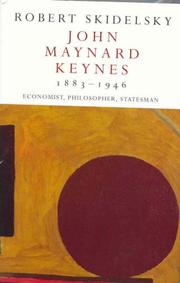
The definitive single-volume biography, condensed from Skidelsky's celebrated three-volume masterwork. It grounds every subsequent idea in Keynes's life, relationships, and historical moment, making the economics feel lived rather than abstract.
Keynes in His Own Words
IntermediateRead Keynes's own most important and accessible texts directly, building fluency with his prose and core arguments before tackling the General Theory.
▸ Study plan for this stage
Pace: 6–8 weeks, ~40–50 pages/day (with close reading and note-taking). Week 1–3: Economic Consequences of the Peace (approx. 300 pages); Week 4–8: Essays in Persuasion (approx. 250–300 pages), with 1–2 days per week for review and synthesis.
- The reparations problem and Keynes's critique of the Versailles Treaty's economic logic—how punitive peace terms create long-term instability rather than security
- Keynes's theory of effective demand and the role of confidence, expectations, and psychology in driving economic outcomes
- The distinction between classical economic orthodoxy and Keynes's heterodox approach to unemployment, inflation, and monetary policy
- Keynes's arguments for managed capitalism: the necessity of state intervention to stabilize the economy and prevent both deflation and excessive inflation
- The relationship between political decisions, economic consequences, and social stability—how economic policy shapes society
- Keynes's prose style and rhetorical method: how he uses historical narrative, moral argument, and economic analysis to persuade
- The gold standard and fixed exchange rates as constraints on economic policy—Keynes's evolving critique of monetary rigidity
- Keynes's vision of the 'economic problem' and the possibility of abundance: how productivity gains could reshape work and leisure
- What were Keynes's main criticisms of the Treaty of Versailles, and why did he believe the reparations imposed on Germany would destabilize Europe economically and politically?
- How does Keynes explain unemployment and economic slumps in Economic Consequences and Essays in Persuasion? What role do confidence and expectations play in his analysis?
- What is Keynes's critique of the gold standard and classical monetary orthodoxy? How does this critique connect to his broader argument for managed capitalism?
- In Essays in Persuasion, how does Keynes argue that economic policy should be guided by moral and political considerations, not just technical economic rules?
- What does Keynes mean by the 'economic problem,' and what does he envision as the long-term social and cultural consequences of solving it?
- How does Keynes's writing style and use of rhetoric serve his economic arguments? Identify specific examples from both texts where narrative or moral language strengthens his case.
- Create a detailed timeline of Keynes's main arguments in Economic Consequences: map his diagnosis of the problem (Versailles terms), his economic analysis (reparations burden, currency collapse), and his proposed solutions. Annotate with page numbers.
- Write a 2–3 page policy brief in Keynes's voice: argue either for or against a contemporary economic policy (e.g., austerity, quantitative easing, trade tariffs) using his logic from the texts. Ground your argument in specific passages.
- Identify and analyze 3–4 passages from Essays in Persuasion where Keynes uses moral or political language to make an economic point. Explain how the rhetoric reinforces the economic argument.
- Create a concept map showing the relationships between: confidence, effective demand, unemployment, monetary policy, and state intervention as Keynes presents them across both texts.
- Debate exercise: take the role of a classical economist (e.g., a contemporary of Keynes) and argue against one of his major claims from Economic Consequences or Essays in Persuasion. Then respond as Keynes, using his actual arguments from the texts.
- Comparative close reading: select one economic concept (e.g., inflation, the role of government, or currency stability) and trace how Keynes's treatment of it differs or evolves between Economic Consequences and Essays in Persuasion. Write a 2–3 page analysis.
Next up: This stage equips you with fluency in Keynes's core arguments, rhetorical style, and historical context, preparing you to engage with the theoretical apparatus and mathematical formalism of the General Theory with confidence that you understand the problems he is trying to solve.

Keynes's brilliant, prophetic critique of the Versailles Treaty — his most readable book and a perfect introduction to his moral seriousness, rhetorical power, and economic reasoning in action.
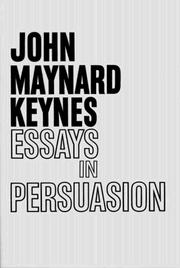
A curated collection of Keynes's own essays on money, policy, and the future. It reveals the full range of his thinking and introduces key concepts (liquidity preference, animal spirits) in plain language before the General Theory formalizes them.
The General Theory Itself
IntermediateWork through the General Theory with enough context and support to grasp its revolutionary argument: that market economies can settle into persistent unemployment and require active demand management.
▸ Study plan for this stage
Pace: 8–10 weeks, ~40–50 pages/day. Start with Hansen's Guide (1–2 weeks, ~30 pages/day) to build foundational understanding, then work through Keynes's General Theory (6–8 weeks, ~50 pages/day with careful re-reading of dense chapters).
- Effective demand as the determinant of output and employment: how aggregate demand, not supply, sets the level of economic activity
- The consumption function and marginal propensity to consume: how income determines consumption spending with a predictable relationship
- Investment volatility and the marginal efficiency of capital: why investment is unstable and driven by animal spirits and uncertain expectations
- The multiplier effect: how changes in autonomous spending ripple through the economy to produce larger changes in total income
- Liquidity preference and the demand for money: why people hold money for precaution and speculation, not just transactions
- The interest rate as a monetary phenomenon: how the interest rate is determined by money supply and liquidity preference, not savings and investment
- Involuntary unemployment in equilibrium: how market economies can settle at less-than-full employment without self-correcting
- The critique of classical economics: understanding Say's Law, the wage-price flexibility assumption, and why Keynes rejected them
- What is effective demand and why did Keynes argue it, rather than supply, determines the level of output and employment?
- Explain the consumption function: what is the marginal propensity to consume and why does it matter for economic stability?
- How does Keynes's theory of investment differ from classical theory, and what role do 'animal spirits' play?
- What is the multiplier, how does it work, and what does it imply about the impact of changes in autonomous spending?
- Why does Keynes argue that the interest rate is determined by monetary factors (money supply and liquidity preference) rather than by the supply and demand for loanable funds?
- How can an economy settle into persistent involuntary unemployment according to Keynes, and why don't wage and price cuts automatically restore full employment?
- After Hansen: Create a one-page diagram mapping the relationships between effective demand, consumption, investment, and employment—label the key variables and causal arrows.
- Work through a numerical example of the consumption function (e.g., assume MPC = 0.8, autonomous consumption = 100) and calculate how income changes with different levels of investment.
- Calculate multiplier effects: given an autonomous increase in investment, use the multiplier formula to predict the change in total income for different values of MPC.
- Read Keynes's Chapter 3 (The Principle of Effective Demand) and Chapter 8 (The Propensity to Consume) twice—annotate the second reading to identify his main argument and supporting evidence.
- Summarize Keynes's critique of classical economics in 2–3 pages: what assumptions did he reject and why? Use specific passages from the General Theory.
- Create a comparison table: classical vs. Keynesian theory on five key points (role of demand, interest rate determination, wage flexibility, unemployment, role of government). Support each row with a quote from Keynes.
Next up: This stage establishes Keynes's core theoretical framework and his case for persistent unemployment and demand management, preparing you to explore how his ideas were developed, critiqued, and applied in subsequent schools of thought and policy debates.
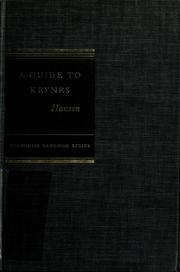
Written by the economist most responsible for spreading Keynesianism in America, this chapter-by-chapter companion to the General Theory is the classic reader's guide — read it alongside or just before Keynes's own text.
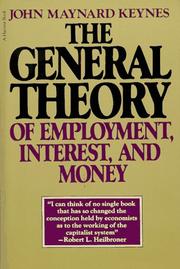
The central text of the entire curriculum. With biography, context, and Hansen's guide in hand, the reader is now equipped to engage Keynes's dense, revolutionary argument on its own terms.
Interpreting and Debating Keynes
ExpertUnderstand how economists have interpreted, formalized, extended, and challenged the General Theory — from the neoclassical synthesis to post-Keynesian and monetarist critiques.
▸ Study plan for this stage
Pace: 8–10 weeks, ~40–50 pages/day (with 2–3 reflection days per week)
- The neoclassical synthesis: how Samuelson, Hicks, and others formalized Keynes into IS-LM and reconciled him with classical economics
- Minsky's financial instability hypothesis and his reinterpretation of Keynes as fundamentally about uncertainty and fragile financial systems
- The post-Keynesian critique: rejection of equilibrium thinking and emphasis on historical time, path-dependency, and endogenous money
- Monetarist and new classical challenges to Keynesian theory: Friedman's permanent income hypothesis and rational expectations
- The distinction between Keynes's original vision and how his ideas were simplified, formalized, and sometimes distorted by later schools
- Keynes's evolving influence on policy debates: from the postwar consensus to stagflation and the rise of alternative schools
- How different interpreters (Lekachman, Minsky, post-Keynesians, monetarists) read the same texts differently based on their own frameworks
- What was the neoclassical synthesis, and how did it both preserve and transform Keynes's original ideas?
- How does Minsky's interpretation of Keynes differ from the mainstream Keynesian consensus, and what role does financial instability play in his reading?
- What are the core critiques of Keynesian economics offered by post-Keynesians and monetarists, and on what grounds do they challenge the orthodoxy?
- How did Keynes's ideas influence economic policy in the postwar period, and why did that consensus eventually break down?
- What does Lekachman argue about the historical trajectory of Keynesian thought, and how does Minsky's work either support or complicate that narrative?
- How would you explain the difference between Keynes's own theory and the 'Keynesianism' that dominated textbooks by the 1960s?
- Create a timeline mapping the major schools of Keynesian interpretation (neoclassical synthesis, post-Keynesian, monetarist, new classical) with key figures and their core disagreements—use Lekachman and Minsky as your primary sources.
- Write a 2–3 page comparative analysis: how would Minsky critique the IS-LM model that Lekachman describes as central to the neoclassical synthesis?
- Reconstruct Minsky's financial instability hypothesis in your own words, then identify which passages in both books best support or illustrate this framework.
- Debate exercise: prepare arguments for and against the proposition 'The neoclassical synthesis was a betrayal of Keynes's original insights'—use specific claims from both books.
- Create a 'reading map' showing how Lekachman and Minsky each interpret three key Keynesian concepts (e.g., uncertainty, effective demand, the role of investment). Where do they agree or diverge?
- Write a short policy brief (1–2 pages) applying either Lekachman's or Minsky's interpretation of Keynes to a contemporary economic problem, showing how your chosen interpretation leads to different policy conclusions than mainstream Keynesianism.
Next up: This stage equips you to recognize that Keynes is not a monolithic doctrine but a contested legacy—preparing you to engage critically with modern debates over which interpretation best captures his insights and how to apply Keynesian thinking to 21st-century challenges like financial crises, inequality, and secular stagnation.

A lucid history of how Keynesian economics was institutionalized in policy from the New Deal onward, showing the gap between Keynes's own ideas and what governments actually did in his name.
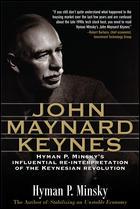
Minsky's full-length intellectual study argues that Keynes's deepest insight was about uncertainty and financial fragility. It bridges the General Theory and modern macroeconomics, and is the natural capstone to the economic strand of this curriculum.
Keynes's Legacy in the Modern World
ExpertEvaluate Keynes's enduring relevance through the lens of 21st-century crises, and understand how his ideas are still contested in economics and policy today.
▸ Study plan for this stage
Pace: 8–10 weeks, ~40–50 pages/day (accounting for denser theoretical passages and note-taking)
- Keynes's theory of uncertainty and its distinction from risk—why this matters for modern financial crises
- Animal spirits as the psychological and behavioral drivers of economic cycles—confidence, fear, and herd behavior
- The inadequacy of rational expectations and equilibrium models in explaining real-world economic behavior
- Keynes's critique of laissez-faire and the case for active government intervention—relevance to 2008 financial crisis and COVID-19
- The role of financial markets, speculation, and asset bubbles in destabilizing the real economy
- How Keynesian thinking was marginalized by neoclassical orthodoxy and why it resurged after 2008
- The limits of monetary policy and the necessity of fiscal policy in deep recessions
- Institutional and political obstacles to implementing Keynesian solutions in the 21st century
- How does Keynes distinguish between risk and uncertainty, and why is this distinction crucial for understanding modern financial crises?
- What does Akerlof mean by 'animal spirits,' and how do these psychological factors explain economic behavior that rational models cannot?
- Why did Keynesian economics fall out of favor in the late 20th century, and what evidence from recent crises has vindicated his core insights?
- How would Keynes have diagnosed and prescribed solutions for the 2008 financial crisis or the COVID-19 pandemic, based on Skidelsky's account?
- What are the key differences between Keynes's approach to managing demand and the neoclassical/monetarist alternatives, and which approach does the evidence support?
- How do financial markets and speculation destabilize the real economy according to Keynes and Akerlof, and what policy tools can address this?
- Create a detailed timeline mapping Keynes's major ideas to specific 21st-century crises (2008, COVID-19, inflation spike 2021–2023), noting which Keynesian prescriptions were adopted or ignored
- Write a comparative policy memo: how would a Keynesian economist and a neoclassical economist each respond to a hypothetical severe recession? Cite specific passages from both books
- Analyze a recent central bank or government policy response (e.g., quantitative easing, stimulus packages) through the lens of Keynes's critique of monetary policy and Akerlof's animal spirits framework
- Identify 3–4 historical or current examples of 'animal spirits' in action (e.g., dot-com bubble, housing bubble, meme stocks)—explain the psychological mechanisms using Akerlof's terminology
- Debate exercise: prepare arguments for and against the statement 'Keynes's ideas are outdated in a world of modern financial markets and technology,' using evidence from both books
- Write a 2,000-word essay: 'Why Did Keynesian Economics Fail to Prevent the 2008 Crisis, and What Would Keynes Have Done Differently?' Ground it in Skidelsky's biography and Akerlof's behavioral insights
Next up: This stage equips you to evaluate Keynes's legacy critically—understanding both his enduring insights and his blind spots—preparing you to engage with contemporary debates over whether modern heterodox economics (behavioral, institutional, post-Keynesian) has successfully extended or transcended his framework.
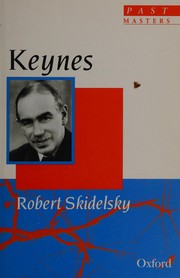
Written in the wake of the 2008 financial crisis, Skidelsky argues powerfully for Keynes's continuing relevance. It synthesizes biography, theory, and policy in a way only possible after completing the earlier stages.
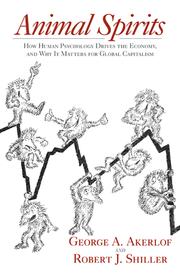
Akerlof and Shiller show how Keynes's intuitions about psychology, confidence, and irrational behavior are being vindicated by behavioral economics — a forward-looking conclusion to the curriculum that connects Keynes to contemporary thought.
Discussion
Keep reading
Paths that share books, cover the same subject, or open a related topic.