Understanding Frantz Fanon: Best Books to Read in Order
This curriculum moves from Fanon's own foundational texts outward into the colonial and racial contexts that shaped his thought, then into critical scholarship that deepens and challenges his legacy. Because the learner starts at an intermediate level, the path skips basic introductions and goes straight to primary sources before layering on historical context and advanced theory.
Fanon in His Own Words
IntermediateRead Fanon's two most essential texts in the order he wrote them, building his core vocabulary — the colonial subject, the racialized body, violence, and liberation — before encountering any secondary interpretation.
▸ Study plan for this stage
Pace: 6–8 weeks, ~40–50 pages/day. Begin with Silverman's introduction and analysis of *Black Skin, White Masks* (2–3 weeks), then move to Quinn's *Wretched of the Earth* (3–4 weeks), with 1 week for review and synthesis.
- The colonized subject as psychologically fractured by racism and colonial domination—the internalization of inferiority and the desire for whiteness
- The racialized body as the primary site of colonial oppression—how skin color becomes a marker of dehumanization and social death
- Violence as a liberatory and cathartic force for the colonized—violence as a means of reclaiming humanity and dignity
- National consciousness and decolonization as collective processes requiring the mobilization of the peasantry and working classes
- The distinction between national bourgeoisie and the masses in post-colonial societies—the danger of neo-colonialism
- Fanon's vocabulary of liberation: consciousness-raising, national culture, and the creation of a new humanity
- The role of intellectuals and the national intelligentsia in articulating and leading anti-colonial struggle
- What does Fanon mean by the 'inferiority complex' of the colonized, and how does Silverman explain its psychological roots in *Black Skin, White Masks*?
- How does Fanon conceptualize the relationship between the racialized body and colonial violence? What is the significance of the 'epidermalization' of inferiority?
- Why does Fanon argue that violence is necessary for decolonization, and what psychological and social functions does it serve according to *Wretched of the Earth*?
- What is the difference between national consciousness and nationalism in Fanon's analysis, and why does he warn against the national bourgeoisie?
- How does Fanon's understanding of national culture relate to the process of decolonization and the creation of a new national identity?
- What is Fanon's critique of the colonial intellectual, and what role does he envision for the national intelligentsia in the post-colonial state?
- Create a glossary of Fanon's key terms (colonized, colonizer, national consciousness, violence, liberation, inferiority complex) as they appear in both Silverman and Quinn, with page references and your own definitions.
- Write a 2–3 page analysis comparing how Silverman presents Fanon's psychological analysis in *Black Skin, White Masks* with how Quinn contextualizes the political dimensions in *Wretched of the Earth*.
- Annotate 3–4 key passages from each text (6–8 total) that best illustrate Fanon's core argument about the colonized subject, racialized body, and liberation. Explain why each passage is pivotal.
- Create a timeline or mind map showing how Fanon's ideas develop from *Black Skin, White Masks* (individual psychology) to *Wretched of the Earth* (collective political action).
- Write a short reflection (1–2 pages) on a historical or contemporary example of colonialism or decolonization, and apply Fanon's framework from both texts to analyze it.
- Engage in a Socratic dialogue with yourself or a study partner: pose one of the six questions above and write out a detailed answer using specific evidence from Silverman and Quinn.
Next up: This stage grounds you in Fanon's own vocabulary and core arguments—the psychological fracturing of the colonized, the liberatory potential of violence, and the vision of national consciousness—preparing you to engage critically with secondary interpretations, debates about Fanon's legacy, and applications of his thought to contemporary postcolonial theory and activism.

Fanon's first major work establishes his psychoanalytic and phenomenological framework for understanding how colonialism deforms Black identity and consciousness. Reading it first gives you the psychological foundation that The Wretched of the Earth later politicizes.

Fanon's masterpiece, written as Algeria fought for independence, synthesizes everything from the first book into a full theory of colonial violence, national liberation, and the pitfalls of postcolonial nationalism. It must be read after Black Skin, White Masks to feel its full force.
The Colonial World Fanon Diagnosed
IntermediateGround Fanon's abstractions in the concrete historical and literary reality of colonialism and race, building the contextual knowledge needed to evaluate his arguments critically.
▸ Study plan for this stage
Pace: 8–10 weeks, ~40–50 pages/day. Allocate roughly 2–3 weeks per book to allow for re-reading difficult passages and completing exercises between texts.
- Colonialism as a civilizational project: Césaire's critique of the myth of European 'civilization' and the dehumanizing logic that justifies colonial domination
- The cultural and psychological dimensions of colonialism: how colonial rule penetrates daily life, institutions, and the colonized subject's self-perception
- Racism as structural and ideological: the entanglement of racial hierarchies with economic exploitation and political control
- The role of intellectuals and discourse: how colonial narratives are constructed, naturalized, and challenged through language and representation
- National consciousness and liberation: the emergence of anti-colonial resistance and the psychological/cultural work required for decolonization
- Orientalism as a system of knowledge-power: how the West constructs the 'Orient' through representation to justify domination and maintain hegemony
- The specificity of colonial contexts: understanding how colonialism operates differently across geographies, histories, and cultures (Algeria, Africa, the Middle East)
- What does Césaire mean by 'civilization' in his critique of European colonialism, and how does he challenge the claim that colonialism was a civilizing mission?
- How does Fanon describe the penetration of colonialism into the everyday life and culture of the colonized in 'A Dying Colonialism'? Provide specific examples from the text.
- What is the relationship between racism and colonialism according to these three texts? How do they argue that racial hierarchies serve colonial interests?
- How does Said's concept of Orientalism relate to the colonial logic that Césaire and Fanon describe? What are the similarities and differences in how these authors understand colonial representation?
- What role do intellectuals, writers, and cultural producers play in either sustaining or challenging colonial domination across these texts?
- How do Césaire, Fanon, and Said each understand the process of decolonization or resistance? What psychological, cultural, and political dimensions do they emphasize?
- Close reading: Select one passage from each book (e.g., Césaire on 'savagery,' Fanon on the veil, Said on the harem) and write a 2–3 page analysis of how each author uses language and imagery to critique colonial representation.
- Comparative mapping: Create a chart comparing how Césaire, Fanon, and Said define colonialism, racism, and resistance. Identify overlaps, tensions, and context-specific differences.
- Historical contextualization: Research the Algerian War of Independence (1954–1962) and the Suez Crisis (1956). Write a 3–4 page reflection on how these historical events illuminate arguments in Fanon and Said.
- Textual annotation: As you read, mark moments where each author directly or implicitly responds to colonial discourse. Collect 10–15 quotes and explain why each is a key intervention.
- Debate preparation: Prepare arguments for and against the following claim: 'Colonialism is primarily an economic system' vs. 'Colonialism is primarily a cultural and psychological system.' Use evidence from all three texts.
- Creative synthesis: Write a short essay (4–5 pages) titled 'The Colonial World in Three Voices' that synthesizes Césaire's, Fanon's, and Said's diagnoses of colonialism into a coherent framework.
Next up: This stage grounds Fanon's theoretical abstractions in concrete historical and literary reality, equipping you with the contextual and comparative knowledge needed to engage critically with his major works on violence, national consciousness, and decolonization in the next stage.

Fanon's mentor and intellectual forefather, Césaire delivers a searing indictment of European colonialism that directly prefigures Fanon's own arguments. Reading it here shows where Fanon's ideas came from and sharpens the distinction between Négritude and Fanon's break from it.
Fanon's lesser-read but crucial account of the Algerian Revolution in progress — covering the veil, the family, and the radio — grounds his theory in lived revolutionary practice and rounds out your reading of his complete corpus.
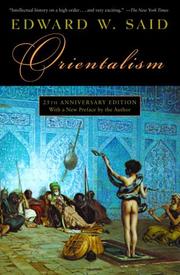
Said's landmark work on how the West constructs the colonized 'Other' as an object of knowledge and power is in deep dialogue with Fanon. Reading it here equips you with the discourse-analysis tools needed for the advanced stage.
Scholarship That Reads Fanon Deeply
ExpertEngage with the best critical and biographical scholarship on Fanon to understand the debates around his legacy — on violence, gender, humanism, and postcolonial theory — and to situate him in intellectual history.
▸ Study plan for this stage
Pace: 4–5 weeks, ~25–30 pages/day, with 2–3 days per week dedicated to reflection and note-taking
- The crisis of European humanism and its relationship to colonialism, racism, and existentialism
- Fanon's diagnosis of European man's self-deception and the psychological/philosophical roots of colonial domination
- The concept of 'national consciousness' as a response to European universalism and its limitations
- Fanon's engagement with existentialism, phenomenology, and Marxism as frameworks for understanding liberation
- The role of violence in Fanon's thought: not as mere brutality but as a psychological and political necessity for the colonized
- Gender, sexuality, and the patriarchal dimensions of both colonialism and anti-colonial nationalism
- Fanon's humanism and its distinction from European humanism: toward a new universalism rooted in the colonized
- Gordon's interpretive method: reading Fanon as a philosopher of freedom and existential liberation, not just a theorist of violence
- What does Gordon mean by 'the crisis of European man,' and how does he argue that Fanon diagnoses this crisis?
- How does Fanon critique European humanism, and what alternative humanism does he propose?
- What is the relationship between violence, consciousness, and liberation in Fanon's thought as Gordon interprets it?
- How does Gordon situate Fanon within existentialist and phenomenological traditions, and what are the implications for reading Fanon philosophically?
- What are the gender and sexual dimensions of colonialism and anti-colonial struggle that Gordon highlights through Fanon's work?
- How does Gordon's reading of Fanon challenge or complicate common interpretations of Fanon as a theorist of violence?
- Create a concept map tracing the genealogy of European humanism as Gordon presents it through Fanon—from Enlightenment universalism through colonialism to existentialism
- Write a 2–3 page analytical response to one chapter, focusing on how Gordon uses Fanon's philosophy to critique a specific aspect of European thought (e.g., bad faith, complicity, self-deception)
- Identify and annotate 5–7 key passages from Gordon's text where he makes his strongest argument about Fanon's philosophical contribution; write a paragraph explaining why each is pivotal
- Construct a dialogue between Gordon's interpretation and a common misconception about Fanon (e.g., 'Fanon glorifies violence'); use textual evidence from Gordon to defend the more nuanced reading
- Create a timeline or genealogy showing how Gordon positions Fanon in relation to other thinkers (Sartre, Hegel, Césaire, Memmi, etc.) and what Fanon learns from or contests with each
- Write a reflective essay (3–4 pages) on how Gordon's reading of Fanon as a philosopher of freedom and existential liberation changes or deepens your understanding of Fanon's relevance to contemporary politics and theory
Next up: This stage establishes Fanon as a rigorous philosophical thinker—not merely a polemicist—whose work addresses fundamental questions about human freedom, consciousness, and liberation; subsequent stages will build on this foundation by engaging with other critical voices that debate, extend, or challenge Gordon's interpretation across specific domains like gender, violence, and postcolonial theory.

Gordon, a leading Fanon scholar, places Fanon within existential philosophy and Africana thought, revealing dimensions of his work — especially his critique of European humanism — that are invisible without this philosophical lens.
Fanon's Living Legacy
ExpertSee how Fanon's ideas have been extended, contested, and applied to race, gender, and decolonization in the 21st century, completing the arc from historical theory to present-day praxis.
▸ Study plan for this stage
Pace: 6–8 weeks, ~25–30 pages/day (with 2–3 days per week for reflection and note-taking). *The Location of Culture* is dense theoretical prose; slower reading with active annotation is essential.
- Hybridity and third space: how colonial subjects create new cultural identities that are neither fully colonizer nor colonized, but something in-between
- Mimicry and ambivalence: the colonized subject's strategic imitation of the colonizer that simultaneously mocks and destabilizes colonial authority
- The colonial stereotype: how fixed racial and cultural representations function as a tool of colonial power and how they can be subverted
- Liminality and the in-between: the productive uncertainty and creative potential of existing in liminal spaces between cultures, languages, and identities
- Bhabha's critique and extension of Fanon: how Bhabha builds on Fanon's theory of violence and liberation while introducing psychoanalytic and poststructuralist nuance
- Cultural translation and incommensurability: how meaning shifts, gets lost, and gets reinvented when moving between colonial and postcolonial contexts
- Agency and resistance in the postcolonial subject: how colonized peoples exercise power not through grand revolutionary gestures alone, but through everyday cultural practices and ambivalent performances
- What does Bhabha mean by 'hybridity' and 'third space,' and how does this concept challenge Fanon's binary model of colonizer/colonized?
- How does Bhabha theorize mimicry as both a colonial strategy of assimilation and a form of postcolonial resistance?
- What role does ambivalence play in Bhabha's analysis of colonial discourse, and why is it important for understanding the instability of colonial power?
- How does Bhabha use psychoanalytic concepts (such as desire, disavowal, and the uncanny) to deepen postcolonial theory beyond Fanon?
- What is the relationship between cultural translation and the construction of postcolonial identity in Bhabha's framework?
- How does Bhabha's concept of liminality and in-betweenness apply to contemporary questions of diaspora, migration, and multicultural identity?
- Close-read one chapter of *The Location of Culture* (e.g., 'Signs Taken for Wonders' or 'Of Mimicry and Man') and create a glossary of Bhabha's key terms with your own definitions and examples.
- Map Bhabha's relationship to Fanon: create a two-column comparison chart showing where Bhabha agrees with, extends, or diverges from Fanon's theory of colonialism and liberation.
- Identify a contemporary example of hybridity or third space (e.g., a film, music genre, diaspora community, or literary work) and write a 2–3 page analysis using Bhabha's concepts.
- Analyze a historical or contemporary colonial stereotype (e.g., the 'noble savage,' the 'model minority,' the 'terrorist') and explain how Bhabha's theory of the stereotype as ambivalent and unstable helps you understand its power and potential fractures.
- Engage in a Socratic dialogue or debate: argue whether Bhabha's emphasis on ambivalence and hybridity represents a productive advance on Fanon's theory or a depoliticizing retreat from revolutionary commitment.
- Create a visual mind-map or diagram showing how Bhabha's concepts (mimicry, hybridity, ambivalence, liminality) interconnect and reinforce one another across the book.
Next up: By mastering Bhabha's poststructuralist and psychoanalytic reworking of postcolonial theory, you are now equipped to explore how contemporary theorists—particularly feminist, queer, and Global South scholars—have further complicated, critiqued, and applied these ideas to intersecting struggles around gender, sexuality, and decolonization in the 21st century.

Bhabha's poststructuralist rereading of Fanon — especially his concepts of mimicry and ambivalence — is one of the most influential and contested engagements with Fanon's legacy. Reading it last lets you evaluate Bhabha's departures from Fanon with full critical awareness.
Discussion
Keep reading
Paths that share books, cover the same subject, or open a related topic.