World War I: the war that made the modern world
This four-stage curriculum takes a beginner from a vivid, human-scale introduction to the war all the way through its grand strategic causes, the grinding reality of the trenches and home fronts, and finally the fateful peace settlement. Each stage builds the vocabulary, cast of characters, and conceptual framework needed to get the most out of the next, ending with the reader able to trace a clear line from the July Crisis of 1914 to the catastrophes of the 1930s and beyond.
First Foothold — A Human Introduction
BeginnerGain an immediate, emotionally grounded sense of what the war felt, looked, and sounded like, so that later analytical reading has a human anchor.
▸ Study plan for this stage
Pace: 6–8 weeks total. Week 1–4: "The Guns of August" (~30 pages/day, reading in named-chapter clusters — e.g., the opening funeral scene through the Schlieffen Plan chapters, then the mobilization chapters, then the opening campaigns). Week 5–8: "All Quiet on the Western Front and Related Readings" (~20–
- The gap between political/military expectations and battlefield reality — Tuchman shows leaders who believed the war would be 'over by Christmas'; Remarque shows what actually greeted soldiers in the trenches
- Mobilization as a machine with its own momentum — Tuchman's detailed account of how interlocking alliance timetables made the war nearly impossible to stop once begun
- The Schlieffen Plan and the logic of the opening campaigns — understanding why Germany swept through Belgium and how that single strategic gamble shaped the entire Western Front
- The psychological destruction of the soldier — Remarque's Paul Bäumer illustrates how sustained industrial warfare eroded identity, youth, and the ability to imagine a future
- The generational wound — both books, from opposite angles, portray a generation of young men consumed by a war designed by their elders
- Sensory and material reality of the trenches — Remarque's prose grounds abstract strategy in mud, rats, gas masks, wounds, and the sound of artillery
- The collapse of romantic nationalism — the contrast between the patriotic speeches Paul's teacher gives and the horror Paul actually experiences mirrors Tuchman's portrait of leaders drunk on mobilization fever
- Civilian vs. soldier perspective — Tuchman writes from the command level and home-front diplomacy; Remarque writes from the anonymous infantryman's foxhole, together giving a full vertical slice of the war
- After reading Tuchman's opening chapters, can you explain in plain language why the assassination of Franz Ferdinand triggered a continental war rather than a localized conflict — and what role the alliance timetables played?
- Tuchman describes the Schlieffen Plan as a gamble that nearly worked. What were its core assumptions, and at what point and for what reasons did it begin to fail?
- Remarque's Paul Bäumer enlists with enthusiasm but is transformed by the front. Trace two or three specific scenes from the novel that mark turning points in his psychological disintegration — what does each scene reveal about the war's human cost?
- Both books deal with the theme of lost illusions. How does Tuchman's portrayal of generals and statesmen clinging to 19th-century assumptions compare to Remarque's portrayal of young soldiers whose pre-war identities are destroyed?
- The 'Related Readings' included alongside Remarque broaden the picture. What perspectives or voices do they add that Paul Bäumer's first-person narrative cannot provide on its own?
- If you had to write one paragraph connecting a specific event in Tuchman (e.g., the fall of Liège, the retreat from Mons) to a specific passage in Remarque, what would the connection be and what does it illuminate about the war as a whole?
- Map the opening moves: After finishing the mobilization and campaign chapters of Tuchman, sketch a simple hand-drawn map of the Western Front showing Germany's sweep through Belgium, the French counter-offensives, and where the lines eventually stabilized. Annotate it with three decisions Tuchman identifies as pivotal — this turns abstract strategy into a visual anchor you can return to when readi
- Parallel timeline: Create a two-column timeline — one column for Tuchman's high-level political/military events (July Crisis, Belgian invasion, Battle of the Marne), the other left blank until you read Remarque, then fill it with the approximate 'war year' of each chapter. Seeing both columns together reveals the chasm between command decisions and trench experience.
- Sensory journal: While reading All Quiet, keep a running list of every sensory detail Remarque uses (sounds, smells, textures, tastes). At the end of the novel, review the list and write a short paragraph (150–200 words) describing a single day in the trenches using only details drawn from your list — no analysis, pure reconstruction.
- Voice contrast exercise: Choose one event that both books touch on (e.g., a major offensive, a gas attack, the experience of a bombardment). Write two short paragraphs — one in Tuchman's detached, analytical third-person voice, one in Remarque's intimate first-person voice — describing the same event. Reflect on what each voice reveals and conceals.
- Discussion or written reflection — 'Who is responsible?': After finishing both books, write a one-page response to this question: Tuchman and Remarque each implicitly assign responsibility for the war's catastrophe differently. Who or what does each author hold accountable, and do you find one argument more persuasive? Use at least one specific passage from each book as evidence.
- Pre-reading activation before each Remarque chapter: Before starting each new chapter of All Quiet, spend two minutes recalling a relevant Tuchman passage (a battle, a command decision, a geographic location). Note whether Remarque's ground-level scene changes how you understand Tuchman's account — jot one sentence after each chapter recording any shift in your thinking.
Next up: By grounding the war in human emotion and sensory experience through Tuchman's narrative sweep and Remarque's intimate voice, the reader now has a vivid personal anchor — a felt sense of what was at stake — that will make the more analytical, structural, or thematic arguments of subsequent stages feel urgent and meaningful rather than abstract.
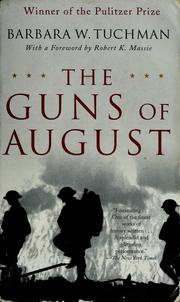
The perfect entry point: Tuchman writes history with the pace of a thriller, covering the opening weeks of the war with vivid characters and clear narrative. It establishes the key nations, commanders, and the shocking speed with which Europe collapsed into war.
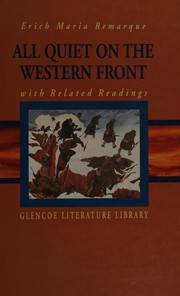
This classic novel, written by a veteran, puts the reader inside the trenches at ground level. Reading it immediately after Tuchman's grand opening transforms abstract strategy into lived human cost — the essential emotional counterweight.
Causes and Origins — Why Did Europe Stumble In?
BeginnerUnderstand the deep structural forces — alliances, imperial rivalry, nationalism, and miscalculation — that made a regional assassination spiral into a world war.
▸ Study plan for this stage
Pace: 8–10 weeks total. Weeks 1–5: "The Sleepwalkers" (~25–30 pages/day, reading in thematic chunks — Balkans background, the alliance systems, the July Crisis). Weeks 6–10: "A World Undone" (~20–25 pages/day, following Meyer's chronological narrative through mobilization and the opening campaigns). Reser
- The Alliance System and Its Rigidity: How the Triple Entente (Britain, France, Russia) and the Triple Alliance (Germany, Austria-Hungary, Italy) created a web of obligations that turned a bilateral crisis into a continental war, as Clark meticulously traces in 'The Sleepwalkers'.
- Nationalism and the Balkan Powder Keg: The role of Serbian nationalism, Pan-Slavism, and Austro-Hungarian anxieties about imperial dissolution — Clark's deep dive into Balkan politics shows why Sarajevo was not a random spark.
- Imperial Rivalry and the 'Weltpolitik' Mindset: Germany's ambition for a 'place in the sun,' Anglo-German naval competition, and colonial friction as background stressors that made European statesmen view every crisis as a zero-sum contest.
- The July Crisis as a Case Study in Miscalculation: Clark's central thesis — that leaders 'sleepwalked' into war through shared failures of imagination, poor communication, and worst-case-scenario thinking — rather than any single villain's master plan.
- Mobilization Timetables and the Loss of Political Control: Meyer explains how military railway schedules (especially the Schlieffen Plan) meant that once mobilization orders were issued, diplomats lost the ability to de-escalate; the machine took over.
- The Assassination of Franz Ferdinand as Trigger vs. Cause: Both books distinguish between the immediate trigger (Sarajevo, 28 June 1914) and the deep structural causes; understanding this distinction is foundational for all subsequent study.
- Domestic Political Pressures on Decision-Makers: Meyer's narrative portraits of Kaiser Wilhelm II, Tsar Nicholas II, and the French and British cabinets show how internal politics, prestige, and fear of appearing weak shaped fateful decisions.
- The Concept of 'Calculated Risk' Gone Wrong: How Austria-Hungary's blank-check guarantee from Germany and the subsequent ultimatum to Serbia were intended as limited coercive moves — and why that calculation catastrophically failed.
- According to Clark in 'The Sleepwalkers,' why is it historically insufficient to assign sole blame for WWI to Germany, and which shared failures among the great powers does he emphasize instead?
- How did the alliance system — as described across both books — transform the Austro-Serbian dispute of July 1914 into a war involving six major powers within six weeks?
- What does Meyer's account of the Schlieffen Plan reveal about the relationship between military planning and diplomatic flexibility, and why did mobilization effectively become irreversible once begun?
- Using evidence from 'The Sleepwalkers,' explain the role of Balkan nationalism and the 'Black Hand' in the assassination plot — and why Austria-Hungary's response was so disproportionate to what the Serbian government actually controlled.
- Both Clark and Meyer describe leaders who believed the war would be short. What assumptions underpinned this belief, and what does its near-universal acceptance tell us about the state of strategic thinking in 1914?
- How did imperial rivalry and the Anglo-German naval arms race, as background context in both books, contribute to a climate of mutual suspicion that made diplomatic resolution of the July Crisis so difficult?
- Alliance Web Diagram: After finishing 'The Sleepwalkers,' draw a hand-drawn map of Europe and annotate each major power with its alliance commitments, key fears, and one domestic political pressure its leaders faced. Use Clark's text to verify each annotation — this makes the abstract web concrete.
- July Crisis Day-by-Day Timeline: Using Meyer's clear chronological narrative in 'A World Undone,' construct a timeline from June 28 to August 4, 1914, marking each declaration of war, mobilization order, and failed diplomatic intervention. Annotate each entry with the decision-maker responsible and their stated rationale.
- Clark's 'Sleepwalker' Thesis — Agree or Disagree?: Write a one-page (300–400 word) response to this prompt: 'Were the leaders of 1914 victims of circumstance or architects of catastrophe?' Draw specific evidence from both books to support your position. This forces active synthesis rather than passive reading.
- Primary Source Pairing: Look up and read the actual text of Austria-Hungary's July Ultimatum to Serbia (1914) — it is freely available online. Annotate it using Clark's analysis of what each demand was designed to achieve. Note which demands Serbia accepted and which it refused, then check your reading against Clark's account.
- Character Study Cards: For each of five key decision-makers (Franz Joseph, Kaiser Wilhelm II, Tsar Nicholas II, Sir Edward Grey, and the Serbian PM Nikola Pašić), create a brief index card listing: their core strategic goal in July 1914, their greatest fear, and one decision they made that accelerated the crisis. Meyer's biographical sketches are especially useful here.
- Counterfactual Reflection Journal: After completing both books, write a short journal entry answering: 'At what single moment in the July Crisis could war most plausibly have been avoided, and what would have had to change?' Ground your answer in specific events described by Clark or Meyer. Counterfactual thinking sharpens causal reasoning.
Next up: By internalizing why the war started and how quickly political control collapsed into military momentum, the reader is primed to understand the next stage — the actual experience of industrial warfare on the Western and Eastern Fronts — where the consequences of those 1914 miscalculations became horrifyingly visible in the trenches.
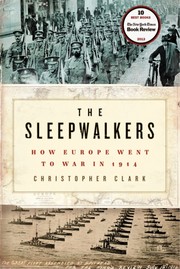
Clark's landmark work is the most authoritative modern account of how Europe's leaders blundered into war without fully intending it. Now that the reader has a narrative foundation from Tuchman, this book deepens the 'why' with rich diplomatic and political detail.
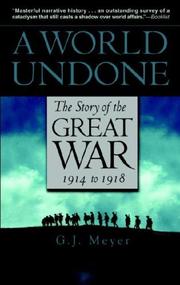
A comprehensive, highly readable single-volume history of the entire war that weaves military, political, and social threads together. It consolidates and expands everything learned so far, serving as a reliable reference backbone for the stages ahead.
The War Itself — Trenches, Tactics, and Home Fronts
IntermediateDevelop a detailed understanding of how the war was actually fought — the Western Front's attrition, the other fronts, and what the war meant for civilians and societies at home.
▸ Study plan for this stage
Pace: 10–12 weeks total, reading roughly 25–35 pages per day. Suggested breakdown: Storm of Steel (3 weeks, ~280 pages) → The Great War and Modern Memory (4 weeks, ~350 pages) → To End All Wars (3–4 weeks, ~400 pages). Allow buffer days after each book for reflection and exercises.
- The soldier's subjective experience of industrial warfare: how Jünger's aestheticization of violence and danger in Storm of Steel contrasts sharply with the anti-war literary tradition, forcing readers to grapple with multiple 'truths' of combat
- Attrition and the logic of the Western Front: why the stalemate developed, what trench life actually looked like day-to-day, and how tactics (raids, artillery barrages, 'going over the top') reflected the brutal arithmetic of attritional war
- The Great War as a rupture in Western consciousness: Fussell's central argument that the war irrevocably shaped modern irony, literary sensibility, and the way English-speaking culture understands war and loss
- Literary and cultural memory vs. lived experience: how soldiers encoded trauma through euphemism, pastoral imagery, and irony (Fussell), versus Jünger's almost mythic, heroic framing — and what each reveals about the limits of representation
- The Home Front as a second battlefield: Hochschild's account of how governments mobilized civilian populations, managed dissent, and sold the war through propaganda, and how ordinary people experienced rationing, loss, and social upheaval
- Dissent, conscience, and resistance: Hochschild's dual narrative of pro-war and anti-war figures (Bertrand Russell, John French, Sylvia Pankhurst, etc.) illuminating the moral fault lines within societies at war
- Class, gender, and empire in wartime: how the war accelerated or exposed existing social tensions — the role of working-class soldiers, women's labor and suffrage movements, and colonial troops whose contributions were largely erased
- The gap between official narrative and reality: across all three books, the persistent tension between what governments, generals, and propagandists claimed and what soldiers and dissenters actually witnessed
- After reading Storm of Steel, how does Jünger's attitude toward combat differ from the 'disillusionment' narrative Fussell describes in The Great War and Modern Memory — and what does that difference tell us about the diversity of soldier experience?
- What does Fussell mean when he argues that the Great War created 'modern irony,' and can you point to specific literary or linguistic examples from his book that illustrate this shift?
- How does Hochschild use paired biographical portraits (pro-war vs. anti-war figures) to argue that the war was not inevitable or universally embraced — and how does this challenge any single, monolithic account of 'why the war was fought'?
- In what ways do all three books reveal a persistent gap between the experience of those in the trenches and the understanding of those directing the war from the rear or the home front?
- How did the war transform civilian life — economically, socially, and psychologically — according to Hochschild, and in what ways do the soldier accounts in Jünger and Fussell reflect or contradict those home-front realities?
- By the end of all three books, what is your own assessment: was the Western Front's attrition the result of strategic incompetence, the inherent logic of industrial warfare, or something else — and which book most shaped your view?
- Comparative voice journal: After finishing Storm of Steel and before starting Fussell, write a 1–2 page reflection in Jünger's voice describing a single day in the trenches, then rewrite the same day in the ironic, disillusioned register Fussell identifies. Compare what each version reveals and conceals about the experience of war.
- Annotated timeline: As you read all three books, build a running timeline of major Western Front events (Somme, Passchendaele, etc.) and annotate each event with: (a) how Jünger experienced or framed it, (b) how Fussell's literary analysis contextualizes it, and (c) what was happening on the home front according to Hochschild. This forces you to triangulate across all three perspectives.
- Propaganda vs. dissent analysis: Using Hochschild's accounts of wartime propaganda and anti-war activism, find one real historical propaganda poster or speech from WWI (freely available online) and one anti-war text from the period. Write a short analysis comparing the rhetorical strategies of each, grounding your argument in Hochschild's framework.
- Close-reading exercise on euphemism and language: Fussell dedicates significant attention to the language soldiers used to cope with horror. Collect 8–10 examples of euphemism, irony, or coded language from Storm of Steel and The Great War and Modern Memory. For each, write one sentence explaining what the language is doing psychologically or politically.
- Moral debate: Hochschild presents figures who supported and opposed the war with equal biographical depth. Choose one pro-war and one anti-war figure from To End All Wars and write a structured 1-page dialogue between them set in 1916, drawing only on evidence and arguments Hochschild provides. This tests how well you've internalized the book's moral complexity.
- Synthesis essay: After completing all three books, write a 600–800 word essay answering: 'Who owns the memory of the Great War — the soldiers who fought it, the writers who interpreted it, or the societies that sent them?' Use specific evidence from all three books to support your argument.
Next up: By grounding the war's human and social reality in soldier memoir, literary criticism, and home-front history, this stage equips the reader to move from 'what happened and how it felt' to the larger questions of causation, consequence, and historical legacy that define the next stage of study.
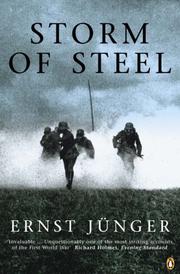
Jünger's memoir offers a soldier's-eye view from the German side, written without Remarque's anti-war sentiment — together they give the reader two very different but equally authentic voices from the same trenches.

Fussell's celebrated cultural study examines how British soldiers and writers made sense of the war through literature and irony. It elevates the reader's understanding from events to meaning, showing how the war permanently reshaped Western consciousness.
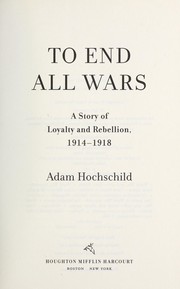
Hochschild focuses on the British home front and the anti-war movement, bringing in voices — women, conscientious objectors, dissenters — that purely military histories omit. It rounds out the picture of a society under total war.
The Peace and the Long Shadow
ExpertCritically evaluate the Paris Peace Conference and the Treaty of Versailles, and understand how the settlement's failures planted the seeds of the Second World War and shaped the modern world.
▸ Study plan for this stage
Pace: 8–10 weeks total. Weeks 1–6: "Paris 1919" (~30–35 pages/day, reading thematically by region/chapter clusters rather than straight through — e.g., Week 1: the Big Four and conference mechanics; Weeks 2–3: European settlements; Weeks 4–5: the Middle East, Asia, and colonial claims; Week 6: synthesis a
- The 'Big Four' and the dynamics of personal diplomacy: how Wilson, Lloyd George, Clemenceau, and Orlando's individual personalities, domestic pressures, and conflicting war aims shaped every major decision at Paris (MacMillan)
- Wilsonian idealism vs. realpolitik: the tension between Wilson's Fourteen Points — especially self-determination — and the practical, punitive, and imperial interests of Britain, France, and Italy (MacMillan)
- The principle of national self-determination and its selective, contradictory application: why it was granted to some peoples (Poles, Czechs) and denied to others (Arabs, Koreans, African colonial subjects) (MacMillan)
- The creation of new states and redrawn borders: the birth of Yugoslavia, Czechoslovakia, the mandate system in the Middle East, and the ethnic minorities trapped inside 'wrong' states — the structural instability built into the map (MacMillan)
- Keynes's portrait of the Big Three leaders as tragic or flawed figures — his devastating character sketches as a form of political argument (Keynes)
- The reparations settlement: Keynes's technical demolition of the capacity of Germany to pay, the distinction between 'war guilt' (Article 231) and economic reality, and his prediction of European economic collapse (Keynes)
- The interconnection of war debts, reparations, and European financial stability: Keynes's argument that the Allies' insistence on payment would strangle the continental economy that all of them depended on (Keynes)
- The 'Carthaginian Peace' thesis: Keynes's central claim that the Treaty was not merely harsh but self-defeating — and the historiographical debate MacMillan implicitly engages with about whether Keynes was right or overstated his case
- According to MacMillan, what were the three or four structural contradictions built into the Paris Peace Conference before it even began — in terms of competing promises, secret treaties, and irreconcilable national demands?
- How does MacMillan's account of the Middle East settlements (the Sykes-Picot legacy, the Balfour Declaration, the Arab claims) explain the origins of conflicts that persist into the twenty-first century?
- Keynes argues that Germany could not, in economic reality, pay the reparations demanded. What is the core of his argument — what are the mechanisms by which he claims payment was structurally impossible — and where do later historians (as reflected in MacMillan's more nuanced view) push back on him?
- Compare Wilson as portrayed by MacMillan (a political actor navigating real constraints) with Wilson as portrayed by Keynes (a tragic, outmaneuvered idealist). Which portrait do you find more persuasive, and why?
- What is the 'war guilt clause' (Article 231), and why does Keynes treat it as both morally unjust and economically catastrophic? How does MacMillan's account complicate or support that judgment?
- In what specific ways did the territorial, economic, and psychological terms of the Versailles settlement create the conditions — political grievances, economic instability, wounded nationalism — that Hitler would later exploit?
- Annotated map exercise: Using MacMillan's territorial chapters as your guide, draw or annotate a blank map of Europe and the Middle East as it looked in 1914, then redraw it as Versailles left it in 1919. Mark every border change, new state, mandate territory, and ethnic minority pocket. Write a one-paragraph caption for each major region explaining the grievance or instability MacMillan identifie
- Character-sketch comparison: After finishing both books, write a 500-word dual portrait of Woodrow Wilson — one paragraph channeling MacMillan's nuanced, archivally grounded view, one paragraph channeling Keynes's rhetorical, polemical portrait. Then write a third paragraph assessing which is more historically useful and why.
- Reparations stress-test: Read Keynes's Chapter 5 carefully, then research (using the books' own arguments) the actual reparations figures set at Versailles. Build a simple table: (a) what Keynes said Germany could pay, (b) what the Treaty demanded, (c) what Germany actually paid before the Dawes Plan. Use this to evaluate whether Keynes's prophecy was vindicated or exaggerated.
- Counterfactual essay: Write a 750-word essay answering: 'If Wilson's Fourteen Points had been implemented in full, would the peace have been more durable?' Draw exclusively on evidence and arguments from MacMillan and Keynes — no outside sources. This forces you to use the texts as primary analytical tools.
- Debate preparation: Divide the central Keynes thesis ('The Treaty of Versailles made the Second World War inevitable') into its strongest and weakest points. Write a structured rebuttal using MacMillan's evidence — her account of German agency, Allied moderation in some areas, and the role of the Great Depression — to challenge Keynes's determinism.
- Reading journal — 'Then and Now' column: As you read MacMillan's chapters on the Middle East, the Balkans, and colonial claims, keep a two-column journal: left column records what the peacemakers decided and why; right column notes a present-day consequence or conflict that traces a direct line to that decision. Aim for at least eight entries.
Next up: By understanding how the Versailles settlement's territorial instabilities, economic punishments, and wounded nationalisms created the precise political kindling that demagogues would ignite, the reader is now equipped to study the rise of fascism, the collapse of Weimar democracy, and the road to the Second World War with a clear causal framework already in place.
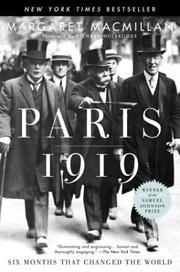
MacMillan's masterful account of the Peace Conference is the definitive popular history of the subject — rich in personality, politics, and consequence. It shows exactly how the map of the modern world was drawn and where the fault lines were buried.

Written in 1919 by the British Treasury's representative at the Conference, this short, brilliant polemic predicted that the punitive peace would destabilize Europe. Reading it last gives the curriculum a prophetic capstone and connects WWI directly to the Great Depression and WWII.