John Maynard Keynes reshaped how governments think about recessions, and his work rewards a reading order because his revolutionary theory grew out of concrete crises. His warning about the Versailles peace, his persuasive essays, his difficult masterwork on employment and money: reading the accessible material and the life before the theory makes the theory itself far easier to grasp.
The path below starts with biography and the readable essays, builds to the central text, then follows the interpreters and critics. In sequence, Keynes stops being a slogan and becomes an argument.
The life and the accessible Keynes
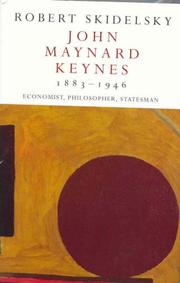
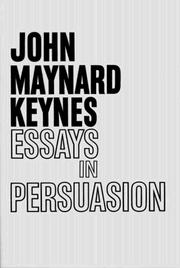
Begin with John Maynard Keynes 1883-1946 by Robert Skidelsky, the acclaimed one-volume distillation of his monumental biography. The World After Keynes surveys his impact. Then read Keynes himself at his most readable: The Economic Consequences of the Peace, his prophetic 1919 attack on the Versailles terms, and Essays in persuasion, where his prose sparkles.
A guide to Keynes by Alvin Hansen is a classic primer that prepares you for the hard book to come.
The theory and its afterlife
Now the centerpiece: The general theory of employment, interest and money, the difficult, epoch-making work that founded macroeconomics. The age of Keynes by Robert Lekachman narrates its triumph in policy.
To see the debates, Keynes and the Classics and John Maynard Keynes, both by Hyman Minsky, offer a searching reinterpretation, while Keynes by Robert Skidelsky gives a shorter portrait. Close with Animal spirits by George Akerlof and Robert Shiller, which revives Keynes's insights about psychology for a modern audience. Follow the full path to read them in order.
Follow the full reading path →
Ready to learn something deeply?
Build a reading path — free