Understanding Friedrich Hayek: Best Books to Read in Order
This curriculum builds a deep, structured understanding of Friedrich Hayek's thought — from his most accessible and famous works, through his core economic and philosophical arguments, to his grand political theory and its critics. Because the learner starts at an intermediate level, we skip introductory primers and go straight to Hayek's own landmark texts, then layer in essential context, intellectual history, and critical engagement to produce a genuinely rounded mastery.
Hayek's Famous Front Door
IntermediateGrasp Hayek's most celebrated and accessible argument — that central planning inevitably leads to political tyranny — and understand the historical moment that produced it.
▸ Study plan for this stage
Pace: 6–8 weeks, ~40–50 pages/day (approximately 2 weeks per book with time for reflection and exercises)
- The knowledge problem: why central planners cannot possess the dispersed knowledge needed to coordinate complex economies efficiently
- The road to serfdom thesis: how well-intentioned socialist planning gradually concentrates power and erodes individual liberty
- The rule of law vs. arbitrary power: how legal certainty protects freedom while discretionary planning enables tyranny
- Hayek's historical context: the 1940s wartime economy, the appeal of planning, and the intellectual currents that shaped his argument
- The distinction between competition and monopoly in political and economic systems: why decentralized markets preserve freedom better than centralized control
- Unintended consequences: how interventionist policies, even when well-motivated, produce outcomes their architects did not foresee
- Hayek's intellectual biography: his evolution from Austrian economics to political philosophy and his engagement with contemporary debates
- What is Hayek's central argument in 'The Road to Serfdom,' and what historical moment prompted him to write it?
- How does Hayek's 'knowledge problem' challenge the feasibility of central economic planning?
- What is the distinction Hayek draws between the rule of law and arbitrary discretionary power, and why does he see planning as inherently arbitrary?
- According to Hayek, what is the causal chain that connects economic planning to political tyranny?
- How does Hayek's argument in 'The Road to Serfdom' reflect his broader intellectual development as presented in Caldwell's biography?
- What are the key criticisms or limitations of Hayek's argument, and how did Hayek respond to them?
- Create a detailed outline of 'The Road to Serfdom' chapter by chapter, identifying the main argument of each chapter and how it contributes to the overall thesis
- Write a 2–3 page summary of the knowledge problem in your own words, with a concrete modern example (e.g., a government agency attempting to centrally manage an industry) that illustrates why dispersed knowledge matters
- Construct a timeline of Hayek's life and intellectual development using Caldwell's biography, marking key events, publications, and shifts in his thinking that led to 'The Road to Serfdom'
- Debate exercise: argue both sides of whether Hayek's road to serfdom thesis applies to a specific 20th-century case (e.g., the New Deal, postwar Britain, or Soviet planning)
- Identify three contemporary policy proposals and analyze each using Hayek's framework: does it concentrate discretionary power? Does it rely on knowledge that planners cannot possess? What unintended consequences might it produce?
- Compare Hayek's warnings about planning in 'The Road to Serfdom' with an actual historical example of centralized planning (e.g., Soviet agriculture or wartime rationing) to test whether his predictions held
Next up: This stage establishes Hayek's most famous and accessible thesis—that planning leads to tyranny—providing the foundation for deeper engagement with his economic theory, his critique of constructivism, and his alternative vision of spontaneous order in subsequent stages.

The essential starting point: Hayek's landmark 1944 warning against collectivism and central planning, written for a general audience. Reading it first establishes the core thesis and vocabulary the rest of the curriculum unpacks and deepens.

The definitive intellectual biography, placing The Road to Serfdom in the full arc of Hayek's life and the debates of his era. Reading it immediately after grounds the ideas in their historical and personal context before diving into harder texts.
The Economic Core — Knowledge, Prices, and Markets
IntermediateUnderstand Hayek's foundational economic arguments: why dispersed knowledge makes central planning impossible, and how the price system coordinates a free society.
▸ Study plan for this stage
Pace: 8–10 weeks, ~25–30 pages/day. *Individualism and Economic Order* (4–5 weeks, ~250 pages) followed by *Prices and Production* (4–5 weeks, ~200 pages). Allocate 1–2 weeks for review and integration exercises.
- The dispersed knowledge problem: why no central authority can possess or process the totality of knowledge required for efficient economic coordination
- The price system as a discovery mechanism: how prices aggregate dispersed information and guide individual decisions without explicit communication
- The fatal conceit of central planning: the intellectual hubris of believing a planned economy can replicate or improve upon market outcomes
- The relationship between knowledge, time, and uncertainty: how economic actors make decisions with incomplete information across different time horizons
- The structure of production and capital theory: how the price system coordinates production across multiple stages and time periods
- Spontaneous order: how complex economic coordination emerges from individual actions without centralized direction
- The division of knowledge and the role of the entrepreneur: how dispersed knowledge is mobilized through market competition and profit incentives
- Monetary expansion and distortion: how artificial credit expansion disrupts the price signals that coordinate production decisions
- Why does Hayek argue that dispersed knowledge makes centralized economic planning fundamentally impossible, and what does he mean by 'knowledge of particular circumstances of time and place'?
- How does the price system function as a communication and coordination mechanism, and what information does it convey to economic actors?
- What is the relationship between the structure of production, capital theory, and the price system in Hayek's framework?
- How do monetary expansion and artificial credit creation distort the price signals that guide production decisions, and what are the consequences?
- What does Hayek mean by 'spontaneous order,' and how does it emerge from individual actions pursuing their own interests?
- How does Hayek's critique of central planning in *Individualism and Economic Order* connect to his analysis of the business cycle in *Prices and Production*?
- Map the knowledge problem: Create a detailed diagram showing how knowledge is dispersed across economic actors (producers, consumers, entrepreneurs, workers) and trace how the price system communicates this knowledge without central coordination.
- Price signal analysis: Select 3–4 real-world price movements (e.g., oil prices, semiconductor shortages, housing markets) and write a 2–3 page analysis of how prices coordinated responses across the economy and what information they conveyed.
- Critique a planning proposal: Find a contemporary policy proposal for centralized economic management (industrial policy, price controls, sectoral planning) and write a 3–4 page critique using Hayek's dispersed knowledge argument from *Individualism and Economic Order*.
- Structure of production exercise: Draw the multi-stage structure of production for a specific good (e.g., automobiles, smartphones, bread) showing capital goods, intermediate stages, and final consumption, then analyze how price signals coordinate decisions across these stages.
- Monetary distortion case study: Using *Prices and Production*, analyze a historical episode of credit expansion (e.g., 2000s housing bubble, 1920s boom) and explain how artificial monetary expansion distorted the price system and misallocated capital.
- Spontaneous order observation: Observe a complex market system in action (financial markets, supply chains, labor markets) and write a 2–3 page reflection on how coordination occurs without central direction, grounding your analysis in Hayek's concept of spontaneous order.
Next up: This stage establishes Hayek's core economic arguments about knowledge and coordination, preparing you to examine how these principles apply to broader questions of liberty, social order, and the limits of human reason in the next stage.
This essay collection contains 'The Use of Knowledge in Society' — arguably Hayek's single most important piece of economic writing. Starting here gives the reader the intellectual engine behind all his later work.

Hayek's technical contribution to capital theory and business cycles, showing the economic mechanism behind his critique of monetary intervention. Reading it after the knowledge essays reveals how micro and macro arguments connect.
The Philosophy of Freedom
IntermediateEngage with Hayek's mature, systematic political philosophy — the nature of liberty, the rule of law, and the spontaneous order of a free society.
▸ Study plan for this stage
Pace: 12–14 weeks, ~40–50 pages/day (accounting for dense philosophical prose and re-reading key passages). *The Constitution of Liberty* (6–7 weeks, ~500 pages), then *Law, Legislation and Liberty* (6–7 weeks, ~480 pages combined volumes).
- Liberty as the absence of coercion and the condition for human flourishing; distinguishing negative liberty from positive liberty and collective goals
- The rule of law as a constraint on arbitrary power: formal equality before law, predictability, and the limits of legislation
- Spontaneous order: how complex social, economic, and legal systems emerge from decentralized individual actions without central design
- The knowledge problem: why centralized planning cannot replicate the distributed knowledge embedded in market prices and evolved institutions
- The evolution of law and custom: how legal systems develop organically through common law tradition rather than rational construction
- The dangers of constructivism: the false belief that social institutions can be deliberately designed from scratch, leading to unintended consequences
- Property rights and the price system as mechanisms for coordinating behavior and preserving liberty
- The distinction between law (general, abstract, prospective rules) and legislation (specific commands), and why conflating them threatens freedom
- What does Hayek mean by liberty, and how does he distinguish it from other concepts like equality or security? Why does he argue that liberty is a precondition for human dignity?
- Explain the rule of law according to Hayek. What are its essential characteristics, and why does he believe it is incompatible with discretionary government power?
- How does Hayek's concept of spontaneous order challenge the idea that complex societies require central planning? Provide examples from the books.
- What is the knowledge problem, and how does it relate to Hayek's critique of socialism and centralized economic planning?
- How do evolved institutions and common law differ from rationally constructed legislation? Why does Hayek prefer the former?
- What dangers does Hayek identify with constructivism in social and political thought? How does this relate to modern policy-making?
- Create a detailed outline of Hayek's definition of liberty (*Constitution of Liberty*, chapters 1–3). Compare it to one alternative definition (e.g., from Berlin, Rawls, or a contemporary source). Write a 500-word reflection on the differences.
- Map out the essential features of the rule of law from *Law, Legislation and Liberty* (Vol. 1). For each feature, find a real-world example where it is violated and analyze the consequences for freedom.
- Select one spontaneous order system discussed in the books (e.g., the market, language, or common law). Write a 750-word essay explaining how it emerged without central design and what would be lost if someone tried to redesign it rationally.
- Identify a modern policy proposal or government intervention. Analyze it through Hayek's knowledge problem lens: What distributed knowledge might central planners lack? What unintended consequences might result?
- Close-read one key passage from each book (e.g., *Constitution of Liberty* on coercion; *Law, Legislation and Liberty* on the distinction between law and legislation). Annotate it thoroughly and write a 400-word exegesis.
- Debate exercise: Argue both sides—Hayek's position on a specific issue (e.g., welfare, regulation, or judicial discretion) versus a contemporary critic. Ground both positions in textual evidence from the books.
Next up: This stage establishes Hayek's foundational political philosophy—liberty, rule of law, and spontaneous order—preparing you to engage with his critique of specific ideologies and his vision for institutional design in the next stage.
Hayek's most comprehensive statement of classical liberal political philosophy, covering liberty, law, and the limits of government. It is the natural bridge from his economic essays to his grand theoretical trilogy.
Hayek's three-volume magnum opus on spontaneous order, the distinction between rules and commands, and the mirage of social justice. Reading it after The Constitution of Liberty allows the reader to follow the full development of his mature thought.
Intellectual Context — Allies and Ancestors
ExpertSituate Hayek within the broader tradition of classical liberalism and the Austrian School, understanding the shoulders he stood on.
▸ Study plan for this stage
Pace: 8–10 weeks, ~40–50 pages/day (with deeper engagement on foundational chapters). Allocate 5–6 weeks to "Human Action" (given its density and length), then 2–3 weeks to "On Liberty" for comparative analysis and synthesis.
- Praxeology and human action as the foundation of economic analysis (Mises): understanding that all human behavior is purposeful action driven by subjective value and time preference
- The critique of positivism and scientism in social science: how Mises and Mill reject mechanical determinism in favor of understanding individual motivation and choice
- Individual liberty as both a moral principle and a practical necessity for human flourishing: Mill's harm principle and Mises's argument that freedom enables knowledge discovery
- The role of entrepreneurship, profit-and-loss, and market signals in coordinating dispersed knowledge: Mises's insight that prices convey information that no central authority can replicate
- The Austrian School's rejection of equilibrium thinking and embrace of dynamic, disequilibrium processes driven by human creativity and uncertainty
- Mill's defense of intellectual freedom and experimentation as essential to progress: the connection between liberty of thought and the discovery of truth
- The relationship between individual rights and social order: how both thinkers ground stability not in coercion but in voluntary cooperation and mutual benefit
- The limits of government and the dangers of paternalism: both authors' skepticism toward state intervention in economic and intellectual life
- What is praxeology according to Mises, and how does it differ from the positivist approach to economics? How does this distinction relate to Mill's defense of human individuality?
- Explain the relationship between subjective value, time preference, and human action in Mises's framework. How does this underpin his critique of socialism and central planning?
- How does Mill's harm principle function as a boundary for legitimate state action? Where might Mises and Mill agree or diverge on what constitutes harmful interference?
- What role do prices and profit-and-loss play in Mises's economic theory, and how does this connect to Mill's argument about the value of individual liberty in discovering truth?
- How do both Mises and Mill challenge the idea that society can be engineered or perfected through top-down design? What do they propose instead?
- Identify three concrete examples from either text where individual freedom produces better outcomes than centralized control. What principles explain these outcomes?
- Close reading exercise: Select one chapter from Mises on praxeology (e.g., Part One) and one section from Mill on liberty of thought. Write a 500-word comparative analysis of how each author grounds their argument in human nature and individual agency.
- Concept mapping: Create a visual diagram showing how praxeology, subjective value, entrepreneurship, and market signals interconnect in Mises's system. Then add Mill's principles of liberty and individuality to show where they reinforce or extend Mises's logic.
- Application exercise: Take a contemporary policy debate (e.g., price controls, occupational licensing, or censorship). Analyze it using Mises's economic reasoning and Mill's liberty framework. Write a 750-word policy brief explaining the likely unintended consequences from both perspectives.
- Socratic dialogue: Write a dialogue between Mises and Mill discussing a specific issue (e.g., education, innovation, or poverty). Use direct quotes and ideas from both texts to show how they would reason together and where tensions might arise.
- Historical tracing: Identify 3–4 key ideas in Mises that he explicitly traces back to earlier thinkers (e.g., Böhm-Bawerk, Cantillon). Then identify how Mill's arguments about liberty and individuality anticipate or complement Mises's later work. Write a 600-word essay on intellectual lineage.
- Critique exercise: Select one major argument from each book (e.g., Mises on socialism, Mill on custom and tradition). Write a 500-word response from a critic's perspective, then write a 500-word defense using the authors' own logic and evidence.
Next up: By mastering the praxeological foundations of human action (Mises) and the philosophical case for individual liberty (Mill), you are now equipped to understand Hayek's synthesis: how he uses both the Austrian economic method and classical liberal principles to diagnose the fatal conceit of central planning and articulate his vision of spontaneous order.
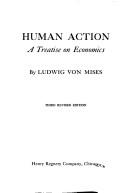
The magnum opus of Hayek's mentor and the Austrian School's foundational text. Reading it here shows where Hayek agreed with, and crucially diverged from, Mises on methodology and the nature of economic knowledge.

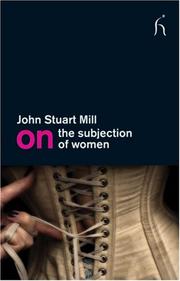
The 19th-century classical liberal touchstone that Hayek explicitly engaged with and built upon. Reading it at this stage lets the learner trace the intellectual lineage of Hayek's arguments about individual freedom and the limits of state power.
Critical Engagement and Legacy
ExpertStress-test Hayek's ideas through serious scholarly criticism and assess his lasting influence on economics, politics, and policy.
▸ Study plan for this stage
Pace: 4–5 weeks, ~40–50 pages/day (with intensive note-taking and re-reading of dense sections)
- Scientism as a methodological error: Hayek's critique of applying natural science methods to social phenomena
- The limits of rational constructivism: why top-down social engineering fails to account for complex, evolved institutions
- Tacit knowledge and spontaneous order: how knowledge dispersed throughout society cannot be centralized or fully articulated
- The role of tradition and evolutionary selection in institutional development versus deliberate design
- Hayek's defense of classical liberalism against scientistic socialism and central planning
- The relationship between epistemology and political economy: how theories of knowledge justify or undermine different policy regimes
- Hayek's historical narrative: the intellectual genealogy of scientism from Comte through Marx to modern technocrats
- Implications for modern policy debates: technocratic overreach, evidence-based policymaking, and the hubris of expert systems
- What does Hayek mean by 'scientism' and why does he argue it is particularly dangerous when applied to social sciences?
- How does Hayek distinguish between the methods appropriate to natural sciences versus the social sciences, and what does he propose instead?
- What is the relationship between tacit knowledge, dispersed information, and the case for decentralized decision-making in Hayek's framework?
- How does Hayek use evolutionary and historical arguments to defend institutions like markets and common law against rationalist criticism?
- What are the main weaknesses or limitations in Hayek's critique of scientism that modern critics have identified?
- How does The Counter-Revolution of Science support or complicate Hayek's broader political and economic philosophy as developed in his other works?
- Map Hayek's intellectual genealogy: create a timeline showing how scientism evolved from Comte through the thinkers Hayek discusses, noting which ideas he endorses and which he rejects
- Analyze a contemporary policy debate (e.g., central bank policy, pandemic response, AI regulation) through Hayek's scientism framework—identify where rationalist overconfidence appears and where tacit/dispersed knowledge is being ignored
- Write a 2,000-word critical essay: 'Where Hayek's Critique of Scientism Falls Short'—identify at least three legitimate uses of systematic methodology in social science that Hayek's framework struggles to accommodate
- Compare Hayek's epistemology in The Counter-Revolution of Science with his arguments in The Road to Serfdom or The Constitution of Liberty—trace how his theory of knowledge justifies his political conclusions
- Debate exercise: argue both sides—(A) that modern evidence-based policymaking represents scientism Hayek warned against, and (B) that it represents legitimate empirical inquiry he would endorse
- Create an annotated bibliography of 5–7 major scholarly critiques of Hayek's scientism thesis (e.g., from Polanyi, Kuhn, or contemporary philosophers of social science) and summarize their objections
Next up: This stage equips you to evaluate Hayek's enduring influence and limitations, preparing you to assess which of his insights remain vital for contemporary challenges and where his framework requires revision or supplementation by other thinkers.

Hayek's own critique of scientism and the misapplication of natural-science methods to social phenomena — essential for understanding his epistemological foundations and often overlooked by readers who stop at the political works.
Discussion
Keep reading
Paths that share books, cover the same subject, or open a related topic.