Understanding Thomas Hobbes: Best Books, in Order
This curriculum builds a deep understanding of Thomas Hobbes by moving from accessible intellectual context and political philosophy foundations, through a careful reading of Hobbes's own masterwork, and finally into advanced scholarly interpretation and critique. Starting at the intermediate level, each stage equips the reader with the concepts, vocabulary, and historical grounding needed to tackle the next — culminating in a sophisticated grasp of Leviathan, the social contract tradition, and the theory of the state.
Foundations: Context and the Social Contract Tradition
IntermediateUnderstand the intellectual and historical landscape from which Hobbes emerged, and grasp the core logic of social contract theory before encountering Hobbes directly.
▸ Study plan for this stage
Pace: 6–8 weeks, ~40–50 pages/day (Russell's relevant chapters first, then Machiavelli in full)
- The medieval and Renaissance intellectual inheritance: scholasticism, natural law, and the authority of the Church
- The shift from medieval to early modern thought: the rise of empiricism and skepticism about inherited authority
- Machiavelli's break from moral philosophy: the separation of politics from ethics and the concept of *virtù*
- Power, self-interest, and human nature as the foundation of political order in Machiavelli
- The role of fear and coercion in maintaining political stability
- The state as an artificial construct created to serve human needs (proto-contractarian thinking)
- How Renaissance humanism and classical revival shaped new approaches to political theory
- How did medieval scholasticism and natural law theory differ from Machiavelli's approach to politics, and why did this represent a radical departure?
- What does Machiavelli mean by *virtù*, and how does it differ from Christian virtue?
- According to Machiavelli, what is the primary motivation of human beings in political life, and how should a ruler account for this?
- How does Machiavelli justify the use of fear and deception as tools of statecraft, and what does this reveal about his view of human nature?
- In what ways does Machiavelli's *The Prince* anticipate social contract thinking, even though it is not explicitly contractarian?
- What role does Russell assign to the Renaissance and early modern period in the development of Western philosophy, and how does this context help explain Hobbes's later emergence?
- Create a timeline mapping the intellectual transition from medieval scholasticism through the Renaissance to early modernity, marking key figures and ideas from Russell's account
- Write a 500-word comparative analysis: medieval natural law theory vs. Machiavelli's realpolitik. Use specific examples from both Russell and *The Prince*
- Annotate 3–4 key passages from *The Prince* (e.g., chapters on fear vs. love, on appearing virtuous) and explain how each challenges medieval moral assumptions
- Construct a concept map showing how Machiavelli's ideas about power, human nature, and the state relate to one another
- Debate exercise: argue both sides—'Is Machiavelli a proto-social-contract theorist?' using textual evidence from *The Prince*
- Write a short dialogue (500 words) between a medieval scholastic and Machiavelli debating the proper foundation of political authority
Next up: This stage establishes that political theory can be grounded in human nature and self-interest rather than divine authority or moral ideals, preparing you to understand Hobbes's radical claim that fear and rational self-preservation—not virtue or God—are the true architects of the commonwealth.

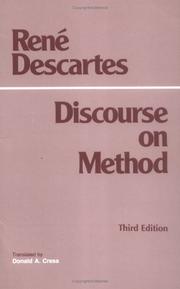
Provides a sweeping but readable map of the philosophical tradition leading up to Hobbes, giving the reader essential context for 17th-century political thought. Reading this first prevents Hobbes from feeling like he appeared from nowhere.

Machiavelli is Hobbes's most important predecessor in hard-nosed, realist political theory; reading him first makes Hobbes's break from moralistic politics immediately legible. It is short, canonical, and sharpens the reader's eye for power-centered argument.
Hobbes in His Own Words
IntermediateRead and genuinely understand Leviathan — Hobbes's argument for the state of nature, the social contract, sovereignty, and the origins of legitimate political authority.
▸ Study plan for this stage
Pace: 8–10 weeks, ~25–30 pages/day (Parts I–II core sections), with weekly pauses for review and reflection
- The state of nature as a condition of perpetual war and insecurity (the 'war of all against all')
- Fear and self-preservation as the primary drivers of human behavior and political motivation
- The social contract: how rational individuals agree to surrender natural rights to a sovereign to escape the state of nature
- Sovereignty as absolute, indivisible, and inalienable—the sovereign's power cannot be limited or shared
- The distinction between natural rights (unlimited in the state of nature) and civil rights (limited by the sovereign's laws)
- Hobbes's mechanistic view of human nature: humans as self-interested, competitive beings driven by passion and appetite
- The covenant and mutual covenants as the foundation of legitimate political authority
- The sovereign's role as guarantor of peace and security, not bound by the laws they create
- What does Hobbes mean by the 'state of nature,' and why does he argue it is a state of war?
- How does fear function in Hobbes's argument for why people create the social contract?
- What is the relationship between natural rights and civil rights in Leviathan?
- Why does Hobbes insist that sovereignty must be absolute and indivisible?
- How does Hobbes justify the sovereign's authority, and on what grounds can it be challenged (if at all)?
- What role do covenants and mutual agreements play in establishing legitimate political authority?
- Create a detailed diagram or flowchart tracing the logical progression from the state of nature → fear and insecurity → social contract → sovereign authority in Leviathan
- Write a 2–3 page dialogue between two characters debating whether Hobbes's state of nature is realistic; use direct quotes from Leviathan to support both positions
- Identify and annotate 5–7 key passages from Leviathan that exemplify Hobbes's mechanistic view of human nature; explain how each supports his political conclusions
- Construct a detailed comparison table: natural rights vs. civil rights, state of nature vs. commonwealth, absolute sovereignty vs. limited government—use Hobbes's own definitions
- Write a critical response essay (3–4 pages) addressing one major objection to Hobbes's theory (e.g., 'Is the sovereign truly bound by the social contract?' or 'Can the state of nature actually exist?')
- Perform a close reading exercise: select one chapter from Part I or II, annotate every instance of fear, security, or power, and write a brief analysis of how these terms interconnect in Hobbes's argument
Next up: Mastering Hobbes's own text equips you to engage critically with interpretations, critiques, and alternative theories of the social contract and sovereignty—preparing you to read secondary scholarship and competing philosophical responses to his work.
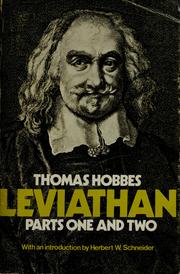
The primary source and the heart of the entire curriculum; everything before prepares for it and everything after deepens it. Focus especially on Parts I and II, which contain Hobbes's account of human nature, the war of all against all, and the covenant that creates the sovereign.
Situating Hobbes: The Social Contract Rivals
IntermediateUnderstand how Locke and Rousseau responded to and diverged from Hobbes's social contract, sharpening the reader's sense of what is distinctive and controversial in Hobbes's version.
▸ Study plan for this stage
Pace: 8–10 weeks, ~40–50 pages/day. Locke's *Second Treatise* (~180 pages) in weeks 1–3, then Rousseau's *Social Contract* (~100 pages) in weeks 4–6, with weeks 7–10 dedicated to comparative analysis, review, and synthesis exercises.
- Locke's state of nature as a condition of relative peace and natural rights (life, liberty, property) versus Hobbes's war of all against all
- The origin and limits of property: Locke's labor theory and the accumulation problem that Hobbes does not address
- Locke's account of consent and the right to revolution—how government legitimacy depends on protecting rights, not merely preventing chaos
- Rousseau's general will as the foundation of legitimate authority, distinct from both Hobbesian absolute sovereignty and Lockean limited government
- Rousseau's critique of private property and inequality as corruptions of natural human goodness, versus Hobbes's pessimism about human nature
- The role of freedom in each thinker: Locke's natural liberty constrained by natural law; Rousseau's transformation of freedom through the social contract
- How each thinker handles the problem of enforcement: Locke through separation of powers and appeal to heaven; Rousseau through the indivisibility of sovereignty
- The practical implications of each model for resistance, reform, and the grounds for legitimate political obligation
- How does Locke's description of the state of nature differ from Hobbes's, and what does this difference imply about the purpose of government?
- What is Locke's labor theory of property, and how does it address a problem that Hobbes's account leaves unresolved?
- On what grounds does Locke argue that citizens have the right to resist or overthrow government, and how does this differ from Hobbes's position?
- What does Rousseau mean by the 'general will,' and how is it supposed to solve the problem of legitimate authority in a way that differs from both Hobbes and Locke?
- How does Rousseau's account of human nature and the origins of inequality challenge Hobbes's pessimism, and what role does property play in his critique?
- How do Locke and Rousseau each attempt to preserve human freedom within the social contract, and where do their solutions diverge?
- What are the key differences in how Hobbes, Locke, and Rousseau each justify political obligation and the limits of sovereign power?
- Create a three-column comparison chart: state of nature (Hobbes vs. Locke vs. Rousseau), natural rights, and the purpose of government. Use direct textual evidence from each work.
- Write a 500-word essay: 'Why does Locke introduce the labor theory of property, and what problem does it solve that Hobbes's account cannot address?'
- Diagram the flow of authority in Locke's system (legislative, executive, federative powers) and in Rousseau's system (general will, sovereign people, government). Identify where each system is vulnerable to abuse.
- Conduct a close reading: Compare Locke's *Second Treatise*, Chapter 19 (on the dissolution of government) with Rousseau's *Social Contract*, Book III, Chapter 18 (on dictatorship). What does each thinker fear, and how do their solutions differ?
- Role-play debate: Assign one person to argue Locke's position on property rights and another to argue Rousseau's critique of private property. Use textual evidence to defend each position.
- Create an annotated timeline: Mark key moments in Locke's and Rousseau's arguments (e.g., 'Locke introduces consent,' 'Rousseau defines the general will') and note where they explicitly agree or diverge from Hobbes.
Next up: By mastering how Locke and Rousseau both accepted and rejected Hobbes's framework, you will be prepared to examine how later thinkers—from Kant to Mill to contemporary theorists—inherit, refine, or dismantle the social contract tradition itself.
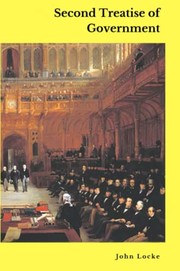
Locke's social contract is the most direct and influential rebuttal to Hobbes — same framework, radically different conclusions about natural rights and the limits of sovereignty. Reading it immediately after Leviathan makes the disagreements vivid and precise.
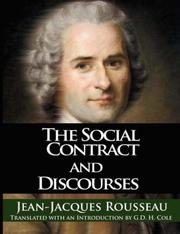
Rousseau's general will and his critique of Hobbesian pessimism about human nature complete the classic social contract triangle. This book shows how far the tradition Hobbes founded could be pushed in an egalitarian direction.
Deep Dive: Scholarly Interpretation of Hobbes
ExpertEngage with the best modern scholarly readings of Hobbes to understand the ongoing debates about his true meaning, his place in intellectual history, and the philosophical strengths and weaknesses of his system.
▸ Study plan for this stage
Pace: 8–10 weeks, ~40–50 pages/day with 2–3 days per week for reflection and note-synthesis. Begin with Hampton (4–5 weeks), then transition to Springborg (4–5 weeks). Allocate final week for comparative synthesis across both texts.
- Hampton's reconstruction of Hobbes's social contract theory: how consent and authorization function in his system versus classical contract theorists
- The debate over Hobbes's materialism and mechanism: whether his physics fully determines his political philosophy or whether political reasoning operates semi-independently
- Hobbes's account of sovereignty as indivisible and inalienable: its logical coherence and practical implications for legitimacy and obligation
- The role of fear and self-interest in Hobbes's moral and political reasoning: whether this reduces to crude egoism or permits genuine obligation
- Springborg's contextualization of Leviathan within 17th-century intellectual history: theological, scientific, and political contexts that shaped Hobbes's arguments
- Interpretive disagreements among scholars: rationalist vs. empiricist readings of Hobbes, contractarian vs. absolutist framings, and their textual bases
- The coherence problem: tensions between Hobbes's stated principles (e.g., sovereign immunity vs. the right of self-preservation) and how scholars resolve them
- Hobbes's influence on subsequent political philosophy: which elements were adopted, rejected, or transformed by later thinkers
- How does Hampton argue that Hobbes's account of authorization differs from other social contract theorists, and what does this reveal about the nature of political obligation in his system?
- What is the relationship between Hobbes's materialism and his political conclusions? Does accepting his physics require accepting his politics?
- According to the scholarly interpretations you've studied, what is the core function of the sovereign in Hobbes's theory, and why do scholars debate whether sovereignty can be limited or divided?
- How do Hampton and Springborg each address the apparent tension between Hobbes's claim that subjects have an inalienable right of self-preservation and his assertion of absolute sovereign authority?
- What does Springborg's historical contextualization reveal about Hobbes's intellectual debts and the specific problems he was trying to solve in Leviathan?
- Identify at least three major interpretive disagreements among Hobbes scholars discussed in these texts. What textual evidence supports each side?
- Create a detailed comparison chart mapping how Hampton presents Hobbes's social contract theory against Locke and Rousseau. Identify which elements are unique to Hobbes and which are shared.
- Write a 2–3 page analytical essay addressing this question: 'Is Hobbes's sovereign truly absolute, or does his own logic permit limits to sovereign power?' Use specific passages from both Hampton and Springborg to support your argument.
- Construct a timeline of intellectual influences on Hobbes (drawing from Springborg's contextual analysis) and write brief notes on how each influence shaped a specific argument in Leviathan.
- Select one major interpretive crux discussed in either text (e.g., the right of self-preservation vs. sovereign authority). Write out both sides of the debate in scholarly language, then draft your own reasoned position with textual evidence.
- Perform a close reading of a key passage from Leviathan (e.g., the definition of the covenant, or the account of sovereignty) and annotate it using the scholarly frameworks from Hampton and Springborg. How do these frameworks illuminate or obscure the text?
- Create a 'genealogy of influence' document: trace how one major Hobbesian idea (e.g., absolute sovereignty, the state of nature, fear as a political motive) was adopted, modified, or rejected by three subsequent philosophers. Use Springborg's historical discussion as a starting point.
Next up: This stage equips you with sophisticated interpretive tools and scholarly awareness of Hobbes's ambiguities and strengths, preparing you to either apply Hobbesian concepts to contemporary political problems, engage with critical responses to Hobbes (feminist, postcolonial, or pragmatist), or develop your own original philosophical critique grounded in textual mastery.

Hampton's rigorous analytical reconstruction of Hobbes's argument — using game theory and rational choice — is the gold standard for understanding why the social contract logic works or fails. It is the essential secondary text for any serious student of Hobbes.

A collection of essays by leading Hobbes scholars covering every major dimension of Leviathan — theology, science, rhetoric, and politics. Reading it last allows the reader to engage critically with specialist debates rather than being overwhelmed by them.
Discussion
Keep reading
Paths that share books, cover the same subject, or open a related topic.