The Enlightenment: the age of reason, in order
This curriculum takes a beginner from a vivid, story-driven introduction to the Enlightenment all the way through its primary sources and critical legacy, building vocabulary and context at each stage before demanding more. The four stages move from accessible narrative history, through political and philosophical theory, into the original texts of the era's greatest thinkers, and finally to a critical reckoning with what the Enlightenment achieved — and where it fell short.
Foundations: The Big Picture
BeginnerGrasp the historical sweep of the Enlightenment — who the key figures were, what problems they were solving, and why the 17th–18th century was such a turning point for reason, science, and liberty.
▸ Study plan for this stage
Pace: 6–8 weeks total. Week 1–3: Robertson's "The Enlightenment" (~20–25 pages/day, including re-reading dense passages). Week 4–8: Gottlieb's "The Dream of Enlightenment" (~15–20 pages/day, pausing after each philosopher chapter to take notes and reflect).
- The Enlightenment as a historical period: roughly 1650–1800, spanning Western Europe and the Atlantic world
- The crisis of authority: how the Scientific Revolution and religious wars destabilized traditional sources of knowledge and power
- Reason as a tool: the Enlightenment's core bet that human reason — not scripture or tradition — could diagnose and solve humanity's problems
- Key figures and their central problems: Descartes (certainty and method), Hobbes (political order and fear), Spinoza (God, nature, and freedom), Locke (knowledge, toleration, and government), Leibniz (reason and optimism), Hume (skepticism and human nature)
- The Republic of Letters: how ideas spread across borders through correspondence, coffeehouses, journals, and salons, creating a pan-European intellectual community
- Liberty and toleration as Enlightenment projects: the move from religious conformity toward individual conscience and civil rights
- The tension between optimism and skepticism running through Enlightenment thought — confidence in progress vs. Humean doubt about what reason can actually deliver
- Why the 17th–18th century was a turning point: the confluence of print culture, new science, colonial encounter, and political upheaval that made radical rethinking possible
- According to Robertson, what were the main social and intellectual conditions that made the Enlightenment possible in the 17th–18th century?
- How does Gottlieb characterize the philosophical problems each thinker (Descartes, Hobbes, Spinoza, Locke, Leibniz, Hume) was trying to solve — and what do those problems share in common?
- What role did the breakdown of religious authority (Reformation, Wars of Religion) play in pushing European thinkers toward reason and natural philosophy as alternative foundations?
- How did Enlightenment thinkers redefine the relationship between the individual and political authority, and which figures in these two books are most central to that shift?
- In what ways does Gottlieb's philosopher-by-philosopher approach complement or complicate Robertson's broader historical sweep?
- What does Robertson identify as the Enlightenment's lasting legacy, and where does Gottlieb's narrative suggest the limits or unfinished business of that legacy?
- Chronological map: After finishing Robertson, draw a simple timeline (1640–1800) and place each key figure, event, and text mentioned in the book on it. Annotate each entry with one sentence on its significance.
- Philosopher one-pagers: After each chapter in Gottlieb, write a half-page summary structured as: (1) the problem this thinker faced, (2) their proposed solution, (3) one idea that still feels relevant today.
- Comparative matrix: Create a table with the six main philosophers from Gottlieb as rows and four columns — 'Core Question,' 'Method,' 'View of Human Nature,' 'Political Implication.' Fill it in as you read; revise it after finishing Robertson.
- Socratic self-quiz: At the end of each week, close both books and write for 15 minutes answering: 'What is the Enlightenment trying to do, and why does it matter?' Compare your answers week-over-week to track how your understanding deepens.
- Primary source dip: Choose one short primary text referenced or implied by Gottlieb (e.g., a passage from Locke's 'Letter Concerning Toleration' or Descartes' 'Discourse on Method') and read 3–5 pages. Write a paragraph on how it confirms or surprises you given Gottlieb's framing.
- Discussion or journal synthesis: After completing both books, write a 1–2 page personal essay answering: 'Which Enlightenment thinker covered in these books speaks most directly to a problem the modern world still faces, and why?'
Next up: Having established who the Enlightenment thinkers were and what large historical forces shaped them, the reader is now ready to go deeper into the primary texts and arguments themselves — moving from the "what and why" of the Enlightenment to the "how": the actual philosophical and political reasoning these figures constructed.

A compact, authoritative overview that maps the major themes — reason, progress, toleration, and reform — giving the beginner a reliable mental framework before diving deeper.

A beautifully written narrative of the philosophers from Descartes to Hume, making abstract ideas concrete through biography and story — the perfect on-ramp to the thinkers themselves.
Politics and Liberty: The Enlightenment's Democratic Core
BeginnerUnderstand how Enlightenment thinkers reimagined government, rights, and the social contract — the ideas that directly produced modern democracy and constitutional government.
▸ Study plan for this stage
Pace: 8–10 weeks total, reading roughly 20–25 pages per day. Week 1–2: Thomas Paine's "Common Sense, The Rights of Man and Other Essential Writings" (start here because Paine's plain, urgent prose is the most accessible entry point for beginners). Weeks 3–5: Rousseau's "The Social Contract and Discourses"
- Natural Rights: Locke's foundational claim in the Two Treatises that all people possess inherent rights to life, liberty, and property that no government can legitimately take away
- The Social Contract: Rousseau's argument in The Social Contract that legitimate political authority arises only from a voluntary agreement among free and equal individuals, not from tradition or divine right
- The General Will: Rousseau's concept (The Social Contract, Book II) that a just government must pursue the collective good of the community, distinct from the mere sum of individual desires
- Consent of the Governed: Locke's argument in the Second Treatise that government derives its just powers only from the ongoing consent of the people it governs
- The Right of Revolution: Both Locke (Second Treatise, Ch. 19) and Paine (Common Sense) argue that when a government systematically violates natural rights, the people have not just a right but a duty to dissolve or overthrow it
- Popular Sovereignty: Paine's insistence in Common Sense and The Rights of Man that political power belongs to the people, not to hereditary monarchs or aristocracies
- State of Nature: Locke's and Rousseau's contrasting visions of human life before government — Locke sees it as mostly peaceful but insecure; Rousseau (Discourses) sees natural man as innocent but corrupted by civilization and inequality
- Limited Government and Separation of Powers: Locke's Second Treatise lays out why government power must be constrained, divided, and answerable to the people — a direct blueprint for constitutional democracy
- According to Locke in the Two Treatises, what is the 'state of nature,' and why do people leave it to form governments? What does this imply about the purpose of the state?
- How does Rousseau's concept of the 'General Will' in The Social Contract differ from simple majority rule, and why does he believe following the General Will is actually a form of freedom?
- What specific arguments does Thomas Paine make in Common Sense against hereditary monarchy, and how does he use plain language to make those arguments accessible to ordinary readers?
- Both Locke and Paine argue that revolution can be justified. Compare their reasoning: on what grounds does each thinker say the people have the right to overthrow a government?
- Rousseau in the Discourses argues that civilization and inequality are deeply linked. How does this critique connect to — or tension with — his vision of the Social Contract as a remedy?
- Taken together, how do Paine, Rousseau, and Locke each contribute a distinct 'layer' to the foundation of modern democratic theory? Which ideas overlap, and where do they fundamentally disagree?
- Annotated Margin Dialogue: While reading each book, mark every passage that addresses (a) the origin of government, (b) the limits of government, and (c) the rights of individuals. After finishing all three books, write a one-page synthesis comparing how each author answers all three questions.
- Paine's Pamphlet Exercise: Paine wrote Common Sense to persuade ordinary people. Choose a contemporary political issue (e.g., voting rights, civil liberties) and write a one-page 'pamphlet' in Paine's plain, direct style, using at least one argument drawn from The Rights of Man.
- Social Contract Stress-Test: Re-read Book I and II of Rousseau's The Social Contract, then write out three real-world scenarios (historical or current) where you think the 'General Will' would be hard to identify or apply. For each, explain the difficulty using Rousseau's own terms.
- Locke vs. Rousseau Comparison Table: Create a two-column table contrasting Locke's Second Treatise and Rousseau's Social Contract on at least six specific points: state of nature, property, consent, sovereignty, the right of revolution, and the role of law.
- Constitutional Archaeology: Find the U.S. Declaration of Independence or the French Declaration of the Rights of Man online. Identify at least five specific phrases or ideas that can be traced directly to passages in Locke's Two Treatises or Paine's writings. Quote both the source passage and the document.
- Socratic Self-Quiz: After completing all three books, write out answers — without looking at the texts — to all six 'Questions' in this study plan. Then return to the books to check your answers, note gaps, and revise. This retrieval-practice loop is the single most effective way to consolidate the material.
Next up: Mastering how Enlightenment thinkers reimagined political authority and individual rights provides the essential vocabulary and conceptual scaffolding needed to explore how these ideas were challenged, refined, and sometimes contradicted by Enlightenment debates on economics, religion, science, and human nature in subsequent stages.
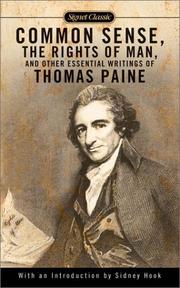
Paine translates Enlightenment political philosophy into plain, passionate prose — an ideal bridge between abstract theory and real-world revolution, and still enormously readable today.
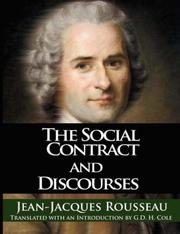
Rousseau's foundational text on popular sovereignty and the general will is essential for understanding democratic theory; reading Paine first makes Rousseau's arguments feel grounded and urgent.

Locke's arguments for natural rights, consent of the governed, and the right to revolution are the bedrock of Enlightenment political thought and directly influenced the American and French revolutions.
Reason and Science: How the Enlightenment Rewired the Mind
IntermediateExplore how Enlightenment thinkers applied reason to religion, morality, and human nature — and how the scientific revolution underpinned a new confidence in human progress.
▸ Study plan for this stage
Pace: 8–10 weeks total. Week 1–2: Candide (~30 pages/day, read in full twice — once for story, once analytically). Week 3–5: Hume's Dialogues and Essays (~15–20 pages/day; slow, careful reading with note-taking on each argument). Week 6–10: Spirit of the Laws (~20–25 pages/day; focus on Books I–VIII, XI,
- Philosophical optimism and its critique: Voltaire's satirical demolition of Leibnizian 'best of all possible worlds' thinking in Candide exposes the limits of abstract rationalism when confronted with real human suffering.
- The problem of evil as an Enlightenment flashpoint: Both Voltaire (through narrative irony) and Hume (through Philo's arguments in the Dialogues) use the existence of suffering to challenge theodicy and providential religion.
- Hume's empiricist epistemology: Knowledge derives from sense experience and the association of ideas — not innate reason — which radically limits what we can claim to know about God, the soul, or miracles.
- The design argument and its limits: The Dialogues stage a three-way debate (Cleanthes, Philo, Pamphilus) that systematically tests and undermines analogical reasoning from nature to a divine designer.
- Skepticism about miracles and the afterlife: Hume's posthumous essays argue that testimony for miracles can never outweigh uniform natural experience, and that personal identity dissolves at death — undercutting revealed religion.
- Montesquieu's naturalistic theory of law: Laws are not divine commands but relationships arising from the nature of things — geography, climate, commerce, and custom — making political science an empirical discipline.
- Separation of powers and political liberty: Spirit of the Laws introduces the tripartite model (legislative, executive, judicial) as a structural safeguard against tyranny, grounding liberty in institutional design rather than natural right alone.
- Relativism and universalism in tension: Montesquieu's comparative method acknowledges that good laws vary by context, yet he still evaluates regimes by universal standards of liberty and human dignity — a tension the Enlightenment never fully resolved.
- How does Voltaire use the character of Pangloss and the repeated catastrophes of Candide to make a philosophical argument, not merely a comic one? What specific Enlightenment target is he satirizing, and does the novel's ending ('we must cultivate our garden') offer a positive alternative or merely a retreat?
- In Hume's Dialogues, which of the three characters — Cleanthes, Philo, or Pamphilus — most closely represents Hume's own position, and how does the dialogue form itself serve as a philosophical strategy for a writer living under censorship?
- What is Hume's 'evidentiary' argument against miracles in the essay on miracles, and how does it relate to his broader empiricist epistemology developed in the Dialogues? Could a theist mount a coherent response using tools available in the 18th century?
- How does Montesquieu define 'law' at the opening of Spirit of the Laws, and why is this definition a radical departure from both divine-command theory and earlier natural-law traditions?
- In what ways does Montesquieu's concept of the 'spirit' of laws — shaped by climate, terrain, population, and commerce — risk collapsing into determinism or cultural relativism? Where does he try to resist that collapse?
- Taken together, how do Voltaire, Hume, and Montesquieu each redefine the proper scope of human reason? Where do they agree, and where does each thinker draw a different boundary between what reason can and cannot achieve?
- Satirical audit of Candide: As you read, keep a running log of every disaster Pangloss explains away with optimism. After finishing, write a one-page 'counter-argument' in Pangloss's voice defending optimism — then write a one-paragraph rebuttal in Voltaire's voice. This forces you to inhabit and then dismantle the position.
- Dialogue mapping for Hume: Draw a three-column table (Cleanthes / Philo / Pamphilus) and, for each of the twelve parts of the Dialogues, record each speaker's main claim and the strongest objection raised against it. At the end, write a one-sentence verdict on who 'wins' each part and why.
- Write your own Humean essay: Modeled on 'Of the Immortality of the Soul,' write a 400–600 word essay applying Hume's empiricist method to one contemporary belief (e.g., life after death, fate, or divine justice). Use only arguments from experience and probability — no appeals to scripture or intuition.
- Montesquieu's typology in practice: Spirit of the Laws classifies governments as republic, monarchy, and despotism. Apply this typology to three modern states of your choosing. Where does the framework illuminate, and where does it break down? Write a 500-word comparative note.
- Cross-book synthesis map: Create a visual concept map linking all three books around four shared themes: (1) the limits of reason, (2) the critique of religion, (3) the basis of good government, and (4) human nature. Use direct quotations from each text as anchor points on the map.
- Socratic seminar preparation: Draft five discussion questions that put Voltaire, Hume, and Montesquieu in direct conversation — as if they were debating at a Parisian salon. Then write a short paragraph predicting where each thinker would agree and where the sharpest disagreement would erupt.
Next up: By establishing how Enlightenment thinkers used reason to critique religion, redesign politics, and interrogate human nature, this stage equips the reader to engage the next stage's focus on how those ideas collided with revolution, romanticism, and the social upheavals they helped unleash.

Voltaire's satirical novella skewers superstition, religious dogma, and blind optimism with wit and speed — a perfect literary entry into the Enlightenment's critical spirit before tackling heavier philosophy.

Hume's rigorous examination of causation, miracles, and the limits of reason is the Enlightenment's most penetrating philosophical achievement; Candide's skepticism primes the reader for Hume's depth.

Montesquieu's comparative analysis of governments, climates, and legal systems introduced the separation of powers and shaped every major constitution of the modern era.
Legacy and Critique: What the Enlightenment Made — and Missed
ExpertCritically assess the Enlightenment's long-term impact on modernity, science, colonialism, and democracy — understanding both its extraordinary achievements and its blind spots.
▸ Study plan for this stage
Pace: 10–13 weeks total, reading all three books sequentially: Pinker's "Enlightenment Now" (~450 pages, ~4 weeks at 25–30 pages/day), Adorno's "Dialectic of Enlightenment" (~250 pages, ~3–4 weeks at 10–15 pages/day — dense philosophical prose requiring slow, re-reading), and Pagden's "The Enlightenment"
- Pinker's 'progress thesis': the empirical case that Enlightenment values — reason, science, humanism, liberty — have measurably improved human welfare across health, poverty, violence, and freedom metrics
- The role of data and scientific rationalism as normative frameworks in Pinker's defense of Enlightenment modernity, and the philosophical assumptions embedded in that framing
- Adorno and Horkheimer's 'dialectic of enlightenment': the argument that the very rationality the Enlightenment celebrated contains the seeds of domination, myth-making, and totalitarianism
- Instrumental reason vs. substantive reason: how Adorno critiques the reduction of reason to a tool for control and efficiency, severing it from moral and emancipatory ends
- The 'culture industry' as an Enlightenment pathology: how mass rationalization produces conformity rather than liberation
- Pagden's historical synthesis: the Enlightenment as a genuinely cosmopolitan, transnational intellectual movement with internal diversity — Scottish, French, Italian, and Neapolitan variants — rather than a monolithic Western project
- The Enlightenment's entanglement with colonialism and empire: how universalist rhetoric coexisted with, and sometimes enabled, racial hierarchy and imperial domination (Pagden's critical historiography)
- Reconciling the three perspectives: holding Pinker's optimism, Adorno's critique, and Pagden's historical nuance in productive tension as a model of advanced critical thinking
- According to Pinker in 'Enlightenment Now,' what specific empirical trends does he cite as evidence that Enlightenment values have succeeded, and what are the strongest methodological or philosophical objections one could raise against his framing?
- How do Adorno and Horkheimer define the 'dialectic of enlightenment,' and why do they argue that reason, rather than liberating humanity, risks becoming a new form of myth and domination?
- In what ways does Pagden's historical account of the Enlightenment complicate or enrich both Pinker's defense and Adorno's critique — particularly regarding the movement's geographic diversity and its relationship to empire?
- Where do Pinker and Adorno most directly contradict each other, and is there any ground on which their arguments could be partially reconciled?
- How did Enlightenment universalism — the idea of a shared human reason and dignity — simultaneously inspire democratic revolutions and provide intellectual cover for colonial projects, as evidenced across these three books?
- After reading all three works, how would you define the Enlightenment's 'legacy'? What did it achieve, what did it fail to see, and what unresolved tensions does it bequeath to the present?
- **The Debate Brief:** Write a structured 2-page debate brief — one side defending Pinker's progress thesis, the other channeling Adorno's critique. Use specific evidence from both books. Then write a one-paragraph verdict in your own voice, drawing on Pagden's historical perspective as a tiebreaker.
- **Slow Reading Log for Adorno:** Because 'Dialectic of Enlightenment' is exceptionally dense, keep a chapter-by-chapter log: for each section, write (a) a one-sentence plain-English summary, (b) one concept you found most challenging, and (c) one real-world example from contemporary life that illustrates Adorno's argument.
- **Data vs. Critique Exercise:** Select one of Pinker's data-driven claims in 'Enlightenment Now' (e.g., declining violence, rising literacy). Research one counterexample or scholarly critique of that specific claim, then write a 300-word response from Adorno's theoretical perspective on why the data alone may be insufficient.
- **Mapping the Enlightenment's Geography:** Using Pagden's account of the movement's national variants, create a comparative chart listing at least four Enlightenment 'centers' (e.g., Edinburgh, Paris, Naples, Berlin), their key thinkers, and their distinctive emphases. Annotate which strands Pinker celebrates and which Adorno would critique most sharply.
- **Colonial Blind Spot Analysis:** Identify two to three specific passages across the three books that address the Enlightenment's relationship to colonialism or race. Write a 400-word synthesis essay: In what ways did Enlightenment thought enable empire, and in what ways did it provide tools for resistance to it?
- **Personal Legacy Statement:** As a final capstone exercise for the stage, write a 500-word personal essay answering: 'What should a 21st-century thinker keep, revise, and discard from the Enlightenment inheritance?' Cite at least one specific argument from each of the three books to support your position.
Next up: By holding Pinker's empirical optimism, Adorno's philosophical suspicion, and Pagden's historical granularity in tension, the reader has developed the critical vocabulary to move beyond the Enlightenment itself — ready to explore how post-Enlightenment movements (Romanticism, postmodernism, postcolonialism) arose precisely as responses to the contradictions this stage has uncovered.

Pinker's data-rich defense of Enlightenment values — reason, science, humanism, progress — offers a powerful modern case for the tradition, and serves as a clear target for the critical texts that follow.
Horkheimer and Adorno's landmark critique argues that Enlightenment reason carried the seeds of its own corruption; reading Pinker first makes this difficult but essential text far more navigable.

A magisterial scholarly synthesis that traces Enlightenment ideas from their origins to contemporary debates on human rights, secularism, and global order — the ideal capstone for the whole curriculum.
Discussion
Keep reading
Paths that share books, cover the same subject, or open a related topic.