Political philosophy: the ideas behind power
This curriculum takes a complete beginner from the essential questions of political life — what is justice, what is freedom, why obey the state? — all the way to the sharpest modern debates. Each stage builds the conceptual vocabulary needed for the next: classics first to establish the core questions, Enlightenment thinkers to frame the liberal tradition, then 20th-century giants who restructured the debate, and finally contemporary challengers who push back and complicate the picture.
The Core Questions
BeginnerGrasp the fundamental questions political philosophy asks — what makes a state legitimate, what is justice, and what do we owe each other — through accessible and engaging entry points.
▸ Study plan for this stage
Pace: 6–8 weeks, ~15–20 pages/day. Read in focused daily sessions of 30–45 minutes. Aristotle's dense prose rewards slow, deliberate reading — aim to finish one Book (chapter) per week, pausing to re-read difficult passages rather than pushing forward.
- The Highest Good (Eudaimonia): Aristotle's claim that all human action aims at some good, and that the highest good is happiness/flourishing — not pleasure or wealth, but a life of excellent activity in accordance with virtue.
- Function Argument (Ergon): The idea that humans have a characteristic function — rational activity — and that living well means performing that function excellently, grounding political philosophy in human nature.
- Virtue (Arete) as a Mean: Virtues are stable character dispositions (hexeis) that hit the mean between excess and deficiency (e.g., courage lies between cowardice and recklessness), cultivated through habit and practice.
- Moral and Intellectual Virtues: The distinction between virtues of character (e.g., courage, justice, temperance) developed through habituation, and virtues of intellect (e.g., practical wisdom/phronesis) developed through teaching.
- Practical Wisdom (Phronesis): The master intellectual virtue that allows a person to deliberate well about what is good and act appropriately in particular situations — the indispensable guide to ethical and political life.
- Justice as the Complete Virtue: Aristotle's treatment of justice (Book V) as both a personal virtue and a political one — distinguishing general justice (lawfulness) from particular justice (fairness in distribution and rectification).
- Distributive vs. Corrective Justice: The two main forms of particular justice — distributive justice allocates goods proportionally according to merit, while corrective justice restores equality when transactions go wrong.
- The Political Animal and the Good Life: Aristotle's foundational claim that humans are by nature political animals (zoon politikon), and that the polis (political community) exists not merely for survival but to enable the good life — directly linking ethics to political philosophy.
- What does Aristotle mean by eudaimonia, and why does he argue it is the highest good? How does his view differ from equating happiness with pleasure or material wealth?
- Explain the Function Argument: what is the characteristic function of a human being, and how does it ground Aristotle's account of what it means to live well?
- How does Aristotle define virtue, and what role does the 'doctrine of the mean' play? Give two concrete examples of a virtue and its corresponding vices of excess and deficiency.
- What is the difference between moral virtues and intellectual virtues? Why is phronesis (practical wisdom) especially important, and how does it relate to the other virtues?
- How does Aristotle distinguish distributive justice from corrective justice? What principle governs each, and why does he consider justice the 'complete' virtue?
- In what sense is the human being a 'political animal' for Aristotle, and what does this imply about the relationship between living ethically and participating in a political community?
- Virtue Mapping Journal: After reading each Book, create a two-column table listing virtues Aristotle discusses, their corresponding vices (excess and deficiency), and one real-world example of each from contemporary life. This forces active engagement with the doctrine of the mean.
- Eudaimonia Self-Assessment: Write a one-page personal reflection answering: 'By Aristotle's definition, what would a flourishing life look like for me?' Then identify which virtues you would need to cultivate and which you currently lack — making the abstract concrete.
- Close-Reading Annotation of Book V (Justice): Read Book V with a pen in hand. Every time Aristotle makes a distinction (e.g., general vs. particular justice, distributive vs. corrective), annotate it in the margin and write a one-sentence summary in your own words. Then produce a one-page outline of his entire theory of justice.
- Phronesis Case Studies: Find three real ethical dilemmas from current events or history. For each, write a short paragraph explaining how a person with phronesis (practical wisdom) would reason through the situation, using Aristotle's framework — what considerations would they weigh, and what would count as the 'mean'?
- Socratic Dialogue Practice: Write a short (1–2 page) imaginary dialogue between Aristotle and a modern skeptic who believes happiness is simply getting what you want. Let Aristotle defend his position using arguments from the Nicomachean Ethics, and let the skeptic push back. This tests whether you can deploy the ideas, not just recall them.
- Concept Map: After finishing the book, draw a visual concept map connecting the following terms: eudaimonia, ergon, virtue, habituation, phronesis, justice, the political animal, and the polis. Draw arrows showing how each concept supports or depends on the others, and label each arrow with a one-phrase explanation.
Next up: Aristotle establishes that justice, virtue, and the good life are inherently political — that humans need a well-ordered community to flourish — which sets up the next stage's deeper interrogation of what form that community should take, who holds legitimate authority within it, and on what grounds.
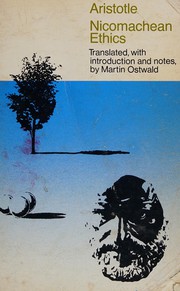
Aristotle grounds politics in human nature and the good life, establishing the idea that humans are political animals — essential context before moving to modern liberal theory.
The Liberal Tradition
BeginnerUnderstand the Enlightenment roots of modern liberal democracy: natural rights, the social contract, the separation of powers, and the limits of government authority.
▸ Study plan for this stage
Pace: 6–8 weeks total: Week 1–2 — Leviathan (focus on Parts I & II, ~20–25 pages/day, skimming the more scholastic Parts III & IV); Week 3–4 — Second Treatise of Government (~15–20 pages/day, a shorter and more accessible text); Week 5–6 — On Liberty (~15–20 pages/day, reading each chapter twice — once fo
- The State of Nature: Hobbes's 'war of all against all' vs. Locke's more benign pre-political condition — understanding why the starting assumption about human nature shapes everything that follows
- The Social Contract: how and why individuals consent (explicitly or tacitly) to surrender some freedoms in exchange for political order and protection
- Sovereignty and Its Limits: Hobbes's case for near-absolute sovereign authority in Leviathan vs. Locke's insistence in the Second Treatise that government authority is conditional and revocable
- Natural Rights: Locke's foundational triad of life, liberty, and property as pre-political rights that no legitimate government may violate
- Separation of Powers and the Right of Revolution: Locke's argument that legislative and executive power must be distinct, and that a government that betrays its trust may be dissolved by the people
- The Harm Principle: Mill's central claim in On Liberty that the only legitimate reason to exercise power over an individual is to prevent harm to others — the cornerstone of classical liberalism
- Liberty of Thought and Discussion: Mill's defense in On Liberty of absolute freedom of opinion and its expression, grounded in both epistemic humility and the value of open debate
- Tyranny of the Majority: Mill's warning that democratic majorities can oppress individuals just as monarchs can, expanding the liberal concern beyond formal government to social pressure and custom
- According to Hobbes in Leviathan, what makes life in the state of nature 'solitary, poor, nasty, brutish, and short,' and why does this justify an almost unlimited sovereign?
- How does Locke's account of the state of nature in the Second Treatise differ from Hobbes's, and what political conclusions does that difference license — particularly regarding the right to revolution?
- What are Locke's criteria in the Second Treatise for legitimate government, and under what specific conditions does he argue that citizens are released from their obligation to obey?
- How does Mill define liberty in On Liberty, and why does he insist the Harm Principle must be the sole justification for coercing an individual — even for that person's own good?
- Trace the evolution of the concept of 'consent' across all three books: in what sense does each thinker rely on it, and where do their accounts conflict or build on one another?
- Mill argues in On Liberty that even a false opinion should not be silenced. What are his reasons, and do you find them convincing?
- Concept map: After finishing each book, draw a one-page diagram showing that author's chain of reasoning from human nature → state of nature → social contract → legitimate government. Then overlay all three diagrams to visualize where Hobbes, Locke, and Mill agree and diverge.
- Socratic dialogue: Write a 500-word imagined conversation in which Hobbes and Locke debate whether citizens have the right to overthrow their government. Use direct textual evidence from Leviathan and the Second Treatise to put words in each thinker's mouth.
- Harm Principle stress-test: Choose three real contemporary policy debates (e.g., mandatory vaccination, hate-speech laws, drug decriminalization). Apply Mill's Harm Principle from On Liberty to each case and write a one-paragraph verdict, noting where the principle gives a clear answer and where it is ambiguous.
- Close-reading annotation: Select one key passage from each book (e.g., Hobbes's Chapter XIII on the state of nature, Locke's Chapter XIX on the dissolution of government, Mill's Chapter I introduction of the Harm Principle). Annotate each passage line-by-line: identify the claim, the supporting argument, any hidden assumptions, and one possible objection.
- Comparative essay (600–800 words): Answer the question — 'Who has the stronger argument for limiting government power: Locke or Mill?' — drawing exclusively on the Second Treatise and On Liberty. Practice structuring a thesis, marshaling textual evidence, and acknowledging the strongest counterargument.
- Timeline and context card: Research (outside the texts) the historical moment each book was written in — the English Civil War, the Glorious Revolution, Victorian industrialization. Write a 3–5 sentence context card for each book explaining how its historical moment shaped its argument, then reflect on whether knowing the context changes how you read the text.
Next up: Mastering the liberal tradition's foundational logic — rights, contract, limited government, and individual liberty — equips the reader with the baseline framework that the next stage's thinkers (whether conservative, republican, socialist, or communitarian) will directly challenge, refine, or dismantle.
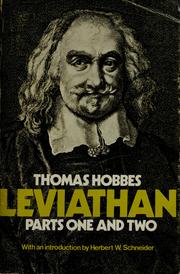
Hobbes constructs the first rigorous argument for why rational individuals would surrender freedom to a sovereign — the starting gun for all social contract theory.
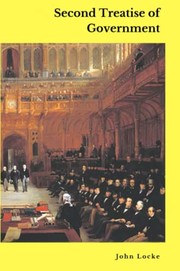
Locke's answer to Hobbes — arguing that government exists to protect natural rights and can be overthrown if it fails — is the direct ancestor of modern liberal democracy and the U.S. Declaration of Independence.
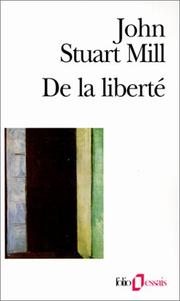
Mill's elegant defense of individual freedom against social and state tyranny introduces the harm principle, which remains the central reference point in debates about rights and limits of law today.
The 20th-Century Restructuring
IntermediateEngage with the landmark texts that redrew the map of political philosophy — redefining justice, liberty, and equality in ways that still dominate academic and policy debate.
▸ Study plan for this stage
Pace: 10–13 weeks total, reading ~25–35 pages per day on weekdays with weekends reserved for review and exercises. Suggested breakdown: Week 1 — Berlin's "Two Concepts of Liberty" (essay-length, ~60 pp.; read slowly, re-read key passages); Weeks 2–8 — Rawls's "A Theory of Justice" (~600 pp.; ~30 pages/day
- Negative vs. Positive Liberty (Berlin): negative liberty as freedom from interference; positive liberty as self-mastery and the capacity to act — and Berlin's warning about the political dangers of positive liberty
- The Concept of Coercion and the 'Extent' of Liberty: how Berlin distinguishes the mere inability to do something from being prevented by other agents, and why this distinction matters politically
- The Original Position and the Veil of Ignorance (Rawls): the hypothetical device by which rational agents choose principles of justice without knowing their place in society
- Rawls's Two Principles of Justice: (1) the Equal Liberty Principle and (2) the Difference Principle — what they say, how they are lexically ordered, and what distributive arrangements they justify
- Reflective Equilibrium (Rawls): the method of moving back and forth between moral intuitions and theoretical principles until coherence is achieved — a cornerstone of Rawls's methodology
- The Entitlement Theory of Justice (Nozick): justice in holdings as a function of just acquisition, just transfer, and rectification of past injustice — not of any patterned end-state
- The Wilt Chamberlain Argument (Nozick): the claim that any patterned distributive principle will be continuously upset by free exchanges, making redistribution require perpetual interference with liberty
- The Minimal State (Nozick): Nozick's argument that only a night-watchman state — protecting against force, theft, and fraud — can be justified without violating individual rights, and his critique of Rawlsian redistribution as a form of forced labor
- According to Berlin, what is the core difference between negative and positive liberty, and why does he argue that conflating the two has historically led to authoritarianism? Use examples from 'Two Concepts of Liberty' to support your answer.
- How does Rawls use the Original Position and the Veil of Ignorance to derive his Two Principles of Justice? Why does he believe rational agents behind the veil would choose the Difference Principle rather than a utilitarian principle?
- What is 'reflective equilibrium' in Rawls's methodology, and how does it differ from deriving ethics purely from first principles or purely from intuitions?
- Reconstruct Nozick's Wilt Chamberlain argument in your own words. Does it successfully refute Rawls's Difference Principle? What are its strongest and weakest points?
- How does Nozick's Entitlement Theory define a just distribution, and how does it challenge the very idea of 'distributive justice' as Rawls conceives it?
- Where do Berlin's, Rawls's, and Nozick's conceptions of liberty overlap, and where do they fundamentally conflict? Which account do you find most defensible, and why?
- Concept Mapping: After finishing Berlin, draw a two-column diagram contrasting negative and positive liberty with at least five real-world political examples in each column (e.g., taxation, free speech laws, public education). Revisit and annotate the map after reading Rawls and Nozick to show how each thinker would classify those examples.
- Veil of Ignorance Simulation: In a journal entry of 500–700 words, place yourself behind Rawls's Veil of Ignorance and reason through which principles you would choose for a society you are about to enter. Then argue against your own choice using Nozick's Entitlement Theory. Note where the two frameworks produce irreconcilable conclusions.
- Argument Reconstruction Drill: For each of the three books, write a one-page 'steel-man' summary — the strongest possible version of the central argument — before writing a one-paragraph critique. This forces engagement with the text on its own terms before evaluation.
- Socratic Dialogue Writing: Write a 2–3 page fictional dialogue in which Rawls and Nozick debate a concrete policy question (e.g., a wealth tax, universal basic income, or affirmative action). Each character must use arguments drawn directly and accurately from their respective books.
- Annotated Re-reading of a Key Passage: Select one dense passage from each book (e.g., Berlin's discussion of 'the retreat to the inner citadel,' Rawls's §§11–17 on the Original Position, Nozick's Wilt Chamberlain section pp. 160–164) and write marginal annotations explaining every claim, assumption, and inferential step.
- Policy Brief Exercise: Choose a live policy debate (e.g., progressive taxation, drug decriminalization, or housing regulation) and write a 1-page brief from each of the three authors' perspectives, citing specific arguments from their texts. Conclude with a paragraph on which framework you find most persuasive and why.
Next up: By mastering the Berlin–Rawls–Nozick triangle — the dominant liberal and libertarian frameworks of the 20th century — the reader has the analytical vocabulary and argumentative baseline needed to engage with the communitarian, feminist, and post-colonial critiques that emerged in direct response to these texts, forming the natural next stage of the curriculum.

Berlin's distinction between negative and positive liberty is perhaps the single most influential framework in modern political philosophy — read this before Rawls to understand what is at stake.
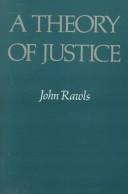
The most important work of political philosophy in the 20th century; Rawls's veil of ignorance and principles of justice set the agenda for virtually every debate that follows.
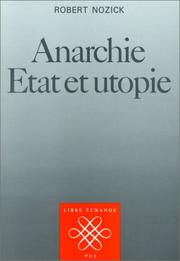
The definitive libertarian response to Rawls, arguing that only a minimal state can be justified — reading it directly after Rawls makes the tension between liberty and equality vivid and concrete.
Challenges and Complications
ExpertEncounter the major critiques of liberal theory — from communitarianism, feminism, and multiculturalism — and understand how contemporary political philosophy grapples with diversity, power, and identity.
▸ Study plan for this stage
Pace: 8–10 weeks total: ~2.5–3 weeks per book at roughly 25–35 pages/day. Suggested breakdown — Walzer's "Spheres of Justice" (weeks 1–3, densest reading, take notes on each sphere); Mill's "The Subjection of Women" (weeks 4–5, shorter but demands close analytical reading); Sandel's "Justice" (weeks 6–8,
- Complex equality and the tyranny of dominant goods (Walzer): the idea that justice requires preventing any single social good — money, power, status — from colonizing all other spheres of distribution
- Spheres of justice and their internal logics (Walzer): each social good (security, education, money, office, etc.) has its own distributive criterion that must be respected on its own terms
- The critique of simple equality (Walzer): why a single universal metric of distribution is both philosophically inadequate and socially destructive
- Structural subordination and the social construction of gender roles (Mill): how legal and customary inequality between the sexes is not natural but historically produced and maintained by power
- Mill's utilitarian-liberal argument for women's emancipation: equal freedom maximizes social utility and individual self-development for all, not just women
- The encumbered self vs. the unencumbered self (Sandel): the communitarian challenge to Rawlsian liberalism — that we cannot coherently abstract persons from their communities, histories, and moral commitments
- Moral limits of markets (Sandel): the argument that market reasoning corrupts certain goods (civic participation, care, education) by treating them as commodities
- The politics of the common good (Sandel): the claim that a just society requires public deliberation about virtue and shared ends, not merely neutral procedures
- According to Walzer in 'Spheres of Justice,' what is 'tyranny' in the distributive sense, and why does preventing it require complex rather than simple equality? Use at least two concrete spheres (e.g., money and political office) to illustrate your answer.
- How does Walzer's communitarian pluralism differ from a purely procedural liberalism? What role does shared social meaning play in determining what counts as a just distribution?
- In 'The Subjection of Women,' how does Mill argue that the existing evidence about women's nature is epistemically unreliable? What does this imply about the burden of proof in debates over social hierarchy?
- How does Mill's feminist argument sit in tension with — or complement — his broader utilitarianism? Does his case for women's equality rest ultimately on utility, liberty, or both?
- In 'Justice,' what does Sandel mean by the 'encumbered self,' and how does this concept challenge the Rawlsian veil of ignorance as a device for achieving fairness?
- Across all three books, how do Walzer, Mill, and Sandel each diagnose the relationship between power and the distortion of justice? Where do their diagnoses converge, and where do they fundamentally conflict?
- Sphere-mapping exercise (Walzer): Choose three real-world institutions (e.g., a university admissions office, a public hospital, a stock exchange) and write one paragraph each identifying which sphere of justice governs them, what their internal distributive logic should be, and one example of a 'boundary violation' where a dominant good has invaded that sphere.
- Counter-argument drill (Mill): Write a two-page steelman of the 19th-century case against women's equality — drawing only on arguments Mill himself identifies and refutes — then write Mill's rebuttal in your own words. Assess whose reasoning is stronger and why.
- Socratic seminar simulation (Sandel): Sandel's 'Justice' is structured around moral dilemmas. Pick two of his cases (e.g., the trolley problem, military service, or organ markets) and write a structured dialogue of at least 500 words between a Rawlsian liberal and a communitarian, using evidence from both Sandel and Walzer.
- Cross-book synthesis essay: Write a 600–800 word comparative essay answering: 'All three authors challenge a purely procedural or neutral liberalism. What positive vision of justice does each offer as an alternative, and which vision is most persuasive?'
- Contemporary application (all three books): Identify one current policy debate (e.g., affirmative action, healthcare privatization, or paid surrogacy) and analyze it through the lens of each author — what would Walzer, Mill, and Sandel each say, and where would they agree or disagree?
- Concept glossary: Build a personal glossary of 15–20 key terms drawn from all three books (e.g., 'complex equality,' 'sphere invasion,' 'encumbered self,' 'moral limits of markets'). For each term, write a one-sentence definition in your own words and a one-sentence example from contemporary life.
Next up: By wrestling with communitarian, feminist, and pluralist critiques of liberal theory across these three books, the reader has developed the critical vocabulary and dialectical agility needed to engage the next stage's deeper explorations of global justice, recognition, and political power — moving from diagnosing liberalism's limits to constructing more expansive normative frameworks.
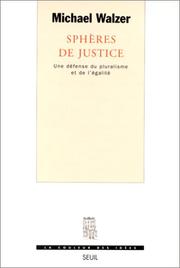
Walzer's communitarian challenge to Rawls argues that justice is plural and rooted in shared social meanings — a crucial corrective to purely abstract liberal theory.
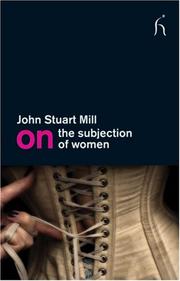
An early but devastatingly clear feminist argument that liberal principles demand full equality for women — it shows how the tradition's own logic can be turned against its blind spots.
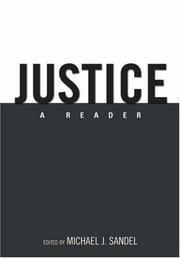
Sandel synthesizes the entire curriculum — Aristotle, Kant, Mill, Rawls, and their critics — into a lucid, contemporary argument, making it the ideal capstone that connects theory to today's political controversies.
Discussion
Keep reading
Paths that share books, cover the same subject, or open a related topic.