Understanding Catholicism: Best Books, in Order
This curriculum takes a complete beginner from a warm, accessible introduction to Catholicism all the way through its rich history, systematic theology, sacramental life, and lived practice. Each stage builds on the last: you first absorb the "big picture" and vocabulary, then explore the historical roots, then wrestle with the theology and sacraments in depth, and finally encounter the interior spiritual life that animates Catholic belief.
First Foundations: What Is Catholicism?
BeginnerGain a friendly, clear overview of Catholic belief, practice, and identity — building the basic vocabulary and framework needed for everything that follows.
▸ Study plan for this stage
Pace: 4–5 weeks, ~25–30 pages/day. Start with "Catholicism" by Bishop Barron (approximately 2.5–3 weeks), then move to "Rome Sweet Home" by Scott Hahn (approximately 1.5–2 weeks). This allows time for reflection and discussion between books.
- The Sacramental Worldview: God's presence and grace mediated through material reality, not just spiritual abstraction
- The Role of Tradition: Sacred Scripture and Sacred Tradition as two sources of divine revelation, interpreted by the Magisterium
- The Incarnation as Central: Jesus Christ as the foundation of all Catholic theology and practice
- The Church as the Mystical Body of Christ: The living, hierarchical community that continues Christ's mission
- Mary and the Saints: Their role as intercessors and models of holiness, not objects of worship
- The Sacraments: Seven channels of grace that mark and sanctify the major transitions and moments of Christian life
- Conversion and Personal Journey: How individuals come to embrace Catholic faith through reason, experience, and grace (Hahn's testimony)
- Catholic Identity: The synthesis of faith, reason, Scripture, Tradition, and community that distinguishes Catholicism from other Christian traditions
- What is the sacramental worldview, and how does it shape the Catholic understanding of God's presence in the world?
- How do Catholics understand the relationship between Scripture and Tradition, and what role does the Magisterium play?
- Why is the Incarnation central to Catholic theology, and how does it affect Catholic practice and devotion?
- What are the seven sacraments, and what is their purpose in the life of a Catholic?
- How do Catholics understand Mary and the saints, and what is the difference between veneration and worship?
- What is the Church as understood in Catholic teaching, and why is it described as the Mystical Body of Christ?
- What was Scott Hahn's spiritual journey, and what key insights led him to embrace Catholicism?
- After finishing 'Catholicism,' write a one-page summary of the sacramental worldview in your own words, with three concrete examples from daily life.
- Create a visual chart or mind map showing the seven sacraments, when they are received, and what grace they convey.
- Read one of Barron's reflections on Mary or the saints, then write a short reflection on how veneration differs from worship.
- Attend a Catholic Mass (or watch one online) and identify at least five sacramental elements Barron discusses (e.g., water, oil, bread, wine, words, gestures).
- After 'Rome Sweet Home,' write a personal reflection: What aspects of Hahn's conversion story resonated with you, and what questions does it raise for you?
- Interview a practicing Catholic (or reflect in writing) about a moment when they experienced the Church as a living community, not just an institution.
- Create a glossary of 15–20 key Catholic terms introduced in both books (e.g., Magisterium, Mystical Body, veneration, grace, Incarnation).
- Compare and contrast Barron's systematic overview with Hahn's personal narrative: What does each approach teach you about Catholicism?
Next up: This stage establishes the foundational vocabulary, theological framework, and emotional entry point into Catholic thought; the next stage will deepen your understanding of specific doctrines (such as Christology, Mariology, or ecclesiology) and explore how Catholics live out these beliefs in prayer, morality, and community.
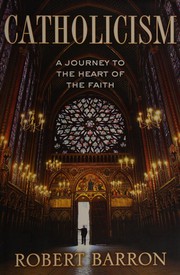
The ideal starting point — beautifully written and visually rich, it surveys the whole Catholic world (Christ, Mary, sacraments, saints, prayer) in an inviting, non-technical way. It gives beginners a coherent 'map' of the faith before diving into details.

A personal conversion narrative that naturally explains core Catholic doctrines as they are encountered and questioned. Reading a real person's journey makes abstract beliefs concrete and memorable at this early stage.
The Historical Roots: How Catholicism Came to Be
BeginnerUnderstand the 2,000-year sweep of Church history — from the Apostles through councils, schisms, reformations, and the modern era — so that theology and doctrine are seen in their living context.
▸ Study plan for this stage
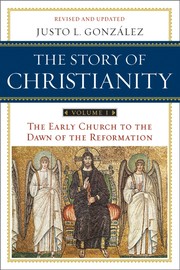
Pace: 8–10 weeks, ~40–50 pages/day (González Vol. 1: 5–6 weeks; Küng: 3–4 weeks)
- The apostolic period and early Christian communities: how the Church emerged from Judaism and spread through the Roman Empire
- The role of councils (Nicaea, Chalcedon, etc.) in defining doctrine and responding to heresies
- The Great Schism of 1054: theological, political, and cultural divisions between East and West
- Medieval Catholicism: monasticism, papal authority, Scholasticism, and the feudal-ecclesiastical order
- The Protestant Reformation and Catholic Counter-Reformation: doctrinal disputes, institutional reform, and the fracturing of Western Christianity
- The modern era: Vatican I and II, papal infallibility, modernism, and the Church's engagement with secularization
- How historical context shapes doctrine: understanding that theology did not emerge in a vacuum but in response to real challenges and cultures
- How did the early Church transition from a persecuted Jewish sect to the official religion of the Roman Empire, and what theological and organizational challenges did this create?
- What were the major heresies (Arianism, Nestorianism, Monophysitism) that prompted ecumenical councils, and how did the councils' decisions shape Catholic doctrine?
- What theological, political, and cultural factors led to the Great Schism of 1054, and how did it reshape Christianity?
- How did the Protestant Reformation challenge Catholic theology and practice, and what were the key reforms of the Counter-Reformation?
- What were the main developments in Catholic thought and practice from Vatican I through Vatican II, and how did the Church respond to modernity?
- How do the historical events and figures you've studied illuminate the doctrines and practices of Catholicism today?
- Create a detailed timeline of major events from the Apostles to the present, marking councils, schisms, reformations, and papal reigns; annotate each with a 2–3 sentence explanation of its theological or institutional significance
- Write a 500-word essay on one major heresy (Arianism, Pelagianism, Jansenism, etc.): what it claimed, why it threatened the Church, and how the Church responded
- Construct a comparison chart of Eastern Orthodox and Roman Catholic Christianity post-1054, listing key theological, liturgical, and organizational differences rooted in their divergent histories
- Read primary source excerpts (e.g., Council of Nicaea's Creed, key passages from Aquinas, Luther's 95 Theses, Vatican II documents) and write brief reflections on how they reflect the historical moment and theological concerns of their time
- Interview a Catholic priest, deacon, or educated parishioner about how they see Church history reflected in current parish life and practice; record or summarize the conversation
- Create a visual map or infographic showing the spread of Christianity geographically and chronologically through the periods covered, noting major cultural and political contexts
Next up: With a grasp of how the Church developed over two millennia—shaped by councils, schisms, and reform—you are now equipped to understand why Catholic theology and practice take their particular forms, preparing you to dive into the doctrinal foundations and lived beliefs of Catholicism in the next stage.

A highly readable, scholarly yet accessible narrative of the early and medieval Church. Starting here grounds the learner in the historical events — councils, heresies, popes, and saints — that shaped Catholic doctrine.
A compact, critical overview of the entire Catholic story from a theologian's perspective. Read after González, it adds interpretive depth and brings the history up to the present day in a single, manageable volume.
Core Theology: What Catholics Believe and Why
IntermediateEngage seriously with the doctrinal content of Catholicism — the nature of God, revelation, grace, the Church, and moral teaching — with enough precision to understand why the Church teaches what it does.
▸ Study plan for this stage
Pace: 8–10 weeks, ~25–30 pages/day, with 1–2 days per week for reflection and exercises
- The existence and nature of God: Lewis's argument from reason, morality, and desire; how God relates to creation and human freedom
- Revelation and Scripture: how God communicates with humanity; the relationship between natural law and revealed truth
- The Church as the living body of Christ: its role in preserving and interpreting doctrine; the sacramental principle in Catholic life
- Grace and salvation: how God's grace works in human beings; the cooperation between divine grace and human free will
- The Incarnation and Redemption: why Christ became human; how his death and resurrection transform human nature and destiny
- Moral teaching and natural law: the basis for Catholic ethics; how reason and revelation guide conscience and action
- The sacraments as means of grace: their role in the Christian life; how material things convey spiritual reality
- The communion of saints and the mystical body: the connection between living and dead in Christ; the corporate nature of salvation
- What are Lewis's main arguments for God's existence, and how do they differ from purely philosophical proofs?
- Why does the Catholic Church claim to be the authoritative interpreter of Christian revelation, and what is the role of Tradition alongside Scripture?
- How does the Catholic understanding of grace differ from a purely forensic or juridical view of salvation?
- What does it mean to say that the Church is the 'mystical body of Christ,' and why is this more than a metaphor?
- How do the sacraments work as 'visible signs of invisible grace,' and why does matter play a central role in Catholic theology?
- What is the relationship between natural law and revealed moral teaching in Catholic ethics?
- After reading each of Lewis's 'proofs' for God in Book I of Mere Christianity, write a one-page summary of the argument and identify where it succeeds or struggles for you personally
- Create a comparison chart of Lewis's Christian theology (from Mere Christianity) with Adam's specifically Catholic emphases (from The Spirit of Catholicism) — note where they align and where Adam adds distinctly Catholic layers
- Select one sacrament (Baptism, Eucharist, Confession, etc.) and write a 2–3 page explanation of how Sheed's theology accounts for its necessity and efficacy
- Engage in a structured dialogue: write out a conversation between a skeptical friend and yourself explaining why the Church teaches a particular doctrine (e.g., the Real Presence, papal authority, or purgatory) — use the three books to ground your responses
- Map out the 'chain of grace' from God's nature through revelation, the Church, the sacraments, and into human moral action — identify key links and how each book illuminates them
- Read one papal encyclical excerpt on a moral or doctrinal topic (e.g., Humanae Vitae on contraception or Lumen Fidei on faith) and analyze it using the theological framework you've built from the three books
Next up: This stage equips you with the doctrinal foundations and theological reasoning of Catholicism, preparing you to examine its historical development, institutional structures, and lived practice in the next stage.
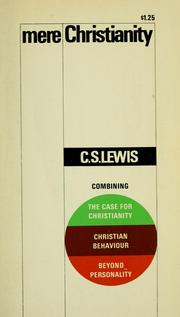
Though written by an Anglican, this is the clearest rational case for the core Christian beliefs (God, morality, the Incarnation, salvation) that Catholicism shares. It builds the theological intuition needed before reading Catholic-specific doctrine.

A classic work of Catholic theology that explains the Church, tradition, authority, and the communion of saints from the inside. It bridges popular faith and serious theology, making it the perfect next step after Lewis.
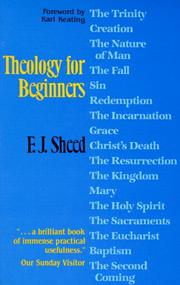
A masterpiece of clear Catholic theological writing — Sheed explains the Trinity, creation, the soul, and redemption with logical precision and warmth. It equips the reader with the doctrinal vocabulary needed for advanced reading.
The Sacraments and Lived Practice
IntermediateUnderstand the seven sacraments, the liturgy, and the daily practices of Catholic life — grasping how Catholic theology is not just believed but enacted and embodied.
▸ Study plan for this stage
Pace: 4–5 weeks, ~25–30 pages/day (approximately 180–200 pages total)
- The Mass as a participation in the heavenly liturgy described in the Book of Revelation
- The seven sacraments as encounters with Christ's redemptive work made present and tangible
- The structure and symbolism of the Catholic liturgy—how each element connects to Scripture and salvation history
- The concept of liturgy as 'work of the people'—the active role of the assembly in worship
- How the Eucharist functions as the center and source of Catholic life and practice
- The connection between sacramental theology and embodied faith—grace working through physical signs and rituals
- The historical development of the liturgy and its continuity with Jewish worship and apostolic tradition
- How does Scott Hahn connect the Book of Revelation to the structure and meaning of the Catholic Mass?
- What is the relationship between the heavenly liturgy and the earthly liturgy we celebrate in church?
- How do the seven sacraments function as 'encounters with Christ' in Catholic theology and practice?
- What does it mean that the liturgy is the 'work of the people,' and how does this shape Catholic participation in worship?
- How does Hahn explain the connection between Jewish worship practices and the Catholic liturgical tradition?
- In what ways does the Eucharist serve as both the center of Catholic life and a means of encountering Christ's redemptive power?
- Read *The Lamb's Supper* actively, marking passages where Hahn connects Revelation to the Mass structure; create a visual diagram showing how the heavenly liturgy mirrors the earthly Mass
- Attend a Catholic Mass with the book's framework in mind; afterward, journal about which elements you now recognize as sacramental signs and how they connect to Revelation
- Create a study guide for each of the seven sacraments as presented in the book, noting the scriptural basis, the grace conferred, and how it shapes Catholic life
- Write a short reflection (500–750 words) on how understanding the Mass as heavenly worship changes your understanding of Catholic practice and participation
- Compare Hahn's treatment of Old Testament worship (Temple, priesthood, sacrifice) with his explanation of how these are fulfilled in the Catholic liturgy
- Practice explaining to someone unfamiliar with Catholicism how the sacraments are 'embodied theology'—how physical signs convey spiritual grace—using examples from Hahn's work
Next up: This stage establishes the theological and liturgical foundation for understanding how Catholic faith is lived through ritual and sacrament; the next stage will deepen this by exploring specific sacraments in greater detail, the role of Mary and the saints in Catholic devotion, and how these practices shape moral and spiritual life.
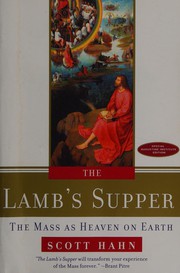
Focuses on the Mass as the heart of Catholic worship, connecting the Eucharist to the Book of Revelation and the heavenly liturgy. It is the best accessible introduction to why the Mass is central to Catholic life.
Deep Dive: The Interior Life and the Catechism
ExpertEncounter Catholicism at its most authoritative and its most mystical — reading the official summary of the faith alongside a spiritual classic that shows where Catholic doctrine ultimately leads: union with God.
▸ Study plan for this stage
Pace: 8–10 weeks, ~40–50 pages/day (alternating between Catechism and Introduction; 3 days Catechism, 2 days Introduction per week)
- The four pillars of Catholic faith: Creed, Sacraments, Morality, and Prayer — as presented in the Catechism's structure
- The relationship between doctrine and lived experience: how official teaching translates into spiritual practice
- The concept of 'devoutness' as Francis de Sales defines it — holiness available to all states of life, not just clergy or monastics
- The interior life as the foundation of Catholic practice: examination of conscience, meditation, and the cultivation of virtue
- The role of the sacraments (especially Eucharist and Reconciliation) in transforming the soul toward union with God
- Obedience, humility, and detachment as the spiritual scaffolding that supports doctrinal understanding
- The mystical dimension of Catholicism: how systematic doctrine points toward personal encounter with the divine
- How does the Catechism's four-part structure (Creed, Sacraments, Morality, Prayer) reflect the architecture of Catholic life, and how does de Sales' Introduction show this structure lived out?
- What does Francis de Sales mean by 'devoutness,' and how does this concept challenge common misconceptions about holiness?
- How do the sacraments function as bridges between doctrine and transformation in the interior life?
- What role does prayer play in both the Catechism's teaching and de Sales' spiritual direction?
- How does de Sales use specific examples and practical advice to make the Catechism's abstract doctrines concrete and actionable?
- What is the relationship between moral virtue (as taught in the Catechism) and spiritual progress (as described in the Introduction)?
- Create a personal 'doctrine-to-practice' map: for each of the four pillars in the Catechism, identify 2–3 corresponding practices from de Sales' Introduction that embody that doctrine
- Practice the examination of conscience daily (as de Sales recommends) for two weeks, journaling how this practice illuminates both your interior state and doctrinal understanding
- Select one sacrament (Eucharist or Reconciliation) and trace its theological foundation in the Catechism, then read de Sales' corresponding spiritual guidance and reflect on how doctrine shapes devotion
- Write a letter to a friend explaining 'devoutness' as de Sales defines it, using specific examples from the Introduction to show how holiness applies to ordinary life
- Meditate on one virtue per week (humility, obedience, detachment, charity) by reading the relevant Catechism section, then the corresponding de Sales passage, and practicing that virtue intentionally
- Compile a personal 'spiritual reading plan' based on de Sales' advice about choosing reading material suited to your state of life, and identify which Catechism sections most illuminate your particular vocation
Next up: This stage establishes the authoritative doctrinal foundation and shows its mystical fruition, preparing the reader to explore how Catholicism engages with the modern world and specific contemporary questions in the next stage.

The definitive, authoritative compendium of all Catholic doctrine — covering creed, sacraments, morality, and prayer. After the previous stages, the reader now has the context to read it not as a cold reference but as a living synthesis.

A 400-year-old spiritual masterpiece showing how Catholic belief is meant to transform everyday life. It is the perfect capstone: doctrine becomes devotion, and understanding becomes love.
Discussion
Keep reading
Paths that share books, cover the same subject, or open a related topic.