Understanding Eastern Orthodoxy: Best Books, in Order
This curriculum moves from accessible historical and theological orientation through the richness of Orthodox liturgy and spirituality, and finally into the deeper patristic and mystical tradition. Because the learner starts at an intermediate level, the path skips purely introductory primers and instead builds steadily from solid historical-theological grounding toward the advanced interior life of the Orthodox Church.
Historical & Theological Orientation
IntermediateUnderstand how Eastern Orthodoxy developed historically, how it differs from Western Christianity, and what its core theological claims are.
▸ Study plan for this stage
Pace: 8–10 weeks, ~40–50 pages/day. Ware's book (~400 pages) over 5–6 weeks, then Lossky (~200 pages) over 3–4 weeks, with overlap for synthesis.
- The Great Schism of 1054 and the theological/political factors that divided Eastern and Western Christianity
- The role of the ecumenical councils (especially Nicaea, Constantinople, Ephesus, Chalcedon) in defining Orthodox doctrine and the filioque controversy
- Theosis (deification) as the central goal of Orthodox theology, distinct from Western juridical models of salvation
- The Orthodox understanding of icons, the Incarnation, and the material world as vehicles of divine presence
- Apophatic theology: the unknowability of God's essence and the limits of human theological language
- The relationship between Scripture, Tradition, and the living Church in Orthodox epistemology
- Hesychasm and mystical prayer as the experiential heart of Orthodox spirituality
- The Orthodox view of the Church as conciliar, episcopal, and sacramental rather than hierarchically centralized
- What were the major historical, theological, and political causes of the Great Schism, and how does Ware present them?
- How does the Orthodox doctrine of theosis differ from Western understandings of justification and salvation, and why is this central to Lossky's mystical theology?
- What is apophatic theology, and how does Lossky argue it shapes Orthodox approaches to God, doctrine, and prayer?
- Why do icons hold theological significance in Orthodoxy, and how does this relate to the Incarnation and the material world?
- How do the ecumenical councils function as sources of authority in Orthodoxy, and what does this reveal about Orthodox ecclesiology?
- What is hesychasm, and how does Lossky present it as the experiential realization of Orthodox theological principles?
- Create a detailed timeline of the Great Schism using Ware's account, marking key theological disputes, political events, and figures; annotate which issues Lossky later addresses theologically.
- Write a comparative chart: Western vs. Orthodox theology on salvation, the Church, icons, and God's nature, drawing directly from both texts.
- Read and annotate one ecumenical council's canons or creed (e.g., Nicaea or Chalcedon, referenced in Ware) and explain how Lossky's mystical framework interprets its theological claims.
- Summarize Lossky's explanation of apophatic vs. cataphatic theology in 500 words, then apply it to a specific Orthodox doctrine (e.g., the Trinity or theosis) from Ware's historical narrative.
- Attend or watch a recorded Orthodox liturgy (or read a liturgical text like the Divine Liturgy of St. John Chrysostom) and identify theological themes from Ware and Lossky embedded in its prayers, hymns, and structure.
- Write a dialogue between a Western Christian and an Orthodox theologian discussing theosis, icons, or the role of Tradition, using specific arguments from both Ware and Lossky.
Next up: This stage establishes the historical roots and theological foundations of Orthodoxy, preparing you to engage with its lived practices, scriptural interpretation, and contemporary challenges in subsequent stages.
The single most widely-used English introduction to Orthodoxy, covering history, doctrine, and worship in two clear halves. Reading it first establishes the essential vocabulary and timeline every subsequent book assumes.

A landmark scholarly synthesis of Orthodox dogmatic theology centered on theosis (deification). Reading it third, after Ware's two books, allows the learner to engage Lossky's density with confidence.
Liturgy, Worship & Sacramental Life
IntermediateGrasp how Orthodox theology is expressed and transmitted through the Divine Liturgy, the liturgical calendar, and the sacramental life of the Church.
▸ Study plan for this stage
Pace: 8–10 weeks, ~25–30 pages/day (with reflection pauses)
- Sacramentality as the fundamental Orthodox worldview: matter, creation, and the divine are inseparably linked
- The liturgy as the Church's primary theological statement and the source of Orthodox doctrine, not merely an expression of it
- The transformation of the world through worship: how the Divine Liturgy sanctifies matter, time, and human life
- The liturgical calendar as a theology of history and salvation: how feasts, fasts, and seasons embody Orthodox understanding of Christ and the Church
- The sacraments (especially Eucharist and Baptism) as encounters with the Kingdom of God that reshape human existence
- Liturgical theology as a method: theology done from within the worshipping community, not abstracted from it
- The eschatological dimension of worship: the liturgy as an entrance into the age to come, not merely commemoration of the past
- What does Schmemann mean by 'sacramentality' and why is it central to Orthodox theology rather than a peripheral practice?
- How does the Divine Liturgy function as a theological statement in Orthodoxy, and what does it teach that doctrinal texts alone cannot?
- Explain the Orthodox understanding of matter and creation in relation to worship. Why is the material world (bread, wine, water, oil) essential to sacramental theology?
- What is the relationship between the liturgical calendar and Orthodox soteriology (doctrine of salvation)? How do the Church's seasons teach about Christ and redemption?
- How does Schmemann distinguish between liturgical theology and systematic theology? What are the advantages and limitations of each approach?
- What is meant by the 'eschatological' character of the liturgy, and how does this reshape the Orthodox understanding of the Kingdom of God?
- Read through a complete Divine Liturgy text (St. John Chrysostom) while annotating which prayers and actions correspond to Schmemann's themes of transformation, offering, and eschatology.
- Create a visual map of the liturgical calendar (one full year) marking major feasts, fasts, and their theological significance; write 2–3 sentences explaining how each season embodies a dimension of Orthodox soteriology.
- Attend or watch a full Divine Liturgy (video recording acceptable) and journal on: (a) moments where matter is consecrated or transformed, (b) how the liturgy moves between remembrance and presence, (c) what 'entering the Kingdom' feels like in the experience.
- Write a comparative essay (1,500–2,000 words): 'How does Schmemann's sacramental theology challenge Western Christian assumptions about the relationship between spirit and matter?'
- Select one sacrament (Eucharist, Baptism, Chrismation, Confession, etc.) and trace how Schmemann's principles illuminate its theology and practice; present findings in a 3–5 page reflection.
- Interview an Orthodox priest or experienced layperson about how the liturgy has shaped their faith and understanding of God; record insights on how their testimony reflects Schmemann's theological themes.
Next up: This stage establishes the liturgical and sacramental foundation of Orthodox theology, preparing you to explore how this lived, worshipping tradition addresses specific doctrinal questions—such as Christology, pneumatology, and ecclesiology—in the subsequent stage.
Schmemann's elegant essay on sacraments and the meaning of the world is the essential gateway to Orthodox liturgical theology and is accessible yet profound.
Builds directly on the previous book with a scholarly account of how Orthodox worship developed historically, deepening the learner's understanding of the lex orandi.
Patristic Foundations & Doctrinal Depth
ExpertEngage the Church Fathers and the conciliar tradition that shaped Orthodox doctrine, and understand how Orthodoxy reads and transmits Tradition.
▸ Study plan for this stage
Pace: 8–10 weeks, ~40–50 pages/day (Wilken first: 4–5 weeks; Meyendorff second: 4–5 weeks)
- The Church Fathers as living interpreters of Scripture and Tradition, not merely historical figures—their theological method and spiritual vision shape Orthodox thought
- The role of the ecumenical councils (especially Nicaea I, Constantinople I, Ephesus, Chalcedon) in defining and defending Orthodox doctrine against heresy
- Theosis (deification) as the central soteriological goal of Orthodox Christianity, rooted in Patristic theology and distinct from Western juridical atonement models
- The apophatic-cataphatic tension: how the Fathers balance negative theology (what God is not) with positive affirmations, avoiding both rationalism and agnosticism
- Tradition as a living, organic transmission of apostolic faith through the Church, not a static deposit—how the Fathers embody this dynamic process
- The Christological and Pneumatological balance in Orthodox doctrine: Christ's incarnation and the Holy Spirit's role in salvation and the life of the Church
- How Byzantine theology synthesizes Patristic thought into a coherent doctrinal system while maintaining the apophatic mystical core
- The liturgical-theological integration: how Orthodox doctrine emerges from and is inseparable from the Church's worship and sacramental life
- How do the Church Fathers approach biblical interpretation and theological reasoning, and how does this differ from modern Western theological method?
- What were the major heresies addressed by the ecumenical councils, and how did the Fathers' responses shape core Orthodox doctrines (e.g., Arianism and Nicene Christology)?
- Explain theosis (deification) as the Orthodox understanding of salvation. How is this rooted in Patristic theology and what are its implications for Christian life?
- What is the apophatic-cataphatic tension in Orthodox theology, and how do the Fathers navigate it? Why is apophatic theology essential to Orthodox thought?
- How does Orthodox Tradition differ from Roman Catholic and Protestant understandings of tradition? What role do the Fathers play in transmitting Tradition?
- How does Byzantine theology integrate Christology and Pneumatology? Why is the balance between Christ and the Holy Spirit crucial for Orthodox doctrine?
- Read and annotate a key Patristic text (e.g., Athanasius's 'On the Incarnation' or Gregory of Nyssa's 'Catechetical Oration') alongside Wilken's analysis; identify how Wilken's framework illuminates the Father's theological method
- Create a doctrinal timeline mapping the major heresies, councils, and Patristic responses (Arianism → Nicaea I → Athanasius; Nestorianism/Monophysitism → Ephesus/Chalcedon → Cyril/Leo); annotate how each shaped Orthodox doctrine
- Write a comparative essay: 'Theosis in Athanasius vs. Western Substitutionary Atonement'—use Wilken's discussion of Athanasius and Meyendorff's treatment of Byzantine soteriology
- Diagram the apophatic-cataphatic tension using specific examples from the Fathers (e.g., Pseudo-Dionysius on unknowability vs. Gregory of Nyssa on God's attributes); explain why both are necessary
- Trace one doctrinal concept (e.g., the hypostatic union, the filioque debate, or the procession of the Holy Spirit) through Wilken's Patristic sources and into Meyendorff's Byzantine synthesis; write a 2–3 page analysis
- Attend or study the liturgy of the Divine Liturgy (text + theological commentary); identify how specific liturgical elements embody the Patristic-Byzantine doctrines you've studied (e.g., epiclesis, theotokos invocation, anaphora structure)
Next up: This stage grounds you in the theological foundations and doctrinal coherence of Orthodoxy, equipping you to move forward into later stages that explore how these Patristic and Byzantine principles apply to contemporary Orthodox life, practice, and engagement with modernity.
A beautifully written account of patristic intellectual culture that shows how the Fathers thought—essential context before reading primary patristic texts.
The authoritative scholarly survey of Byzantine theological development from the Councils through Palamas; it bridges the patristic era and later Orthodox thought.
Ascetic & Mystical Tradition
ExpertEncounter the living spiritual and hesychast tradition of Orthodoxy—prayer, ascesis, and the direct experience of God—as understood by its greatest practitioners and theologians.
▸ Study plan for this stage
Pace: 8–10 weeks, ~25–35 pages/day (with contemplative pauses). Allocate 5–6 weeks to The Philokalia (selections), 2–3 weeks to Meyendorff's study, plus 1 week for integration and reflection.
- Nepsis (watchfulness) and the guarding of the heart as foundational ascetic practices—the constant awareness of thoughts and inner movements
- Hesychasm as a method of prayer: the Jesus Prayer, stillness, and the integration of body and spirit in seeking union with God
- Theosis (deification) as the ultimate goal of Orthodox spirituality—becoming partakers of the divine nature through grace
- The role of the nous (spiritual intellect) versus discursive reasoning in direct experience of God
- Palamite theology: the distinction between God's essence and energies, and how this enables genuine encounter with the divine without pantheism
- Ascetic struggle (agon) as purification: the systematic mortification of passions and the cultivation of virtues through monastic discipline
- The Jesus Prayer as a complete spiritual technology—its mechanics, theological depth, and transformative power across all states of life
- The testimony of the Church Fathers in The Philokalia as living witnesses to the possibility and practice of deification
- What is nepsis, and why do the Philokalia authors regard it as essential to all spiritual progress?
- Explain the relationship between the Jesus Prayer and hesychasm. How does repetition of the prayer lead to transformation?
- What is theosis, and how does it differ from Western Christian understandings of salvation or sanctification?
- According to Meyendorff's account of Gregory Palamas, what is the theological significance of the distinction between God's essence and energies?
- How do the ascetic practices described in The Philokalia (fasting, vigil, guarding the heart) serve the ultimate goal of union with God?
- What role does the nous play in Orthodox mystical theology, and how is it cultivated through hesychast practice?
- Practice the Jesus Prayer daily for 15–20 minutes in a quiet setting. Record observations about your inner state, distractions, and any shifts in awareness over 2–3 weeks.
- Select three short texts from The Philokalia (e.g., passages from St. Hesychios, St. Philemon, or St. Maximos) and write a 2–3 page synthesis on how they address a single theme (e.g., guarding the heart, passions, or prayer).
- Create a comparative chart mapping the ascetic practices mentioned in The Philokalia (nepsis, fasting, vigil, prayer) to their theological purpose as explained by Meyendorff's account of Palamas.
- Write a personal reflection (2–3 pages) on how the distinction between God's essence and energies (Palamite theology) changes your understanding of what 'experiencing God' or 'union with God' might mean.
- Identify and analyze one passage from The Philokalia that describes an encounter with divine light or presence. Discuss how Meyendorff's explanation of Palamas's theology illuminates this experience.
- Engage in a structured lectio divina practice using a short passage from The Philokalia, moving through reading, meditation, prayer, and contemplation. Document the process and insights.
Next up: This stage establishes the experiential and theological heart of Orthodoxy—the living tradition of prayer and deification—which now equips you to explore how this mystical vision shapes Orthodox theology, ethics, ecclesiology, and engagement with the modern world in subsequent stages.

The definitive anthology of Orthodox ascetic and mystical writing from the 4th–15th centuries; reading it after the historical and theological stages allows the learner to place each author in context.
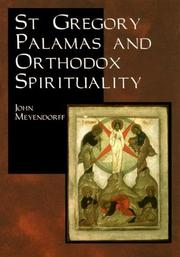
Focuses on the hesychast controversy and Palamas's theology of divine energies—the theological heart of Orthodox mysticism—completing the curriculum's arc from history to lived experience.
Discussion
Keep reading
Paths that share books, cover the same subject, or open a related topic.