Baruch Spinoza was excommunicated at twenty-three and went on to write a book of philosophy laid out like Euclid, with definitions, axioms, and propositions marching toward the claim that God and Nature are one. That geometric form is a wall for new readers. The right order, biography and guides first, turns the wall into a door.
The path begins with accessible introductions, moves to the primary texts, and ends with the commentaries and the modern rediscovery of his thought.
Getting in
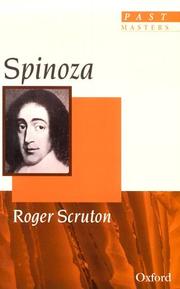
Start with Spinoza by Roger Scruton, a lucid short introduction to the whole system, and Betraying Spinoza by Rebecca Goldstein, which weaves biography, the trauma of the Jewish community's expulsion from Spain, and philosophy into a moving portrait. These prepare you for the austere prose of the man himself.
The primary texts
Read his politics first, since it is more approachable: the Theological-Political Treatise is a groundbreaking defense of free thought and a critical reading of scripture that scandalized his age. Then come to the masterwork, Ethics, where Spinoza derives a complete vision of God, mind, emotion, and freedom in geometric form. It rewards slow reading with a commentary at hand.
Commentaries and legacy
Several guides make the Ethics navigable. A study of Spinoza's Ethics by Jonathan Bennett is a rigorous analytic commentary, and Spinoza's Ethics: An Introduction by Steven Nadler is the clearest single companion for a first pass. For the metaphysics, Spinoza's metaphysics by Edwin Curley and his Behind the Geometrical Method explain how the system fits together. To place Spinoza among his peers, The rationalists by John Cottingham surveys the tradition, Spinoza and the origins of modern critical theory by Christopher Norris traces his later influence, and Looking for Spinoza by Antonio Damasio reads him through modern neuroscience of emotion.
Read in this order and Spinoza's forbidding geometry opens into one of philosophy's most rewarding systems. Follow the full path to work through it.
Follow the full reading path →
Ready to learn something deeply?
Build a reading path — free