Martin Heidegger set out to reawaken the oldest question in philosophy, the meaning of being, and to do it he built a strange new vocabulary that can baffle first readers. His work is also shadowed by his Nazi affiliation, a fact worth confronting honestly. Read in order, with strong guides, his thought becomes one of the twentieth century's most influential and can be studied critically.
The path pairs the primary works with commentaries and then traces his enormous influence on later philosophy.
The masterwork, with help
The center is Being and time, Heidegger's analysis of human existence as being-in-the-world, thrown, temporal, and mortal. Do not read it alone. Heidegger by Richard Polt is an excellent introduction to the whole project, and Division I of Heidegger's Being and Time by William Blattner is a clear commentary on the crucial first half. Heidegger and the problem of knowledge by Charles Guignon situates his break with traditional epistemology.
The wider corpus
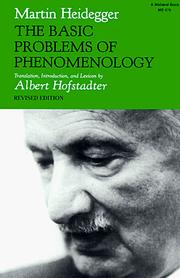
Beyond the masterwork, The Basic Problems of Phenomenology is a lucid lecture course that many find clearer than Being and time itself. Introduction to metaphysics revisits the question of being in his later idiom, and Poetry, Language, Thought collects the essays where his later thinking on art, dwelling, and language is most beautiful and accessible.
Roots and influence
Heidegger grew out of and reshaped a whole tradition. Ideas: general introduction to pure phenomenology by Edmund Husserl is the teacher he broke from, essential background for the method. His influence runs through Being and Nothingness by Jean-Paul Sartre and Phenomenology of perception by Maurice Merleau-Ponty, two landmarks of French thought. Truth and Method by Hans-Georg Gadamer extends his hermeneutics, and Of Spirit by Jacques Derrida offers a searching later engagement, including with the politics.
Read in this order and Heidegger's dense prose starts to yield its rewards. Follow the full path to read him with the guides he requires.
Follow the full reading path →
Ready to learn something deeply?
Build a reading path — free