The Renaissance: art, power & the rebirth of ideas
This curriculum takes the reader from a vivid, story-driven introduction to the Renaissance all the way through its intellectual and artistic depths, ending with the broader question of how it shaped modernity. Each stage builds the vocabulary, context, and confidence needed to tackle the richer, more demanding works that follow — so by the end, the reader can engage with primary-source ideas and specialist scholarship rather than just narrative summaries.
Foundations: The Story of the Renaissance
BeginnerGain a vivid, chronological feel for what the Renaissance was, where it happened, who the key players were, and why it matters — building the basic vocabulary and cast of characters needed for everything that follows.
▸ Study plan for this stage
Pace: 6–8 weeks total. Week 1–4: Burckhardt's "The Civilization of the Renaissance in Italy" (~20–25 pages/day, reading in its five major sections — The State as a Work of Art, The Development of the Individual, The Revival of Antiquity, The Discovery of the World and of Man, Society and Festivals). Week
- The Renaissance as a distinct historical epoch: Burckhardt's foundational argument that 14th–16th century Italy witnessed a self-conscious rebirth of classical antiquity and a new celebration of human individuality
- The Italian city-state as a political laboratory: Burckhardt's concept of 'the state as a work of art' — how despots and republics alike treated political power as something to be crafted and displayed, not merely inherited
- The emergence of the individual: Burckhardt's thesis that Renaissance Italy produced the first fully self-aware, self-fashioning modern individual — in contrast to the medieval collective identity defined by guild, church, and dynasty
- Humanism and the Revival of Antiquity: the recovery, copying, and celebration of Greek and Roman texts as the intellectual engine of the Renaissance, and the role of scholars (umanisti) in making classical learning central to education and public life
- Poggio Bracciolini and the manuscript hunters: Greenblatt's vivid portrait of how papal secretaries and humanist book-hunters physically rescued ancient texts from decaying monastery libraries, making the recovery of antiquity a literal, adventurous act
- Lucretius and 'De Rerum Natura': Greenblatt's argument that the rediscovery of this Epicurean poem — with its atomism, rejection of divine providence, and celebration of earthly pleasure — planted seeds of a modern, secular worldview
- The Swerve (clinamen) as metaphor: the Lucretian idea that atoms randomly deviate from their path, producing all change and creation — and Greenblatt's use of this as a metaphor for how a single recovered manuscript can redirect the course of history
- Why the Renaissance matters: both books together establish that the period was not merely an art-history label but a genuine transformation in how Europeans understood the state, the self, nature, and the cosmos
- According to Burckhardt, what specific political and social conditions of the Italian city-states made them the birthplace of the Renaissance rather than, say, France or England?
- How does Burckhardt define and support his claim that the Renaissance produced a new kind of 'individual' — and what medieval worldview was this individuality reacting against?
- Who was Poggio Bracciolini, what was he searching for, and why does Greenblatt argue that his discovery of Lucretius's 'De Rerum Natura' in 1417 was a pivotal moment in Western history?
- What are the core philosophical ideas in Lucretius's 'De Rerum Natura,' and how do they challenge both medieval Christian orthodoxy and the political order Burckhardt describes?
- Both Burckhardt and Greenblatt center their narratives on the recovery and celebration of classical antiquity — in what ways do their approaches to this theme complement each other, and where do they differ in emphasis?
- After reading both books, how would you explain to someone unfamiliar with the period: what was the Renaissance, roughly when and where did it happen, and why should a modern reader care about it?
- Create a one-page annotated cast of characters: as you read Burckhardt, list every major ruler, artist, scholar, and patron he names (e.g., the Visconti, Lorenzo de' Medici, Petrarch) with a two-sentence description of their role — then add Poggio and Lucretius when you reach Greenblatt. This becomes your reference sheet for all future stages.
- Draw a simple hand-drawn timeline spanning 1300–1600. Plot at least 15 events, figures, or texts from both books (e.g., Petrarch crowning as poet laureate 1341, Poggio's discovery 1417, fall of Constantinople 1453). Annotate each entry with one phrase explaining its significance to the Renaissance narrative.
- Write a 300–400 word 'dialogue across books': imagine Burckhardt's ideal Renaissance individual (self-fashioning, ambitious, steeped in antiquity) reading Lucretius's 'De Rerum Natura' for the first time. What would excite them? What would disturb them? Ground your answer in specific passages from both books.
- After finishing Burckhardt's section 'The Revival of Antiquity,' pause and write a one-paragraph definition of Renaissance Humanism in your own words — without looking at the text. Then re-read your source pages and revise it. Compare the two versions to identify gaps in your understanding.
- Map the geography: sketch or print a blank map of the Italian peninsula and mark every city Burckhardt identifies as a major Renaissance center (Florence, Venice, Milan, Rome, Ferrara, etc.). Add a brief note on what each city contributed — a dynasty, a genre of art, a famous court. This spatial grounding will pay dividends in later stages.
- Reflective journal entry (after completing both books): In 500 words, answer — 'What single idea from Burckhardt and what single idea from Greenblatt most changed how I think about this period, and why?' This forces synthesis and surfaces the questions you'll want to pursue in later, more advanced stages.
Next up: Having absorbed the Renaissance's broad chronology, key players, and animating ideas through Burckhardt's sweeping framework and Greenblatt's narrative close-up, the reader is now equipped with the vocabulary and cast of characters needed to zoom in on specific domains — art, science, religion, or politics — with genuine context and curiosity.

The foundational text that defined how the modern world understands the Renaissance. Though written in 1860, it remains the essential starting point for its sweeping, readable portrait of Renaissance culture, individualism, and society.
A Pulitzer Prize-winning narrative that shows how the rediscovery of a single ancient text helped ignite Renaissance humanism — a perfect, story-driven complement to Burckhardt that makes the intellectual stakes feel personal and urgent.
Florence and the Medici: Power, Patronage, and Politics
BeginnerUnderstand Florence as the cradle of the Renaissance — how the Medici family used wealth and patronage to commission the art and ideas that defined the age, and how politics and culture were inseparable.
▸ Study plan for this stage
Pace: 6–7 weeks total. Week 1–3: Read "April Blood" (~20–25 pages/day, including time to re-read dense political passages). Week 4–7: Read "Medici: Godfathers of the Renaissance" (~25–30 pages/day, a more narrative pace). Set aside one "reflection day" per week with no new reading — use it for journaling,
- Florence as a city-republic: how its merchant-oligarchic political structure made it uniquely fertile ground for Renaissance culture
- The Medici banking empire as the financial engine behind artistic and intellectual patronage — money, power, and beauty were one system
- Patronage as politics: commissioning art, architecture, and scholarship was a deliberate strategy for legitimacy, influence, and soft power
- The Pazzi Conspiracy (April 1478) as a lens — 'April Blood' uses this single violent event to reveal the full web of Florentine power, family rivalry, and papal politics
- The distinction between Cosimo de' Medici (the architect of Medici dominance), Lorenzo the Magnificent (its cultural zenith), and the family's eventual decline — three generations, three modes of power
- Humanism and the Platonic Academy: how Lorenzo's circle turned Florence into the intellectual capital of Europe, and why the Medici funded it
- The inseparability of art and ideology: how works by Botticelli, Brunelleschi, and Donatello were not just beautiful objects but political statements
- Violence, conspiracy, and fragility: 'April Blood' shows that Renaissance splendor rested on a foundation of ruthless realpolitik and ever-present danger
- According to Martines in 'April Blood,' what were the underlying political, economic, and personal grievances that made the Pazzi Conspiracy possible — and what does the conspiracy reveal about how power actually worked in Renaissance Florence?
- How did the Medici use banking wealth, as described by Strathern, to build a patronage network that spanned art, architecture, philosophy, and the Church — and why was this more effective than overt political rule?
- Both books portray Lorenzo de' Medici differently in emphasis — how does Martines's more critical, politically forensic view in 'April Blood' compare with Strathern's broader narrative portrait, and what does the difference tell you about historical perspective?
- What role did the Catholic Church — popes, cardinals, and clergy — play in both supporting and threatening Medici power, as shown across both books?
- How did Cosimo de' Medici lay the groundwork, according to Strathern, for everything Lorenzo later achieved — and what were the key decisions or institutions Cosimo built that made the Renaissance 'Florentine'?
- After reading both books, how would you argue that Renaissance art cannot be understood without understanding Renaissance politics?
- The Conspiracy Map: After finishing 'April Blood,' draw a relationship diagram of every major figure involved in the Pazzi Conspiracy — Pazzi family, Medici, Pope Sixtus IV, the Archbishop of Pisa, Florentine guilds. Draw arrows showing alliances, debts, rivalries, and motives. This makes Martines's dense political web visible and memorable.
- Patron's Portfolio: Using Strathern's account of Medici commissions, make a two-column list — left column: the artwork or building commissioned; right column: the political or social purpose it served for the Medici. Aim for at least 8–10 entries. Look up images of each work online as you go.
- Three Generations, Three Strategies: Write a one-page comparison of Cosimo, Piero, and Lorenzo de' Medici as leaders, drawing only on Strathern. For each: What was their primary tool of power? What was their greatest vulnerability? This forces you to track change across time rather than treating 'the Medici' as a monolith.
- Dueling Portraits of Lorenzo: Write a short paragraph (150–200 words) describing Lorenzo de' Medici as Martines might characterize him, then another as Strathern might. Then write a third paragraph reflecting on why the two portraits differ — what sources, methods, or goals shape each author's lens?
- Walk the City (Virtual or Real): Using free tools like Google Arts & Culture or the virtual Uffizi tour, 'visit' three Medici-commissioned sites mentioned in Strathern (e.g., the Palazzo Medici Riccardi, Brunelleschi's dome, Botticelli's 'Primavera'). For each, write 2–3 sentences connecting what you see to something specific you read.
- Timeline of Power: Build a single master timeline from ~1397 (founding of the Medici bank) to ~1494 (expulsion of the Medici). Mark key events from both books — banking milestones, artistic commissions, political crises, the Conspiracy, Lorenzo's death. Color-code by theme: red for political violence, gold for patronage, blue for banking. This integrates both books into one coherent arc.
Next up: By grounding you in how one city and one family fused money, art, and politics into a self-reinforcing system, this stage equips you to recognize those same dynamics — patronage, humanism, and power — playing out on a broader European stage as the Renaissance spreads beyond Florence.
A gripping account of the Pazzi Conspiracy of 1478 that doubles as a masterclass in Florentine politics, banking, and the Medici's central role — it makes the social machinery of Renaissance patronage concrete and dramatic.

A clear, chronological biography of the Medici dynasty that traces their patronage of Botticelli, Leonardo, Michelangelo, and others — ideal for cementing the link between money, power, and artistic genius before moving deeper.
The Great Artists and Their World
IntermediateEngage closely with the lives and works of the Renaissance's defining artists — Leonardo, Michelangelo, and Raphael — understanding not just biography but how their art embodied Renaissance ideals of beauty, humanism, and ambition.
▸ Study plan for this stage
Pace: 10–12 weeks total: ~4–5 weeks for "Lives of the Artists" (Vasari is dense and episodic — aim for 20–25 pages/day, focusing on the Lives of Leonardo, Michelangelo, Raphael, Botticelli, and Giotto as anchors, with selective reading of supporting Lives); ~6–7 weeks for "Leonardo da Vinci" by Isaacson (
- The Renaissance 'myth of the artist': Vasari's Lives essentially invented the idea of the artistic genius as a heroic individual — understanding how Vasari frames artists like Michelangelo and Leonardo as divinely gifted shapes how we still talk about art today.
- Disegno as a foundational Renaissance value: the primacy of drawing (disegno) as both a technical skill and a philosophical act — the visible expression of the artist's inner idea — runs through both Vasari and Isaacson's analysis of Leonardo's notebooks.
- Humanism embodied in form: how Renaissance artists used anatomical study, mathematical proportion (sfumato, contrapposto, the golden ratio) and classical references to place the human figure at the center of the cosmos.
- The workshop system and artistic apprenticeship: Vasari reveals how Renaissance art was produced — through botteghe, master-apprentice chains, and fierce competition — giving context to why rivalry between Leonardo, Michelangelo, and Raphael was both personal and ideological.
- Leonardo's 'unfinishedness' as a philosophical statement: Isaacson argues that Leonardo's habit of leaving works incomplete (the Adoration of the Magi, the Sforza horse) reflects an obsessive pursuit of perfection and a mind that crossed art and science inseparably.
- The role of patronage and power: both books illuminate how the Medici, the papacy, and secular courts shaped what artists could create — art was never made in a vacuum but in negotiation with wealth and politics.
- Michelangelo's Neoplatonism: Vasari's Life of Michelangelo shows how his sculpture and painting were infused with Neoplatonic ideas — the body as a prison of the soul, beauty as a path to the divine — connecting Renaissance art to its philosophical roots.
- Observation and curiosity as artistic method: Isaacson's central thesis — that Leonardo's genius came from an insatiable, almost childlike curiosity about the natural world — reframes Renaissance art as a product of empirical observation as much as aesthetic tradition.
- According to Vasari, what distinguishes the 'third age' of art (the age of Leonardo and Michelangelo) from the earlier work of Giotto or Masaccio — and what does this progression reveal about his theory of artistic history?
- How does Vasari's own position as an artist and Florentine insider shape the biases and blind spots visible in Lives of the Artists — for instance, in his treatment of Venetian painters or his elevation of Michelangelo above all others?
- Isaacson argues that Leonardo's notebooks are the key to understanding his paintings. Using at least two specific examples from 'Leonardo da Vinci,' explain how his scientific investigations (anatomy, optics, geology, fluid dynamics) directly influenced his artistic choices.
- What does the concept of sfumato — as described by Isaacson — reveal about Leonardo's philosophy of knowledge and perception? How is it more than just a painting technique?
- Both Vasari and Isaacson depict their subjects navigating powerful patrons (the Medici, Ludovico Sforza, Pope Julius II, Francis I). What do these relationships reveal about the tension between artistic freedom and political dependency in the Renaissance?
- If Vasari's Lives created the template for how we think about artistic genius, in what ways does Isaacson's biography of Leonardo both follow and challenge that template?
- **The Comparative Portrait Exercise:** Choose one artist covered in depth by Vasari (Leonardo, Michelangelo, or Raphael) and write a two-page comparison between Vasari's account of a specific work and Isaacson's account of the same work (e.g., the Last Supper, the Sistine Chapel). Note where they agree, where they diverge, and what each author's framing reveals about his own era and purpose.
- **Slow-Looking Practice:** Select one painting discussed in Isaacson's Leonardo — the Virgin of the Rocks, the Lady with an Ermine, or the Mona Lisa — and spend 20 uninterrupted minutes studying a high-resolution image before reading Isaacson's chapter on it. Write half a page of your own observations, then read the chapter and note what you missed or saw differently.
- **Vasari's Ranking Game:** After finishing Lives of the Artists, reconstruct Vasari's implicit hierarchy of artistic virtues (what does he praise most — invention? grace? difficulty? naturalism?). Then apply that rubric to Leonardo as described by Isaacson: would Vasari's criteria fully capture what made Leonardo great? Write a one-page argument.
- **Notebook Imitation:** Leonardo's notebooks combined observational sketches with written questions and hypotheses. Spend one week keeping a small notebook in this spirit — sketch one natural object per day (a hand, a plant, water in a glass) and write 2–3 questions the observation raises. Reflect at the end of the week on how this practice changes your relationship to looking.
- **Patronage Map:** Using both books, create a visual diagram or chart mapping at least six artists to their primary patrons, the works produced under each relationship, and one way the patron's agenda shaped the artwork. Identify any patterns across the Renaissance patronage system.
- **'Lives of the Artists' Rewrite:** Pick one of Vasari's shorter Lives (Botticelli or Perugino work well) and rewrite it in the style of Isaacson — replacing Vasari's anecdote-and-moral structure with a curiosity-driven, evidence-based narrative. This exercise makes the difference in historical methodology viscerally clear.
Next up: By internalizing how individual genius, humanist philosophy, and patronage networks shaped the Renaissance's greatest art, the reader is now equipped to zoom out and examine the broader political, scientific, and social forces — the printing press, the Reformation, the rise of nation-states — that both enabled and ultimately disrupted the Renaissance world these artists inhabited.
Written in 1550 by a contemporary artist, this is the original source for Renaissance biography — reading Vasari is hearing the Renaissance speak about itself, and it provides irreplaceable first-hand texture and anecdote.

A richly illustrated modern biography that uses Leonardo's notebooks to explore how his art and science were one unified project — the ideal deep-dive into the Renaissance's greatest polymath after Vasari has set the stage.
Ideas and Humanism: The Renaissance Mind
IntermediateMove from art and biography into the intellectual heart of the Renaissance — humanism, political philosophy, and the recovery of classical thought — understanding how Renaissance thinkers reimagined the human being and the state.
▸ Study plan for this stage
Pace: 8–10 weeks total: Weeks 1–3 for "The Prince" (~15–20 pages/day, including re-reading key chapters); Weeks 4–10 for "The Portable Renaissance Reader" (~25–30 pages/day, reading thematically grouped selections in clusters rather than straight through)
- Humanism and the studia humanitatis: the Renaissance recovery of Greek and Latin classical texts as a program for reshaping human self-understanding and civic life
- Virtù vs. Fortuna in Machiavelli: the tension between human agency, skill, and adaptability on one side, and the unpredictable force of circumstance on the other
- The 'New Prince' and realpolitik: Machiavelli's radical separation of political effectiveness from traditional Christian morality and medieval political theology
- The dignity of man: the Renaissance philosophical conviction — expressed across The Portable Renaissance Reader — that human beings occupy a unique, self-fashioning place in the cosmos (Pico della Mirandola's 'Oration' as its landmark text)
- Civic humanism: the idea, running through many selections in the Reader, that the active life in the city-state (vita activa) is morally superior to monastic withdrawal, and that the educated citizen has duties to the republic
- The recovery and reinterpretation of antiquity: how Renaissance thinkers (Petrarch, Bruni, Valla, Erasmus) did not simply copy classical sources but argued with, translated, and transformed them for contemporary purposes
- The relationship between rhetoric and power: how mastery of language — letters, orations, histories — was understood as a form of political and moral authority in Renaissance culture
- Secularization of thought: the gradual shift, visible across both books, from a God-centered medieval worldview toward a human-centered one, without necessarily abandoning Christian faith
- According to Machiavelli in The Prince, what is the relationship between virtù and fortuna, and why does he argue that a prince must be both a lion and a fox? Use at least two specific chapters to support your answer.
- How does Machiavelli's advice in The Prince represent a break from the medieval 'mirror for princes' tradition? What assumptions about human nature and political morality underlie that break?
- Based on the selections in The Portable Renaissance Reader, how did Renaissance humanists define the 'dignity of man,' and in what ways did this concept challenge or complement medieval Christian anthropology?
- What did civic humanists (as represented in the Reader) mean by the vita activa, and how did they use classical sources — particularly Cicero — to argue for the moral value of political engagement over contemplative withdrawal?
- How did Renaissance scholars like Lorenzo Valla use philology and textual criticism as tools of intellectual and political argument? What does this reveal about the relationship between language and power in the period?
- Taken together, what picture of the Renaissance 'self' emerges from both The Prince and The Portable Renaissance Reader — and where do Machiavelli's assumptions about human nature most sharply agree or conflict with those of the humanists in the Reader?
- Close-reading journal for The Prince: After each reading session, write 150–200 words paraphrasing Machiavelli's core argument in that chapter in your own words, then add 2–3 sentences noting where you agree, disagree, or find the logic surprising. This forces active engagement rather than passive reading.
- Concept-mapping the Reader: As you move through the thematic sections of The Portable Renaissance Reader, build a running concept map (on paper or digitally) connecting authors, key terms, and ideas. Draw explicit lines between, for example, Petrarch's humanism → Bruni's civic humanism → Machiavelli's political realism, noting continuities and ruptures.
- Comparative essay (500–700 words): Write a focused comparison of Machiavelli's view of human nature in The Prince with the view expressed in one or two selections from The Portable Renaissance Reader (e.g., Pico's 'Oration on the Dignity of Man' or Erasmus). Are humans fundamentally self-interested and dangerous, or self-fashioning and dignified — or both?
- Translate a passage into modern political language: Choose one chapter of The Prince (Chapter 15, 17, or 18 work well) and rewrite it as if Machiavelli were advising a contemporary political leader. Then write a short paragraph reflecting on what is lost or gained in the translation — this surfaces assumptions embedded in the original.
- Debate preparation exercise: Using evidence drawn from both books, prepare a 10-minute argument for one of the following positions — (a) Machiavelli IS a humanist, or (b) Machiavelli BETRAYS humanism. Write out your three strongest points and your two strongest counterarguments. Deliver it aloud, even to yourself.
- Timeline and context card set: Create a set of index cards (physical or digital), one per major author or text encountered in The Portable Renaissance Reader. Each card should include: dates, city/patron context, the classical source they most relied on, and one sentence on their key idea. Arrange them chronologically and geographically to see the movement of Renaissance thought across time and pl
Next up: By internalizing how Renaissance thinkers reimagined human agency, political life, and classical authority, the reader is now equipped to follow these ideas as they travel north across the Alps and collide with religious reform — setting the stage for understanding the Reformation as, in part, a humanist project turned radical.
The most famous Renaissance text on politics and power, written by a Florentine insider — reading it at this stage, with full historical context already in place, reveals it as a product of its precise moment rather than an abstract treatise.
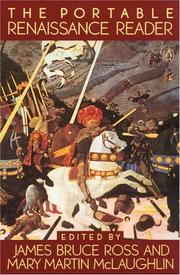
A carefully curated anthology of primary sources — Petrarch, Pico della Mirandola, Erasmus, More, and others — that lets the reader hear the humanists directly and see how their ideas formed a coherent intellectual movement.
The Renaissance and the Birth of the Modern World
ExpertSynthesize everything into a panoramic understanding of how the Renaissance — its art, science, politics, and philosophy — cracked open the medieval worldview and set the conditions for the modern age, from the Scientific Revolution to the Reformation.
▸ Study plan for this stage
Pace: 6–8 weeks total: Weeks 1–3 cover Johnson's "The Renaissance" (~25–30 pages/day, reading it as a sweeping intellectual and cultural survey); Weeks 4–7 cover King's "Michelangelo and the Pope's Ceiling" (~20–25 pages/day, reading slowly and reflectively given its narrative density); Week 8 is reserved
- The Renaissance as rupture: Johnson's core argument that the Renaissance was not merely a 'rebirth' of antiquity but a fundamental crack in the medieval worldview — a shift from God-centered to human-centered thought (humanism)
- Interdisciplinarity as Renaissance identity: How the same figures moved fluidly between art, science, engineering, philosophy, and politics — and why that synthesis was itself a revolutionary act
- Patronage and power: How the Medici, the papacy (especially Julius II in King's book), and city-states shaped, funded, and sometimes distorted artistic and intellectual production
- The Sistine Chapel ceiling as a total Renaissance object: King's detailed account reveals how the ceiling synthesizes Neoplatonist philosophy, Christian theology, classical antiquity, and cutting-edge artistic technique into a single unified vision
- The mechanics of artistic creation: King grounds abstract Renaissance genius in concrete reality — the physical suffering, contractual disputes, workshop politics, and technical improvisation behind Michelangelo's masterpiece
- The papacy as a Renaissance institution: Julius II's militarism, ambition, and cultural patronage illustrate how the Church itself was transformed by — and helped drive — Renaissance values, setting the stage for the Reformation's backlash
- The Scientific Revolution as Renaissance offspring: Johnson traces how Renaissance empiricism, anatomical study, perspective geometry, and skepticism of inherited authority laid the intellectual groundwork for Copernicus, Vesalius, and Galileo
- Individual genius vs. collective culture: Both books wrestle with the tension between the 'great man' narrative and the broader social, economic, and theological forces that made such individuals possible
- According to Johnson, in what specific ways did Renaissance humanism challenge the medieval scholastic worldview — and what were the limits of that challenge?
- How does King's account of the Sistine Chapel commission complicate the romantic myth of the solitary, inspired genius? What does the reality of Michelangelo's working conditions reveal about Renaissance artistic production?
- What role did the papacy — particularly Julius II as portrayed by King — play as both enabler and constraint of Renaissance creativity? How does this dual role help explain the eventual Protestant Reformation?
- Across both books, how did the rediscovery of classical antiquity function — was it a source of liberation, a new form of authority, or both? Use specific examples from Johnson and King to support your answer.
- Johnson argues the Renaissance set the conditions for the modern world. Drawing on both books, what would you identify as the single most consequential Renaissance shift — intellectual, artistic, or political — and why?
- How do Johnson's broad survey and King's deep narrative case study complement each other as historical methods? What does each approach reveal that the other cannot?
- Comparative annotation: As you read Johnson, keep a running two-column log — one column for 'ideas/movements,' one for 'specific individuals.' Then, when you reach King, map Michelangelo and Julius II onto Johnson's framework. Where do they confirm his thesis? Where do they complicate or contradict it?
- The Sistine ceiling close-read: Using King's chapter-by-chapter descriptions as a guide, spend one session studying high-resolution images of the Sistine ceiling panels in sequence (Google Arts & Culture has gigapixel views). Identify at least five specific iconographic choices King explains and articulate why each one reflects a Renaissance — rather than purely medieval — sensibility.
- Patronage power map: Draw a diagram mapping the web of relationships in King's book: Julius II, Michelangelo, Bramante, Raphael, the Vatican bureaucracy, and the banking families. Draw arrows indicating who held power over whom, who was in competition, and who was collaborating. Then write a one-paragraph reflection on what this map reveals about how Renaissance culture was actually produced.
- Johnson synthesis essay (500–700 words): After finishing Johnson, write a personal essay answering: 'Was the Renaissance a revolution or an evolution?' Commit to a thesis, use at least four specific examples from the book, and anticipate one counterargument. Revisit and revise this essay after finishing King — does your answer change?
- Timeline of ruptures: Build a master timeline spanning the full period covered by both books, marking not just dates but 'conceptual ruptures' — moments Johnson or King identifies where a new idea, technique, or event made the old worldview impossible to sustain. Annotate each entry with one sentence explaining the rupture's significance.
- Cross-stage reflection journal: After completing both books, write three journal entries from the imagined perspective of (1) a medieval monk encountering Michelangelo's Adam for the first time, (2) Julius II defending his decision to commission the ceiling to a skeptical cardinal, and (3) Paul Johnson himself critiquing one of Ross King's interpretations. This exercise forces you to inhabit the m
Next up: By establishing the Renaissance as the hinge between the medieval and modern worlds — through Johnson's panoramic argument and King's granular case study — this stage equips the reader with both the 'why' and the 'how' of cultural transformation, making the next stage's exploration of the Reformation, the Scientific Revolution, or early modernity feel like a direct and inevitable consequence rathe
A concise but authoritative synthesis by a major historian that ties together art, religion, science, and exploration into a single argument about why the Renaissance was the hinge of Western history — perfect as a capstone overview.
A masterful narrative of the Sistine Chapel's creation that serves as a final, intimate case study — weaving together art, theology, patronage, and personality to show the Renaissance at its most concentrated and magnificent peak.
Discussion
Keep reading
Paths that share books, cover the same subject, or open a related topic.