Understanding Descartes: essential books on the father of modern philosophy
This curriculum takes a beginner from zero background in philosophy all the way to a sophisticated, critical understanding of Descartes' thought. It begins by building general philosophical literacy and historical context, moves into Descartes' own accessible writings, deepens with scholarly interpretation of his core doctrines (rationalism, the cogito, mind-body dualism), and finally situates him critically within the broader tradition of modern philosophy.
Foundations: Philosophical Literacy & Context
BeginnerBuild basic philosophical vocabulary, learn how to read philosophical texts, and understand the historical moment (the Scientific Revolution, scholasticism) that made Descartes' project urgent and revolutionary.
▸ Study plan for this stage
Pace: 8–10 weeks, ~40–50 pages/day (mix of reading and reflection)
- The pre-Socratic philosophers and their fundamental questions about reality, change, and being
- The distinction between rationalism and empiricism as two major epistemological traditions
- Scholasticism and medieval philosophy's reliance on Aristotle and theological authority
- The Scientific Revolution's challenge to Aristotelian physics and the rise of mechanical explanation
- How philosophical literacy involves close reading, identifying arguments, and tracing historical influence
- The historical context that made Descartes' method of doubt and mind-body problem urgent
- The relationship between ancient philosophy, medieval synthesis, and early modern innovation
- What were the main concerns of pre-Socratic philosophers, and how did their answers differ from one another?
- How did scholasticism use Aristotle and theology to explain the world, and why did this framework eventually face challenges?
- What is the difference between rationalist and empiricist approaches to knowledge, and where do early thinkers fall on this spectrum?
- How did the Scientific Revolution change the way philosophers thought about causation, motion, and the nature of matter?
- What does it mean to 'read philosophically,' and what should you look for when encountering a philosophical argument?
- Why was Descartes' project of radical doubt and his focus on the mind-body problem a response to the intellectual crisis of his time?
- Create a timeline of major philosophers from the pre-Socratics through the medieval period, noting their key ideas and how they influenced later thinkers
- Write one-page summaries of 5–6 major philosophical schools (Stoicism, Platonism, Aristotelianism, Scholasticism, etc.) using only the books as sources
- Identify and extract 3–4 key arguments from chapters on ancient or medieval philosophy; diagram the logical structure of each (premise → conclusion)
- Keep a 'philosophical vocabulary journal' with 20–30 terms (e.g., epistemology, metaphysics, substance, essence, efficient cause) with definitions and examples from the texts
- Write a 2–3 page reflection on how one specific scientific discovery (e.g., heliocentrism, the telescope) would have challenged scholastic philosophy
- Trace the intellectual lineage of one concept (e.g., the nature of the soul, the problem of change) from the pre-Socratics through medieval thinkers, showing how it evolved
Next up: This stage equips you with the philosophical vocabulary, reading skills, and historical awareness necessary to understand Descartes not as an isolated genius but as a thinker responding to specific intellectual crises—preparing you to engage deeply with his actual texts and revolutionary method in the next stage.

A narrative introduction to the entire history of Western philosophy, it gives beginners the conceptual vocabulary and historical arc needed to place Descartes in context before reading him directly.
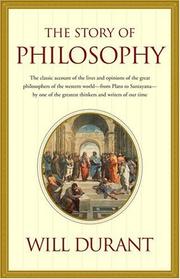
Durant's lucid, engaging portraits of major philosophers — including Descartes — provide a second pass at context, making the transition from popular narrative to serious study feel natural.
Primary Sources: Reading Descartes Himself
BeginnerRead Descartes in his own words, following his method of doubt, the cogito ('I think, therefore I am'), the existence of God, and the mind-body distinction as he himself constructed them.
▸ Study plan for this stage
Pace: 8–10 weeks, ~20–25 pages/day (with 1–2 reflection days per week). Begin with Discourse on Method (Part I–VI, ~80–100 pages), then move to Meditations on First Philosophy (all 6 meditations, ~80–100 pages).
- The Method of Doubt: Descartes' systematic rejection of uncertain beliefs to find an indubitable foundation for knowledge
- The Cogito, ergo sum ('I think, therefore I am'): the first certainty that survives radical doubt and serves as the foundation for all knowledge
- God's Existence: Descartes' arguments for God (the trademark argument, the causal argument) and why God's existence is necessary to guarantee the reliability of reason
- The Mind-Body Distinction: Descartes' dualism—the separation of res cogitans (thinking substance) from res extensa (extended substance) and the problem this creates
- Clear and Distinct Ideas: Descartes' criterion for truth—ideas that are clear and distinct must be true because God would not deceive us
- The Wax Argument: Descartes' demonstration that intellect, not sensation, is the true source of knowledge about material objects
- The Methodical Path from Doubt to Certainty: how Descartes rebuilds knowledge step-by-step from the cogito outward
- Reason as the Universal Tool: Descartes' conviction that proper method and rational reflection can solve any problem
- What is the Method of Doubt, and why does Descartes employ it? What types of beliefs does he systematically reject?
- Why does Descartes arrive at 'I think, therefore I am' as indubitable, and how does this serve as the foundation for rebuilding knowledge?
- What are Descartes' main arguments for God's existence, and why is God's existence crucial to his epistemology?
- How does Descartes distinguish between mind (res cogitans) and body (res extensa), and what problems does this distinction raise?
- What is the Wax Argument, and what does it demonstrate about the nature of knowledge and perception?
- How does Descartes use the concept of 'clear and distinct ideas' to establish criteria for truth?
- Outline the Method of Doubt: List each stage of doubt Descartes employs in Discourse on Method (Parts I–II) and Meditations I, noting what he doubts and why.
- Trace the Cogito: Write a 1–2 page explanation of how Descartes arrives at the cogito in Meditation II, and explain why this claim cannot be doubted even by the evil demon.
- Map the Arguments for God: Create a diagram or written summary of each argument for God's existence presented in Meditations III and V, noting the logical steps and premises.
- Analyze the Wax Argument: Read Meditation II's wax passage carefully, then write a paragraph explaining what Descartes proves about intellect vs. sensation and why this matters.
- Construct a Dialogue: Write a short dialogue between Descartes and a skeptic in which Descartes defends his method of doubt and explains how it leads to certainty rather than endless skepticism.
- Compare Discourse and Meditations: Create a side-by-side comparison of how Descartes presents the cogito and God's existence in Discourse on Method vs. Meditations, noting differences in tone and rigor.
Next up: This stage grounds you in Descartes' own voice and reasoning, establishing the foundational concepts (doubt, the cogito, God, mind-body dualism) that all subsequent interpretations and critiques build upon, preparing you to engage with secondary scholarship that either defends or challenges his conclusions.
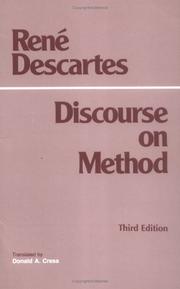
Descartes' most accessible and autobiographical work; it introduces his four-rule method and the famous cogito in plain prose, making it the ideal first primary text for any beginner.
The masterwork — six meditations that systematically deploy radical doubt, establish the cogito, prove God's existence, and argue for mind-body dualism. Read after the Discourse so the method is already familiar.
Guided Interpretation: Unpacking the Core Doctrines
IntermediateUnderstand what scholars mean by Cartesian rationalism, methodical doubt, and dualism; resolve common confusions about the cogito and the 'Cartesian circle'; and see how Descartes' arguments actually work under scrutiny.
▸ Study plan for this stage
Pace: 4–5 weeks, ~25–30 pages/day, with 2–3 days per week dedicated to close reading of key chapters and synthesis work
- Cartesian rationalism: the doctrine that reason (not sensation) is the primary source of knowledge, and how Descartes privileges clear and distinct ideas
- Methodical doubt (systematic skepticism): the method of doubting all beliefs that can possibly be doubted to find an indubitable foundation for knowledge
- The cogito, ergo sum: what it actually claims, why it resists doubt, and why it is not a logical syllogism but an intuitive certainty
- Mind-body dualism: the distinction between res cogitans (thinking substance) and res extensa (extended substance), and the interaction problem
- The Cartesian circle: the apparent circularity in Descartes' attempt to validate reason through God's existence and God's existence through reason
- The role of God in Descartes' system: how God guarantees the reliability of clear and distinct ideas and bridges the gap between mind and body
- Descartes' arguments for God's existence: the trademark argument and its structure, and why it matters for his epistemology
- Common scholarly confusions and how Cottingham's commentary resolves them: distinguishing Descartes' actual claims from later Cartesian interpretations
- What is the relationship between methodical doubt and the cogito? Why does Descartes use doubt as a method, and what does the cogito establish that doubt cannot undermine?
- Explain the Cartesian circle: what is the apparent problem, and what are the main scholarly interpretations of whether Descartes actually falls into it?
- How does Descartes distinguish between the mind and the body, and what is the interaction problem? What solutions does he propose or suggest?
- What role does God play in Descartes' epistemology? How does God's existence and nature guarantee the reliability of reason?
- What does it mean to say Descartes is a rationalist? How does his view of reason differ from empiricism, and what counts as a clear and distinct idea?
- Why is the cogito not a syllogism? What makes it an intuitive certainty, and what exactly does it prove about the thinking subject?
- Map the structure of Descartes' Meditations using Cottingham's chapter on method: create a flowchart showing how methodical doubt leads to the cogito, then to God, then to the validation of reason
- Write a 500-word explanation of the Cartesian circle in your own words, then compare it to Cottingham's treatment; identify which scholarly interpretation (e.g., Descartes avoids the circle, or the circle is real but not vicious) you find most convincing and why
- Create a two-column table: one side lists Descartes' claims about mind-body interaction, the other lists the philosophical problems this creates; then annotate with Cottingham's commentary on how Descartes addresses (or fails to address) each problem
- Close-read one of Descartes' arguments for God's existence (e.g., the trademark argument from Meditation III) by breaking it into premises and conclusions; then write a paragraph on how Cottingham explains why this argument was persuasive to Descartes' contemporaries and what modern objections exist
- Identify three common misconceptions about Cartesian rationalism or dualism (e.g., 'Descartes thought the mind is non-physical and therefore immaterial'), then use Cottingham's text to explain why each is a misreading and what Descartes actually claimed
- Write a dialogue between a skeptic and Descartes in which the skeptic challenges the cogito, the reliability of reason, and the coherence of dualism; use Cottingham's explanations to construct Descartes' most defensible responses
Next up: By mastering the core doctrines and resolving scholarly confusions through Cottingham's guidance, you will be equipped to engage critically with Descartes' original texts and evaluate how later philosophers (Spinoza, Leibniz, Kant, and modern interpreters) responded to, refined, or rejected his rationalism and dualism.
Cottingham — the leading English translator of Descartes — offers a compact, rigorous analysis of rationalism, the cogito, and dualism, deepening what Hatfield introduced with greater philosophical precision.
Going Deeper: Mind, Body, and the Problem of Dualism
IntermediateCritically examine Cartesian mind-body dualism — its philosophical consequences, its notorious difficulties (the interaction problem), and its lasting influence on philosophy of mind.
▸ Study plan for this stage
Pace: 6–7 weeks, ~40–50 pages/day (Ryle: ~3 weeks; Damasio: ~3–4 weeks, with 1 week for integration and review)
- Ryle's critique of Cartesian dualism: the 'ghost in the machine' metaphor and the category mistake underlying mind-body separation
- Behaviorism as an alternative framework: how mental states can be understood as dispositions to behave rather than private inner substances
- The interaction problem: the logical and causal difficulties of explaining how an immaterial mind could influence a physical body
- Damasio's somatic marker hypothesis: how emotions and bodily states are constitutive of reasoning, not separate from it
- The role of affect and embodied experience in cognition: evidence that mind and body are integrated, not dualistic
- Descartes' legacy in modern neuroscience and philosophy of mind: how dualism persists despite empirical challenges
- The limitations of both Cartesian dualism and strict behaviorism: moving beyond false dichotomies
- What is Ryle's 'category mistake' and how does it undermine Cartesian dualism? Give a concrete example.
- How does Ryle's concept of mental dispositions differ from Descartes' notion of the immaterial mind? What are the strengths and weaknesses of each view?
- What is the interaction problem, and why does Damasio's somatic marker hypothesis offer a response to it?
- According to Damasio, what is the relationship between emotion, bodily states, and rational decision-making? How does this challenge Cartesian assumptions?
- How do Ryle and Damasio each argue against mind-body dualism, and where might their arguments complement or diverge?
- What does Damasio mean by 'Descartes' Error,' and what evidence does he present from neuroscience to support his critique?
- Map the interaction problem: Create a diagram showing Descartes' proposed causal relationship between mind and body, then identify the logical gaps Ryle and Damasio expose.
- Analyze a mental state using Ryle's framework: Take a concept like 'intelligence' or 'jealousy' and describe it as a behavioral disposition rather than a private mental event. Compare this to how Descartes would describe it.
- Close reading: Select one key passage from Ryle (e.g., the 'ghost in the machine' section) and one from Damasio (e.g., on the somatic marker hypothesis). Annotate them carefully and write a 500-word analysis of how each author builds their argument.
- Case study application: Choose a real-world example of decision-making or emotion (e.g., fear, moral judgment, or risk assessment) and explain it using both Ryle's behaviorist framework and Damasio's somatic marker hypothesis. Which better accounts for the phenomenon?
- Debate preparation: Prepare arguments defending and attacking Cartesian dualism using evidence from both texts. Practice articulating the strongest version of each position.
- Concept synthesis: Create a visual concept map showing how Ryle's critique of dualism, Damasio's neuroscientific evidence, and the interaction problem all interconnect. Use this to write a 1000-word essay on the integrated mind-body relationship.
Next up: By dismantling Cartesian dualism and establishing the mind-body integration through both philosophical critique and neuroscientific evidence, this stage prepares you to explore contemporary alternatives to dualism—such as physicalism, functionalism, and embodied cognition—and to engage with current debates in philosophy of mind and cognitive science.
Ryle's classic demolition of what he calls the 'ghost in the machine' is the most famous critique of Cartesian dualism; reading it sharpens your understanding of exactly what Descartes claimed and why it matters.
A neuroscientist's challenge to the mind-body split from modern science, showing how Descartes' dualism has shaped — and distorted — our understanding of reason, emotion, and the body.
Advanced Synthesis: Descartes and the Birth of Modern Philosophy
ExpertSituate Descartes within the rationalist tradition, trace his influence on Spinoza, Leibniz, Kant, and beyond, and evaluate his foundational role in shaping epistemology and metaphysics for the modern era.
▸ Study plan for this stage
Pace: 6–8 weeks, ~40–50 pages/day (Russell: 3–4 weeks, ~35 pages/day; Curley: 2–3 weeks, ~45 pages/day)
- Descartes as the founding figure of modern rationalism and the epistemological turn toward the subject
- The method of doubt and the cogito, ergo sum as the unshakeable foundation for knowledge
- How Descartes's dualism (mind-body problem) shaped subsequent metaphysical debates in the rationalist tradition
- Descartes's response to skepticism and the role of God's existence in guaranteeing the reliability of reason
- The transmission and transformation of Cartesian ideas through Spinoza, Leibniz, and Kant
- The distinction between Cartesian rationalism and empiricism as competing epistemological frameworks
- How Descartes's mechanistic physics and mind-body separation created enduring philosophical problems
- The historical contingency of Descartes's influence: why he became canonical and what alternatives were eclipsed
- How does Descartes's method of doubt function as a response to skepticism, and why does Curley argue it succeeds or fails?
- What is the relationship between the cogito and God's existence in Descartes's system, and how does this differ from later rationalists like Spinoza and Leibniz?
- How did Descartes's mind-body dualism create the 'hard problem' that subsequent philosophers had to address?
- According to Russell, what made Descartes the pivotal figure in the transition from medieval to modern philosophy?
- How did Kant's critical philosophy both build upon and fundamentally revise Cartesian rationalism?
- What are the key differences between Descartes's rationalism and the empiricist critique of his foundationalism?
- Map the logical structure of Descartes's argument from doubt to the cogito to God's existence (as presented in both Russell and Curley), identifying where each author agrees or diverges in interpretation
- Write a 1,500–2,000 word comparative essay on how Spinoza or Leibniz either accepted or rejected Descartes's dualism, using Russell's historical narrative to contextualize the debate
- Create a genealogical chart tracing one key Cartesian concept (e.g., the mind-body problem, the method of doubt, or the role of God) through Spinoza, Leibniz, and Kant, with brief annotations from the texts
- Reconstruct Curley's strongest objection to a standard reading of Descartes, then write a 500-word response defending or refuting his interpretation with textual evidence
- Identify 3–4 passages from Russell where he explicitly claims Descartes 'broke with' medieval philosophy; analyze whether these claims hold up under Curley's more detailed scrutiny
- Debate exercise: argue both sides of whether Descartes's dualism was a necessary step toward modern science or an obstacle that later philosophers had to overcome
Next up: This stage establishes Descartes as the indispensable origin point of modern epistemology and metaphysics, equipping you to evaluate whether subsequent philosophical movements (empiricism, German idealism, phenomenology) represent genuine alternatives to Cartesianism or merely variations on its core assumptions.
Russell's magisterial survey, read now with full Cartesian knowledge, reveals how Descartes' method and dualism set the agenda for every major philosopher who followed — rationalists, empiricists, and Kant alike.

A rigorous scholarly work that reconstructs Descartes' anti-skeptical project in full philosophical detail, providing the advanced capstone that ties together rationalism, the cogito, and the foundations of modern epistemology.
Discussion
Keep reading
Paths that share books, cover the same subject, or open a related topic.